
EN
What are you looking for?
Getting your Dust Collector RFQ together, like really, the first and most important step in getting accurate and competitive quotes for replacement filter parts. Most times, if you need filter bags, cages, or full cartridge systems, the problem starts when the info is a bit incomplete or just incorrect, then the supplier pricing goes sideways, delivery can slip, and worst case you end up with a messy installation failure. Anyway, this guide basically covers a big technical sourcing checklist, plus an engineering framework, so procurement managers and plant engineers can smooth out the whole quoting workflow. With years of industrial filtration manufacturing experience, Senotay helps connect the complicated technical requirements to fast, accurate quotations—so certified filter parts get delivered across industries worldwide.
Core Sourcing Objectives:
• Quote Accuracy: pin down the exact technical parameters that remove the guesswork, so suppliers quote the right replacement parts the first time.
• Cost Optimization: cut down on endless back-and-forth, and stop expensive reorders by sending full specifications up front, not “close enough” notes.
• Supplier Evaluation: set clear comparison points for quotes, based on quality, lead time, and total cost of ownership, so decisions are a bit more objective and not just gut feeling.
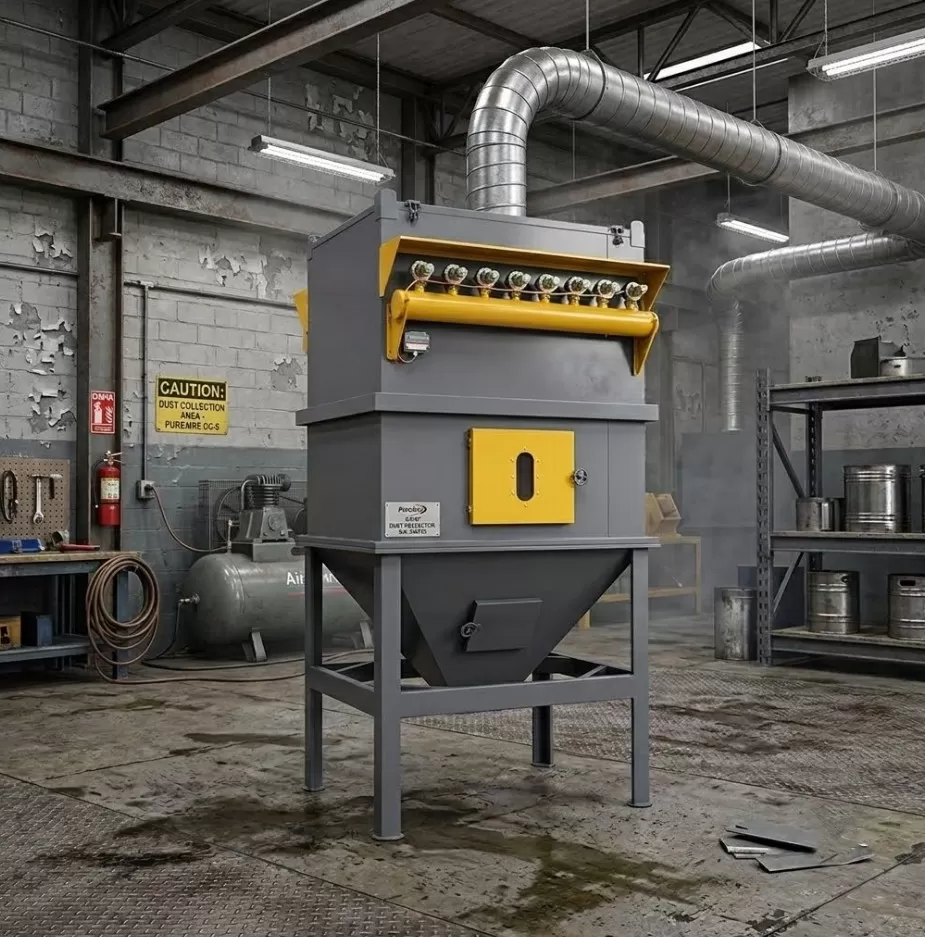
Accurate quotations really rely on clean and verifiable data. Buyers should provide specific dimensional, material, and operational details so they can receive a precise Filter Parts Quote.
Senotay also offers free technical consultation and provides detailed quotes within 24 hours. Our engineering team checks every RFQ carefully, to confirm the dimensions line up and the material is compatible.
Understanding typical response timelines helps procurement managers plan effectively.
Data compiled from industry analysis. Senotay maintains a response time of ≤3 hours during business hours with an on-time delivery rate exceeding 98%.
Getting an accurate RFQ really kind of needs a systematic approach, because otherwise it's all guesswork and suppliers do not feel confident. You know, like it has to be right from the start.
Initial Data Collection & Specification Verification:
Start by collecting every piece of documentation you already have for your dust collector. Find the nameplate, for the manufacturer and the model number. If it has no label, then take clear photos of the filter bag top and bottom construction, plus the cage (if it’s used). Also photograph the tube sheet arrangement. Then measure the bag diameter, or the flat width, and also the total length using a tape measure, not calipers.
Core Technical Submission & Supplier Engagement:
Put all the collected information into a structured RFQ set. Make sure it lists the dust collector type, the filter dimensions in detail, the top and bottom build styles, the current filter media material (if you can confirm it), plus operating conditions like temperature, dust type, moisture content, and cleaning pressure. Send the RFQ to suppliers that are ISO 9001 certified, and yes that piece matters.
Compliance Verification & Supplier Evaluation:
Before ordering, confirm the supplier’s quality system matches ISO 9001:2015, and also any industry-specific certificates like AS9100D for aerospace. Then check the on-time delivery metric (aiming for over 95%) and the reorder rate (aiming for over 30%), because performance usually shows up in repeat work.
Getting the hidden technical bits right is basically key for doing a proper RFQ prep and keeping risk down. Even when the wording seems fine, missing some of the less obvious stuff can quietly throw everything off later.
Dimensional Accuracy Risks: One of the most common RFQ blunders is sending only a product name or some random part number, but with no actual dimensions. There is no single, shared database of dust collector filters, so those manufacturer part numbers are mostly for their internal records. If you measure only the flat width when diameter is what they need, or do the opposite, the bag sizing ends up wrong. Make sure the dimensions are labeled super clearly, and whenever you can, include both flat width and diameter, not just one.
Material Selection & Operating Environment: The filter media has to line up with the real operating conditions. Polyester bags typically won’t hold up past about 280°F, while aramid (Nomex®) is good to 400°F, and PTFE can go up to 500°F. If the environment is acidic or alkaline, then you usually need specialized media such as PPS or P84. If chemical exposure isn’t spelled out, you can get bags that basically degrade within weeks instead of lasting years.
Key Engineering Compliance Standard:
Standard Code: ISO 9001:2015 / ASME Section VIII
Critical Threshold: The filter cages must tolerate differential pressures up to 20″ W.C. without any meaningful deformation. Welding has to follow AWS D1.1, with documented welding procedures.
Operational Impact: If this is violated, expect immediate filter failure, sudden downtime, and possible safety hazards. Rework or replacement can add something like 2–6 weeks to the schedule, sometimes more depending on sourcing.
Grasping the sub-components helps with RFQ prep, a lot more precise kinda, and also supports sourcing choices that are actually informed. Filter bags are probably the thing that gets swapped out most often. For materials, people usually choose polyester because it’s cost-effective and handles moderate temperatures, or aramid such as Nomex® for high temperature, then PPS for acid resistant needs, and PTFE when you want near maximum resistance. The key parameters are fabric weight, air permeability, and breaking strength, especially all of that together.
Now filter cages act like structural backbone, and they prevent collapse when pressure is applied. These cages are made from carbon steel, galvanized steel, or stainless steel. Here too the critical parameters are the diameter, the length, wire count, ring spacing, and whether you need a venturi requirement or not. Senotay also does cage matching services so you end up with a fit that’s correct, not “close enough”.
Pulse valves run the cleaning mechanism, essentially. Valve selection depends on system pressure, typically 80–100 PSI, plus voltage requirements and response time. If you size the valve wrong, cleaning efficiency drops, then pressure drop climbs, and the bag life gets shortened, kind of fast.
Static & Dynamic Load Capacities: Carbon steel cages with 10-gauge wire generally manage loads up to 50 lbs per bag. Stainless steel cages are expected, for corrosive setups or high-temperature use.
Pressure Containment Limits: Baghouse housings are typically rated for 20″ W.C. (±5000 Pa). Go beyond that number and you can see structural deformation, leakage, and safety hazards, not just minor issues.
Welding & NDT Standards: Cage welding has to follow AWS D1.1. The top and bottom ring attachments need continuous welding, no gaps. Senotay uses automated welding lines, and then NDT is carried out on all critical components.
Control Loop Topology: differential pressure sensors trigger pulse cleaning when the pressure drop goes beyond the chosen limits, typically 4–8″ W.C. PLC controllers then manage the pulse order and they also handle the alarm stuff , so nothing stays quiet for too long .
Communication Protocol Options: the controllers can use Ethernet/IP, Modbus TCP/IP, and OPC UA, which helps SCADA integration without a big deal .
VFD Sizing: VFDs manage fan velocity, which lowers power use around 20–40% . With active front-end drives, harmonic distortion gets kept under 5% THD, it feels smoother in practice.
Daily / Continuous Diagnostics:
- differential pressure tracking, compressed air leak checks, and hopper material buildup confirmations, all the time .
Quarterly Intervention (2,000 Operating Hours):
- bolt re-torquing, pulse valve inspections, pressure sensor tidying, and set point verification .
Annual Refit (8,000 Operating Hours):
- full filter bag replacement, cage inspection, fan bearing lubrication, plus control system refresh work .
The Industrial Challenge: a cement plant needed replacement filter bags for roughly 2,400 bags across four pulse-jet collectors. The older supplier shipped bags with the wrong dimensions , which led to bypass leakage and emissions that went past EPA limits. The plant needed the delivery inside 4 weeks, and it had to include full ISO compliance .
The Custom Engineering Response: Senotay did on-site measurements of the existing bags, cages, and tube sheets. For the media choice, PTFE membrane-coated aramid media was selected, aimed at better dust release and emissions compliance. Production was pushed faster using dedicated production lines, because schedule mattered .
The Quantifiable Outcome:
Bags delivered in 3.5 weeks— ahead of schedule, which is honestly pretty good. First-pass installation was at 100% fit , with zero bypass leakage. Emissions dropped to 0.03 gr/dscf, and that’s under EPA limits. Per bag cost ended up down by 28%. Also service life went from 18 to 28 months, so that’s a win.
Dust collector type (pulse-jet, reverse-air, shaker, or cartridge)
Filter bag diameter or flat width (label clearly)
Filter bag length
Top construction style (snap band, ring, cuff, flange, loop, or grommet)
Bottom construction style (disc, reinforced, open, or custom)
Filter media material or current media
Finish or treatment (membrane, anti-static, water/oil repellent, singed)
Operating temperature and dust type
Cleaning method and pressure
Quantity and delivery country
Target delivery date
Photos, drawings, samples, or equipment nameplate
Senotay provides free technical consultation and detailed quotes within 24 hours.
What info is most important for a replacement filter bag quote?
Diameter or flat width, length, top style and bottom style, material, operating conditions, quantity, delivery country, plus clear photos Those are basically the critical things. If that info isn’t included, suppliers cannot give you an accurate quote for the filter parts, it just becomes guesswork.
What if I don’t know the filter bag material?
Send the application details instead. Include operating temperature, dust type, current bag photos, and any nameplate info you have. A technical supplier can review the situation and suggest suitable material even if you aren’t sure which one is currently installed.
Does operating temperature really impact filter bag material choice?
Yes, a lot. Polyester tends to fail above 280°F, aramid handles around 400°F, and PTFE resists up to about 500°F. If you share the correct temperature range, you’re much more likely to get durable, long-lasting filter bags.
Should I send diameter or flat width for filter bags?
Send both if you can. Mixing up flat width with diameter is one of the most common quoting mistakes and it causes wrong sizing, then everyone has to redo the order later.