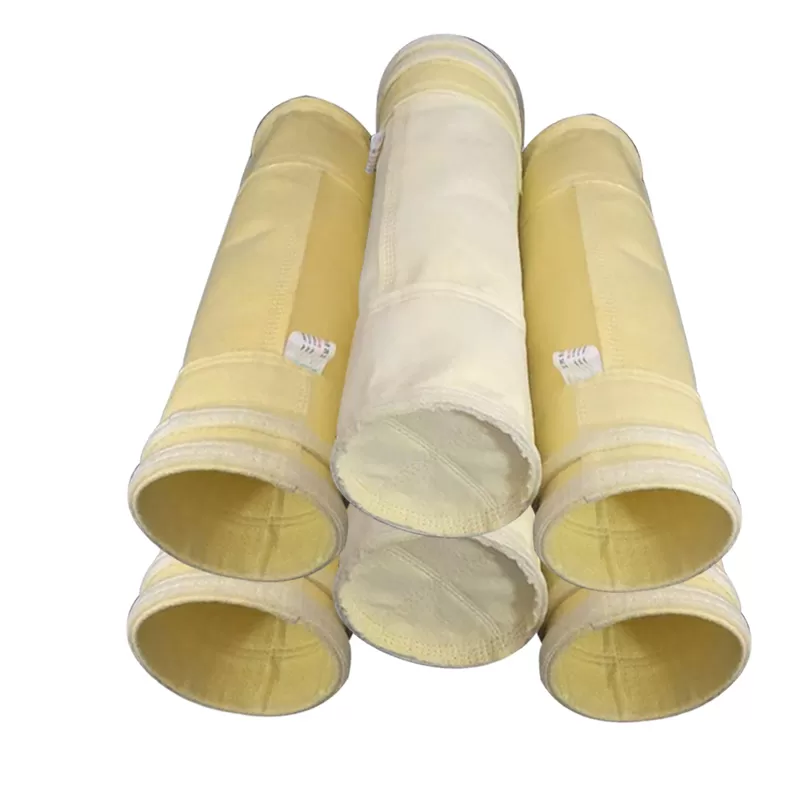
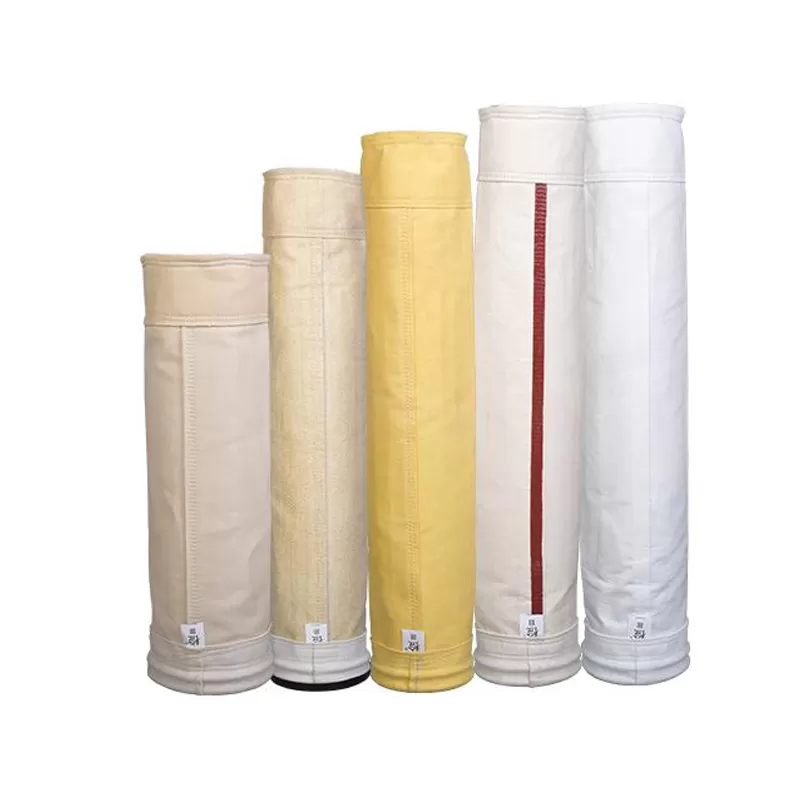
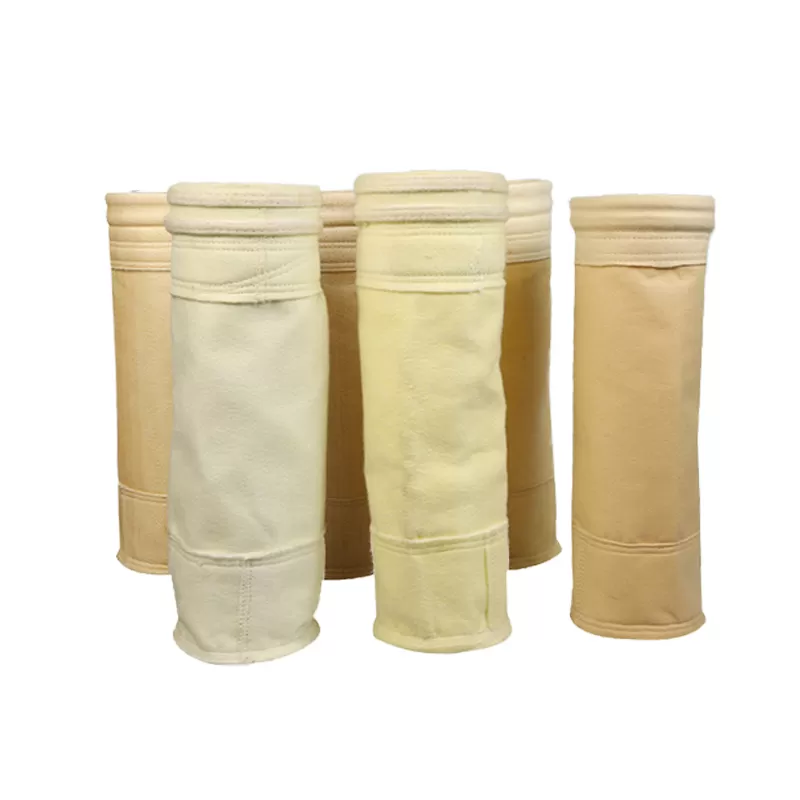
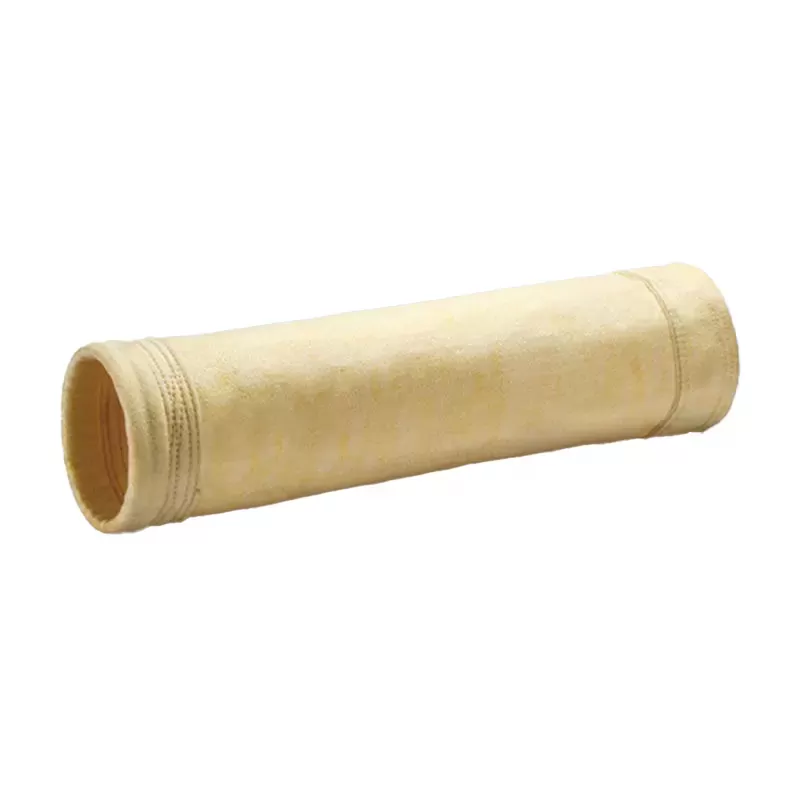
P84 filter bags: compare polyimide blends and filtration media
P84’s irregular fiber cross-section is useful material-selection information, but it does not establish a guaranteed collector efficiency. SENOTAY lists pure and blended polyimide media with different finishes. Confirm the actual fiber identity, blend, backing and sewing construction before selecting the bag for a hot or chemically demanding stream.
500 ±10 g/m²
Listed base construction
200–400 L/m²/s
Base permeability at 200 Pa
>1000 / >1200 N
Base warp/weft references
The original base table lists<204 °C continuous and240 °C transient, while alternative tables claim higher limits. Those alternatives are not merged into an approved universal rating; obtain a reconciled construction-specific data sheet.
P84 construction and technical comparison tables
Base polyimide construction reference
The thermal entries are retained as the published base-construction reference, not a declaration that all P84 bags share that limit. Confirm the actual selected grade and transient duration.
product name: | P84 dust filter bag |
|---|
Fiber Type | Polyimide fiber |
Weight (g/ ㎡ ) | 500±10 |
Thickness(mm) | 1.8-2 |
Tensile strength (N/5×20cm) | vertical | >1000 |
Weft | >1200 |
Air permeability (L/m2/s·200pa) | 200-400 |
Recommended operating temperature (℃) | <204 |
Instantaneous operating temperature (℃) | 240 |
Surface treatment process | PTFE coating
|
P84-101 toP84-110 composition and finish references
Published blend names are retained for an inquiry. A composite cannot inherit the highest temperature capability of one ingredient. Unassigned operating-temperature cells have been archived.
Type No. | Composition | Operating Temp (°C) | Surface Treatment | Application Area |
|---|
P84-101 | 100% P84 fiber | Confirm complete-assembly limit | None | Waste incineration |
P84-102 | P84 + PTFE membrane | Confirm complete-assembly limit | PTFE coating | Chemical plant dust collection |
P84-103 | P84 + fiberglass | Confirm complete-assembly limit | Graphite finish | Cement kiln |
P84-104 | P84 + Nomex blend | Confirm complete-assembly limit | Silicone coating | Power plant |
P84-105 | P84 + PPS blend | Confirm complete-assembly limit | Anti-static | Coal combustion |
P84-106 | P84 + PTFE lamination | Confirm complete-assembly limit | Dual layer | Biomass furnace |
P84-107 | P84 + aramid base | Confirm complete-assembly limit | Oil & water repellent | Petrochemical plant |
P84-108 | 100% P84 felt | Confirm complete-assembly limit | Heat-set finish | Waste treatment |
P84-109 | P84 + glass composite | Confirm complete-assembly limit | Acid-resistant coating | Metal smelting |
P84-110 | P84 + acrylic blend | Confirm complete-assembly limit | Alkali-resistant | Fertilizer industry |
Alternative physical-property reference
These are separate reference values, not additions to the base grade. Confirm test conditions and construction before using them in a purchase specification.
Property | Value |
|---|
Continuous Temperature | Confirm construction-specific limit |
Peak Temperature | Confirm transient duration and limit |
Air Permeability | 100–180 L/m²·s @ 200 Pa |
Tensile Strength | > 2600 N (warp), > 2200 N (weft) |
Elongation | < 20% |
Filtration Efficiency | Published≥99.9%; test report required |
Thickness | 2.0–2.4 mm |
Weight | 500–600 g/m² |
P84-201 toP84-210 finish and permeability references
Permeability and efficiency figures remain supplier references pending a named grade and common test basis. They are not guaranteed outlet concentration. Temperature ranges are not assigned to a verified finished construction.
Model No. | Temperature Range (°C) | Finish Type | Air Permeability (L/m²·s) | Efficiency (%) |
|---|
P84-201 | Confirm construction envelope | PTFE | 150 | 99.9 |
P84-202 | Confirm construction envelope | Graphite | 140 | 99.8 |
P84-203 | Confirm construction envelope | Silicone | 160 | 99.7 |
P84-204 | Confirm construction envelope | None | 180 | 99.5 |
P84-205 | Confirm construction envelope | Acid-resistant | 140 | 99.9 |
P84-206 | Confirm construction envelope | Alkali-resistant | 130 | 99.8 |
P84-207 | Confirm construction envelope | Dual coating | 120 | 99.9 |
P84-208 | Confirm construction envelope | Anti-static | 130 | 99.8 |
P84-209 | Confirm construction envelope | Oil-repellent | 150 | 99.8 |
P84-210 | Confirm construction envelope | Composite PTFE | 110 | 99.95 |
Use fiber shape as a selection feature, not a performance guarantee
The P84 fiber manufacturer describes an irregular cross-section and environment-dependent high-temperature use. Its material guidance does not certify a SENOTAY finished bag, prove an 80% increase for every blend or establish a universal capture percentage. Actual grade identity and blend proportion must be recorded.
A PTFE membrane, surface coating and glass-containing backing are distinct choices. Specify their locations in the fabric and the sewing thread. An anti-static option does not by itself approve coal dust or another combustible process; assess the complete system and relevant electrical behavior.
Resolve the grade before comparing permeability
For the base construction,200–400 L/m²/s at 200 Pa converts to 12–24 m³/m²/min. The separate100–180 L/m²/s reference converts to 6–10.8 m³/m²/min. These are different published ranges, not alternative units for one value.
Do not select the highest tensile figure, lowest permeability and highest temperature from different tables and call the result a standard product. Request a single matched data sheet with mass, thickness, permeability differential, tensile method, fiber composition and service envelope.
Monitor hydrothermal exposure and bag integrity
Provide moisture, acid-gas constituents, oxygen and temperature history for chemical assessment. Polyimide chemistry does not guarantee immunity to hydrolysis or every acidic condensate. Include start-up, shutdown and abnormal excursions rather than only a normal process temperature.
Under approved isolation, inspect seams, cuff seating, cage contact and the finished surface for deposits or damage. Relate pressure-drop changes to actual airflow, cleaning state, hopper discharge and outlet/leak indications. An efficiency claim for a fabric coupon does not locate a leaking seal or establish installed emissions.
Quality documents and order acceptance
Review the published ISO 9001, ISO 14001 and ISO 45001 management-system documents on our Quality Control page. They concern Hebei Outai’s management systems; they are not blanket certification of filter-bag performance or CE/ATEX approval.
Specify the exact fiber blend, backing, finish, seam thread and connection drawing. Agree fabric mass, permeability test differential, tensile specimen/orientation, dimensions and identification. State whether acceptance concerns a media coupon, a finished bag or the installed collector; these are different tests.
For technical coordination, use our technical support information. Inspection scope, test reports, warranty, delivery and site-service arrangements should be confirmed in the quotation, rather than inferred from a material name.
P84 polyimide filter bag questions
Is260 °C a universal continuous rating for these bags?
No. P84 material guidance is environment-dependent, and the source page contains conflicting finished-bag references. Use one identified construction with written continuous/transient limits.
Why retain the<204 °C/240 °C base reference?
It preserves the actual published construction data rather than silently replacing it with a higher fiber-level rating. It must be reconciled with the selected grade before an order.
Does a trilobal fiber guarantee 99.9% capture?
No. Fiber shape is one construction feature. Dust properties, media design, face velocity, conditioning, cleaning and leakage determine test and installed results.
Can a P84/PPS or P84/acrylic blend use the pure-P84 temperature?
Not automatically. Each blend, backing, finish and seam has to be assessed as a complete assembly under the actual gas conditions.
Request P84 bags with one reconciled technical data sheet
For P84 filter bags for fine dust baghouse applications, send the required grade or blend, drawing, quantity, gas composition, moisture and temperature profile. Specify the media test basis and any installed outlet-performance acceptance separately.
Related components and media