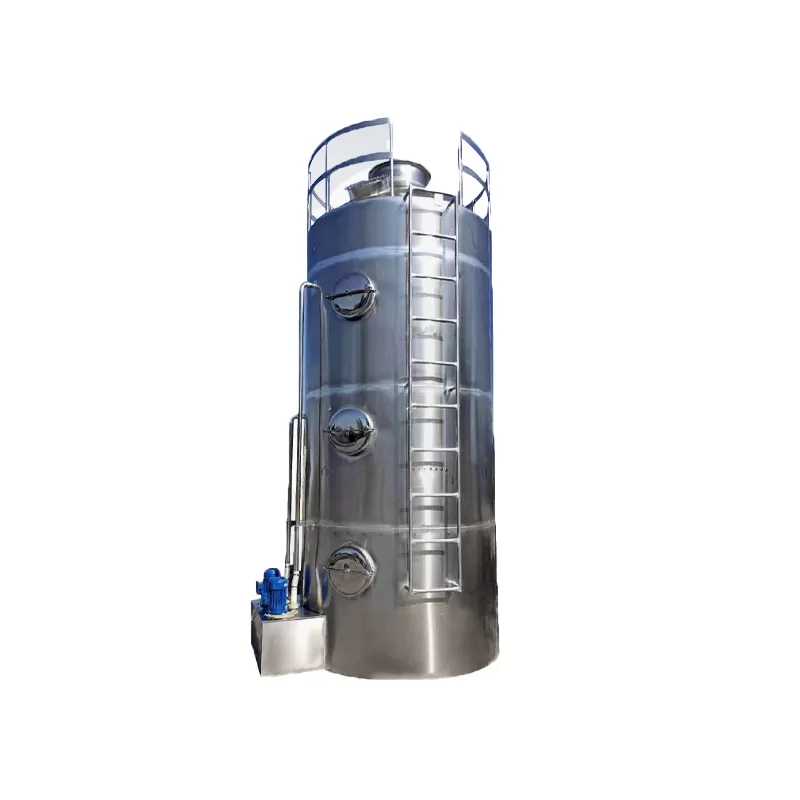
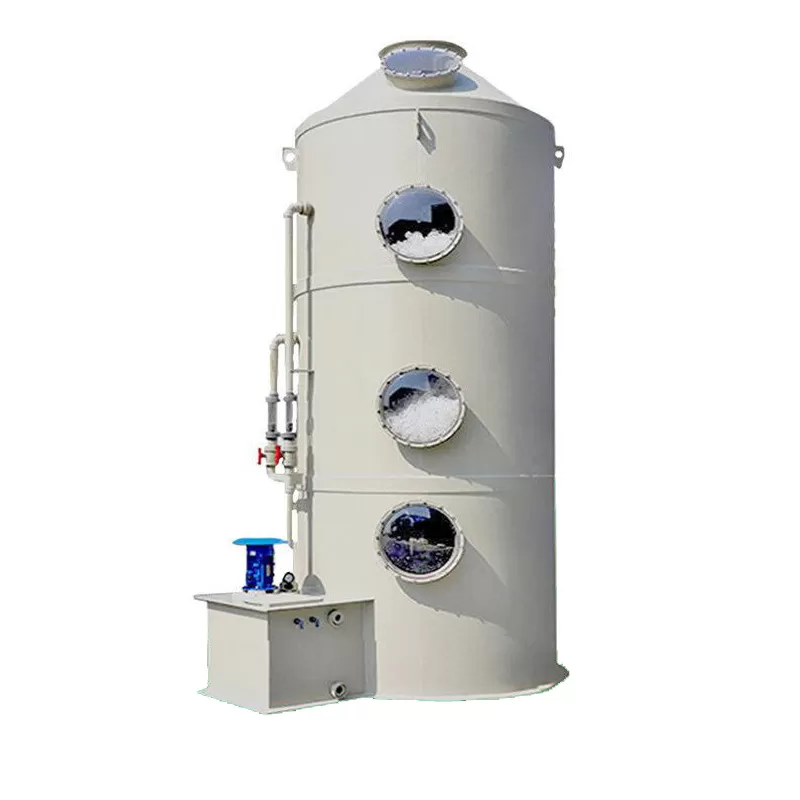
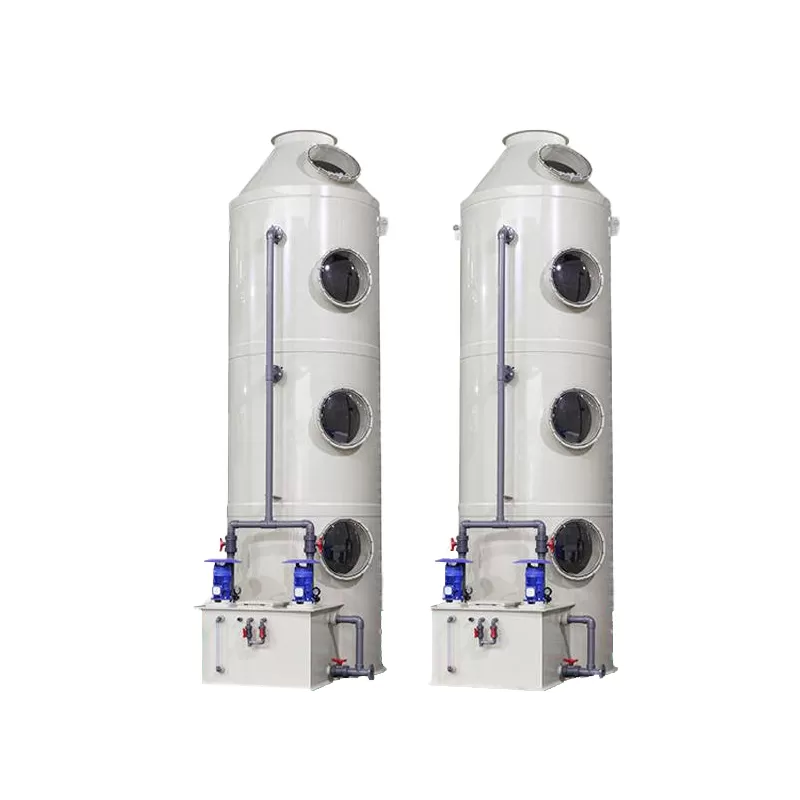
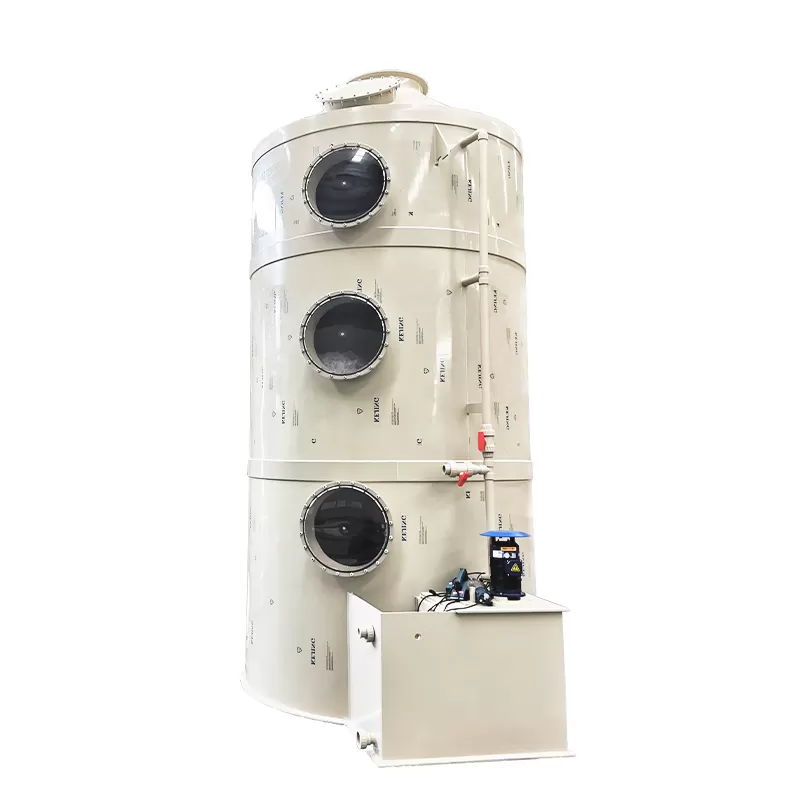
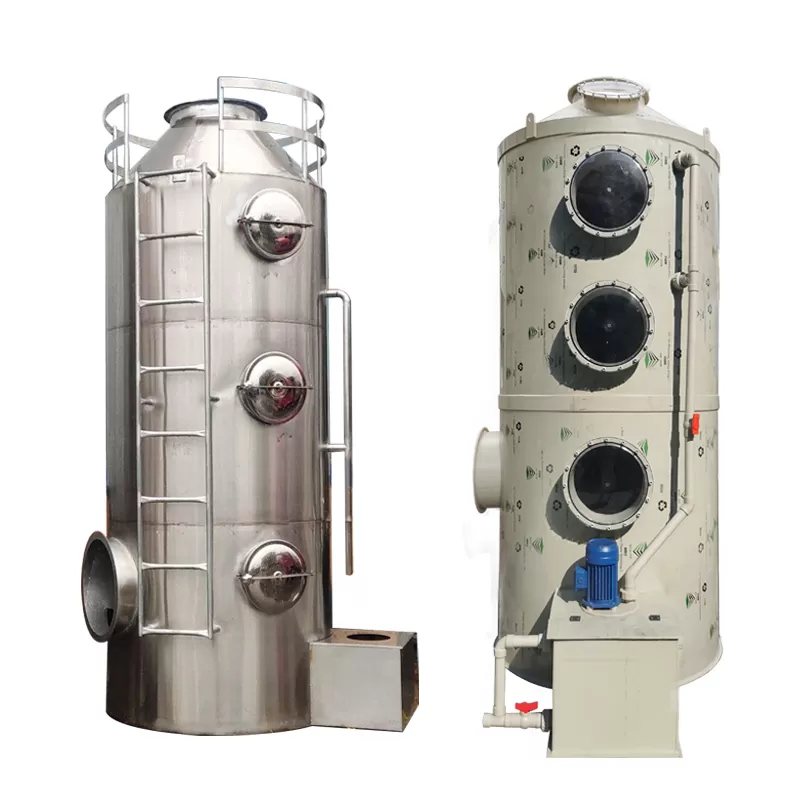
PP Series Polypropylene Wet Spray Tower
Corrosive Acid & Alkali Gas Neutralization System
The PP Series Spray Tower (Industrial Gas Scrubber) is an engineered wet-scrubbing system designed to capture, dissolve, and neutralize aggressive fumes, chemical vapors, and acid gases. Constructed from premium anti-corrosive polypropylene (PP/PP-H), it replaces vulnerable metal housing to deliver zero-leakage performance in harsh chemical, plating, and laboratory environments.
Core Capabilities
High-Efficiency Mass Transfer: Utilizes specialized PP Pall ring packing combined with counter-current liquid spraying to achieve up to 99% removal efficiency for target acid/alkali gases.
Low System Resistance: Aerodynamically optimized column geometry maintains low operational pressure drop (600–1,300 Pa) to minimize fan power consumption.
Integrated Demisting Technology: Built-in high-efficiency droplet eliminators prevent liquid carryover, ensuring clean, dry discharge below strict environmental limits (≤ 30 mg/m³).
Model Selection Overview
Type 1 | Laboratories & Pilot Lines
Airflow capacity: 2,000–4,000 m³/h | Tower diameter: 800 mm | Typical efficiency: 85–90%
Type 7 | Large Chemical Manufacturing
Airflow capacity: 21,000–25,000 m³/h | Tower diameter: 2,200 mm | Typical efficiency: 96–99%
Type 10 | High-Volume Industrial Complexes
Airflow capacity: 40,000+ m³/h | Tower diameter: 3,000+ mm | Typical efficiency: 97–99%
Why Choose PP Spray Tower?
Key advantages for industrial emission control
· Outstanding corrosion resistance. Polypropylene withstands acids, alkalis, salts, and many harsh chemicals—ideal for corrosive fumes from plating, chemical, or battery plants.
· High purification efficiency. Senotay’s design emphasizes thorough gas–liquid contact plus mist elimination, supporting removal levels that meet or exceed strict standards.
· Lower operating costs via smart design. A recirculation pump and efficient liquid use can cut water consumption substantially, helping operations manage both cost and environmental impact.
· Lightweight, durable construction. PP’s combination of strength and low weight simplifies transport, installation, and maintenance compared to heavier metal systems.
· Flexible for different airflow ranges and sites. Models can be sized for small labs, pilot setups, or larger manufacturing operations, indoors or outdoors; supporting portable, rooftop, or fixed installations.
Why Leading Plants Choose SENOTAY PP Spray Tower
Factory-Direct Pricing. Certified Quality. Dedicated Support.
Best Price Guarantee
Certified & Compliant
Fast, Reliable Delivery
Types of PP Spray Towers — quick analysis table
Type No. | Tower diameter | Tower height | Airflow capacity | Packing type | Best use case | Typical efficiency |
1 | 800 mm | 6 m | 2,000–4,000 m³/h | PP rings | Small labs, pilot | ~85–90% |
2 | 1,000 mm | 6 m | 4,000–6,000 m³/h | PP rings | Small chemical plants | ~90–95% |
3 | 1,200 mm | 6 m | 6,000–8,000 m³/h | Structured or high‑area | Corrosive fumes, mid‑size | ~92–96% |
4 | 1,500 mm | 6–7 m | 8,000–12,000 m³/h | High surface packing | Metal finishing, plating | ~93–97% |
5 | 1,800 mm | 6–8 m | 12,000–17,000 m³/h | Layered PP packing | Larger chemical plants | ~94–97% |
6 | 2,000 mm | 6–7 m | 17,000–21,000 m³/h | Grid or mixed | Heavy industries | ~95–98% |
7 | 2,200 mm | 6–7 m | 21,000–25,000 m³/h | Multi‑stage | Large manufacturing | ~96–99% |
8 | 2,500 mm | 6–7 m | 25,000–32,000 m³/h | Hybrid packing | High‑load gas treatment | ~96–99% |
9 | 2,800 mm | 7 m | 32,000–40,000 m³/h | Multi‑stage | Industrial complexes | ~97–99% |
10 | 3,000+ mm | 7–10 m | 40,000+ m³/h | Specialized packing | Major plants, mega‑flows | ~97–99% |
PP Spray Tower — Technical Specification Table
Physical Dimensions | Performance Ratings | Material & Construction | Operational Data | Certifications & Lifecycle |
Tower Diameter: 600–3,000 mm | Pressure Rating: –2 to –5 kPa | PP / PP-H | –1.5 to –4.5 kPa | > 60,000 h |
Tower Height: 3,000–18,000 mm | Removal Efficiency (acid gases): 85–99% | PP Pall Rings (25–50 mm) | 2–25 m³/h | 10–20 years |
Inlet Diameter: 200–1,200 mm | Scrubbing Efficiency (PM ≥ 2 μm): 70–95% | 6–18 mm | 1,500–85,000 m³/h | ISO 9001 / CE |
Outlet Diameter: 250–1,000 mm | Max Temperature: ≤ 80°C | PP/FRPP, Ø 3–6 mm | 1.1–11 kW | Class A (acids/alkali) |
Flange Size: DN200–DN1200 | Gas Velocity: 1.5–3.0 m/s | PP-reinforced | 600–1,300 Pa | ≤ 30 mg/m³ |
(BCD): 300–1,150 mm | Liquid-to-gas Ratio: 3–8 L/m³ | EPDM / FKM | 120–2,800 kg | EPA / EN 12741 |
Access Door: 400×600 / 500×700 mm | pH Neutralization Range: pH 6–8.5 | 8–12 mm | 40–120 Nm | Anti-UV stabilized PP |
Base Plate Size: 800–3,500 mm | Max Gas Concentration: ≤ 450 mg/m³ | Silicone / PTFE | 0.2–1.2 m³/h | Every 6–9 months |
Product Description and Material Properties
Material Characteristics:
Property | Description |
Material Type | 100% High-Grade Polypropylene (PP) |
Corrosion Resistance | Excellent against acids, alkalis, and salts |
Temperature Resistance | -10°C to 120°C (14°F – 248°F) |
Density | 0.91 g/cm³ |
Tensile Strength | ≥33 MPa |
Flexural Modulus | 1,400 MPa |
Color | Natural / Custom Optional |
Certifications | CE, ISO 9001, ISO 14001, RoHS |
How does a PP Spray Tower work?
Working mechanism
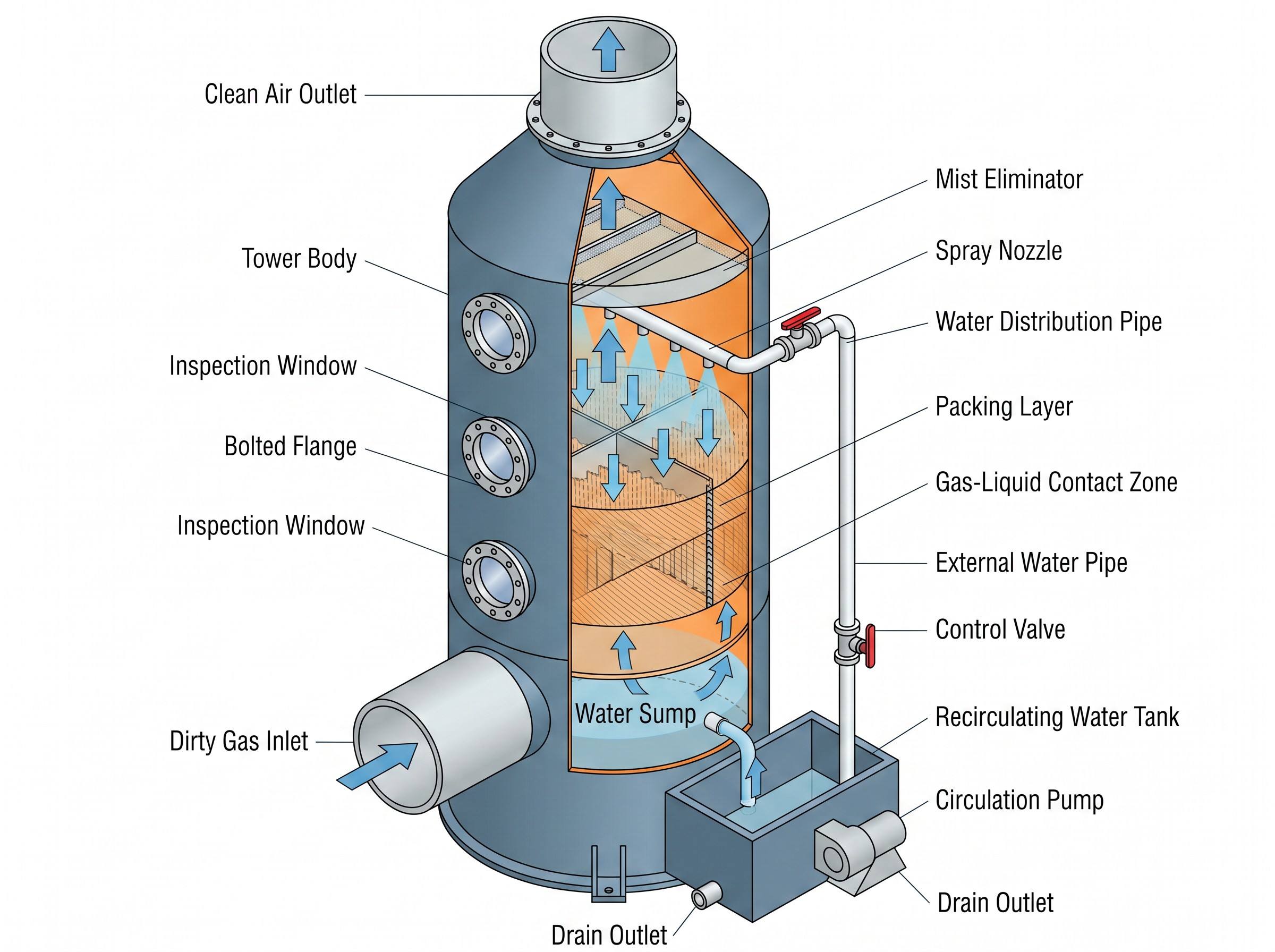
1. Polluted gas entry. Exhaust containing corrosive fumes enters the lower section of the tower.
2. Liquid spray distribution. A pump sends scrubbing liquid to nozzles that spray it downward as a mist.
3. Gas–liquid interaction. Gas rises through the tower, passing through packing layers where it contacts the liquid. Pollutants dissolve, react, or are captured by the scrubbing solution.
4. Mist elimination. Before discharge, a dehydration or mist removal stage strips out entrained droplets to prevent carry‑over or condensation.
5. Clean gas exit. The purified gas is discharged, often through a fan or duct.
6. Liquid recirculation. The spent liquid is collected at the base, pumped back, and reused—minimizing fresh water needs and supporting continuous operation.
This counter‑flow or optimized flow design closely follows proven wet‑scrubber principles widely accepted in air‑pollution control and cited by environmental authorities.
Features of Spray Tower
· Corrosion‑resistant polypropylene construction.
· High treatment efficiency for acidic, alkaline, or corrosive fumes.
· Compact, high‑strength, lightweight design for easier handling.
· Automated controls, manual debugging, and fault alarms to simplify operations.
· Low running and maintenance costs, designed for economic long‑term use.
· Customizable sizing, air volume, and parameters, tailored to different working conditions.
· Suitable for indoor, outdoor, rooftop, or portable/moveable installations.
Core components
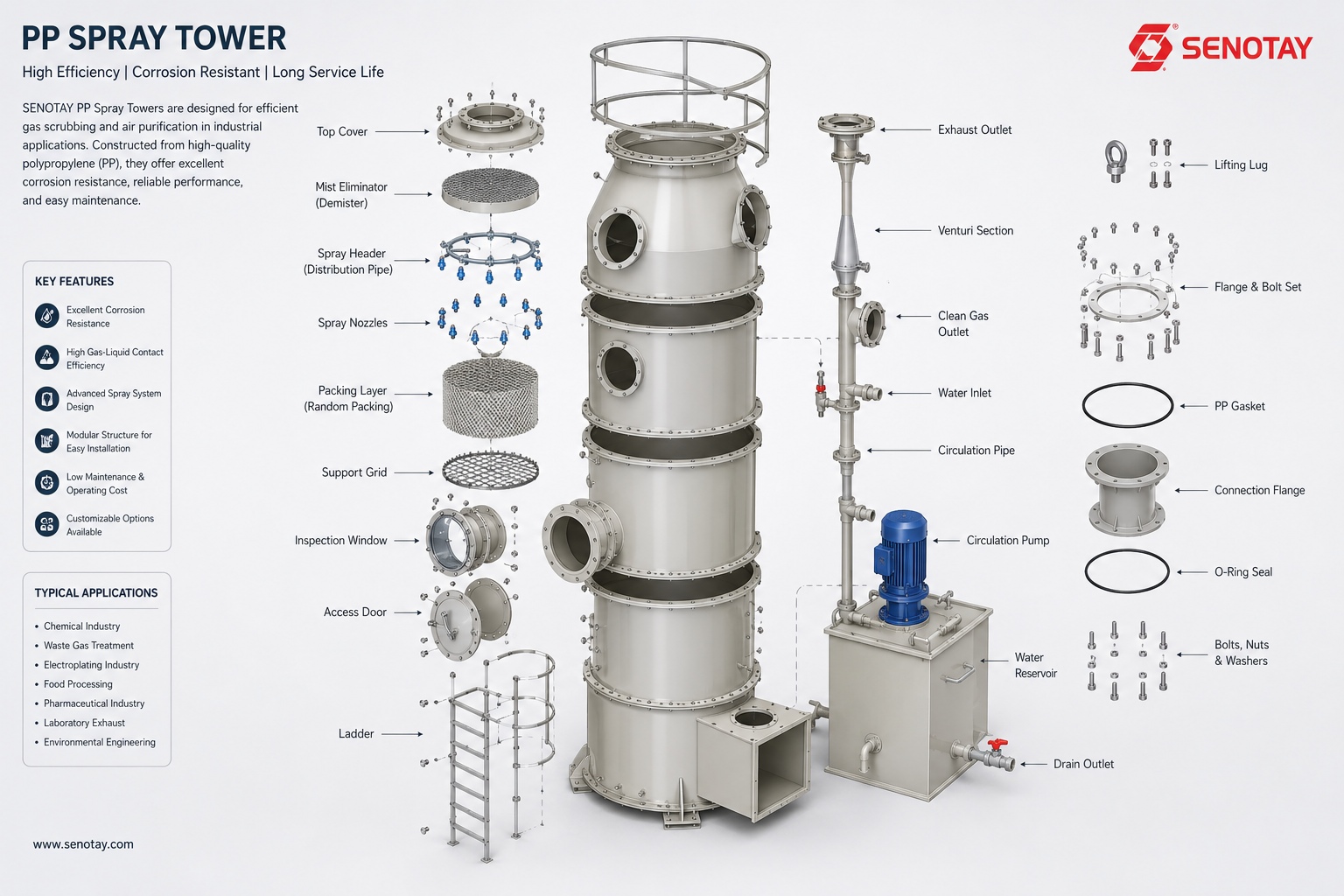
A Senotay PP Tower system typically includes:
· Tower body and shell made of PP.
· Packing layer to enhance contact surface.
· Spray nozzles / spraying device.
· Demister / dehydration layer.
· Circulating pump and liquid tank.
· Inspection windows or access points.
· Exhaust fan, piping, and valves.
· Control panel for automation and alarms.
Each element is chosen or sized to ensure high efficiency, strong corrosion resistance, and ease of maintenance.
Technical advantages in manufacturing at Senotay
Senotay emphasizes a combination of field experience, quality control, and advanced materials:
· Long‑term engineering experience in industrial air purification, with a track record of installations across varied industries and geographies.
· ISO‑certified processes supporting consistent manufacturing quality and verified performance claims.
· High‑efficiency design: careful integration of packed beds, mist elimination, and smart recirculation for better cost and environmental outcomes.
· Customization capabilities for airflow ranges, pollution type, and site constraints, ensuring the system matches real operating conditions.
· Robust component selection: PP tower body, packing, and spray devices selected to maximize contact and minimize corrosion issues.
These strengths support systems that are both effective today and future‑proof against tightening emission standards or harsher process conditions.
Explore More Air Pollution Control Equipment
▪ Industrial Baghouse Series
▪ LDMC baghouse dust collector | PPC baghouse dust collector | DMC Pulse Jet Baghouse Dust Collector | Baghouse Dust Collector
▪ Electrostatic & Gas Treatment
▪ Horizontal electrostatic precipitator | Wet electrostatic precipitator | Electrostatic Dust Collector | PP Spray Tower | Catalytic Combustion Dust Collector
▪ Cyclone Dust Separators
▪ Single-Cylinder Cyclone Dust Collector | Combined Cyclone Dust Collector | Ceramic Multi-Tube Cyclone Dust Collector
▪ Cartridge & Station Extraction
▪ Cartridge Dust Collector | Modular Dust Collector | Mobile dust collector | Welding Fume Purifier | Grinding table dust collector
FAQs - About tower
Q1: What gases can a PP Tower remove?
Answers: It effectively removes acidic gases (HCl, SO₂), alkaline fumes (NH₃), and volatile organic compounds (VOCs).
Q2: How long is the service life of the PP Tower?
Answers: With proper maintenance, the system offers up to 50,000 operational hours or 5 years warranty
.
Q3: Is customization available?
Answers: Yes, Senotay provides fully customized tower sizes, inlet configurations, and control systems.
Q4: What maintenance is required?
Answers: Regular inspection of nozzles, pumps, and filtration liquid quality ensures optimal performance.
Q5: Can the PP Tower be used outdoors?
Answers: Yes, it features IP54–IP55 protection, making it suitable for corrosive and outdoor environments.