
EN
What are you looking for?

Determining an accurate Industrial Baghouse Cost really needs localized manufacturing data, filtration media lifespans, plus pneumatic automation variables that kinda shift over time. When sourcing from premium Chinese OEMs like Senotay procurement officers can secure robust filtration systems that satisfy global emission standards (less than 10 mg/m³) while still tuning the initial capital expenditure by up to 30%. This technical guide is basically how to lay out the exact mechanical parameters that you need in order to generate a reliable long-term commercial quotation, in a way that doesn’t drift.
Mitigate Capital Surprises: Learn how to calculate the hidden variable expenses such as replacement media frequency and pulse-jet compressed air consumption, so you can predict the exact total cost of ownership (TCO) without weird surprises later on.
Conduct a Supplier Comparison: Compare exact structural limits, material science integrations, and safety compliance benchmarks across different manufacturing tiers, not just marketing promises.
Optimize Procurement Pipelines: Use our structured engineering workflow to capture the exact mechanical data required, to avoid undersized equipment, and those costly operational bottlenecks that follow.
Estimating a dependable Baghouse Cost China means you cross-reference your exact airflow capacity requirements with standardized OEM structural designs. Buying in a rush, without mapping those mechanical tiers leads to undersized equipment and rapid filter blinding . Senotay manufactures engineered Industrial Baghouse systems tailored to handle diverse particulate loads across a range of demanding industries.
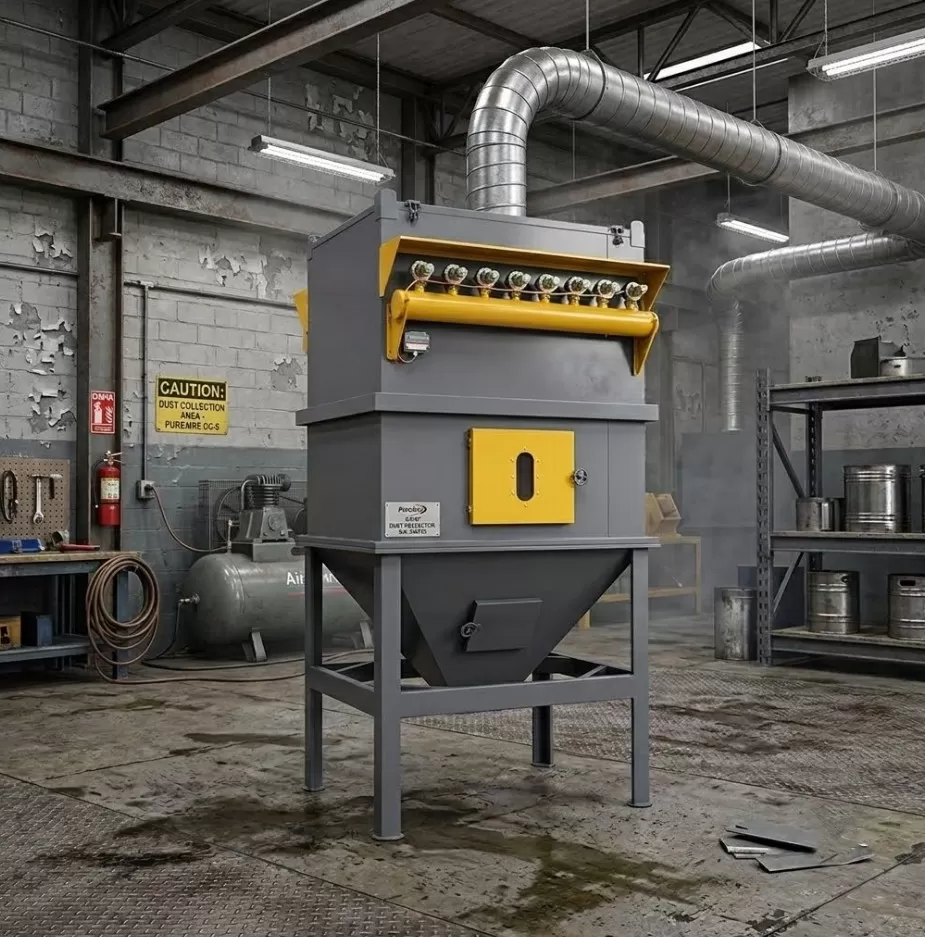
To make sure your commercial quote actually matches what the factory is doing right now, plant engineers have to run a kinda structured three phase verification routine before they even submit an inquiry for a new system.
Phase 1 Data Collection: Log Volumetric Flow Rates
Capture the ongoing exhaust temperatures, the differential pressure values ( ΔP ), plus the dust chemical makeup. These raw figures are there to stop procurement from picking filtration media that will rapidly lose performance under corrosive vibes or sustained high-heat situations.
Phase 2 Formula Application: Calculate the Air-to-Cloth Ratio
Engineers must compute the full filtration surface area needed from the gas volume. For example if the exhaust flow is 20,000 m3/h, and the target filtration velocity is 1.2 m/min, the total required bag area has to be calculated with care , so the system isn’t overloaded and you don’t end up with higher over time upkeep costs.
Phase 3 Verification: Regulatory Compliance Sign-Off
Recheck the chosen media parameters against the relevant local environmental code. Confirm the unit can keep continuous stack emissions under the tight regulatory limits, before any final financial commissioning is approved.
High-volume particulate removal comes with serious operational perils , like extreme thermal breakdown and dust clouds that can become explosive under the right conditions. While doing a Supplier Comparison, ignoring moisture content or the minimum ignition energy (MIE) of the exhaust gas stream will meaningfully shorten component service life, and it can even cause warranty coverage to be denied.
Key Engineering Compliance Standard
Standard Code: ATEX Directive 2014/34/EU / NFPA 654
Critical Threshold: Combustible dusts with an MIE < 3 mJ mandate the integration of explosion vents and anti-static filtration media.
Operational Impact: Failure to isolate electrostatic discharge risks causes immediate regulatory violations, risking catastrophic system ignition and massive facility downtime.
The main capital cost in any filtration setup is basically shaped by the metallurgy of the structural housing and the overall material finish of the internal bits. Senotay engineering tries to bridge that gap between the initial sourcing budget and the long run reliability, so it doesn’t feel like a random surprise later.
Filtration Media Fabric: Customers need to pick between standard polyester felt for normal ambient temperatures and more advanced PTFE membranes, or P84 fibers for corrosive, high temperature settings. PTFE can stretch operational life by about 40% but it also pushes the start-up capital cost up.
Support Cage Metallurgy: Typical carbon steel cages are the cheaper route for entry. Still 304 or 316L stainless steel should be specified, for highly acidic applications, to help stop structural rusting and bag tearing.
Pulse-Jet Valves: Premium electromagnetic pulse valves are mandatory to survive high pressure pneumatic shockwaves (usually 0.4 to 0.6 MPa), without localized diaphragm rupturing or weird early wear.
Structural failure usually happens when a unit can't handle real pneumatic vibrations, or it meets high negative pressure conditions. Senotay tests every structural boundary, to make sure the steel chassis stays intact through tough operational cycles, and doesn’t end up with physical deformation.
Modern units have to work, pretty much flawlessly, with the facility’s centralized control framework, to stop those annoying comms failures between the field equipment and the main operations desk.
On-Demand Cleaning Topology: With differential pressure (ΔP) sensors involved, the PLC starts the cleaning cycles only when resistance reaches a set threshold, like around 1,200 Pa. This kind of logic tends to stretch the bag lifespan, by cutting down on unnecessary mechanical shock, and yeah it helps overall.
Communication Protocol Options: The systems are built to use standardized network interfaces “out of the box”, including Modbus TCP/IP, Profinet, and EtherNet/IP, so the fit into the SCADA environment stays smooth.
VFD Sizing & Harmonics: Built-in variable frequency drives fine tune fan motor speeds in a controlled way, which supports energy savings while also reducing electrical noise harmonics that could otherwise bounce back toward the factory grid.
To keep TCO low, facilities really should follow a strict preventative maintenance routine, one that’s built around the system’s mechanical lifecycle, not just random checks.
Daily Diagnostics: Check differential pressure baselines across the main plenum and watch stack emission opacity using continuous emission monitoring systems.
Quarterly Interventions (2,000 Operating Hours): Inspect hopper discharge valves, review structural bolt torque ratings, and confirm solenoid valve response times, properly.
Annual Refit Protocols (8,000 Operating Hours): Do full structural corrosion audits, repack the major mechanical fan bearings, and recalibrate all analog pressure sensors.
The Industrial Challenge: A big cement manufacturer ran into severe filter bag blinding and also structural housing deformation because the dust was abrasive, and high moisture level , so the pressure drops never really settled and the whole system lifespan stayed under 2,000 operating hours.
The Custom Engineering Response: Senotay rolled out a customized heavy-duty retrofit. The engineering group chose PTFE membrane filter media to fight moisture blinding, and they used 316L stainless steel support cages to reduce chemical corrosion effects.
The Quantifiable Outcome: After the upgrade, filtration efficiency stayed steady at 99.95% . With better abrasion resistance, the media service life went up roughly 55% , and annual compressed air energy consumption fell by 22%, mostly because on-demand PLC cleaning was tuned in a smarter way.
Before submitting an engineering inquiry to a manufacturer , use this whole checklist so your data package includes every key metric needed for a correct commercial quote.
Volumetric Process Requirements: Capture the exact required system airflow capacity (m3/h) and the maximum continuous inlet temperature the line can tolerate.
Physical Environment Boundaries: Provide the exact factory electrical supply profile ( for example 380V/50Hz ) along with strict floor area limits , plus height restrictions.
Detailed Particulate Specification: State the precise dust chemical composition, the average moisture percentage, the median particle sizing in microns, and attach the MSDS , yes the Material Safety Data Sheet.
Mandatory Regulatory Certifications: List all regional compliance needs, like CE marks, ISO 9001 certifications, or the specific ATEX explosion-proof rating that applies.
What is the usual commercial lead time for custom manufactured systems?
Typically around 6 to 8 weeks after the initial engineering drawing gets approved. In practice, the whole schedule includes specialized metallurgical preparation, precision CNC laser cutting, automated welding, and then thorough non-destructive testing (NDT) before global dispatching.
How does the price of standard carbon steel housings stack up against stainless steel?
Stainless steel housings generally lift the upfront capital cost by about 40% to 60% versus standard carbon steel. Still, that extra spending is kind of non optional when you’re handling highly corrosive chemical dusts, or when the unit works in high-moisture conditions. It helps avoid speedy structural deterioration and also prevents those huge replacement expenses later.
Can Chinese OEM suppliers bring in localized automated controls?
Yes, top-tier suppliers usually provide native support for common network interfaces. Senotay engineering teams then set up internal PLC-based arrangements so the system connects smoothly over Modbus TCP/IP, Profinet, or EtherNet/IP. That way the unit can link directly into your existing local SCADA control room framework.