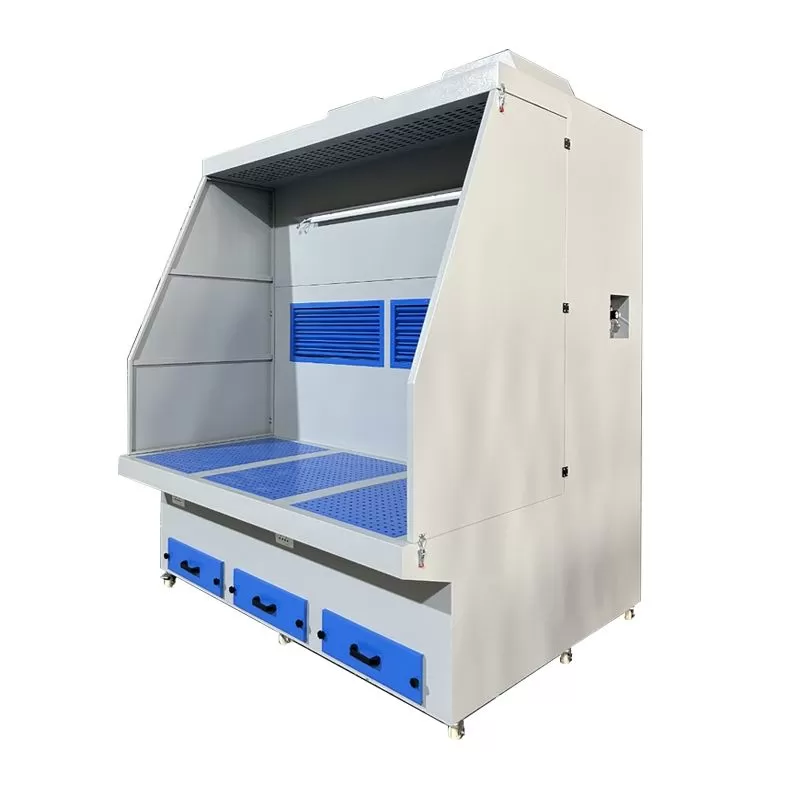
GTDC grinding table dust collector: table sizes and extraction specifications
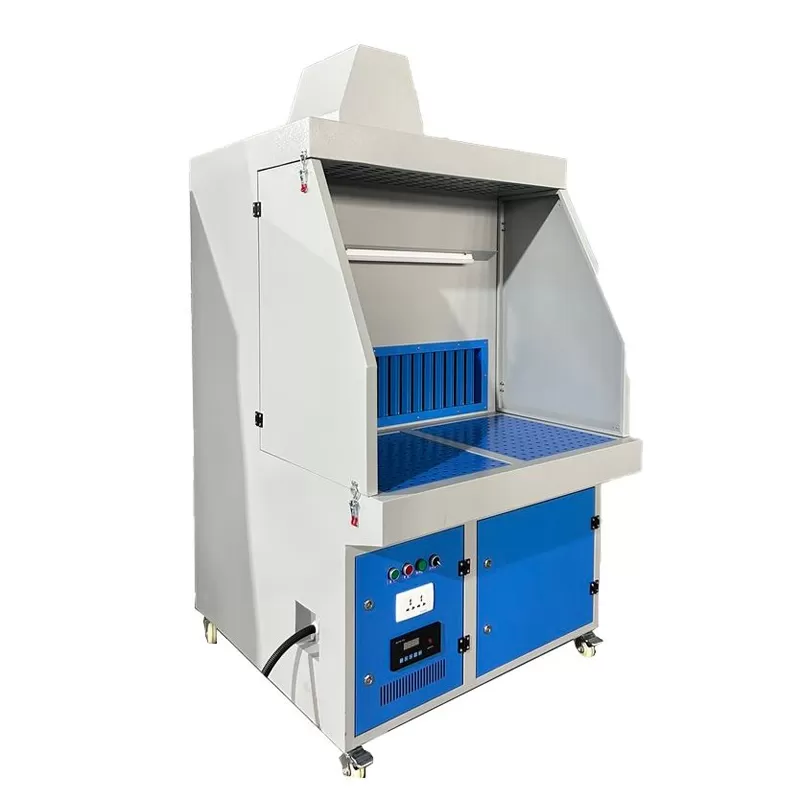
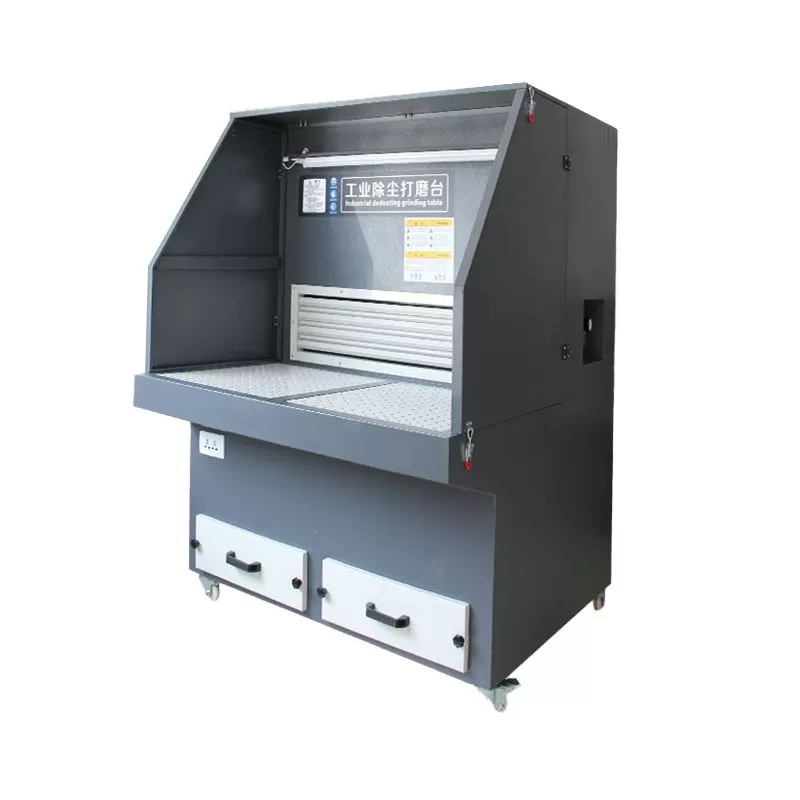
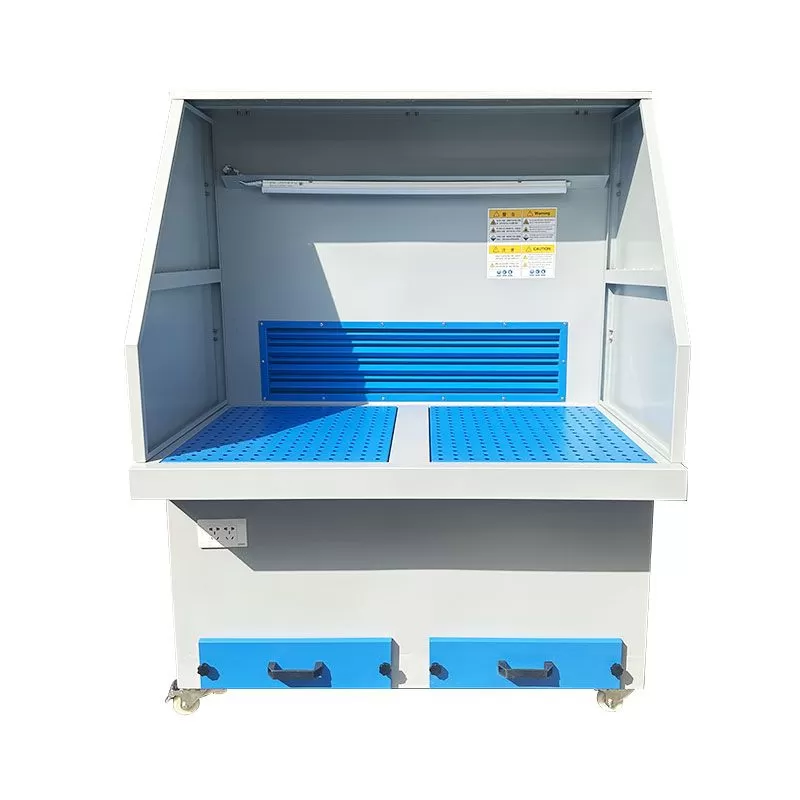
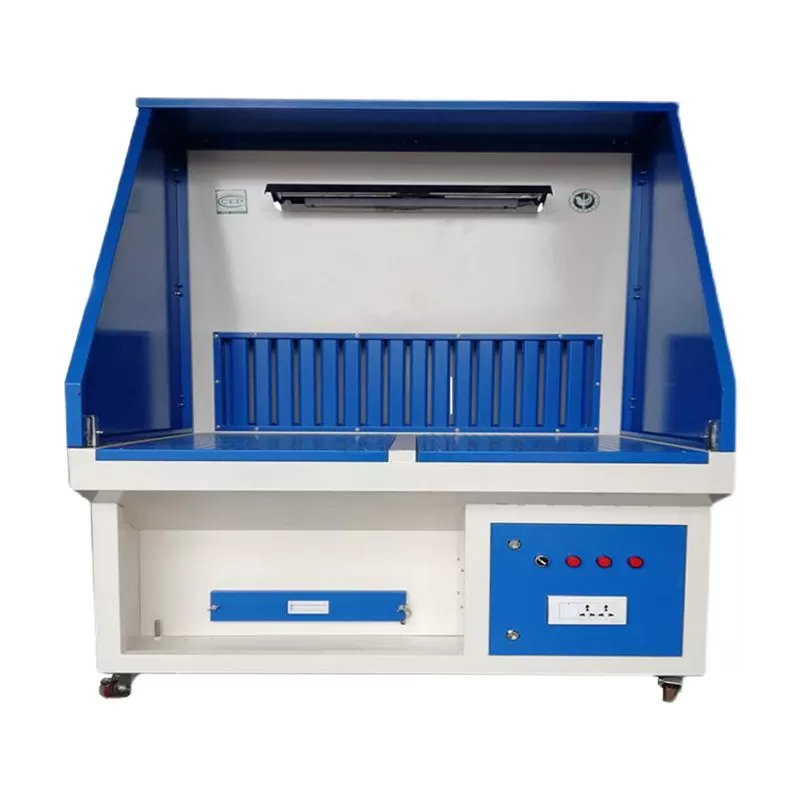
SENOTAY GTDC grinding table dust collectors integrate a perforated working surface, extraction fan, filtration section and dust collection compartment for suitable grinding, polishing, deburring and sanding tasks. The catalog offers different table footprints and motor sizes, with Q235 or SS304 construction references and powder-coated finishes. Select the bench around the workpiece and dust characteristics, not table length alone.
GTDC-1500 | Dual-zone reference
3,000 m³/h · 4 kW
1,500 × 1,000 mm table
Catalog noise: ≤72 dB; test basis to confirm.
GTDC-2500 | Larger work surface
5,000 m³/h · 7.5 kW
2,500 × 1,200 mm table
Safety configuration requires assessment.
GTDC-3500 | Extended bench
7,000 m³/h · 11 kW
3,500 × 1,500 mm table
Catalog noise: ≤76 dB; test basis to confirm.
Work-surface references
850–950 mm table height
35–55% surface opening
Confirm fixture coverage and final drawing.
GTDC grinding table sizes and catalog specifications
Model-specific catalog values are shown for comparison. Confirm airflow at operating resistance, the selected configuration and the final drawing in the quotation.
Model comparison · 10 catalog rows · confirm the selected configuration and duty point.
| Model | Published airflow (m³/h) | Motor (kW) | Catalog filter description | Table size (mm) | Published noise (dB) | Configuration note |
|---|
| GTDC-1000 | 2000 | 3 | Cartridge | 1000×800 | ≤70 | Compact design |
|---|
| GTDC-1500 | 3000 | 4 | HEPA + Carbon | 1500×1000 | ≤72 | Dual suction zones |
|---|
| GTDC-2000 | 4000 | 5.5 | Cartridge | 2000×1000 | ≤74 | Automatic cleaning configuration |
|---|
| GTDC-2500 | 5000 | 7.5 | HEPA | 2500×1200 | ≤75 | Safety configuration to assess |
|---|
| GTDC-3000 | 6000 | 7.5 | HEPA + Carbon | 3000×1200 | ≤75 | Multi-operator layout |
|---|
| GTDC-3500 | 7000 | 11 | Cartridge | 3500×1500 | ≤76 | Integrated filters |
|---|
| GTDC-4000 | 8000 | 11 | HEPA | 4000×1500 | ≤77 | Temperature rating to confirm |
|---|
| GTDC-4500 | 9000 | 15 | Cartridge | 4500×1500 | ≤78 | Monitoring configuration to confirm |
|---|
| GTDC-5000 | 10000 | 18.5 | Hybrid | 5000×1800 | ≤80 | Welded frame |
|---|
| GTDC-6000 | 12000 | 22 | HEPA + Pulse Jet | 6000×2000 | ≤82 | Industrial-duty configuration |
|---|
Construction, dimensions and material specifications
These construction references describe the catalog options. The selected model’s drawing and bill of materials define the supplied dimensions, materials and components.
Construction references · dimensions and materials · final drawings define the supplied configuration.
| Parameter | Catalog reference | Selection detail |
|---|
| Body and table material options | Q235 / stainless steel SS304 | Confirm the parts made from each grade. |
|---|
| Table-height reference | 850–950 mm | Final ergonomic height and fixture arrangement are project-specific. |
|---|
| Work-surface opening rate | 35–55% | Open-area reference; workpiece coverage affects the usable capture area. |
|---|
| Suction connection reference | DN160–DN250 | Confirm the actual slot/connection geometry in the drawing. |
|---|
| Access-door reference | 300 × 450 mm | Allow service clearance for filters and collection compartments. |
|---|
| Bolt-circle reference | 180–400 mm | Confirm final flange drilling and connection standard. |
|---|
| Seal materials | EPDM / silicone | Select for the agreed process and operating conditions. |
|---|
| Surface treatment | Powder-coated / anti-corrosion finish | Specify the required preparation and coating system. |
|---|
| Coating materials listed | Epoxy / polyurethane | Confirm the selected coating rather than assuming both. |
|---|
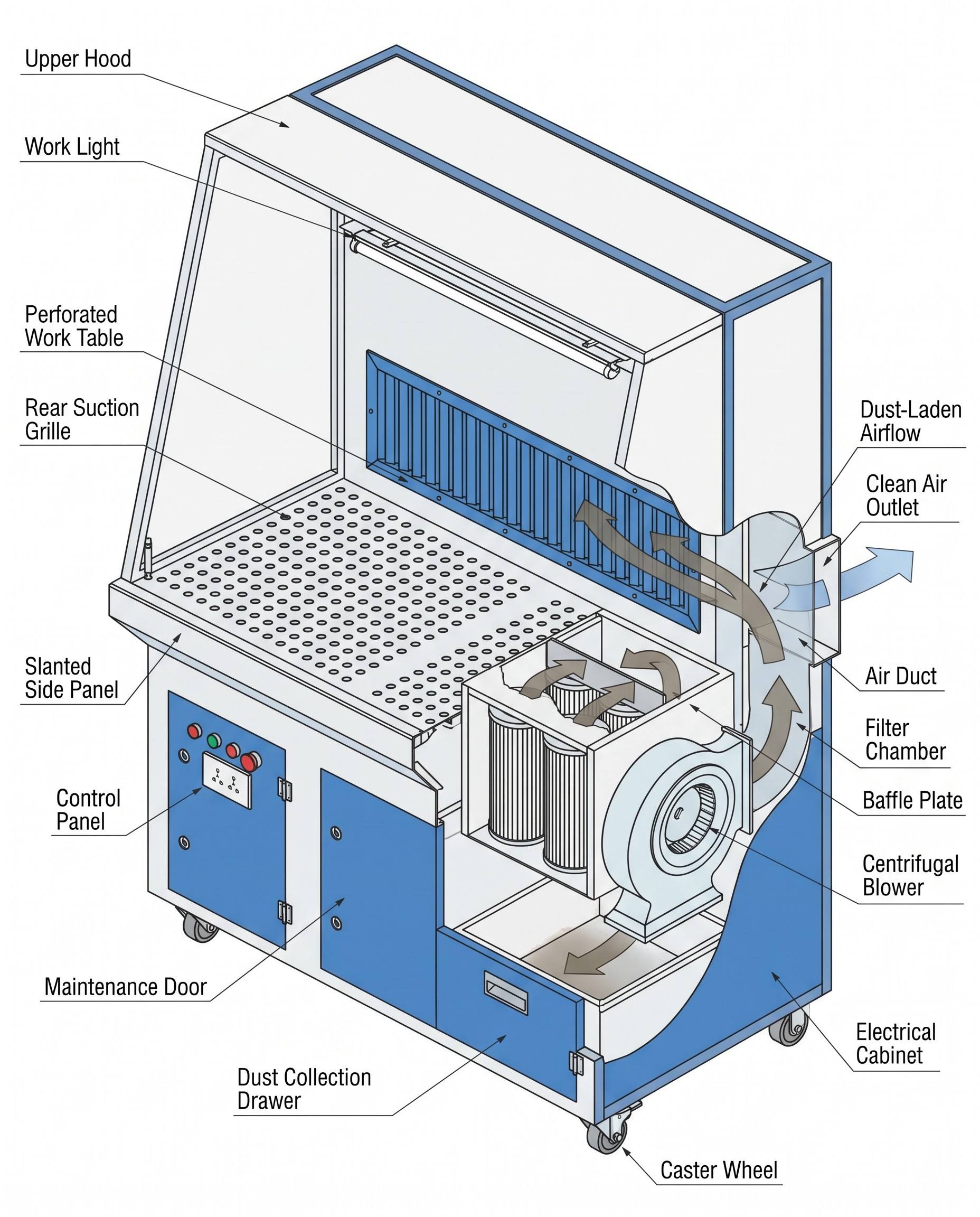
Grinding bench construction and components
Component reference · equipment roles · confirm the quoted supply and operating scope.
| Component | Role in the product |
|---|
| Perforated steel work surface | Supports suitable bench work and provides the extraction openings. |
|---|
| Centrifugal fan and motor | Matched to the airflow and system resistance of the selected bench. |
|---|
| Filtration section | Cartridge, HEPA-stage or other catalog arrangements as specified for the material. |
|---|
| Dust collection drawer or container | Provides access for controlled emptying of the collected material. |
|---|
| Control panel | Confirm airflow, filter-pressure and maintenance indications in the quoted configuration. |
|---|
| Enclosure and access panels | Separate the working area from the internal collection equipment and provide service access. |
|---|
CALCULATED COMPARISON · ASSUMPTIONS SHOWN
GTDC work-area and model-power comparisons
The following example compares GTDC-1500 and GTDC-2500. Table area is calculated as a rectangle from the listed work-surface dimensions, not the perforation open area or total installed footprint. Rated-power illustrations assume 8 hours at the listed motor power and are not electricity-consumption forecasts.
Calculated table areas
1.50 / 3.00 m²
1.500 × 1.000 m and 2.500 × 1.200 m, respectively.
Converted model airflow
0.83 / 1.39 m³/s
3,000 ÷ 3,600 and 5,000 ÷ 3,600, respectively.
Scale comparison
2.00× area / 1.67× flow
3.00 ÷ 1.50 and 5,000 ÷ 3,000. Different ratios are not capture-efficiency results.
8-hour rated-power illustration
32 / 60 kWh
4.0 × 8 and 7.5 × 8, respectively. No savings claim is implied.
Apply the comparison at commissioning
The larger model doubles the rectangular table area in this comparison, but its catalog airflow does not double. That does not establish a safe face velocity or uniform capture across either table. Workpiece coverage, fixture location and the grinding direction still need assessment. Reserve space beyond the table for access and collection-container removal. At acceptance, document the selected dimensions and the capture arrangement with representative work, while checking actual electrical demand separately from nameplate arithmetic.
How a downdraft grinding bench captures dust
Air drawn through the work surface or the specified extraction openings carries airborne particulate toward the filter section. Collected material remains in the filter or collection compartment until it is removed. The airflow pattern must work with the actual grinding direction: large parts, cross-drafts and particles projected beyond the capture area can reduce control.
The HSE guide to local exhaust ventilation explains why capture design must match the contaminant source. Catalog fan volume alone does not establish capture at every position across a bench. Agree how airflow and capture will be checked under representative production conditions.
Combustible dust and spark risks need separate assessment
Metal dust may be combustible even when the original workpiece is not readily ignited. OSHA’s combustible-dust overview identifies this distinction. Do not assume a dry grinding table, spark trap or individual rated component makes the complete installation suitable for aluminum, magnesium or other hazardous dust. Obtain a process-specific assessment and a documented equipment selection before connecting such work.
Specify a downdraft table around the real task
Capture area and operator access
Send a drawing or photographs showing the largest and smallest components, normal working height and tool movement. A wide component may block extraction openings even if it fits on the table. Multiple operators also change the capture requirement. Discuss loading/unloading access, service-door clearance and whether fixtures or protective surfaces restrict airflow.
Grinding and deburring RFQ checklist
Materials: base metals or other substrates, coatings, abrasive type and known hazardous or combustible dust properties.
Process: grinding, deburring or polishing method, tool sizes, workpiece dimensions, mass and production duration.
Extraction: simultaneous operators, required capture arrangement, existing ventilation and target dust-control outcome.
Utilities: site voltage/frequency, compressed air if a cleaning system requires it, and proposed discharge location.
Procurement: floor-space limits, required table load rating, collection-container handling and applicable documentation.
Downdraft, side-draft and grinding-dust selection
Choose the capture direction
Downdraft draws air through the work surface; side-draft draws it toward a rear or side opening. The useful choice depends on the dust-release direction, workpiece shape and access needs. A fast grinding wheel can project particles beyond a table’s capture area, while a broad part can obstruct downward flow. Ask for an assessment using the actual fixture and tool path. Side panels or a receiving hood may be appropriate to discuss, but are not assumed standard equipment.
Separate material risks from filter ratings
Record each metal, coating and abrasive that may enter the collector, including changeover work. A particle-filter rating does not establish fire or explosion suitability, and a spark trap cannot resolve every dust hazard. Specify whether material segregation or a different collection approach is needed before selecting a dry bench. During acceptance, assess the whole task—including edge work and operator movement—not only an average airflow reading over an unobstructed table. Keep the assessment tied to the agreed materials and configuration.
Capture-direction principles are discussed in HSE’s local-exhaust-ventilation guide. OSHA’s combustible-dust guidance explains why material hazards need separate evaluation.
Use SENOTAY’s industrial dust-control range to compare a fixed bench with other collection arrangements when the component cannot remain within the working area. Agree the capture layout and waste-handling method before choosing the table solely by its length.
Maintenance access and acceptance checks
Allow safe access to filters and the dust compartment without moving the workstation into an active aisle. Plan inspection of extraction openings, seals, collection containers and filter condition. Set cleaning and replacement criteria against the commissioned airflow and pressure readings; do not assume a fixed filter life. Dust removal should follow a method suited to the material, avoiding uncontrolled release or mixing of incompatible waste.
Before acceptance, check the agreed work-surface dimensions, operating clearances, supplied filter arrangement and capture performance with representative parts. Any specified controls or monitoring devices should be identified in the quotation, including who supplies and commissions them.
Quality documents and procurement requirements
SENOTAY publishes ISO 9001:2015, ISO 14001:2015 and ISO 45001:2018 management-system certificates for Hebei Outai Environmental Protection Equipment Co., Ltd. These concern management systems, not certification of this product’s filtration efficiency, emissions or explosion protection. Review our Quality Control & Certifications page and request current copies and scope confirmation for your order. Include destination-market requirements, inspection documents and acceptance criteria in your RFQ; product-specific conformity must be confirmed separately.
Frequently asked questions
Can this grinding table collect aluminum or magnesium dust?
Do not assume so. Combustible-metal dust needs a specific hazard assessment and a suitably documented collection system. Standard dry-table specifications and spark-trap claims do not establish suitability.
Is a larger table always better for dust capture?
No. Capture depends on the airflow distribution, workpiece coverage, tool direction and operator position. Select the effective working area and capture design together.
Can activated carbon replace particulate filtration?
No. Carbon is not a substitute for a correctly selected dust filter. Any gas-treatment stage needs a defined contaminant and service basis; the catalog filter label alone does not establish that capability.
What should be confirmed before ordering a grinding bench?
Confirm table dimensions and load rating, material suitability, airflow at duty, filter configuration, discharge arrangement, maintenance access and the documents required for the destination market.
Compare related filtration equipment
Share your grinding or deburring task
Send material details, workpiece sizes, operator count and a layout sketch so SENOTAY can review the workstation requirements.
Send project details for quotation