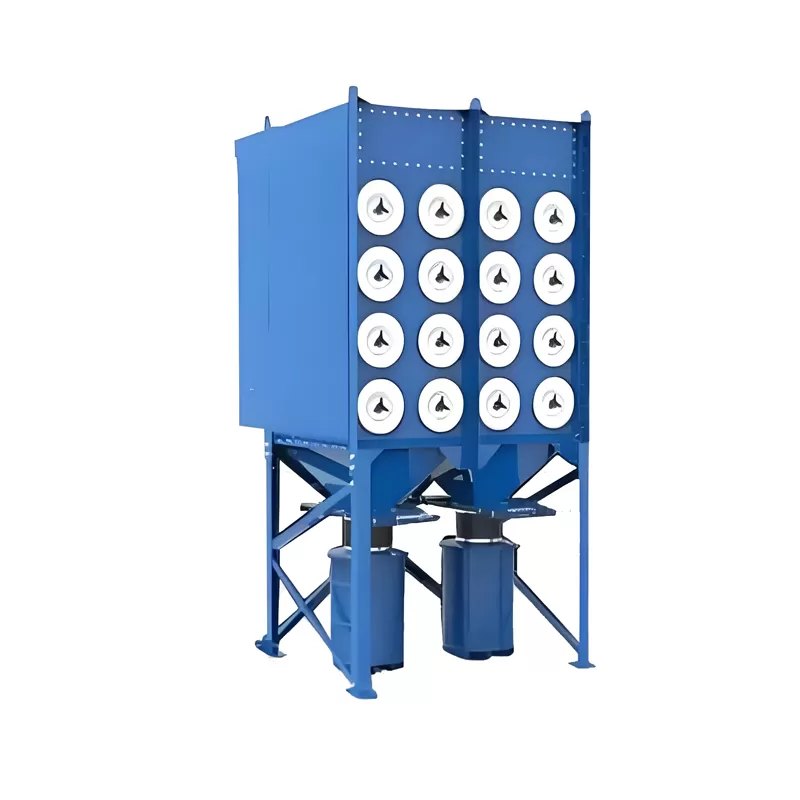
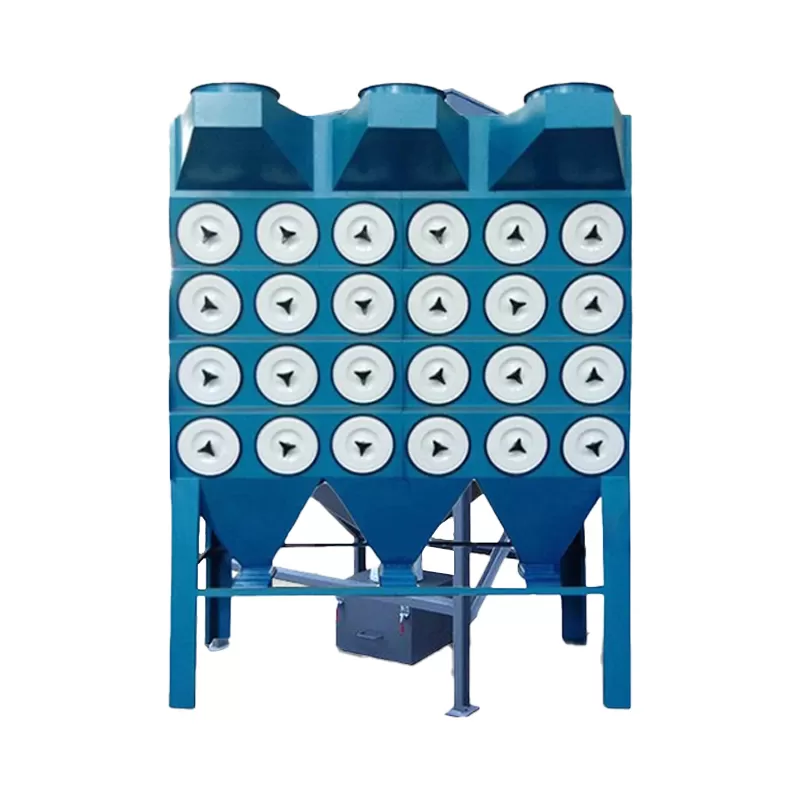
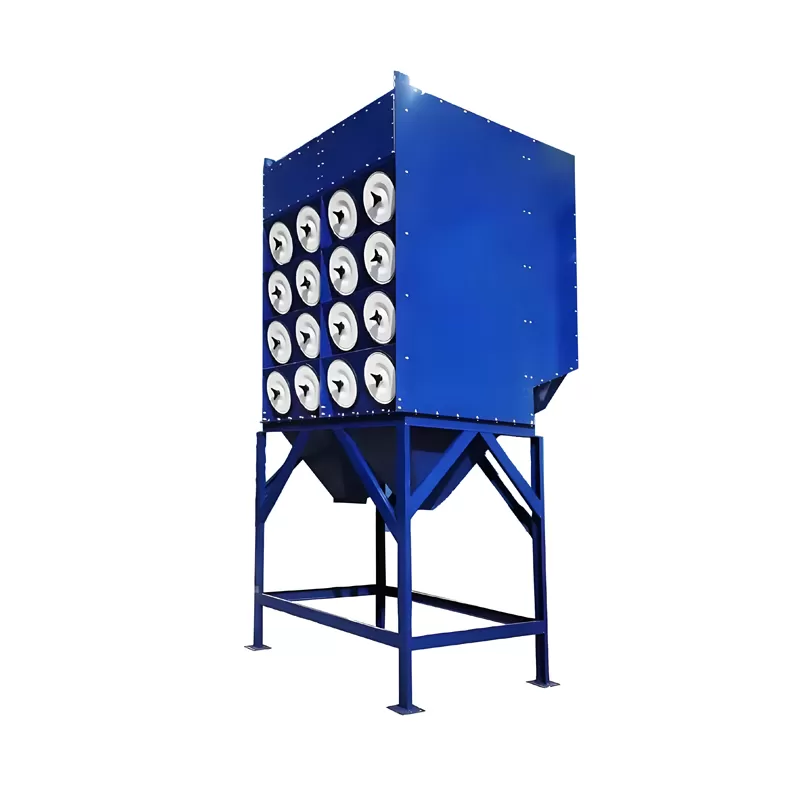
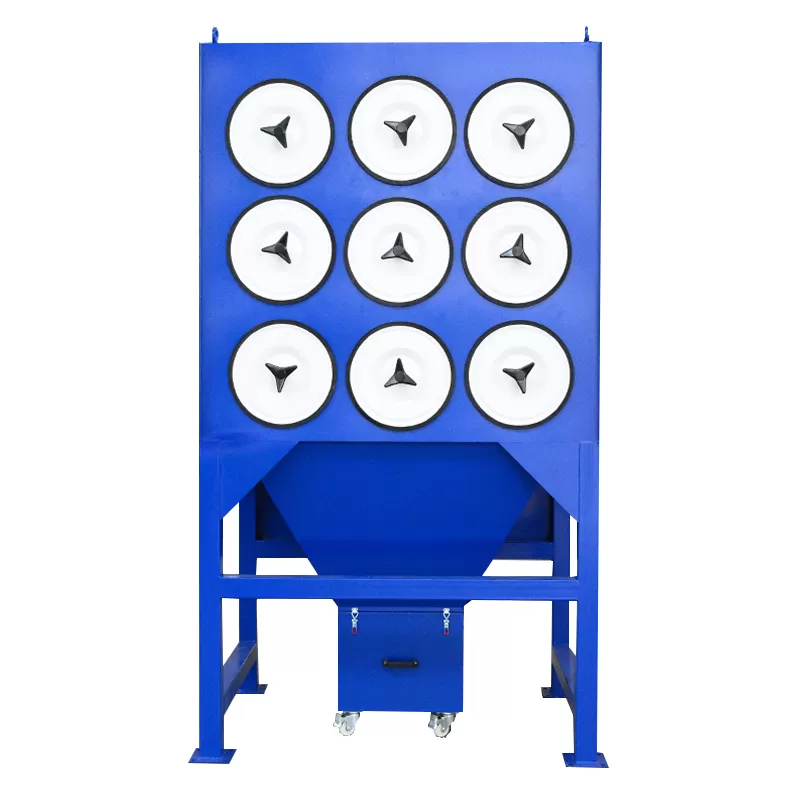
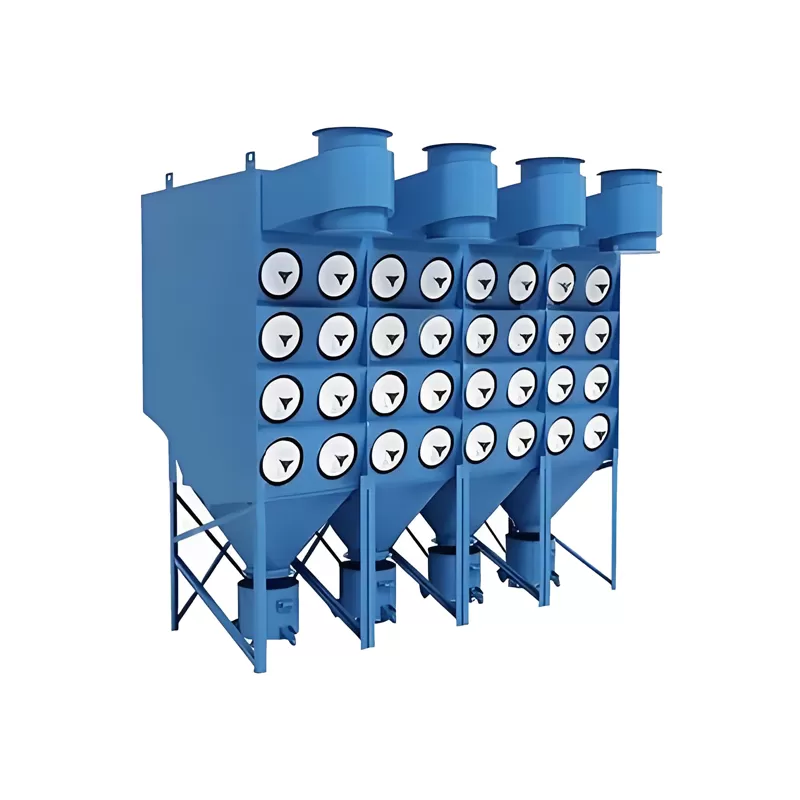
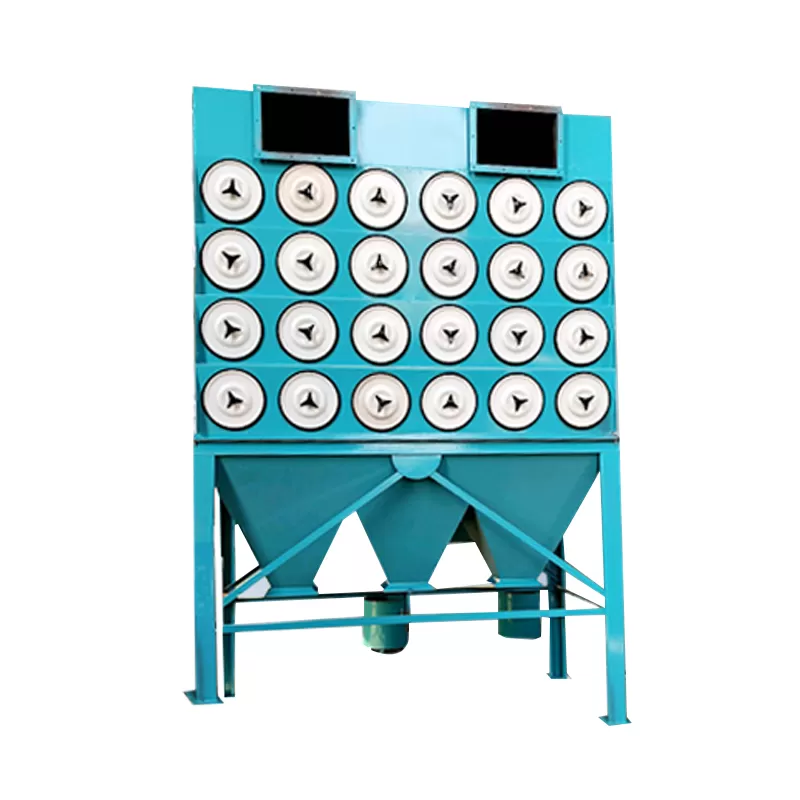
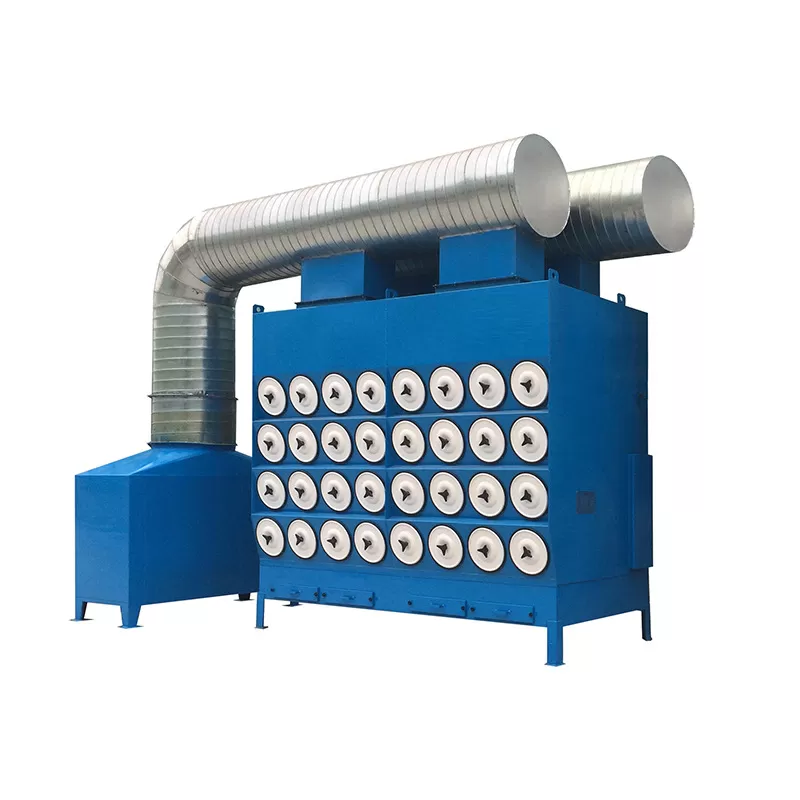
Cartridge dust collector for industrial extraction
CDC collectors use pleated cartridge filters, pulse-jet cleaning and a separate clean-air section. Compare airflow, element count, power and dimensions in the complete model table, followed by the media, connections and operating references.
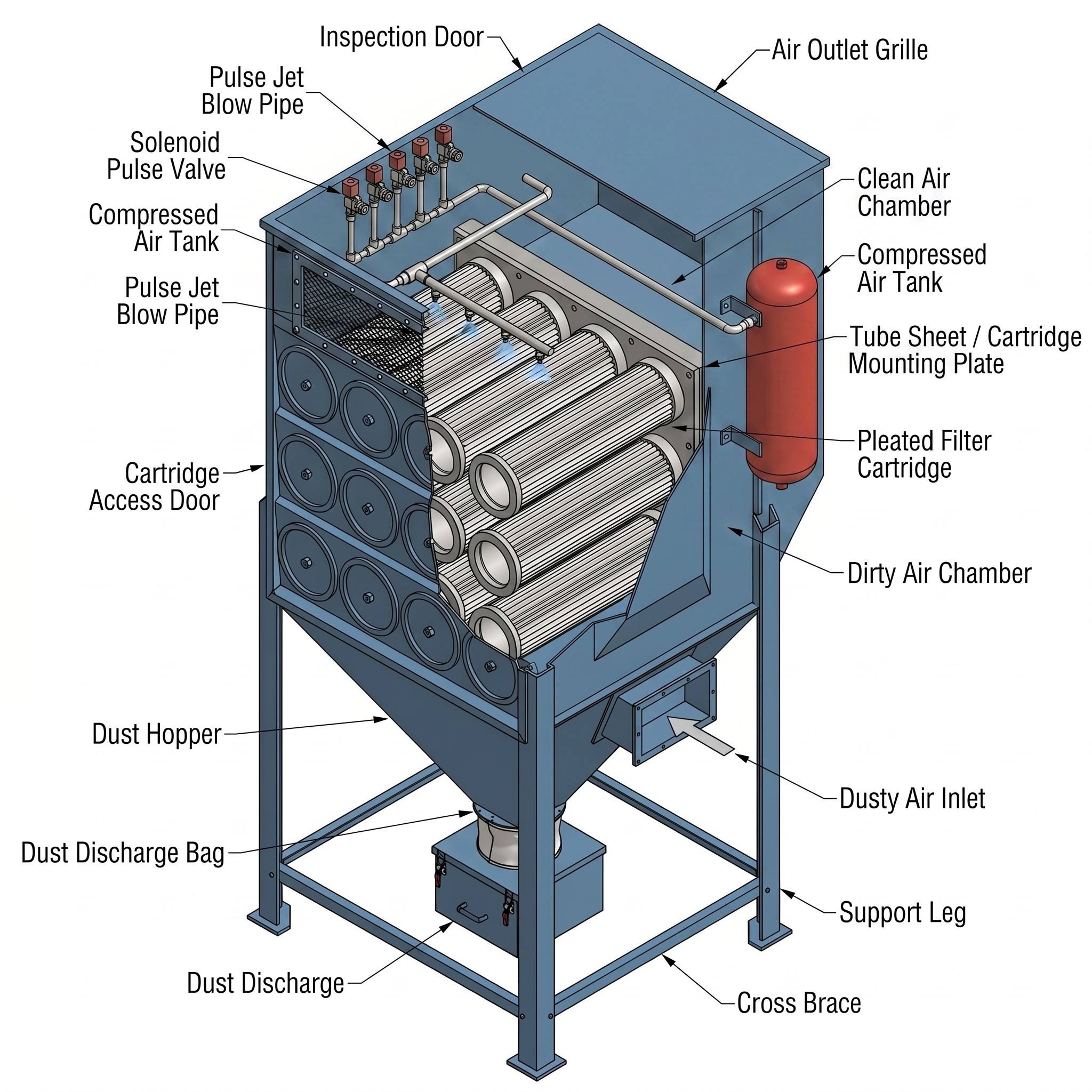
Pleated filter elements
The cartridge arrangement offers a different layout from conventional long bags. Confirm the media type, element dimensions and replacement access for the selected model.
Pulse-jet cleaning
Compressed-air pulses remove accumulated dust from the filter surface. The cleaning arrangement and air supply must suit the process loading.
CDC model comparison
Published CDC entries include cartridge count, fan power, airflow and dimensions. Use a complete model row for comparison rather than mixing values from different sizes.
CDC cartridge collector models and specifications
Use these catalog values to shortlist equipment for a technical discussion. Confirm airflow at the required system resistance, electrical conditions, media selection and the efficiency test basis before ordering. Cartridge quantity alone does not establish usable filtration area or system capacity.
CDC model specifications — airflow, cartridges, power and dimensions| Model | Cartridges (pcs) | Power (kW) | Air Volume (m³/h) | Cleaning Method | Efficiency (%) | Dimensions (mm) |
|---|
| CDC-2 | 2 | 2.2 | 2200 | Pulse Jet | 99.5 | 600×800×1800 |
| CDC-4 | 4 | 3.0 | 3000 | Pulse Jet | 99.7 | 800×800×2000 |
| CDC-6 | 6 | 5.5 | 6000 | Pulse Jet | 99.8 | 1200×1000×2200 |
| CDC-9 | 9 | 7.5 | 7000 | Pulse Jet | 99.9 | 1200×1500×2300 |
| CDC-24 | 24 | 3.0 | 3000 | Pulse Jet | 99.9 | 1220×880×4000 |
| CDC-48 | 48 | 5.5 | 5000 | Pulse Jet | 99.9 | 1560×1290×4000 |
| CDC-100 | 100 | 11 | 10,000 | Pulse Jet | 99.9 | 1900×1900×4500 |
| CDC-150 | 150 | 15 | 15,000 | Pulse Jet | 99.9 | 2300×2100×4700 |
| CDC-200 | 200 | 18.5 | 20,000 | Pulse Jet | 99.9 | 2600×2300×4800 |
| CDC-250 | 250 | 22 | 25,000 | Pulse Jet | 99.9 | 2900×2500×4900 |
The table reports different efficiencies for different models. These are catalog ratings, not a single guaranteed value for every particle size or operating condition. Specify the required outlet concentration separately from a percentage collection efficiency.
CDC cartridge collector construction and operating references
These are configuration-dependent catalog ranges and component references, not a universal specification. Final dimensions, flange details, bolt patterns and weight must come from the selected model drawing; range endpoints do not identify matching connections. Operating values require the quoted duty and measurement basis.
CDC connection, media and operating references — configuration dependent| Parameter / component | Published reference |
|---|
| Inlet flange options | DN200–DN1200 |
| Outlet flange options | DN200–DN1000 |
| Bolt-circle diameter (BCD) | 150–1,100 mm |
| Access-door reference | 400×600 mm |
| Published unit-weight range | 450–18,000 kg; selected configuration governs |
| Pulse-cleaning air reference | 0.45–0.65 MPa; confirm at collector connection for selected model |
| Initial resistance | 110–160 Pa; filter condition and measurement basis to be confirmed |
| Final resistance reference | 1,200–1,500 Pa; not a universal alarm or cleaning setpoint |
| Air-to-cloth reference | 0.8–1.3 m/min; configuration and dust dependent |
| Housing options | Galvanized / powder-coated steel / stainless steel304; Q235 also listed |
| Filter-media options | Polyester spunbond / PTFE-coated; cellulose and fire-retardant options listed, subject to duty review |
| Seal options | Silicone / EPDM |
| Coating options | Epoxy / polyurethane |
| Cleaning system | Pulse jet |
CALCULATION & COMMISSIONING CHECK
CDC-4: distinguish airflow per element from media loading
The CDC-4 row lists 3,000 m³/h and four cartridges. Dividing those catalog entries produces a count-normalized comparison:
3,000 m³/h ÷ 4 cartridges = 750 m³/h per cartridge
This is not an air-to-media velocity, an element rating or a basis for scaling another CDC model. That calculation needs the effective media area per cartridge: v = Q ÷ (60 × n × a), where Q is actual m³/h, n is the online cartridge count and a is effective m² per cartridge. Confirm a from the selected element documentation; neither the cartridge count nor external dimensions provide it.
Inspect the element-to-clean-air interface
Record the cartridge part number, gasket profile and seating arrangement before approving replacement elements. A dimensionally similar cartridge may have a different media area or seal.
In the isolated inspection plan, distinguish pleat damage or persistent dust bridging from end-cap, gasket and mounting defects. Document affected positions rather than treating every pressure change as exhausted media.
Identify the pressure-sensing points and check that recorded comparisons refer to the same airflow and cleaning condition. Include outlet observations when assessing suspected bypass.
The EPA cartridge-filter discussion explains why pleat cleanability and mounting integrity need separate consideration.
Cartridge filtration and pulse cleaning
Dust-laden air reaches the filter section, particulate collects on the cartridge media, and filtered air passes into the clean-air side. Pulse cleaning releases deposited material into the hopper or collection bin. The fan must provide the required extraction airflow against the resistance of the collector and connected ductwork.
Pleat geometry and dust behavior matter: a compact filter arrangement is not automatically suitable for sticky, damp or heavily loaded dust. Share how the material behaves during collection so media, pretreatment and cleaning requirements can be reviewed.

Cartridge media, materials and application fit
Match the filter to the particulate
Published options include polyester spunbond and PTFE-coated media. Fire-retardant options are also listed, but that description does not establish explosion protection or eliminate ignition risk. Confirm the exact media grade, temperature limits, dust compatibility and replacement-element specification.
Choose the housing and collection arrangement
Construction options include galvanized steel, powder-coated steel and stainless steel 304. Define corrosion exposure, cleaning requirements, indoor or outdoor location and the preferred dust-discharge method. Check whether the quotation includes the fan, controls, collection bin, rotary valve and connecting ductwork.
Review the process, not just the industry
Potential inquiries include welding, grinding, polishing and industrial powder handling. Provide particulate composition and any fumes, gases, sparks, moisture or combustible-dust concerns. A particulate collector should not be assumed to remove gaseous contaminants or make recirculated air suitable for breathing.
Cartridge dust collector quotation checklist
Normal and peak airflow, extraction-point arrangement and estimated duct resistance.
Dust composition, particle-size information, loading, moisture and temperature profile.
Outlet-emission or air-quality requirement and the proposed measurement method.
Cartridge-change clearance, service access, footprint, height and dust-bin handling space.
Electrical supply, available compressed air, control interfaces and installation location.
Ask for the model datasheet, arrangement drawing, spare-cartridge specification and a clear supply boundary. Compare maintenance access and consumable requirements alongside the initial equipment cost. If the process needs a different filter layout, review the baghouse dust collector range; for planned capacity additions, review modular dust collection.
ENGINEERING CHECK
Cartridge engineering checks: usable media and sealing details
Look beyond the number of cartridges
Request filtration area per element, total installed area, media type and the proposed loading basis. Two collectors with the same cartridge count may use different element dimensions and pleat arrangements.
Closely spaced pleats provide more nominal area, but the dust must still release during cleaning. Ask how the selected element addresses the actual particle size, cohesion and moisture rather than assuming that more pleats always mean more usable capacity.
Specify the complete replacement element
Record the element part number, length, diameter, mounting arrangement, gasket profile, end-cap construction and media specification. Include the temperature and chemical limits of the complete cartridge assembly—not just its filter fabric.
Request a drawing showing withdrawal clearance and how a replacement element seals against the clean-air opening. A catalog efficiency describes a defined test condition; it does not rule out bypass through an incorrectly seated element or an unsuitable seal.
The EPA cartridge-filter engineering discussion describes pleat cleanability and mounting/sealing considerations. Use those principles to question a proposal; its historical example dimensions and efficiencies are not SENOTAY specifications.
Where the collector is part of a wider workshop extraction project, review SENOTAY’s extraction-equipment range before deciding whether the quotation needs separate local-capture, ventilation or dust-discharge equipment.
Quality documentation for industrial filtration
SENOTAY publishes ISO 9001:2015, ISO 14001:2015 and ISO 45001:2018 management-system certificates for Hebei Outai on the Quality Control & Certifications page. These concern the manufacturer’s management systems, not blanket product approval. Request current copies and confirm the documentation required for your selected model, configuration and destination before ordering.
Cartridge dust collector procurement FAQs
How do I select a CDC model?
Start with airflow at the operating resistance and the dust conditions. Confirm media area, cartridge arrangement, cleaning capacity and service access on the selected model’s datasheet.
Is 99.9% efficiency standard for every CDC unit?
No. The published table lists different values by model. Ask for the particle-size and test basis relevant to your duty, and agree the outlet performance required for the project.
When do cartridges need replacement?
Use the operating manual, pressure-drop history, outlet performance and element condition to plan replacement. Pulse cleaning does not make cartridges permanent, and service life varies with duty.
Can the collector handle combustible dust?
Provide the dust hazard assessment and destination requirements for a configuration review. Fire-retardant media alone is not a complete explosion-protection system, and no blanket ATEX approval is claimed here.
Request a CDC cartridge collector quotation
Send your airflow, dust characteristics, installation space and discharge preference. Ask for a model-specific selection that defines media, utilities, supplied components and performance acceptance conditions.