
HEBEIOUTAI ENVIRONMENTAL PROTECTION EQUIPMENT CO., LTD.
Silicone Bag Cage
Silicone Bag Cage
Silicone Bag Cage
Silicone Bag Cage
Silicone Bag Cage

Silicone Bag Cage

SENOTAY silicone bag cages use a coated metal framework to support filter bags. Select the SBC configuration by substrate, connection and coating specification, then confirm complete assembly compatibility with the operating gas and filter media. Temperature and chemical limits must be established for the quoted construction.

  • SBC-01: carbon steel;60 µm coating; flange connection.

  • SBC-06: steel wire;100 µm coating; quick-lock connection.

  • Listed dimensional options include 2000–4000 mm lengths.

Request a quotation Email specifications

Contact us

Silicone bag cages: coating specification and replacement fit

A silicone bag cage should be specified as a metal support plus an identified coating system. SENOTAY lists SBC configurations with different substrates, coating thicknesses and connections. The useful purchasing question is whether the complete cage and bag combination fits the collector and remains compatible with its temperature, moisture and gas chemistry.

SBC-01 COATING

60 µm

0.060 mm unit conversion; flange connection.

SBC-06 COATING

100 µm

0.100 mm unit conversion; quick lock.

LENGTH OPTIONS

2000–4000 mm

Separate dimensional choices; verify model mapping.

CAGE DIAMETERS

120–165 mm

Listed options include 120, 130, 150, 160 and 165 mm.

SBC material, coating and connection references

SBC model references — coating thickness is model-specific
Type No.Base MaterialSilicone Coating ThicknessConnection Type
SBC-01Carbon steel60 µmFlange
SBC-02Stainless steel80 µmSnap ring
SBC-03Alloy steel70 µmClamp ring
SBC-04Mild steel50 µmVenturi
SBC-05Galvanized base60 µmThreaded
SBC-06Steel wire100 µmQuick lock
SBC-07Carbon steel reinforced90 µmCollar band
SBC-08Stainless 30485 µmHook end
SBC-09Hot-dip base95 µmWelded type
SBC-10Custom alloy120 µmCustomized

The SBC table lists coatings from 50 to 120 µm. Confirm the coating formulation, cure, thickness measurement and substrate preparation for the selected model. These values are not a universal temperature or chemical-resistance rating.

Additional dimensional options for quotation

Dimensional options — not assigned to SBC model numbers
ParameterListed options
Wire Diameter (Core Steel)4.0 mm; 4.5 mm; 5.0 mm; 5.5 mm; 6.0 mm
Standard Cage Diameter120 mm; 130 mm; 150 mm; 160 mm; 165 mm
Standard Cage Length2000 mm; 2500 mm; 3000 mm; 3500 mm; 4000 mm
Vertical Rib Count8 Ribs; 10 Ribs; 12 Ribs; 14 Ribs; 16 Ribs
Weight per Meter (Avg.)1.8 kg/m; 2.1 kg/m; 2.4 kg/m; 2.7 kg/m; 3.0 kg/m
Top Collar Thickness3.0 mm; 3.5 mm; 4.0 mm; 4.5 mm; 5.0 mm

These separate dimensional options are not a second numbered model series and must not be combined by column as a verified assembly. Ask for a drawing that matches the chosen cage diameter, length, wire support, collar and mass to the selected coating and connection.

Coated framework features to specify

Identify the coating system

Request the coating formulation or product specification, substrate preparation, cure requirements and inspection criteria. The word silicone does not identify every property of the finished surface, and thickness alone does not prove adhesion or corrosion resistance.

Match the substrate and connection

The SBC series includes carbon, stainless and other listed steel descriptions with flange, snap-ring, clamp, venturi, threaded and quick-lock connections. Confirm the actual material grade and joint drawing rather than assuming all coated frames are equivalent.

Check bag-contact surfaces

The coating should be assessed together with welds, wire ends, rings and collars. Specify acceptable surface defects and handling protection. A coated frame can still develop damage, protrusions or worn areas; it is not a guarantee against fabric abrasion.

Review electrical and hazard requirements

Do not infer that a non-conductive coating eliminates static risk. Dust hazards, bonding/grounding arrangements and electrical continuity where required need an assessment of the complete collector and components by qualified personnel.

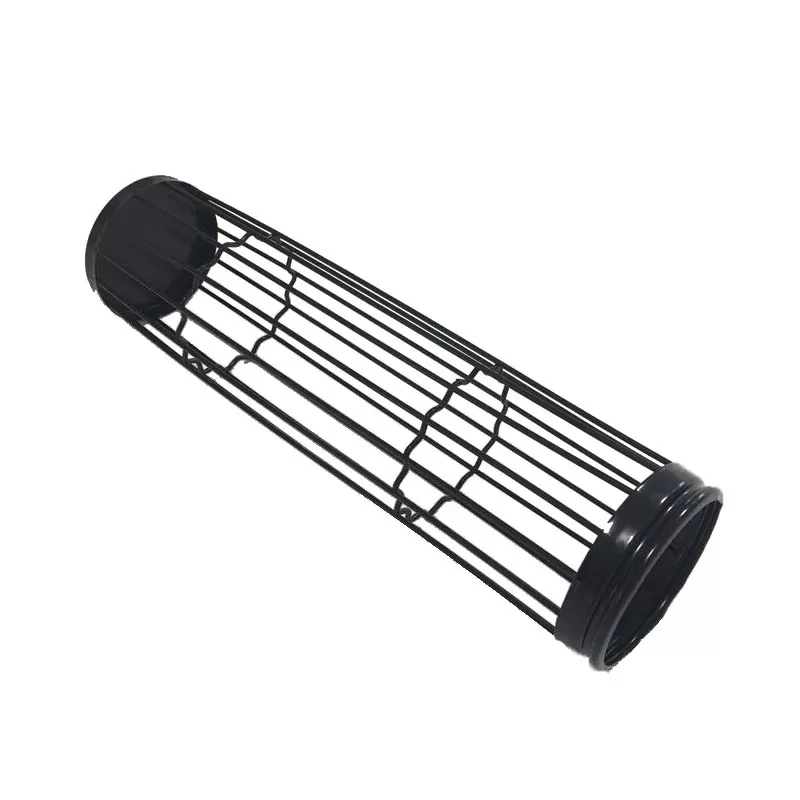
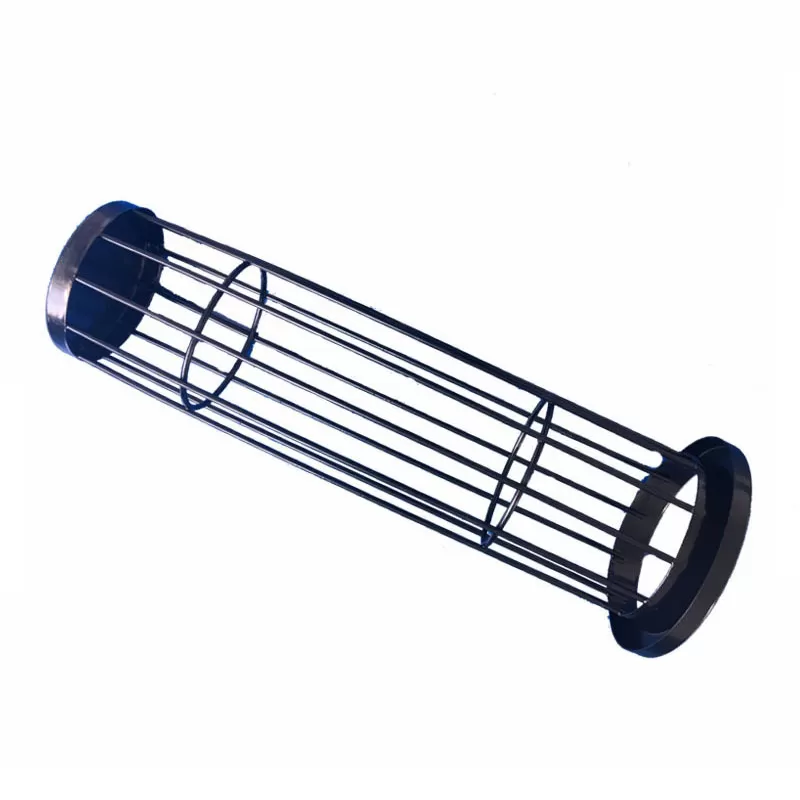
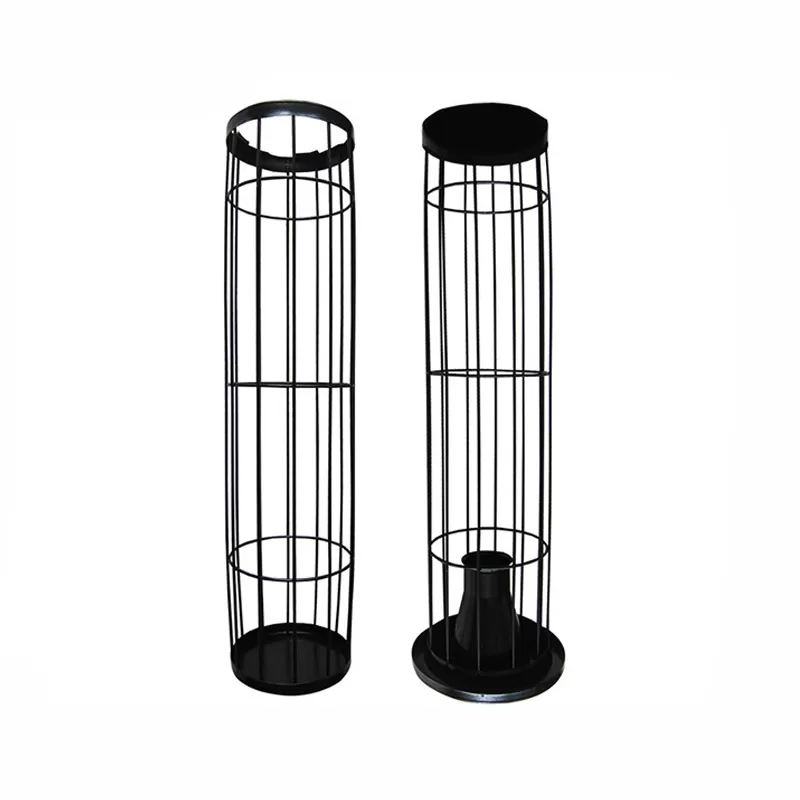
Two black-coated round bag cages, including a venturi-equipped configuration

Product photograph shows a component example. Confirm the ordered profile, finish and connections on the approved drawing; appearance alone does not establish the material grade or operating limits.

Compatibility checklist for silicone-coated baghouse cages

Separate mechanical fit from coating approval. A correct diameter does not establish chemical compatibility, and a suitable coating does not establish bag-to-cage fit. Supply operating extremes and shutdown conditions, not only the average gas temperature.

Silicone-coated cage purchase specification
Specification areaBuyer informationQuotation confirmation
DimensionsCage length/profile, collar, bottom, joints and tube-sheet interfaceDrawing matched to the bag and collector
FrameworkWire gauge/count, ring spacing and section arrangementSupport appropriate to the selected media
CoatingFormulation, target thickness and desired inspection/test evidenceSubstrate preparation, cure and acceptance criteria
ServiceNormal/peak temperature, wet shutdowns, condensate and cleaning chemicalsComplete-assembly operating envelope
Special requirementsHazard assessment, bonding/continuity and destination documentationConfiguration-specific obligations; no generic safety approval

Coating inspection and maintenance planning

Inspect delivered cages for straightness, weld/contact-surface condition, coating discontinuities and transport damage. Where thickness or adhesion testing is required, agree the measurement method and locations on the purchase specification. Do not interpret a hardness scale, salt-spray duration or test name without its actual specimen and acceptance basis.

Store and handle coated cages so that frames do not rub against sharp edges or scrape during insertion. During an approved outage, compare worn or discolored coating areas with bag wear and contact points. Repeated local damage should prompt review of fit, handling and service chemistry rather than simply applying a thicker coating.

General cage construction guidance explains why baghouse design and filter media govern cage selection. It is background information, not a specification or test report for the SBC range.

Use in demanding duties only after configuration review

Coated cages may be considered for compatible cement, metal-processing, power, chemical and other filtration duties. Incineration, food, pharmaceutical and combustible-dust applications require additional process-specific review. Neither the coating name nor a stainless substrate alone establishes hygienic suitability, explosion protection, chemical immunity or a universal high-temperature limit.

Quality documents and purchase inspection

SENOTAY publishes ISO 9001:2015, ISO 14001:2015 and ISO 45001:2018 management-system certificates for Hebei Outai on the Quality Control & Certifications page. Request current copies and confirm scope. These management documents are not blanket product certification or proof that a particular cage meets every destination requirement.

Define the inspection package in the purchase order: approved drawing revision, material identification, dimensional checks, joint and weld condition, coating/finish requirements and packing protection. Where test reports are required, agree the test method, sample, acceptance criteria and reporting before manufacture. Confirm applicable product conformity documentation for the quoted configuration rather than relying on a generic badge.

Buyer questions

Is 60 µm the same as 0.25 mm?

No. 60 µm equals 0.060 mm; 0.25 mm equals 250 µm. Coating values must refer to the same specified construction and measurement basis. Use the SBC model reference and confirmed coating datasheet rather than mixing unrelated ranges.

Can the SBC dimensional options be combined freely?

Not without a confirmed drawing. The separate dimensional table lists options but does not map every length, diameter, wire gauge and collar thickness to an SBC model.

Does a silicone coating make the cage safe for combustible dust?

No. Electrical behavior, dust characteristics and the complete system’s protective measures require a suitable hazard assessment. A non-conductive surface is not a substitute for bonding or other required safeguards.

What operating temperature should be used for selection?

Request approved normal and peak limits for the actual substrate, coating and bag assembly, including exposure duration and chemistry. No generic SBC temperature is assumed across different constructions.

Related baghouse replacement components

Match the filter bag and cage together. Compare the relevant cage geometry, finish and filter media rather than treating similar-looking replacement parts as interchangeable.

Request a silicone bag cage specification review

Send the cage/bag drawings, SBC reference, substrate and coating requirements, connection details and quantity. Add normal/peak temperatures, gas and condensate chemistry, inspection requirements and any electrical or hazardous-duty conditions.

Send your drawing and quantity Email specifications