
EN
What are you looking for?
Industrial dust collection systems are kinda vital for air purification around manufacturing facilities, but you also have to keep an eye on the Baghouse Operating Costs. That part is always a balancing act—like, immediate maintenance vs long-term energy use variables, because everything kinda stacks on each other. For plant operators using Senotay filtration solutions, system optimization helps cut overhead and still keeps a sort of steady alignment between how long structural parts last and those lower utility bills.
System optimization reduces day-to-day operational risks while also stretching the useful service life of industrial filtration assets.
Advanced particulate collection reduces emissions fines, so you stay in steady compliance with environmental regulatory requirements.
Aligning maintenance intervals well prevents those catastrophic failure vectors that cause unexpected facility downtime.
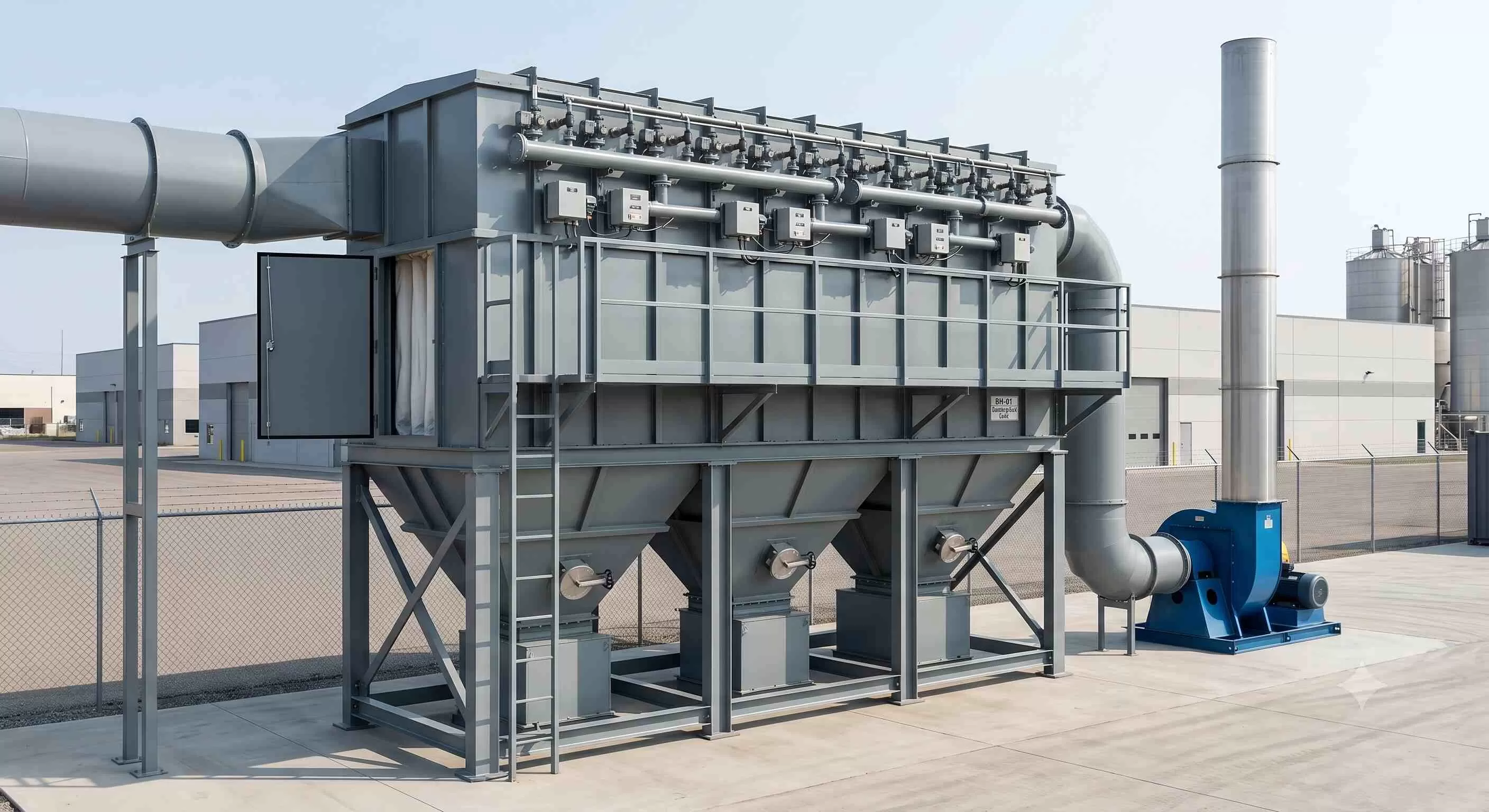
To optimize industrial dust collectors, engineers have to look at where the power is really going. The main consumers are the exhaust fan blower and the compressed air regeneration system. The fan runs continuously to pull particulate-laden air through the dense filter media, while the pulse-jet setup fires sudden bursts of pressurized air to knock off dust cakes. If you isolate these areas, you can get a meaningful Baghouse Cost Reduction, without putting plant air quality metrics in danger.
The main system fan is usually the biggest source of electricity used inside a factory air filtration setup, ya know, like the whole air cleaning line. The electrical demand for this fan tends to track with the differential pressure, written as ΔP, basically that pressure swings between the clean-air plenum up top and the dirty-air housing down below. Blindness starts to happen when the fabric filters start to foul—particulate matter gets packed in and clogs the media. If you add a Variable Frequency Drive (VFD) you can nudge the fan motor speed, kind of in real time, using the current ΔP readings.
Running the fan around an optimized pressure drop of 3 to 5 inches WG (water gauge) helps keep the volumetric flow up near its best.
Using a VFD system instead of relying on mechanical dampers reduces that extra energy “brake” effect.
The compressed air network is another major chunk of industrial energy use, it is not small. In older arrangements, the pulse-jet cleaning is typically continuous and timer-driven, so it blasts on a fixed rhythm, even when you do not really need it. That means compressed air is wasted, and the fabric gets hit with more mechanical fatigue than it should. Switching to an automated clean-on-demand layout makes the pulse valves fire only when the differential pressure climbs past a chosen high point.
Clean-on-demand setups help restrain the unnecessary pulse rate, which in turn reduces the repeated flexing that can split bag seams.
When you dial the pulse header pressure to about 90 PSI, you lower the burden on the facility air compressors.
Buying premium filter materials is sort of a cornerstone move if you want to push down the real total cost of ownership. When you upgrade to enhanced ePTFE ( expanded polytetrafluoroethylene ) membranes, or swap in pleated filter elements, the whole money equation changes. These upgraded materials help stop deep particle intrusion, keeping dust on the surface instead, so it gets held in place where it can be shaken loose again during regular pulsing cycles. That tends to keep baseline resistance lower, year after year , even when operating conditions swing a bit.
And for the day to day reliability, the best results usually come from structured preventative maintenance workflows, not from waiting until something fails then scrambling. If you ignore small system leaks or let pulse valves drift out of spec, dust collector efficiency can drop pretty fast. Maintenance teams should run routine visual inspections during planned shutdown windows. The key things to look at are internal filter cages, tubesheet seal condition, and making sure the dust removal hoppers keep emptying smoothly, because otherwise dust can get re-entrained back into the airflow and turn into a safety issue.
Inspecting the inner filter support cages helps prevent wire corrosion from slowly abrading ,or worse slicing, the fabric media.
Checking tubesheet structural integrity ensures that dirty air cannot sneak around the filter bags and end up bypassing into clean plenums.
Modern industrial dust collection is increasingly driven by digital monitoring setups that help manage ongoing expenses. When a plant adds automated monitoring controls, it kind of shifts maintenance from a simple calendar approach into something more predictive and data-centered. By tracking differential pressure trends, spotting emissions surges early, and watching compressed air usage, the system can flag small mechanical deviations before they grow into bigger failures.
Systemic failure inside heavy air filtration loops often comes back to stuff like predictable mechanical stress, and it’s not totally random. When you look at the usual failure modes ahead of time, industrial teams can roll out focused preventative protocols before parts end up with permanent, irreversible damage. High moisture in the incoming air stream can create severe material mudding, basically sticky dust buildup on the filter bags, and then if the blowpipe is mechanically misaligned the high velocity air can start “chewing” through the bag tops.
Install auxiliary inline air dryers to remove moisture from the compressed air lines, so dust cake mudding gets stopped early.
Verify mechanical alignment of blowpipe nozzles so the air pulses go straight down through the filter centers.
Before approving next year's capital allocation budgets, or actually executing an RFQ request for quote for replacement parts sourcing procurement managers should quietly run through this validation checklist… to maximize value:
Do a quick cross reference of replacement filter media dimensions against OEM tolerances, so you get tight tube sheet fits that stay dust free
Look at the real lifecycle value of advanced fabric treatments, rather than defaulting to whatever has the lowest upfront price
Confirm the replacement pulse jet valves show certified industrial reliability ratings, for millions of cycles without drama
What is filter blinding and how does it mess with system costs?
Filter blinding happens when fine particulate matter embeds deep within the inner fabric fibers, instead of just sitting on the surface. That deeper plugging can’t be pushed out by pulse jet cleaning, so the fans end up pulling more electricity to hold the required design airflow.
How is a clean on demand system different from a traditional timer based setup?
Timer based setups trigger pressurized air pulses at fixed time intervals, even if the bags don’t look that dirty. Clean on demand systems use differential pressure sensors, to start the cleaning only when dust cakes reach a set thickness, which saves compressed air.
Why is compressed air quality critical for optimizing industrial dust collector operations?
If the compressed air used for cleaning includes oil or water vapor from plant compressors, it can mix with dry dust on the bags. That combination forms a stubborn crust that essentially ruins filter permeability in practice, and then energy costs go up.