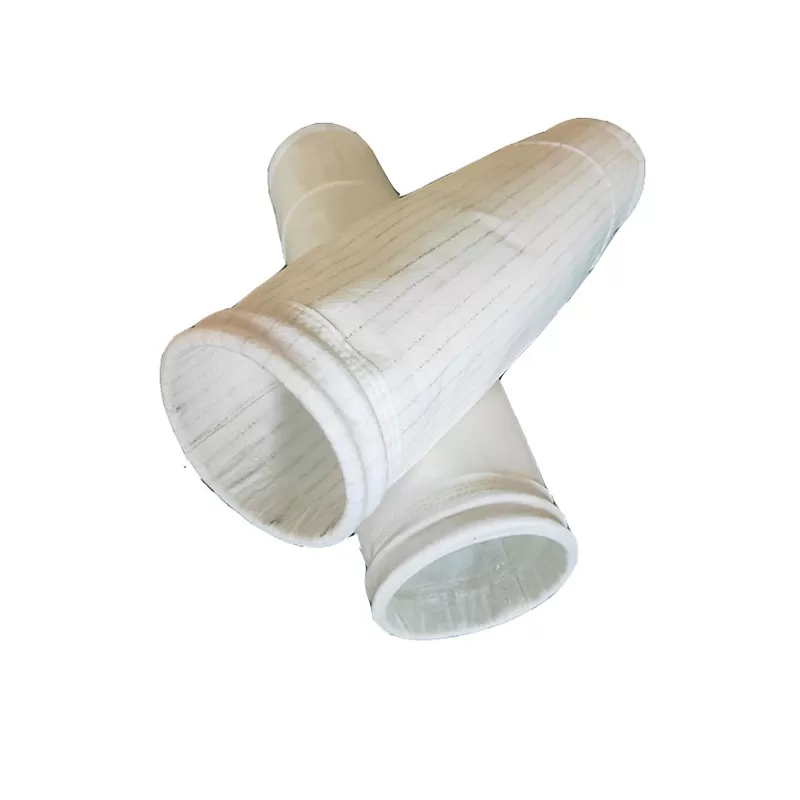
PFB polyester filter bags: size, material and replacement fit
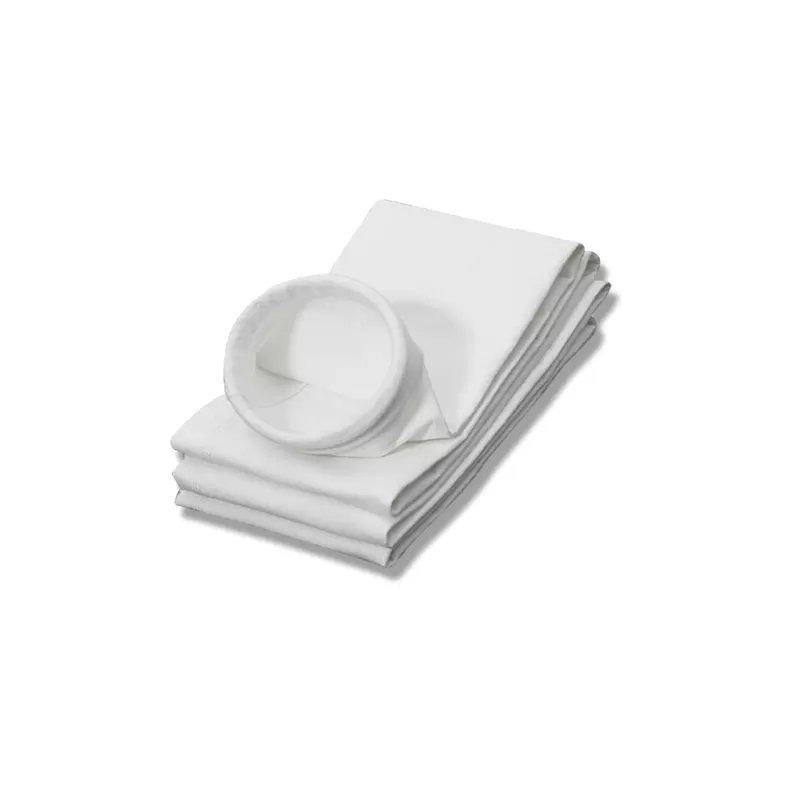
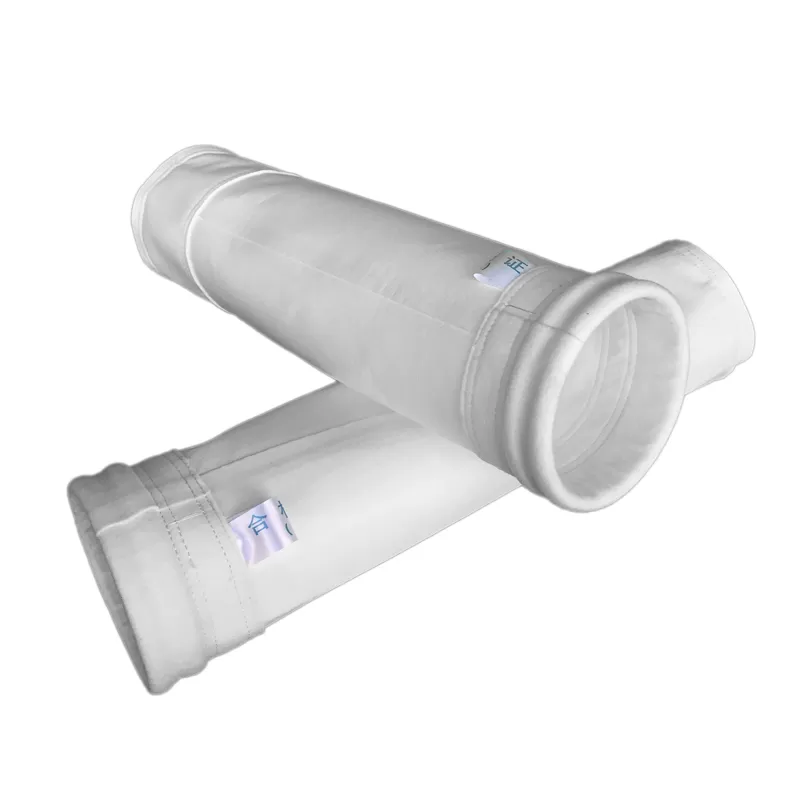
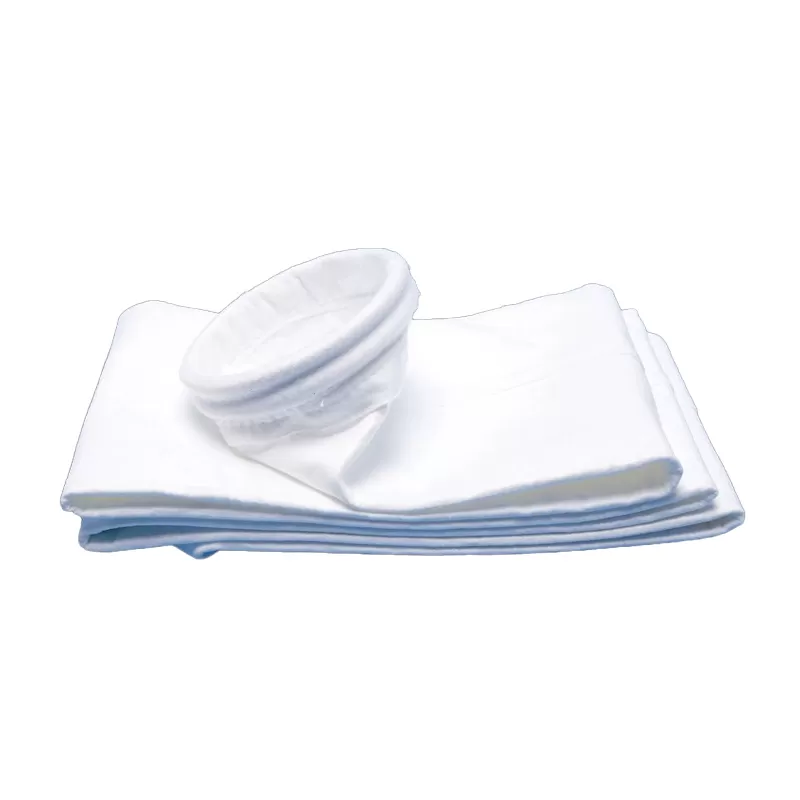
Select a polyester needle felt filter bag by its complete construction, not by diameter alone. SENOTAY lists cylindrical PFB options for dry mineral, milling, material-handling and other compatible dust duties. PTFE coating is a surface-treatment option in this range; it does not turn the polyester substrate into a high-temperature PTFE-fiber bag.
500 ±10 g/m²
Published base-fabric mass
1.7–1.8 mm
Published fabric thickness
40–60 L/m²/s
Air permeability at 200 Pa
100–280 mm
PFB family diameter references
Base-fabric references are for specification comparison. The listed continuous limit is below 110 °C and the transient reference is below 130 °C; confirm exposure duration, gas chemistry and the complete sewn assembly before ordering.
Polyester filter bag models and technical specifications
Standard bag dimensions and nominal filter area
Model designations are retained as published, including PFB-1OS and PF prefixes. Confirm the exact code and connection drawing in the quotation. Listed area is nominal cylindrical area, not a promise of system airflow.
Model Code | PFB-130×2000 | PFB-130×2500 | PFB-150×2000 | PFB-1OS-150×3000 | PFB-180×2500 | PF-180×3200 | PF-200×3000 | PF-200×4000 |
|---|
Diameter (mm) | 130 | 130 | 150 | 150 | 180 | 180 | 200 | 200 |
Length (mm) | 2000 | 2500 | 2000 | 3000 | 2500 | 3200 | 3000 | 4000 |
Filter Area (m²) | 0.82 | 1.02 | 0.94 | 1.41 | 1.41 | 1.81 | 1.88 | 2.51 |
Weight (g/m²) | 500 ±10 | 500 ±10 | 500 ±10 | 500 ±10 | 500 ±10 | 500 ±10 | 500 ±10 | 500 ±10 |
Air Permeability (L/m²/s) | 40–60 | 40–60 | 40–60 | 40–60 | 40–60 | 40–60 | 40–60 | 40–60 |
Max Continuous Temp (°C) | <110 | <110 | <110 | <110 | <110 | <110 | <110 | <110 |
Base polyester needle-felt material specification
Air permeability is measured at a stated 200 Pa fabric test differential. It is not the operating pressure drop of an installed, dust-loaded baghouse.
product name: | Polyester needle felt filter bag |
|---|
Fiber Type | Polyester |
| Weight (g/m²) | 500±10 |
Thickness(mm) | 1.7-1.8 |
Tensile strength (N/5×20cm) | vertical | >1200 |
Weft | >1400 |
| Air permeability (L/m²/s at 200 Pa) | 40-60 |
Recommended operating temperature (℃) | <110 |
Instantaneous operating temperature (℃) | < 130 |
Surface treatment process | PTFE coating |
PFB family selection references
The capture percentages below are supplier-published catalog references without a matched dust/test protocol. They are not guaranteed outlet emissions, nor proof that a larger diameter inherently captures finer particles. Temperature references must be read with the stricter<110 °C base-material limit above.
Model Code | Diameter (mm) | Length Range (mm) | Published capture reference (%) — test basis required | Air Permeability (L/m²/s) | Catalog temperature reference (°C) |
|---|
PFB-100 | 100 | 2000-3000 | 99.0-99.3 | 58 | 110 |
PFB-120 | 120 | 2000-3500 | 99.1-99.4 | 56 | 110 |
PFB-140 | 140 | 2000-4000 | 99.2-99.5 | 54 | 110 |
PFB-160 | 160 | 2000-4500 | 99.3-99.6 | 52 | 110 |
PFB-180 | 180 | 2000-5000 | 99.4-99.7 | 50 | 110 |
PFB-200 | 200 | 2000-5500 | 99.5-99.8 | 48 | 110 |
PFB-220 | 220 | 2000-6000 | 99.6-99.9 | 46 | 110 |
PFB-240 | 240 | 2000-6500 | 99.7-99.95 | 44 | 110 |
PFB-260 | 260 | 2000-7000 | 99.75-99.97 | 42 | 110 |
PFB-280 | 280 | 2000-7500 | 99.8-99.99 | 40 | 110 |
Construction and application compatibility
Needle felt combines a textile support structure with a three-dimensional fiber layer. For replacement work, confirm the specified polyester substrate, seam construction, cuff or snap-band, bottom reinforcement and finish. A PTFE-coated surface and an ePTFE membrane laminate are different constructions; order the one shown on the approved data sheet.
Dry cement-handling, limestone, crushing and grinding streams are potential applications when the gas entering the baghouse remains within the selected material’s temperature and chemical limits. Kiln or furnace exhaust is not suitable merely because the plant handles cement or metal.
Wood, grain and other combustible dusts require a process-specific fire and explosion assessment. A textile bag, coating or matching cage is not an ignition-control system.
Moisture resistance is not immunity to hydrolysis or condensation. Review start-up, shutdown, water ingress and dew-point conditions before selecting polyester for a wet or chemically aggressive stream.
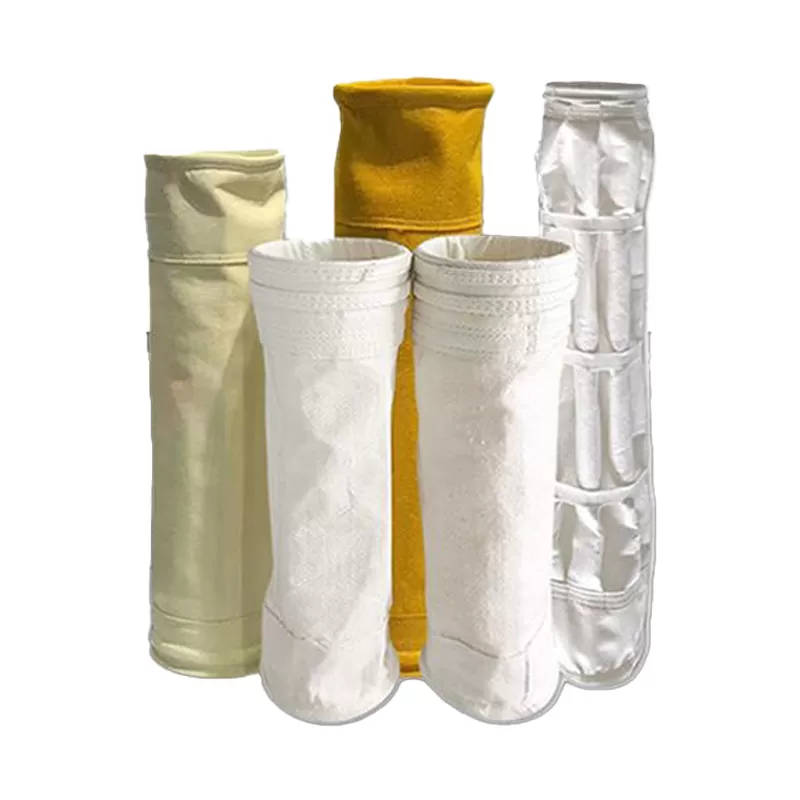
Compare alternative media in the dust filter bag range when the duty exceeds the confirmed polyester specification.
Check bag area without inventing an airflow rating
For an approximately cylindrical bag, lateral fabric area is A = π × D × L, using diameter D and length L in metres. The listed 130 × 2000 mm bag gives π × 0.130 × 2.000 ≈ 0.817 m², matching the rounded 0.82 m² catalog area. End closures, seams and inactive attachment zones can reduce effective area.
For a complete collector, filtration velocity v = Q/(60 × Aonline), where Q is actual gas flow in m³/h and Aonline is available filtering area in m²; v is in m/min. Bag count, offline compartments and the approved cleaning method therefore matter. This relationship does not establish a recommended velocity for your dust or authorize changing an existing fan duty.
Fit verification, installation and maintenance
Confirm the interface before manufacturing
Measure tube-sheet hole diameter and plate thickness separately from bag diameter. Record snap-band or cuff profile, groove position, sealing arrangement and dimensional tolerances on an approved drawing.
Confirm cage outside diameter, length, ring spacing, weld smoothness and top/Venturi interface. A sharp weld or incorrect clearance can damage otherwise suitable felt.
Identify the cleaning arrangement and pulse hardware. Do not transfer a pressure setting from another collector or increase pulse pressure to compensate for an unidentified blockage.
Inspect patterns, not just elapsed months
Use the approved isolation and access procedure before handling bags or cages. Compare differential pressure at comparable airflow and cleaning state; check pulse function, hopper discharge, condensation and leak indications before attributing a change to the media. Localized holes near cage rings, cuff bypass and widespread blinding point to different corrective actions.
The earlier 6–24 month life range is a supplier planning example, not a replacement interval or warranty. Likewise, the published Vietnam cement-plant claim of 40% longer bag life and 20% lower dust emissions needs the original baseline, run duration and test records before it can support a forecast for another plant.
Quality documents and order acceptance
Review the published ISO 9001, ISO 14001 and ISO 45001 management-system documents on our Quality Control page. They concern Hebei Outai’s management systems; they are not blanket certification of filter-bag performance or CE/ATEX approval.
For this media, request the agreed fabric mass, thickness, air-permeability method and differential, tensile specimen/orientation, finished dimensions and seam inspection criteria. A fabric coupon result does not by itself establish full-collector outlet concentration. Agree the dust, gas conditions, sampling basis and acceptance test separately.
For technical coordination, use our technical support information. Inspection scope, test reports, warranty, delivery and site-service arrangements should be confirmed in the quotation, rather than inferred from a material name.
Polyester filter bag selection questions
Can this polyester filter bag operate continuously at 130 °C?
Do not use 130 °C as a continuous rating for this listed base construction. Its material table specifies continuous operation below 110 °C and a transient reference below 130 °C. Transient duration and frequency require written confirmation; an illustration or generic FAQ is not an operating approval.
Does the PFB-280 capture more dust because it has a larger diameter?
Diameter determines geometry and affects the available area and fit. It does not independently establish collection efficiency. Compare the media construction, particle-size test, face velocity, loading, conditioning and leakage under a common test basis.
Can I replace a PTFE-coated polyester bag with a PTFE-fiber bag?
Only after checking the entire design. Coated polyester retains a polyester substrate; a PTFE-fiber bag has a different material construction. Confirm mass, permeability, cage fit, cleaning compatibility and chemical/temperature conditions rather than substituting by the word PTFE.
What should accompany a replacement sample?
Provide a drawing or measured tube-sheet/cage dimensions, connection details, quantity, normal and peak gas temperature, moisture and gas chemistry, dust properties, actual flow, cleaning arrangement and the reason the previous bags failed. A used sample alone may be stretched or damaged.
Request polyester filter bags matched to your baghouse
Send the PFB reference or current bag drawing, quantity and operating data. For polyester needle felt filter bags for dry dust collection, the quotation should identify the fabric, finish, connection geometry, dimensional tolerances and acceptance documents, together with confirmed operating limits.
Related components and media