
EN
What are you looking for?
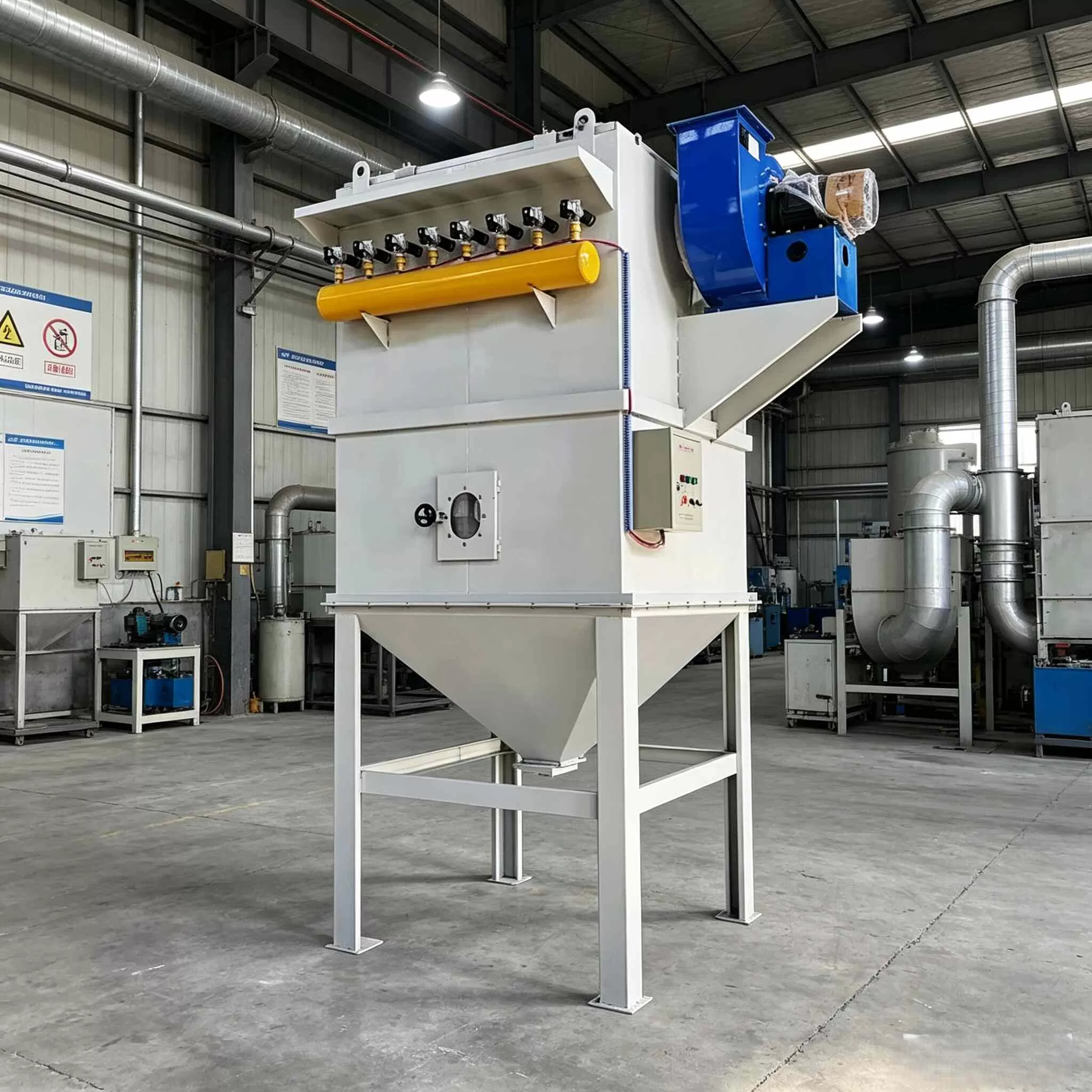
Procuring industrial Dust Collector Parts requires exact engineering data to prevent system failure, airflow drops, and regulatory non-compliance. To secure a fast, accurate commercial quote, procurement officers and plant managers must bypass generic descriptions and provide precise physical, chemical, and operational parameters. This technical guide outlines the specific data requirements needed to streamline your engineering inquiry pipeline and minimize your total cost of ownership.
Cut down on lead-time bottlenecks: see the exact data metrics Senotay engineers use to avoid those engineering revision loops and help accelerate component delivery times by as much as 40 percent.
Tune filtration effectiveness: find the correct material science selections needed to sustain uninterrupted particle removal efficiency of >99.9% for micro particles as small as 0.5 microns, not just “pretty good” performance.
Reduce compliance exposure: make sure every replacement valve, cage, and filter media follows strict international ATEX, CE, and OSHA safety rules.
Making sure your Dust Collector RFQ response comes back accurate really starts with what you define as the mechanical boundaries of your existing setup. In older, legacy routines there’s usually a lot of system wide pressure spikes, it happens because the parts get sized off estimated metrics instead of data that’s been actually taken in the field. Senotay systems lean on standard configurations across the DMC series , and this way buyers can compare and map their real mechanical requirements without too much back and forth.
Now, to make a customized Filter Parts Quote line up with what’s happening inside the plant day to day , plant engineers should run a kind of structured, three-phase verification routine before sending anything as an RFQ.
Capture real-time operational differentials. The reader should note the active differential pressure across the filter plenum, measure the exact inlet velocity , and compute the working air-to-cloth ratio. These baseline measurements help avoid procurement of undersized components that then lead to fast airflow starvation, and then you end up chasing fixes later.
Apply industrial fluid dynamics equations. Engineers must calculate total system resistance using the fundamental pressure drop equation. Factor in the specific gas velocity and dust cake resistance coefficient to verify if the replacement parts can withstand the active particulate loading without accelerating motor fatigue.
Compare the calculated results against applicable legal thresholds. Confirm the computed parameters don’t push past local air safety limits. Every data profile has to go through engineering review, so the component upgrades can still hold stack emissions under the localized regulatory ceilings before final commissioning.
Micro particle extraction is sorta tricky, because it brings serious operational hazards—mechanical abrasion, thermal degradation, and also explosive dust concentrations. When you’re sourcing components, skipping the minimum ignition energy , (MIE) or ignoring the moisture level in the exhaust gas stream will really and truly shave off usable life. Like, high moisture profiles can end up causing particulate blinding, which then basically cements the dust cake onto the media, and that turns into catastrophic pressure drops.
Key Engineering Compliance Standard:
Standard Code: ATEX Directive 2014/34/EU / NFPA 68
Critical Threshold: Minimum Ignition Energy (MIE) $< 3 \text{ mJ}$ for organic/metallic dust.
Operational Impact: Failure to isolate electrostatic discharge risks triggers immediate system ignition, violating global safety codes and terminating facility insurance protections.
How long a baghouse or electrostatic precipitator lasts usually comes down to the metallurgy, plus the surface finishing of the internal sub-components. Senotay engineering bridges that awkward gap between raw purchasing budgets and long-term reliability, by using advanced material sciences on each critical wear location, not just the obvious bits.
Filtration media fabric: buyers have to pick between plain polyester needle punched felt, or more advanced PTFE membranes. PTFE options can stretch filter bag service life by around 40% in chemically aggressive or high humidity operating environments.
Support cage metallurgy: cages should be specified as carbon steel with galvanized coatings for routine installations, while 304 or 316L stainless steel is preferred for corrosive chemical processing, so you don’t get rust induced fabric tearing.
Pulse Jet solenoid valves: for cleaning cycles, you need high performance heavy-duty aluminum or stainless steel body valves, because they have to survive repetitive high pressure cleaning shocks without localized diaphragm cracking.
Structural failure happens when a part can not handle live system vibrations or deal with high negative pressure conditions. Senotay runs pretty strict Finite Element Analysis (FEA) checks on every structural boundary so cages and housings make it through the actual factory floor, without ending up mechanically deformed.
Replacement parts also have to mate well with the facility’s centralized control framework, so you don't get communication dropouts between the field equipment and the main operations desk.
Control Loop Topology: Onboard sensors lean on localized PID control loops to adjust pulse jet cleaning intervals more or less on the fly, using differential pressure telemetry in real time, so compressed air usage stays optimized.
Communication Protocol Options: The systems natively support standard network interfaces, like Modbus TCP/IP, Profinet, and EtherNet/IP, which helps everything slot into existing SCADA infrastructure without extra fuss.
VFD Sizing & Harmonics: Integrated variable frequency drives steer fan motor speeds smoothly, and they use built in line reactors to suppress electrical noise harmonics, so feedback doesn't bounce back into the factory power grid.
To keep a low Total Cost of Ownership (TCO), the facilities have to follow a strict preventative maintenance framework that is built around component lifetime thresholds.
Daily / Continuous Diagnostics: you validate differential pressure baselines across the main plenum, confirm continuous bearing temperatures, and you also audit acoustic signatures for any unusual pneumatic leakage.
Quarterly Intervention Matrix (~2,000 Operating Hours): you check structural bolt torque ratings, inspect internal seals for micro tears, and you test how fast the individual pulse-jet solenoid valves actually respond.
Annual System Refit Protocols (~8,000 Operating Hours): you do full filter media swaps, recalibrate analog pressure sensors, complete broad structural corrosion audits, and you repack the major mechanical fan bearings.
The Industrial Challenge: a mid sized chemical processing plant ran into severe filter bag blinding, plus structural housing deformation, from an abrasive chemical dust profile along with unexpected pressure drops, and as a result the system lifecycle basically dropped down to under 1,500 operating hours.
The Custom Engineering Response: Senotay deployed a customized retrofit using DMC-80 technical standards , swapping out legacy parts for PTFE-membrane needle-punched felt bags, heavy duty 316L stainless steel support cages, and reinforced structural framing that is rated for high differential pressure containment.
The Quantifiable Outcome: filtration efficiency steadied at 99.93% for 0.5-micron particles, and the filter bag service life went up by 45%, cutting annual energy consumption by 18 kW/h, because the system airflow dynamics got optimized.
Before you submit an engineering inquiry to a manufacturer, use this kind of Sourcing Checklist first ,so you know your data package has everything that really matters for a solid commercial answer.
Volumetric Process Requirements: Please list the exact required system airflow capacity and also the maximum inlet temperature that will be used during operation .
Physical Environment Boundaries: Make sure you write down the exact factory electrical supply profiles (like 380V/400V at 50Hz versus 60Hz), plus the hard limits of the physical facility layout, and the floor space footprint constraints ,too.
Detailed Particulate Specification: You should define the exact chemical composition of the dust, give the average moisture percentage, provide the median particle sizing in microns, and attach the official Material Safety Data Sheet (MSDS) .
Mandatory Regulatory Certifications: Clearly state every regional and industrial compliance requirement and stamps ,for example CE marks, ISO 9001 certifications, FDA food-grade material approvals, or ASME pressure vessel stamps .
What is the usual commercial lead time for custom dust collector parts?
Typically 12 to 14 weeks after the initial engineering drawing approval, though there can be timing nuances depending on the scope. That whole production run includes specialized metallurgical preparation, precision welding configurations, and non-destructive testing validation so the final units hold up in the field, you know reliably.
How do I figure out if my system needs specialized anti-static filter parts?
You generally look at the processing dust profile and check whether the Minimum Ignition Energy, MIE, comes in below 10 mJ. If you’re running organic media, sugars, plastics, or volatile metallic powders then anti-static grounded media is advised, in order to limit destructive static electricity buildup within the collector plenum.
Can Senotay components be retrofitted into non-Senotay older baghouses?
Yes, the components are built around standard global sizing dimensions. If you share exact cage lengths, tube sheet hole diameters, and valve connection threads, the engineering team can set up the parts so they slide into existing third-party assemblies without structural modifications, basically drop-in fit.