PTFE filter bags: fiber construction, finish and duty selection
A PTFE-fiber bag is a different purchase from a polyester, glass or PPS bag with a PTFE surface layer. SENOTAY lists PTFE media and finishing references for industrial baghouses. Chemical compatibility and thermal limits depend on the entire assembly and exposure conditions, not a blanket “acid-proof” label.
750 g/m²
Published material mass
0.9–1.1 mm
Published thickness
1.8–3.6 L/m²/s
Permeability at 200 Pa
800 N
Listed warp and weft tensile reference
The base table gives<260 °C continuous and280 °C transient references. Confirm duration, atmosphere, support fabric, seam and finish. Higher type-table temperatures are not assumed to be continuous limits.
PTFE media and configuration references
Listed PTFE material specification
The tensile value requires confirmation of specimen dimensions and test method. Transient exposure is not a sustained setpoint.
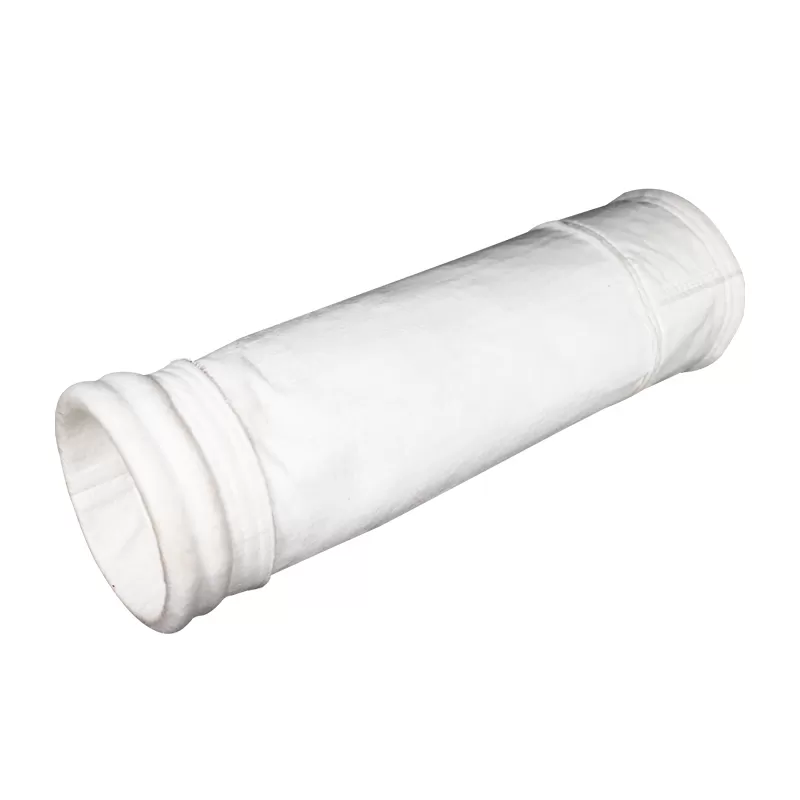
product name: | PTFE filter bags |
|---|
Fiber Type | Polytetrafluoroethylene |
Weight (g/ Square meter ) | 750 |
Thickness(mm) | 0.9-1.1 |
Tensile strength (N/5×20cm) | vertical | 800 |
Weft | 800 |
Air permeability (L/m2/s·200pa) | 1.8-3.6 |
Recommended operating temperature (℃) | <260 |
Instantaneous operating temperature (℃) | 280 |
Surface treatment process | Dipping coating
|
PTFE type and finish selection
Published codes, permeability and surface options are retained. Industry labels describe possible applications, not food/pharmaceutical approvals or chemical compatibility.
Type No. | Air Permeability (L/m²/s) | Working Temp (°C) | Surface Treatment | Typical Application |
|---|
PTFE-100 | 1.8 | Confirm complete-bag limit | Dipping Coated | Steel Dust Collection |
PTFE-200 | 2.2 | Confirm complete-bag limit | Glazed Finish | Power Industry |
PTFE-300 | 2.5 | Confirm complete-bag limit | PTFE Membrane | Cement Production |
PTFE-400 | 3.0 | Confirm complete-bag limit | Anti-Static | Chemical Industry |
PTFE-500 | 3.0 | Confirm complete-bag limit | PTFE Coated | Petrochemical Plants |
PTFE-600 | 2.8 | Confirm complete-bag limit | Hydrophobic | Food & Beverage |
PTFE-700 | 3.4 | Confirm complete-bag limit | Dual-Layer | Waste Incineration |
PTFE-800 | 3.6 | Confirm complete-bag limit | PTFE Film Lamination | Pharmaceutical |
PTFE-900 | 2.4 | Confirm complete-bag limit | Singed | Pulp & Paper |
PTFE-1000 | 3.2 | Confirm complete-bag limit | Antioxidant Treated | Metallurgical Plants |
PF model references — confirm the system basis
These PF codes were published with airflow, inlet loading, capture and pressure-drop figures but no bag area/count or test boundary. The unassigned numbers are archived; obtain a model-specific data sheet before treating them as equipment capacity.
| Published model identifiers | Information needed before sizing or acceptance |
|---|
| PF-101 · PF-202 · PF-303 · PF-404 · PF-505 · PF-606 · PF-707 · PF-808 · PF-909 · PF-1010 | Identify bag dimensions and area, bag count, collector/system boundary, gas flow conditions, dust loading and particle distribution, cleaning method, temperature envelope and the applicable performance test. |
Distinguish substrate, membrane and chemical duty
Specify the fiber composition, scrim/backing, membrane or impregnation, sewing thread and cuff materials. A PTFE surface on another polymer does not confer the temperature capability of a PTFE-fiber construction. Surface treatment may aid cake release, but sticky deposits and condensation can still cause blinding.
For corrosion assessment, state the substances, concentrations, gas and liquid phases, temperature, moisture and cleaning exposures. A pH 0–14 statement is not a complete gas-compatibility specification. Food-contact or pharmaceutical use also requires the relevant finished-product documentation; it does not follow automatically from PTFE chemistry.
Chemours identifies approximately 327 °C as a PTFE melting-point reference, not a safe operating or decomposition threshold for this bag. Do not heat the assembly toward a polymer melting point to infer a permissible excursion.
Compare permeability without confusing it with fan duty
The published 1.8–3.6 L/m²/s at 200 Pa converts to 0.108–0.216 m³/m²/min using ×0.06. This is a clean-media test result. Installed resistance also depends on dust cake, face velocity, cleaning and assembly leakage; it cannot be inferred from fabric mass alone.
To assess collector capacity, use the available online area and actual gas flow. v=Q/(60×Aonline) gives m/min when Q is m³/h and area is m². No PF flow value on its own establishes the quantity or length of bags needed.
Maintain seals, cleaning and temperature control
Use the collector manufacturer’s approved isolation, handling and cleaning procedure. Confirm cage clearance and smoothness, avoid creasing a membrane during insertion and verify the cuff seal before restart. Check compressed-air quality and pulse timing against the approved design rather than selecting a generic pressure.
Investigate changes in pressure drop together with airflow, gas temperature, hopper discharge and outlet/leak indications. The former 4–6 year life and 2–3 times improvement statements lack a comparable operating record here; they are not service-life promises. Replacement planning should use actual condition and duty history.
Quality documents and order acceptance
Review the published ISO 9001, ISO 14001 and ISO 45001 management-system documents on our Quality Control page. They concern Hebei Outai’s management systems; they are not blanket certification of filter-bag performance or CE/ATEX approval.
Specify the exact fiber blend, backing, finish, seam thread and connection drawing. Agree fabric mass, permeability test differential, tensile specimen/orientation, dimensions and identification. State whether acceptance concerns a media coupon, a finished bag or the installed collector; these are different tests.
For technical coordination, use our technical support information. Inspection scope, test reports, warranty, delivery and site-service arrangements should be confirmed in the quotation, rather than inferred from a material name.
PTFE filter bag specification questions
Does PTFE mean complete chemical immunity?
No. Compatibility must be checked for the exact material construction, chemicals, concentrations, phase and temperature. The cuff, sewing thread, support and seals can have different limitations.
Can a PTFE-coated polyester bag run at the PTFE-fiber temperature?
No. The substrate remains polyester. The complete assembly’s approved limit, including backing, membrane and seams, controls selection.
Is 327 °C a safe short-term operating temperature?
No. It is a polymer melting-point reference, not this product’s operating limit or a decomposition threshold. Use the selected assembly’s documented continuous and transient envelope.
Does PTFE guarantee a lower pressure drop or longer life?
No universal improvement is established. Compare the same gas flow, dust, test method, cleaning and service conditions, and ask for records supporting any proposed life-cycle claim.
Request PTFE filter bags for your actual gas chemistry
For PTFE filter bags for corrosive dust collection, provide the existing bag/cage drawing, quantity, required fiber and finish, normal/peak temperature and duration, moisture, named chemicals and dust properties. Define both material acceptance and any installed-emissions test separately.
Related components and media