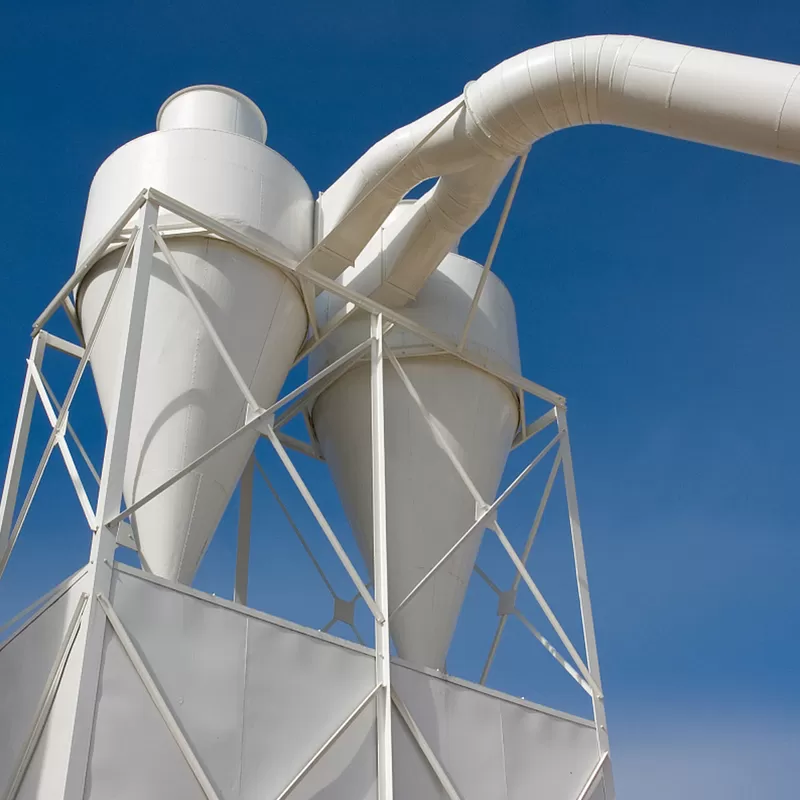
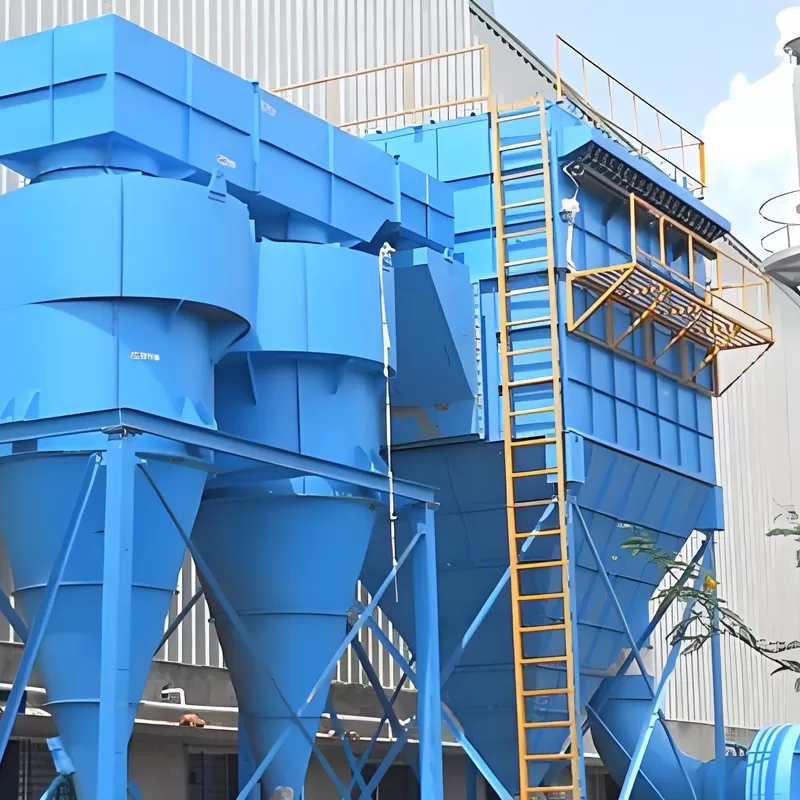
CC Series Combined Cyclone Dust Collector
Multi-Cyclone Parallel Separation for High-Volume Industrial Air Filtration
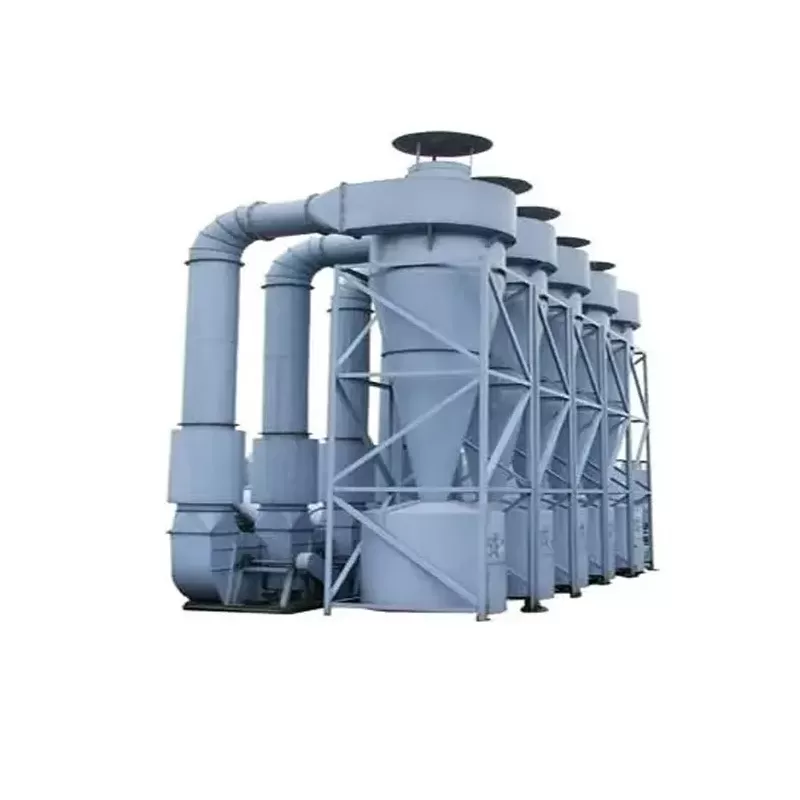
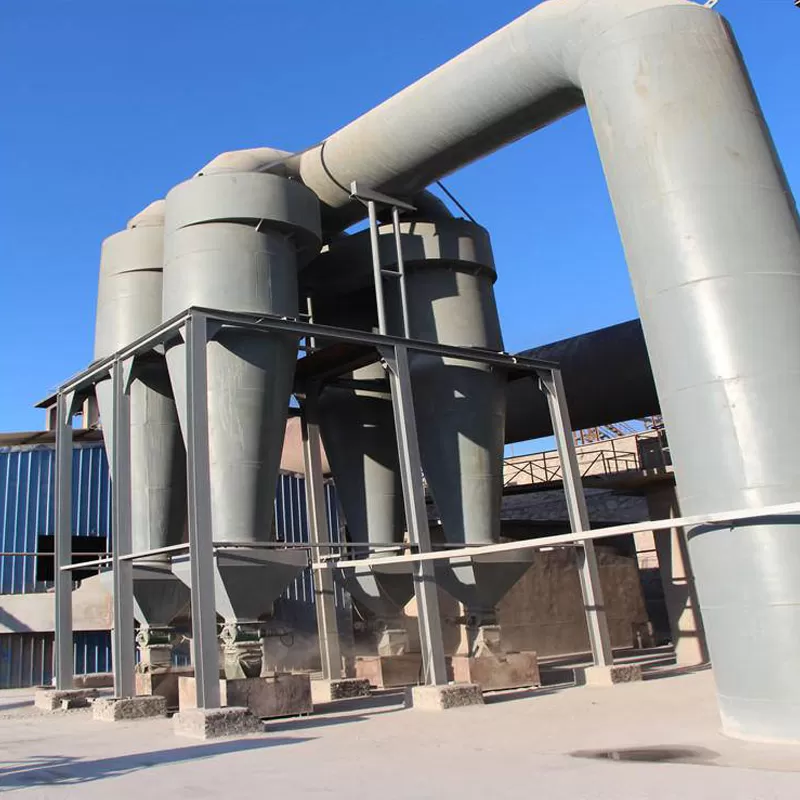
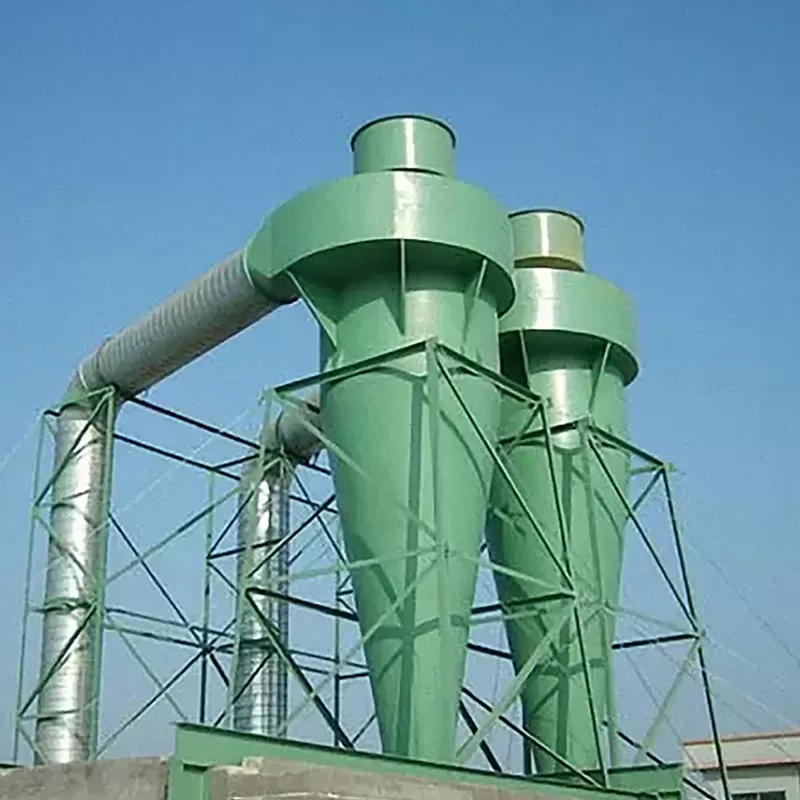
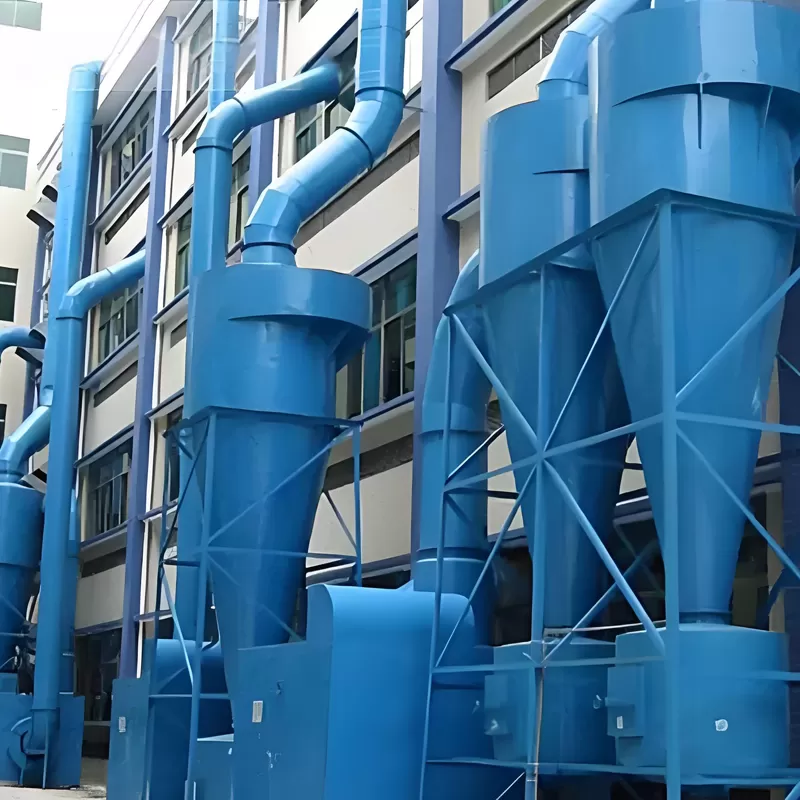
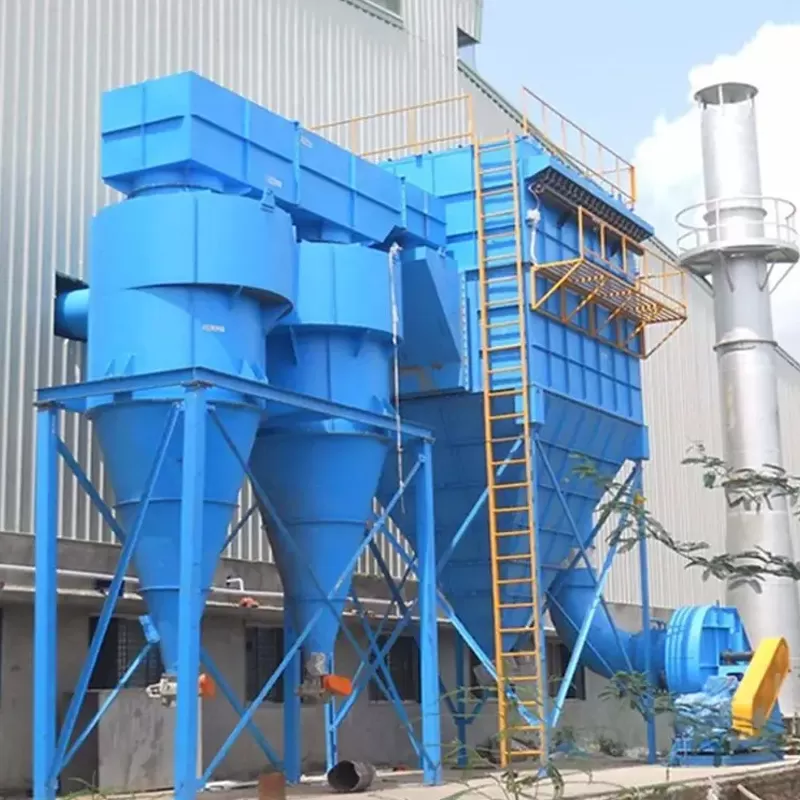
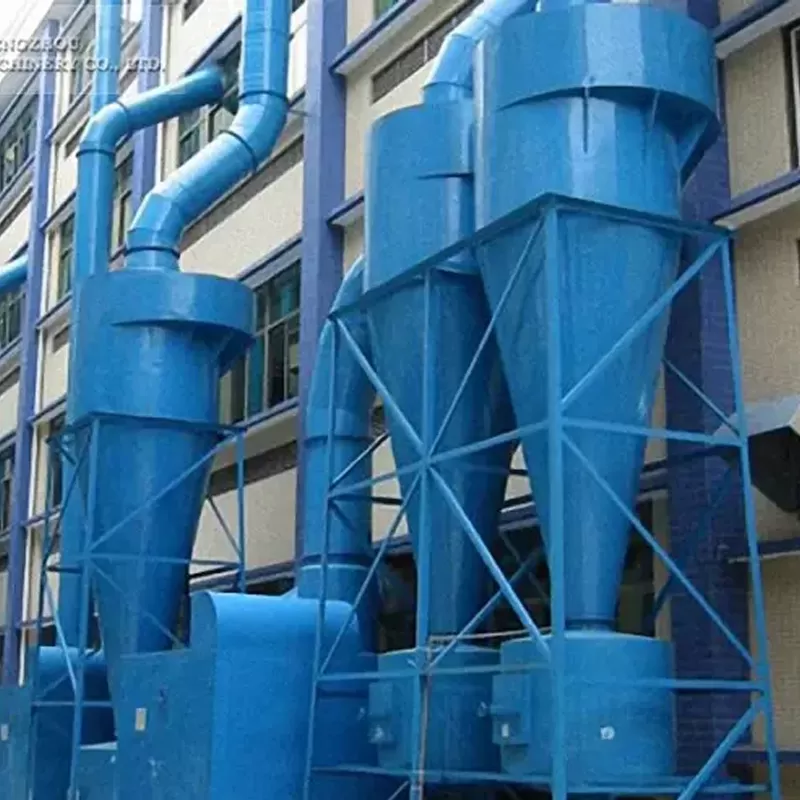
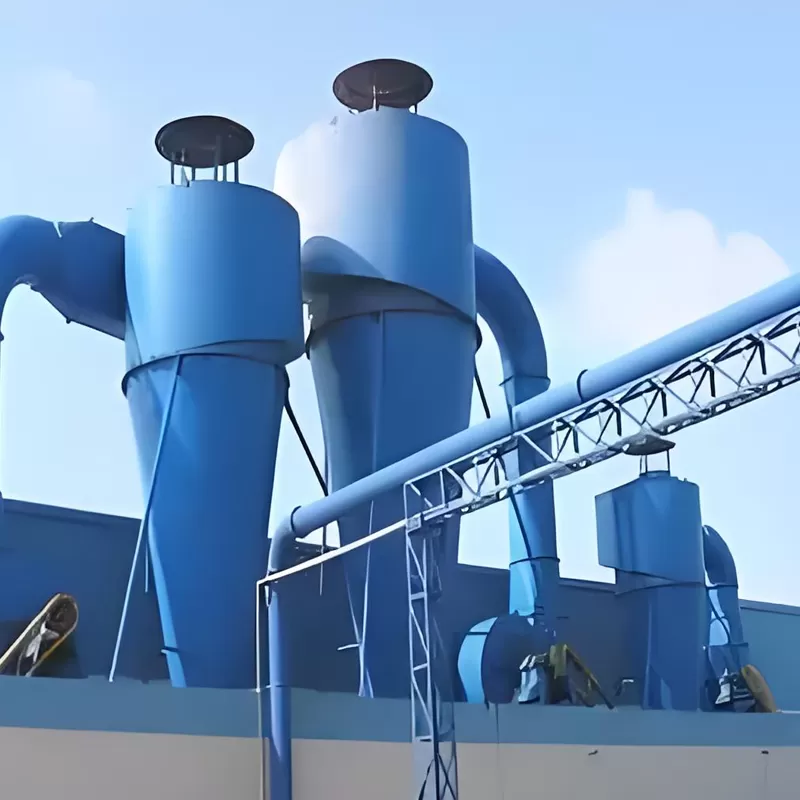
The HCY Series Combined Cyclone Dust Collector arranges multiple cyclone separators in parallel within a single compact housing. By splitting incoming dust-laden air across several cyclone chambers simultaneously, it handles significantly higher airflow volumes in a smaller physical footprint than an equivalent single-cylinder unit. Delivering overall collection efficiencies up to 99.8%, it serves as a powerful standalone separator or an energy-efficient pre-filter upstream of secondary baghouse systems to extend downstream filter bag life.
Key Operational Advantages
Extended Secondary Filter Life: Captures up to 99.8% of particles ≥ 5 μm upstream, dramatically reducing dust loading on secondary baghouses or cartridge collectors.
Heavy-Duty & Low Maintenance: Constructed from heavy-gauge galvanized steel, powder-coated steel, or 304/316 stainless steel with no moving filter bags to clog or replace.
Key Technical Specifications
Airflow Capacity & Efficiency: Handles processing volumes from 5,000 to 180,000 m³/h with a separation efficiency of 85% to 95% for particles ≥ 5 μm (up to 99.8% overall).
System Resistance & Loading: Operates with a low pressure drop of 800–1,600 Pa and manages maximum dust loading up to 80 g/m³.
Thermal & Environmental Limits: Supports operating temperatures up to 150°C with IP54/IP55 sealing and optional ATEX Zone 21/22 compliance.
Why Choose a Combined Cyclone Dust Collector?
Superior Air Purification Efficiency:
With over 99.8% efficiency for particles ≥5 μm, the system minimizes downstream filter load, extending the life of secondary filters.
Energy-Saving Operation:
The multi-cyclone configuration optimizes airflow paths and pressure distribution, reducing energy consumption without compromising performance.
Durability & Continuous Operation:
Built from galvanized steel, powder-coated steel, or stainless steel 304, the collectors are corrosion-resistant and engineered for 15+ years of service life.
Low Maintenance Requirements:
Fewer moving parts and easy-access hoppers make operation and maintenance cost-effective and time-saving.
Compliance & Certification:
CE, ISO 9001, and RoHS certifications guarantee compliance with OSHA, NIOSH, and EU environmental standards.
Why Leading Plants Choose SENOTAY Combined Cyclone Dust Collector
Factory-Direct Pricing. Certified Quality. Dedicated Support.
Best Price Guarantee
Certified & Compliant
Fast, Reliable Delivery
Types of Combined Cyclone Dust Collectors (Comparative Table)
Model | Airflow (m³/h) | Power (kW) | Efficiency (@0.3 µm) | Material | Noise Level [dB(A)] | Protection Class |
CC-1000 | 1,000 | 3.7 | 99.5% | Galvanized Steel | 70–85 | IP54 |
CC-1500 | 1,500 | 5.5 | 99.6% | Powder-Coated Steel | 72–86 | IP54 |
CC-2000 | 2,000 | 7.5 | 99.7% | Powder-Coated Steel | 75–90 | IP55 |
CC-2500 | 2,500 | 9.0 | 99.7% | Stainless Steel 304 | 76–88 | IP55 |
CC-3000 | 3,000 | 11 | 99.9% | Stainless Steel 304 | 80–95 | IP55 |
CC-4000 | 4,000 | 15 | 99.9% | SS304 / Hybrid Coating | 82–96 | IP55 |
CC-5000 | 5,000 | 18.5 | 99.95% | SS304 | 83–97 | IP55 |
CC-6000 | 6,000 | 22 | 99.95% | SS316 | 85–98 | IP55 |
CC-7000 | 7,000 | 30 | 99.97% | SS316 | 85–99 | IP55 |
CC-8000 | 8,000 | 37 | 99.98% | SS316 / Hybrid Alloy | 86–99 | IP66 |
Combined Cyclone Dust Collector — Technical Specification Table
Physical Dimensions | Performance Ratings | Material & Construction | Operational Data | Certifications & Lifecycle |
Length: 1,200–6,800 mm | Pressure Rating: –3 to –7 kPa | Q235 / SS304 / SS316 | –3.5 to –6 kPa | > 50,000 h |
Width: 1,000–4,200 mm | Max Temperature (standard): 80°C | Carbon Steel / SS | ≤ 150°C | 10–15 years |
Height: 2,800–12,500 mm | Separation Efficiency: 85–95% (particles ≥ 5 μm) | 4–10 mm | 5,000–180,000 m³/h | ISO 9001 / CE |
Inlet Diameter: 300–1,200 mm | Pressure Drop: 800–1,600 Pa | Epoxy / Hot-Dip Galv. | 4–40 units | ≤ 30 mg/m³ |
Outlet Diameter: 250–1,000 mm | Dust Removal Efficiency (with pre-filter): ≥ 98% | NBR / Silicone | 0–95% RH | ≥120 μm |
Flange Size: DN300–DN1200 | Particle Size Range: ≥ 3–10 μm | Q235 Steel | 900–14,000 kg | EPA / EN 12779 |
(BCD): 400–1,150 mm | Max Dust Loading: ≤ 80 g/m³ | EPDM / PTFE | Rotary Valve / Airlock | ATEX Zone 21/22 (optional) |
Access Door: 450×650 mm | Flow Imbalance Tolerance: ≤ 5% | 200–400 mm | 40–160 Nm | Every 6–12 months |
Product Description & Material Properties
The Senotay Combined Cyclone Dust Collector features robust construction and precision-engineered airflow dynamics. The housing materials and filtration media are carefully selected to ensure optimal performance under industrial conditions.
Parameter | Material/Specification | Standard |
Housing Material | Galvanized Steel (2.5 mm), Powder-Coated Steel (3 mm), Stainless Steel 304 (3 mm) | ASTM A653/A240 |
Filter Media | PTFE-Coated Polyester, Fire-Retardant Polyester, Nano-Fiber Composite | NFPA 701, EN 779:2012 |
Sealing Type | IP54/IP55 with Silicone or Double Lip Seals | IEC 60529 |
Airflow Range | 1,000–3,000 m³/h | AMCA 210 |
Operating Temperature | -20°C to 90°C | UL 507 |
Efficiency | 99.5–99.9% @ 0.3 µm | EN ISO 16890 |
Noise Level | 70–95 dB(A) | ISO 3744 |
Vibration | ≤3 mm/s RMS | ISO 10816-3 |
Service Life:
15–20 years of continuous operation with minimal servicing required.
How Does a Combined Cyclone Dust Collector Work?
The working mechanism of the Combined Cyclone Dust Collector is based on centrifugal separation and multi-stage filtration:
Step 1: Dust-Laden Air Entry
Contaminated air enters through a tangential inlet, forming a high-speed spiral (cyclonic flow) distributing it evenly into multiple cyclone chambers.
Step 2: Centrifugal Particle Separation
The centrifugal force pushes heavier particles toward the outer wall, where they lose velocity and fall into the collection hopper.
Step 3: Fine Dust Collection
Finer particles are filtered through additional cyclonic stages, achieving micro-level dust removal.
Step 4: Clean Air Discharge
Purified air exits through a central exhaust manifold, and the separated dust is discharged automatically via a rotary valve.
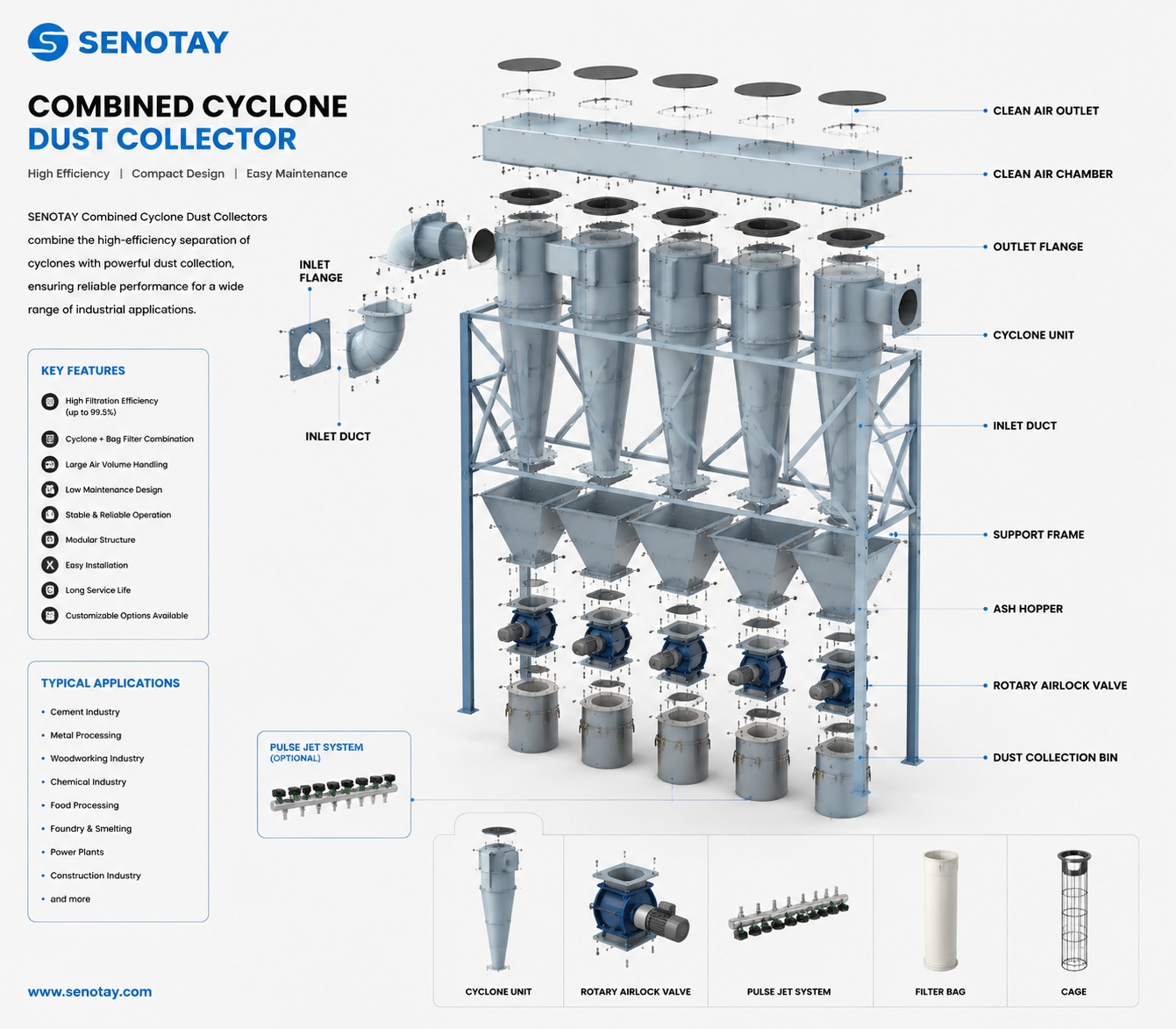
Core Components
Cyclone separation chambers.
Common air inlet manifold.
Dust collection hopper.
Rotary airlock valve.
Clean air exhaust outlet.
Electrical control panel (CE/ATEX compliant).
Support frame & vibration damping mounts.
Installation Method
Secure the base frame to a concrete foundation.
Connect inlet ducts to the contaminated air source.
Ensure proper sealing around joints and flanges.
Connect the clean air outlet to the exhaust ducting system.
Power up the blower and rotary valve assembly.
Calibrate air velocity and pressure according to operational requirements.
Technical Advantages in Manufacturing (Senotay)
At Hebei Outai Environmental Protection Equipment Co., Ltd., Senotay ensures every Cyclone Filter System embodies:
CNC precision fabrication for consistent cyclone geometry.
ISO-quality inspected welds and anti-corrosive coatings.
Balanced impeller design ensuring minimal vibration.
Advanced flow modeling (CFD) for optimized particle separation.
RFID-based filter monitoring systems (optional).
These factors collectively deliver unmatched efficiency, reliability, and longevity
Explore More Air Pollution Control Equipment
▪ Industrial Baghouse Series
▪ LDMC baghouse dust collector | PPC baghouse dust collector | DMC Pulse Jet Baghouse Dust Collector | Baghouse Dust Collector
▪ Electrostatic & Gas Treatment
▪ Horizontal electrostatic precipitator | Wet electrostatic precipitator | Electrostatic Dust Collector | PP Spray Tower | Catalytic Combustion Dust Collector
▪ Cyclone Dust Separators
▪ Single-Cylinder Cyclone Dust Collector | Combined Cyclone Dust Collector | Ceramic Multi-Tube Cyclone Dust Collector
▪ Cartridge & Station Extraction
▪ Cartridge Dust Collector | Modular Dust Collector | Mobile dust collector | Welding Fume Purifier | Grinding table dust collector
FAQs – Combined Cyclone Dust Collector
1. What is the efficiency of a Combined Cyclone Dust Collector?
answers: Over 99.8% removal efficiency for particles ≥5 µm.
2. Can it handle explosive or hazardous dust?
answers: Yes, ATEX-certified explosion-proof models are available for combustible dust environments.
3. What industries commonly use it?
answers: Cement, metal, chemical, wood, textile, and recycling industries.
4. How often does it require maintenance?
answers: Typically once per quarter, with daily hopper emptying and annual inspection.
5. What are the power requirements?
answers: Models range between 3.7 kW to 37 kW, depending on airflow capacity.
6. Is customization available?
answers: Yes – inlet diameters, motor types, body materials, and discharge systems can be tailored to project requirements.