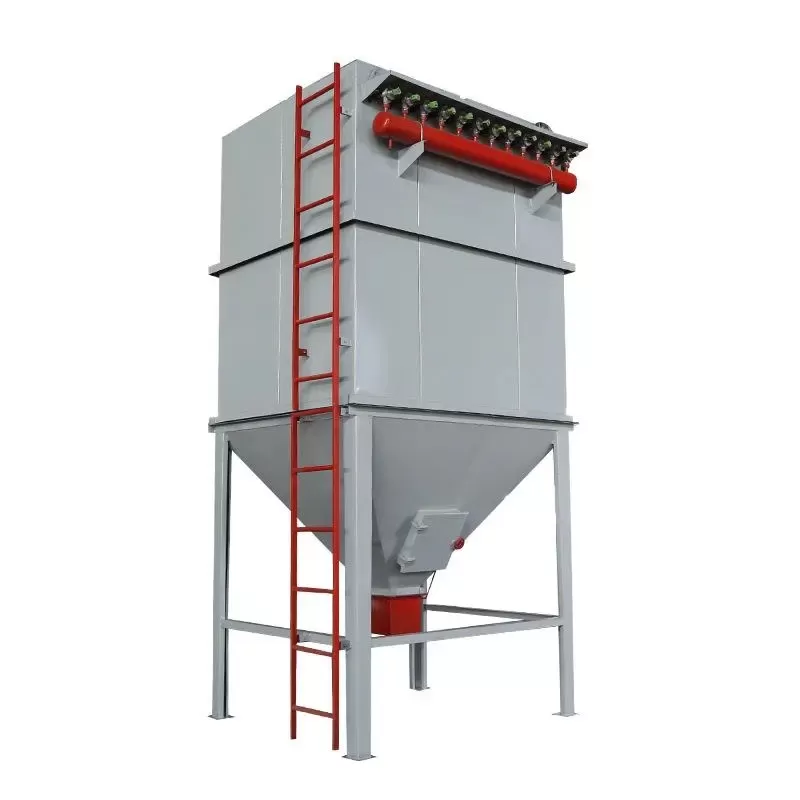
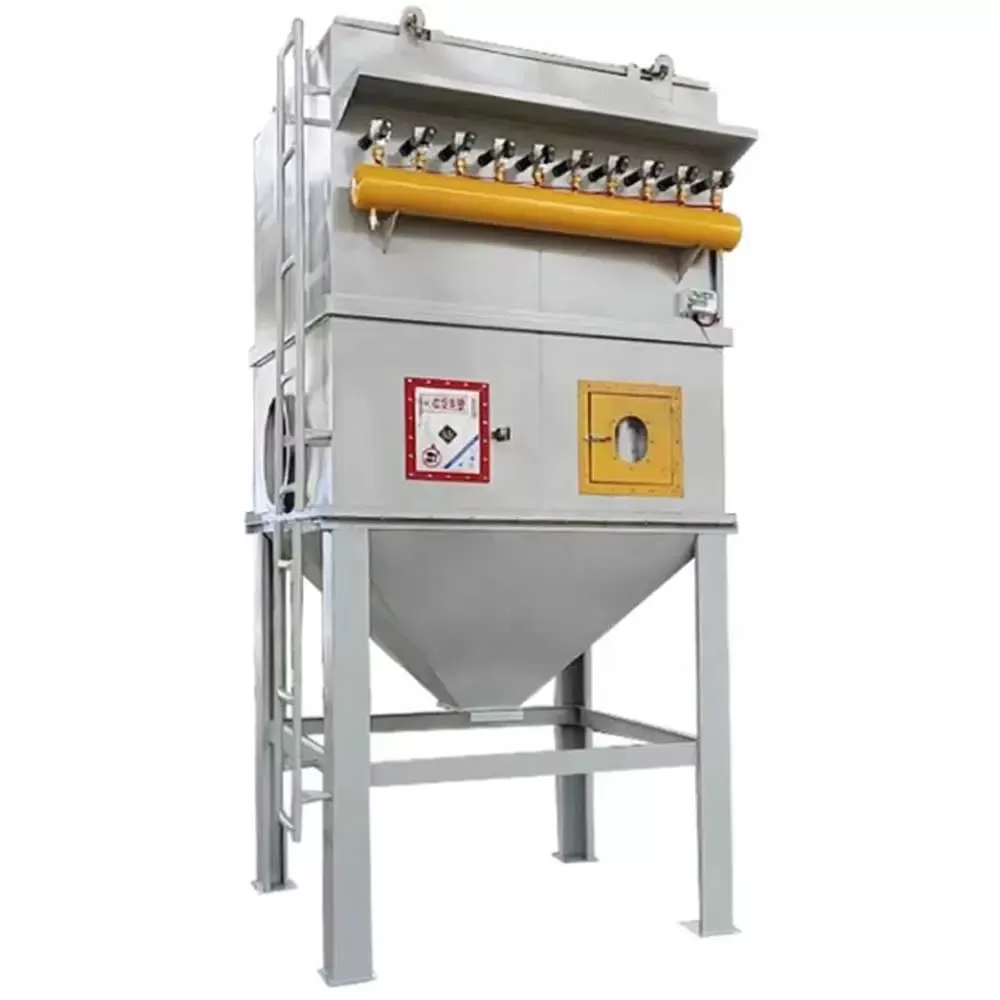
High-Efficiency Offline Filtration Engineered for Continuous Industrial Dust Control
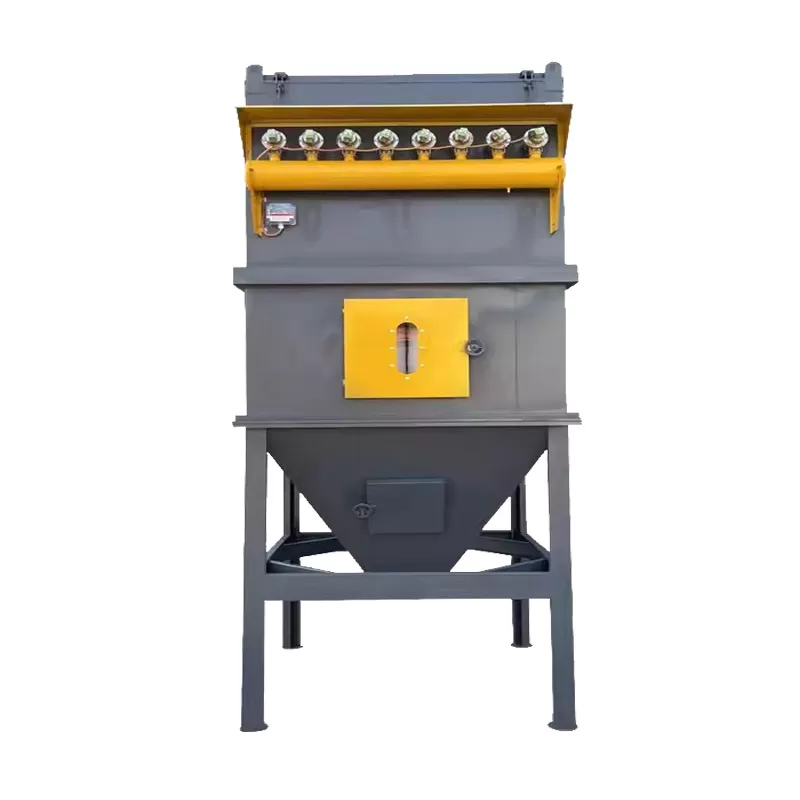
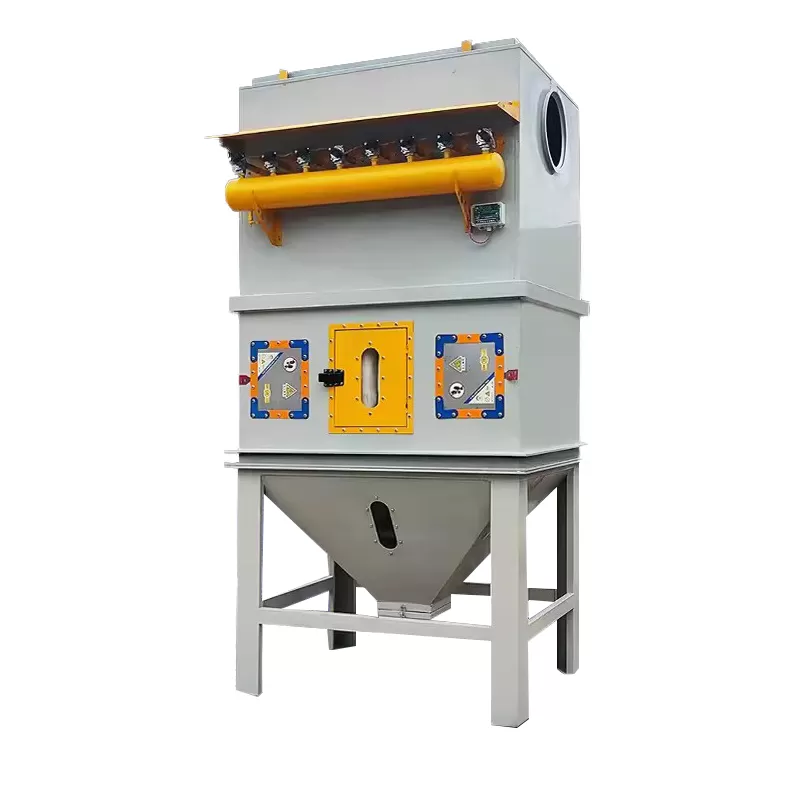
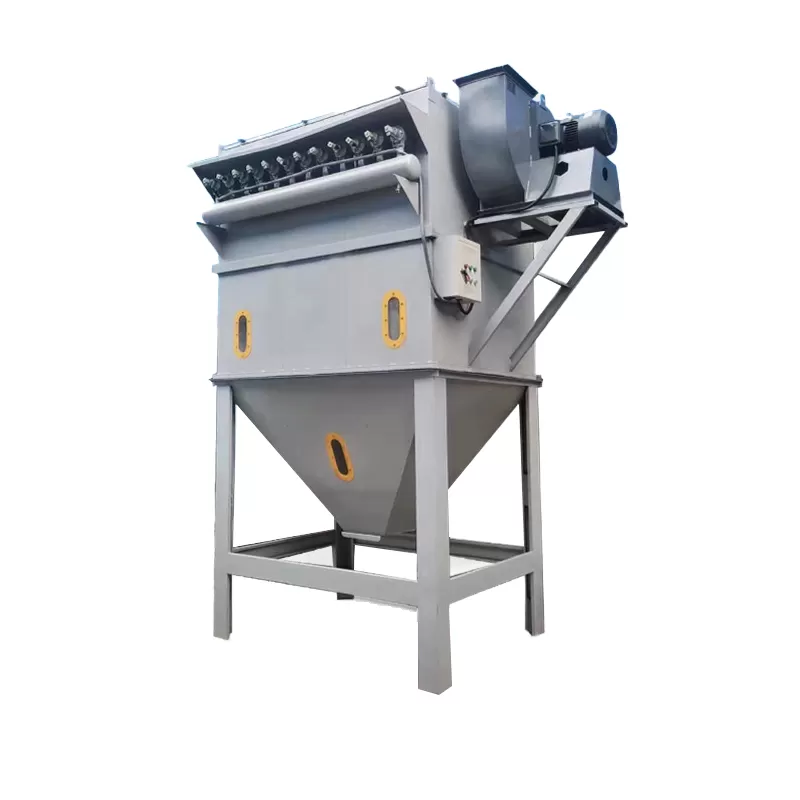
The PPC Series (Offline Pulse Jet Baghouse Dust Collector) is a modular industrial dust extraction system designed to capture airborne particulates and fine dust. Utilizing offline chamber pulse-jet technology, each compartment cleans independently without interrupting process airflow—delivering over 99.8% filtration efficiency and meeting strict emission standards below 20 mg/m³.
Key Features
Zero Downtime Offline Cleaning: Cleans isolated chambers individually while the system continues filtering, eliminating production stoppages.
Strict Emission Control: High-efficiency media options (including PTFE membranes) keep outlet dust levels ≤ 20 mg/m³ for full environmental compliance.
High-Temperature Capability: Robust construction with specialized filter media options withstands operating temperatures up to 250°C.
Modular & Scalable Design: Flexible, compact modular construction simplifies transportation, installation, and capacity expansion.
Quick Model Selection
DMC-24 | Small-Scale Extraction
DMC-64 | Light Industrial Processing
DMC-200 | Heavy Duty & High Volume
Why PPC Bag Dust Collector?
Choosing the PPC pulse jet bag filter means investing in performance, reliability, and longevity. These collectors are designed for heavy-duty industrial environments such as:
Power plants, cement manufacturing, metallurgy, petrochemical industries, and food processing.
Facilities that require continuous filtration with minimal downtime.
Applications demanding strict emission control and adaptable modular solutions.
Unlike conventional dust collectors, the PPC model uses offline chamber cleaning—allowing uninterrupted operation while maintaining clean, efficient filtration cycles.
Why Leading Plants Choose SENOTAY PPC Baghouse Dust Collector
Factory-Direct Pricing. Certified Quality. Dedicated Support.
Best Price Guarantee
Certified & Compliant
Fast, Reliable Delivery
Types & Technical Specifications
Model Type | Total Filter Area (m²) | Air Volume (m³/h) | Filter Bags (PCS) | Motor Power (kW) | Efficiency (%) | Weight (kg) |
DMC-24 | 19.2 | 1152–2304 | 24 | 2.2 | >99 | 600 |
DMC-36 | 28.8 | 1728–3456 | 36 | 3 | >99 | 900 |
DMC-48 | 38.4 | 2304–4608 | 48 | 4 | >99 | 1200 |
DMC-64 | 51.2 | 3072–6144 | 64 | 5.5 | >99 | 1600 |
DMC-80 | 64 | 3840–7680 | 80 | 7.5 | >99 | 2000 |
DMC-100 | 80 | 4800–9600 | 100 | 11 | >99 | 2500 |
DMC-120 | 96 | 5760–11520 | 120 | 15 | >99 | 3000 |
DMC-150 | 120 | 7200–14400 | 150 | 18.5 | >99 | 3500 |
DMC-180 | 144 | 8640–17280 | 180 | 22 | >99 | 4000 |
DMC-200 | 160 | 9600–19200 | 200 | 30 | >99 | 4500 |
PPC Bag Dust Collector — Technical Specification Table
Physical Dimensions | Performance Ratings | Material & Construction | Operational Data | Certifications & Lifecycle |
Airflow Capacity: 10,000–300,000 m³/h | Filtration Efficiency: ≥ 99.8% | Polyester / PPS / Aramid | −3,000 to +800 Pa | 18–36 months |
Length: 2,800–18,500 mm | Outlet Emission: ≤ 20 mg/m³ | Galvanized Steel / SS304 | 0.35–0.6 MPa | 15–20 years |
Width: 2,200–7,200 mm | Optimized Emission: ≤ 10 mg/m³ | 130–160 mm | 1.0–5.5 m³/min | ≥ 1,200,000 cycles |
Height: 5,500–22,000 mm | Air-to-Cloth Ratio: 0.8–1.4 m/min | 2,000–6,000 mm | 11–200 kW | ISO 9001 / CE / GB 16297 |
Inlet Flange Size: DN600–DN2400 | Pressure Drop: 1,000–1,600 Pa | Q235 / Q345 Steel | 5,000–65,000 kg | EU PM Emission Standards |
Outlet Flange Size: DN600–DN2400 | Max Operating Temp: 120–150 °C | 6–12 mm | ISO Standard | C3–C5 |
(BCD): 450–2,300 mm | Max High-Temp Bag Limit: 220 °C | EPDM / Silicone | 70–150 Nm | IP54–IP65 Panel |
Module Weight Range: 5–65 tons | Cleaning Method: Offline Pulse Jet | 1''–2'' Diaphragm | 4–10 Reinforced Lugs | 3,000–5,000 h |
Product Description, Material Properties & Standard Mechanical Properties
Senotay’s PPC baghouse dust collector is built from high-strength, corrosion-resistant steel and robust structural components to ensure long-term reliability under harsh industrial conditions.
Property | Specification |
Housing Material | Carbon steel / Stainless steel |
Filter Media | Polyester felt, fiberglass, PTFE membrane options |
Bag Diameter | 133 mm |
Bag Length | 2000 mm |
Blowing Pressure | 0.3–0.4 MPa |
Filtration Wind Speed | 1.0–2.0 m/min |
Temperature Resistance | Up to 250°C (with specialized filter media) |
Efficiency | >99% dust removal efficiency |
These designs ensure stability, consistent performance, and compliance with international air-quality benchmarks.
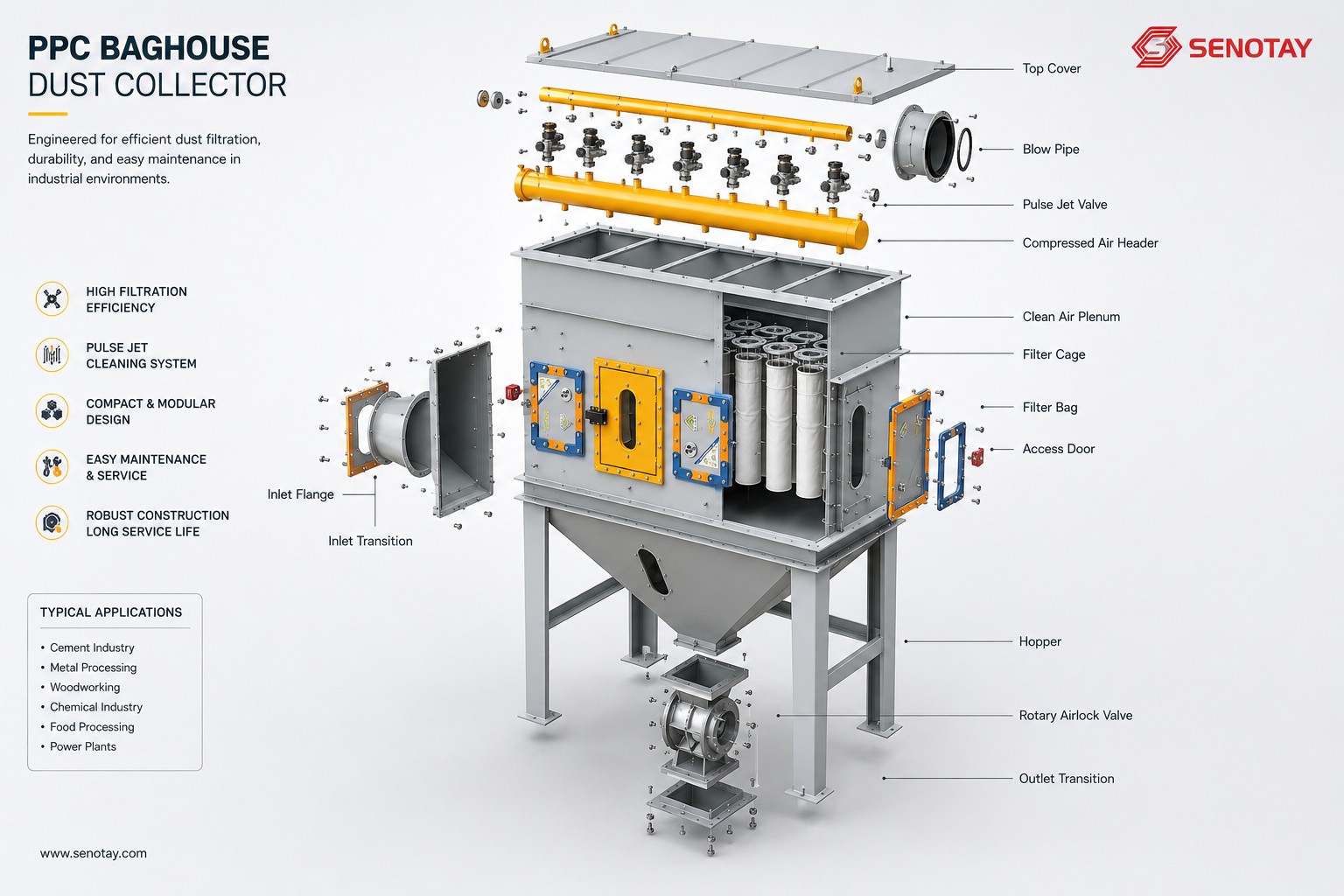
Features of PPC Bag Dust Collector
High filtration efficiency (>99%).
Continuous and stable operation.
Offline pulse-jet cleaning for thorough maintenance.
Modular design for flexibility and easy expansion.
Strong, durable housing for industrial-grade operations.
Core Components
Housing (Body): Divided into dirty and clean air rooms with perforated steel dividers.
Filter Bags and Cages: Polyester or fiberglass media supported by reinforced cages.
Pulse Valves: High-strength valves for controlled cleaning pressure.
Hopper: Collects dislodged dust for discharge.
Dust Discharge System: Rotary valves or screw conveyors to expel dust safely.
Control Unit: PLC or timer-based control for automated operation.
Technical Advantages in Manufacturing at Senotay
Precision Welding and Laser Cutting for optimal sealing and strength.
High-Pressure Testing ensures safety at ±5000 Pa resistance.
Advanced PLC Control Systems for real-time monitoring.
Custom Engineering Support to tailor configurations for industry-specific needs.
Environmental Compliance with international air emission standards (ISO/CE Certified).
Senotay’s engineering excellence, quality control, and research-driven innovation make it one of the top PPC bag dust collector manufacturers in China.
Explore More Air Pollution Control Equipment
▪ Industrial Baghouse Series
▪ LDMC baghouse dust collector | PPC baghouse dust collector | DMC Pulse Jet Baghouse Dust Collector | Baghouse Dust Collector
▪ Electrostatic & Gas Treatment
▪ Horizontal electrostatic precipitator | Wet electrostatic precipitator | Electrostatic Dust Collector | PP Spray Tower | Catalytic Combustion Dust Collector
▪ Cyclone Dust Separators
▪ Single-Cylinder Cyclone Dust Collector | Combined Cyclone Dust Collector | Ceramic Multi-Tube Cyclone Dust Collector
▪ Cartridge & Station Extraction
▪ Cartridge Dust Collector | Modular Dust Collector | Mobile dust collector | Welding Fume Purifier | Grinding table dust collector
FAQs
Q1: What makes an offline pulse jet system better than a standard one?
Answers: Offline pulse jet cleaning isolates each chamber during cleaning, ensuring zero airflow interference and better cleaning efficiency.
Q2: How often should filter bags be replaced?
Answers: Typically every 12–24 months depending on operation hours and dust type.
Q3: What industries benefit most from dust collectors?
Answers: Cement, steel, chemical, power, and food sectors where large-scale dust collection is essential.
Q4: Can Senotay customize the baghouse system?
Answers: Yes, Senotay provides tailor-made solutions based on air volume, dust load, and site conditions.
Q5: Is the system compliant with emission regulations?
Answers: Yes, all dust collectors meet national and international environmental standards.