
EN
What are you looking for?
Estimating true Dust Collector Prices, you cannot just look at the first upfront capital outlay you know. You have to go past that part and really look at the full total cost of ownership (TCO), and yeah it gets more messy from there. Procurement managers sourcing via Senotay must account for localized labor , filtration media lifespans, and even how the pneumatic cleaning integration is actually supposed to work. This technical guide basically lays out the exact mechanical parameters needed so your long-term commercial quotation is not guesswork, and it can stand up later.
Mitigate Capital Surprises: Figure out the less obvious variable expenses, like replacement media frequency and pulse-jet air consumption, so you can predict the TCO with more exactness.
Optimize Sourcing Logistics: Learn the baseline pricing metrics for high-efficiency systems manufactured in China, without giving up essential safety compliances like CE certification.
De-Risk the Procurement Process: Follow our structured RFQ workflow, to collect the precise mechanical data that prevents undersized equipment and those annoying operational bottlenecks later on.
Getting a reliable Dust Collector Price China, really depends on cross-checking your exact operational capacity with standardized system baselines. If you buy in an ad-hoc way , without understanding those tiers, you can end up with immediate system overloads. Senotay systems use standardized heavy-duty configurations across multiple models like the low-pressure pulse-jet DMC series (from DMC-24A to DMC-300A), and that helps buyers audit costs more easily against their own mechanical capacities, instead of trying to interpret everything after the fact.
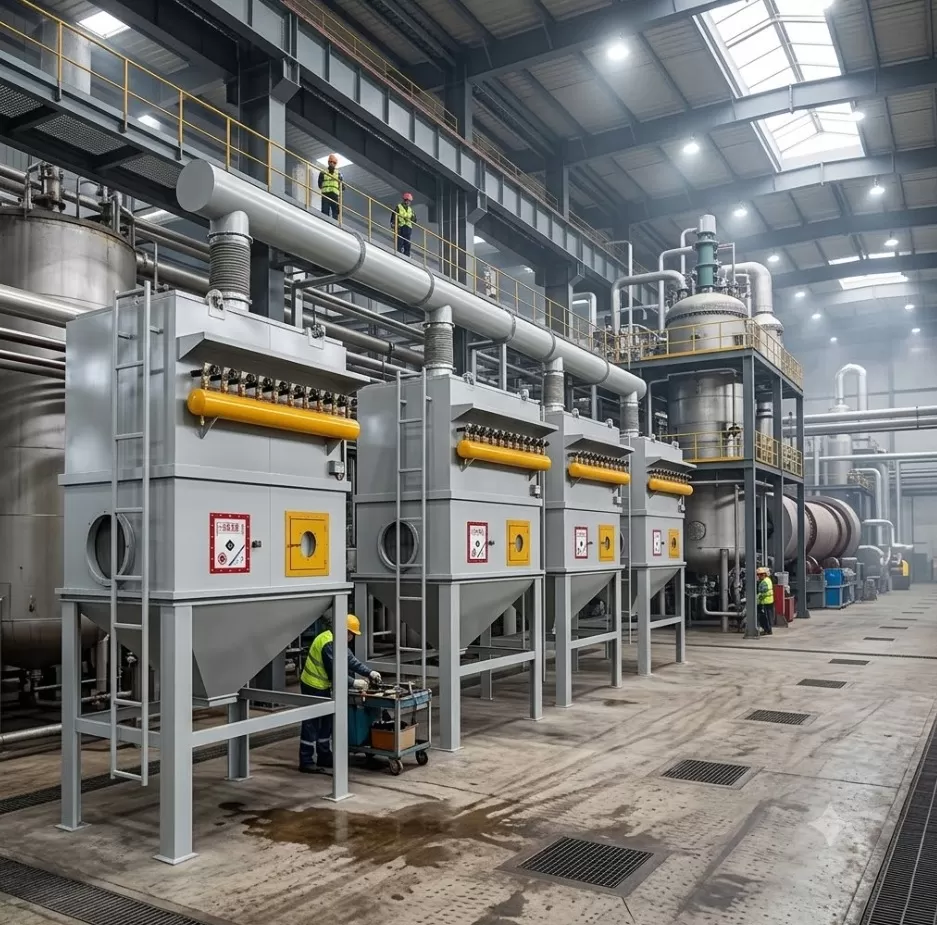
To guarantee that a customized quote lines up with your factory's financial realities, plant engineers basically need to run a structured, three phase algorithmic verification, define the whole Dust Collection System Cost. Not just guess, you know.
First, log the active volumetric flow rates. The reader must note the exact inlet velocity, temperature, and differential pressure (ΔP) across the existing ductwork; these variables decide if standard carbon steel housings work or if premium stainless steel alloys are necessary, and that changes the early manufacturing quote in a big way. Also, capture all conditions as they really are, no approximations.
Next, calculate the exact air to cloth ratio. Engineers must apply industrial fluid dynamics to validate the filtration area that is actually required. If the computed ratio pushes the system to run too fast, the bags will blind quickly. Correct sizing prevents premature media damage, and that directly shrinks the long term maintenance cost matrix.
Now cross-check the metrics with legal emission thresholds. Verify that the computed system parameters comply with local air quality limits. Getting dependable equipment means ensuring the unit keeps stack emissions under strict targets , for instance < 10 mg/m3, so you avoid catastrophic fines and plant shutdowns.
High-speed extraction brings severe operational hazards, like extreme heat, abrasive wear, and those explosive particulate concentrations that build up too fast. When you review early quotes, ignoring the minimum ignition energy (MIE) or overlooking the moisture level in the exhaust stream can kick off catastrophic system failure, and then the warranties get void. For instance, high moisture profiles often need specialized PTFE-coated media, so yeah the upfront price goes up, yet it helps you avoid total system clogging, or at least it delays it in a very noticeable way.
Key Engineering Compliance Standard
Standard Code: ATEX Directive 2014/34/EU / NFPA 68
Critical Threshold: Minimum Ignition Energy (MIE) $< 3 \text{ mJ}$ requires explosion vents and anti-static media.
Operational Impact: Failure to isolate electrostatic discharge risks triggers immediate ignition, resulting in severe physical damage, voided insurance, and massive legal penalties.
The real expense behind an Industrial Dust Collector is mostly shaped by the metallurgy, plus the material finishes, of the internal sub parts. Senotay engineering actually bridges that awkward gap between raw sourcing budgets and longer-term reliability.
Filtration Media Fabric: Standard polyester felt is usually the most economical option, but in humid atmospheres or when corrosive chemicals show up, you end up needing advanced PTFE membranes, or high-temperature P84/PPS fibers. That comes with a higher initial premium, however it extends operational life a lot.
Support Cage Metallurgy: A lot of people start with carbon steel cages, since the entry price is lower. Still, for acidic applications, 304/316L stainless steel cages should be budgeted, otherwise rust-driven bag tearing can become a quiet, slow disaster.
Pulse Jet Solenoid Valves: High-performance, heavy-duty electromagnetic pulse valves are the backbone here, because they must survive repetitive high-pressure cleaning shocks without localized diaphragm cracking. That kind of selection can reduce recurring replacement costs.
Structural failure happens when the system housing can not handle active system vibrations or high negative pressure environments. Senotay runs rigorous testing on every structural boundary, to make sure the steel chassis survives real factory floor conditions, not just lab assumptions.
The Industrial Challenge: a chemical processing plant saw rapid bag blinding and too much pressure loss, so their old setup started eating more compressed air ,and electricity than expected, pushing their operating costs higher.
The Custom Engineering Response: Senotay rolled out a tailored DMC-80A retrofit. We upgraded the system using PTFE membrane bags ,and then added smart PLC control logic with differential pressure sensors, so the pulse-jet cleaning cycle could be adjusted on the fly ,based on real-time ΔP signals.
The Quantifiable Outcome: the localized cleaning automation lowered compressed air use by 30% . Filtration performance stayed stable at 99.9% ,and annual energy consumption dropped by 18 kW/h, with the full payback period achieved within 14 months.
Before you submit an engineering inquiry to a manufacturer, use this full checklist to make sure your information pack includes the key numbers and proof points for a proper commercial response.
Volumetric Process Requirements: write down the exact required airflow rate (m3/h) and the maximum allowed continuous inlet temperature.
Physical Environment Boundaries: list the exact factory electrical supply profiles, for example 380V/50Hz, and specify the non negotiable floor space footprint.
Detailed Particulate Specification: state the chemical makeup of the dust, moisture percentage, median particle size, and attach the official Material Safety Data Sheet MSDS .
Mandatory Regulatory Certifications: specify every relevant regional and industry compliance marker, like CE marks, ATEX ratings, or ISO quality requirements.
So what’s the normal lead time for custom system manufacturing?
Typically it comes in around 4 to 6 weeks after the initial engineering drawing approval, i mean once the drawing is signed. That whole production flow, it also includes specialized metallurgical prep, welding setups that are more precision oriented than the generic ones, and non-destructive testing verification, all done before it goes out for global shipping.
How does standard polyester media stack up on price vs the high-temperature options?
High-temperature fabrics—like FMS or PTFE—usually cost more, yes, they do command a premium, but in return you tend to get a better TCO. Meanwhile standard polyester is usually very economical when you’re dealing with ambient work, up to about 130°C. But if your process regularly goes past 200°C then the specialized synthetic blend option is pretty much mandatory, because otherwise you risk early thermal degradation and eventual system failure, not “later”, right away often enough.
Do Chinese manufacturers offer real after-sales support?
Yes, many reputable manufacturers fold in long-term engineering services. Senotay is one example, they provide one-stop engineering services, CE-certified products, and they also run responsive 24/7 after-sales support so uptime stays stable, not just at the start.