High-Intensity Corona Discharge Electrodes cathode wire
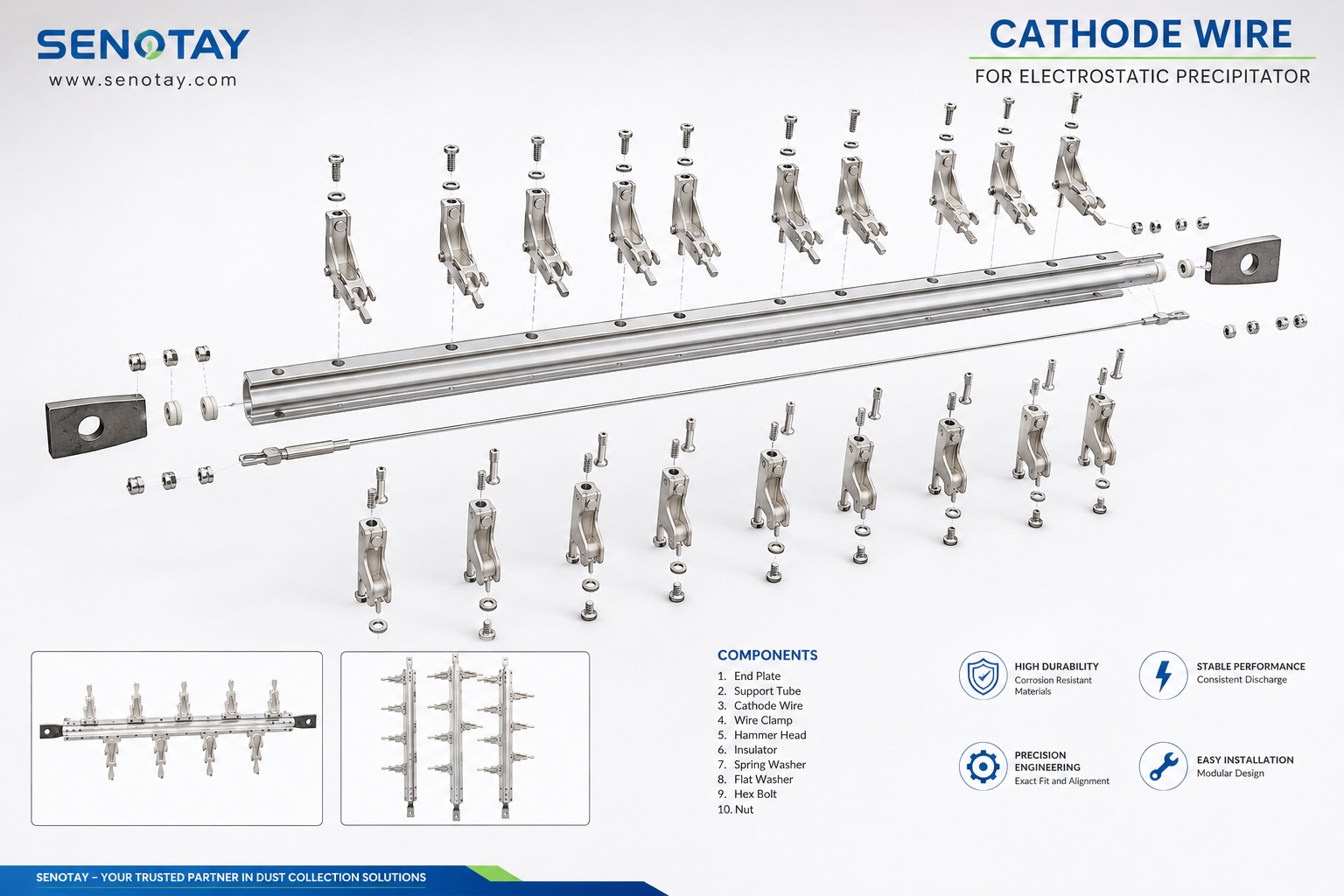
The Cathode Wire (or discharge electrode) is a critical electrical component within an Electrostatic Precipitator (ESP) system. Operating under incredibly high voltage (typically 20–70 kV DC), the cathode wire is responsible for generating a high-intensity corona discharge field. This electrical field ionizes the particulate matter within the passing industrial exhaust gas, giving the dust a negative charge. The charged dust is then violently attracted to the grounded collecting plates, effectively scrubbing contaminants from the airflow and ensuring strict environmental compliance.
Featured Model Configurations
CW-03 | Corrosive Steel Plant Electrode
Material: SS316 Stainless Steel | Max Temp: 700°C | Tensile Strength: 950 MPa
Passivated stainless steel wire designed to withstand the highly corrosive, acidic exhaust gases generated in steel mills and metallurgical foundries.
CW-07 | Extreme Heat Waste Incineration
Material: Titanium Alloy | Max Temp: 800°C | Tensile Strength: 1100 MPa
The ultimate high-temperature, high-strength electrode utilizing an oxide film to survive the chaotic, extreme heat of municipal waste incineration.
Key Technical Specifications
Available in High Carbon Steel, SS304, SS316L, 904L, Titanium, and Hastelloy. Diameters range from 2.0 mm to 3.5 mm.Exhibits an elastic modulus of 200 GPa and tensile strengths ranging from 760 MPa up to 1100 MPa, ensuring the wire will not snap under the tension of the ESP frame. Maintains an exceptional electrical conductivity of ≥ 14 MS/m (Electrical Resistivity: 0.73 μΩ·m) for optimal corona generation across the entire length of the wire.
Technical Performance Matrix
| Electrode Feature | Standard Discharge Wires | SENOTAY Structural Advantage |
|---|
| Tensile Stability | Sagging under high temperatures | Cold-drawn high-tensile alloys maintain straightness |
| Discharge Points | Uneven corona distribution | Precision-formed barbs maximize ionization efficiency |
| Sway Resistance | Higher vibration and short-circuit risk | Reinforced end sleeves reduce sway and fatigue |
Why Leading Plants Choose SENOTAY Cathode wire
Factory-Direct Pricing. Certified Quality. Dedicated Support.
Best Price Guarantee
Certified & Compliant
Fast, Reliable Delivery
Trusted by industrial air pollution control and material handling plants worldwide. Ready to optimize your ESP performance.
Material Properties of ESP Cathode Wire
Our ESP cathode wires are manufactured using premium materials for maximum durability and electrical performance:
High Carbon Steel – Excellent conductivity and high mechanical strength.
Stainless Steel (SS304, SS316L, etc.) – Outstanding corrosion resistance for harsh industrial environments.
Alloy Steel – Superior durability and high-temperature performance.
Every cathode wire is precision manufactured, straightened, and quality inspected to ensure consistent corona discharge and reliable long-term operation.
Types of ESP Cathode Wire
Type No. | Material | Diameter (mm) | Tensile Strength (MPa) | Surface Treatment | Application Type | Max Temp (°C) |
CW-01 | High Carbon Steel | 2.5 | 800 | Galvanized | Power Plant ESP | 450 |
CW-02 | SS304 | 3.0 | 900 | Polished | Cement Industry | 600 |
CW-03 | SS316 | 2.8 | 950 | Passivated | Steel Plant | 700 |
CW-04 | Mn-Steel Alloy | 3.2 | 870 | Coated | Chemical Processing | 550 |
CW-05 | Low Carbon Steel | 2.0 | 780 | Zinc-Plated | Paper Mill | 400 |
CW-06 | Nickel Alloy | 3.5 | 1000 | Electro-Polished | Refineries | 750 |
CW-07 | Titanium Alloy | 3.0 | 1100 | Oxide Film | Waste Incineration | 800 |
CW-08 | Copper-Clad Steel | 2.6 | 850 | Copper Coating | Textile Mill | 500 |
CW-09 | Galvanized Iron | 2.2 | 760 | Zinc Coating | Pulp Industry | 420 |
CW-10 | Stainless 310S | 3.4 | 960 | Pickled | Petrochemical | 750 |
Cathode Wire Specifications - Model CW-ESP-400
Parameter | Specification | Tolerance | Standard | Application |
Wire Diameter | 2.5 mm | ±0.05 mm | ASTM B258 | ESP Discharge Electrode |
Material Composition | 316L Stainless Steel | - | ASTM A276 | Corrosive Environments |
Tensile Strength | 850 MPa | ±25 MPa | ISO 6892-1 | High Mechanical Stress |
Surface Finish | Electro-polished | Ra ≤ 0.2 µm | ASTM B912 | Reduced Particle Adhesion |
Operating Temperature | 400°C Max | - | - | High Temp ESP Units |
Electrical Resistivity | 0.73 μΩ·m | ±0.02 | ASTM B193 | Optimal Corona Generation |
Spool Length | 500 meters | ±5 meters | - | Production Efficiency |
Weight per Spool | 19.2 kg | ±0.5 kg | - | Shipping & Handling |
Corrosion Resistance | 1000 hr Salt Spray | No Corrosion | ASTM B117 | Marine Environments |
Certification | ISO 9001:2015 | - | Quality Management | Industry Standard |
Physical and Mechanical Properties of ESP Cathode Wire
Property | Typical Value | Description |
Tensile Strength | 780–860 MPa | Ensures high mechanical stability |
Electrical Conductivity | ≥ 14 MS/m | Enables efficient corona discharge |
Melting Point | 1400–1500°C | Suitable for high-temperature environments |
Coefficient of Thermal Expansion | 16×10⁻⁶ / °C | Maintains structural integrity |
Corrosion Resistance | Excellent | Enables long service life in harsh conditions |
Elastic Modulus | 200 GPa | Provides flexibility and shock resistance |
Density | 7.8 g/cm³ | Ensures strength-to-weight balance |
Industries Where ESP Cathode Wire Is Used
Power Generation Plants (coal-fired, biomass, thermal)
Cement Production
Metallurgical Industries
Chemical & Petrochemical Plants
Pulp and Paper Mills
Waste Incineration Plants
Foundries and Steelworks
Technical Advantages in Manufacturing ESP Cathode Wire (HEBEI OUTAI Environmental Protection Equipment Co., Ltd.)
At HEBEI OUTAI, we apply advanced technologies and stringent quality control in every stage of production:
Automated forming and straightening ensures precise geometrical accuracy.
Surface treatment processes enhance conductivity and resist corrosion.
High-voltage testing guarantees each wire’s corona discharge capability.
Customized manufacturing according to specific ESP models and environmental conditions.
These advantages make our cathode wire stand out as both durable and efficient.
▪ Dust Filter Bag
▪ Polyester Filter Bag | FMS Filter Bag | Basalt Filter Bag | Nomex Filter Bag |
PTFE Filter Bag | Acrylic Filter Bag | Fiberglass Filter Bag | P84 Filter Bag | PPS Filter Bag
▪ Dust Collector Bag Cage
▪ Dust Collector Bag Cage | Galvanized Bag Cage | Silicone Bag Cage | Trapezoidal Bag Cage | Envelope Bag Cage | Cage Venturi Tube
▪ Dust filter element
▪ Air Filter Element | Top-mounted Dust Filter Element | Oblique-insert Dust Filter Element |
Lifting Dust Filter Element | Six-Ear Quick-release Dust Filter Element | Threaded Dust Filter Element | Flange Dust Filter Element
▪ Electromagnetic pulse valve
▪ DMF-Z Right Angle Solenoid Pulse Valve | DMF-Y Submerged Electromagnetic Pulse Valve
▪ Industrial Electric Precipitation Accessories
▪ Cathode Wire | Dust Collecting Plate | Vibrating Hammer | Bearing In Dust | Electrostatic Precipitator Porcelain Sleeve
FAQs About ESP Cathode Wire
Q1: How long does an ESP cathode wire typically last?
A: With proper maintenance, our cathode wires can last 5–10 years, depending on the environment and operating conditions.
Q2: Can cathode wires be customized?
A: Yes, Hebei Outai offers custom designs, materials and dimensions to meet the specific requirements of your ESP system.
Q3: How does cathode wire quality affect ESP performance?
A: High-quality wires ensure consistent corona discharge and reduce voltage fluctuation and greatly improving dust collection efficiency.
Q4: How often should cathode wires be inspected or replaced?
A:kindly Inspection every 6–12 months is recommended with replacement depending on wear, corrosion and discharge performance.
Q5: What makes Hebei Outai different from other manufacturers?
A: We combined advanced automatic production lines then strict quality testing, and tailored solutions to deliver superior which is very much reliable cathode wire products globally.