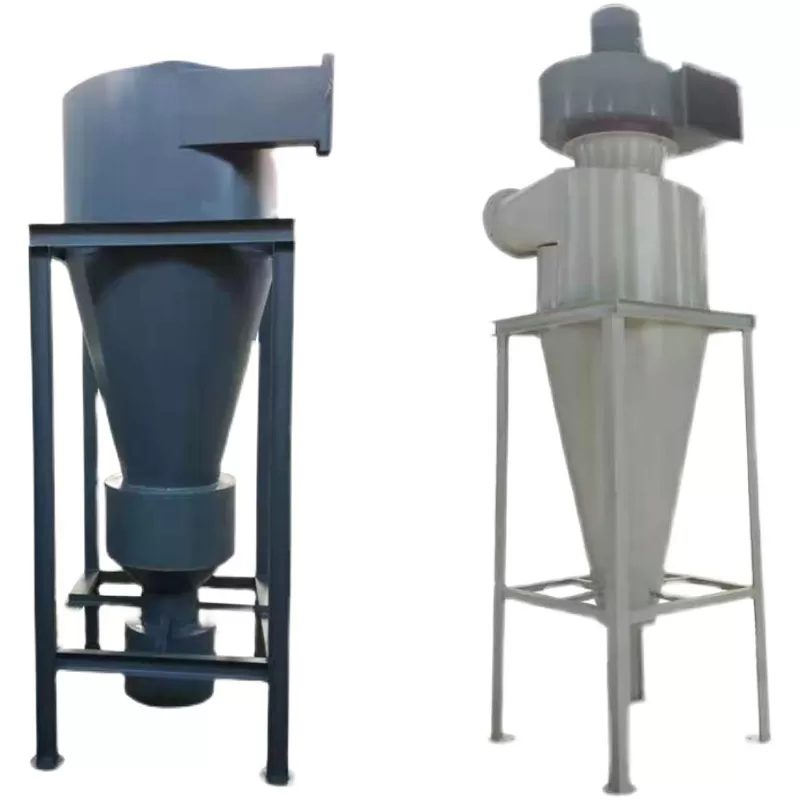
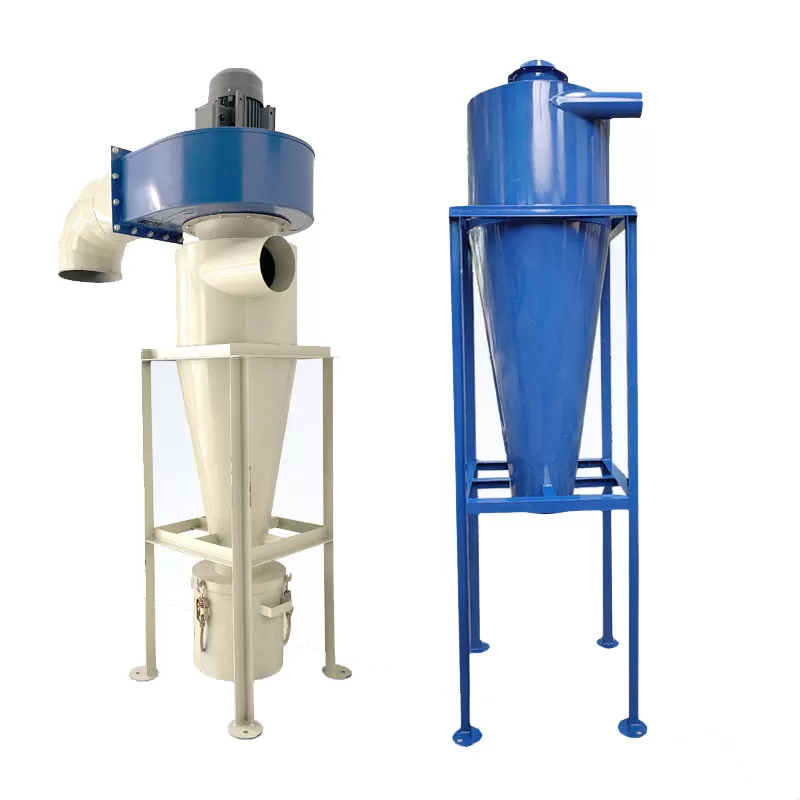
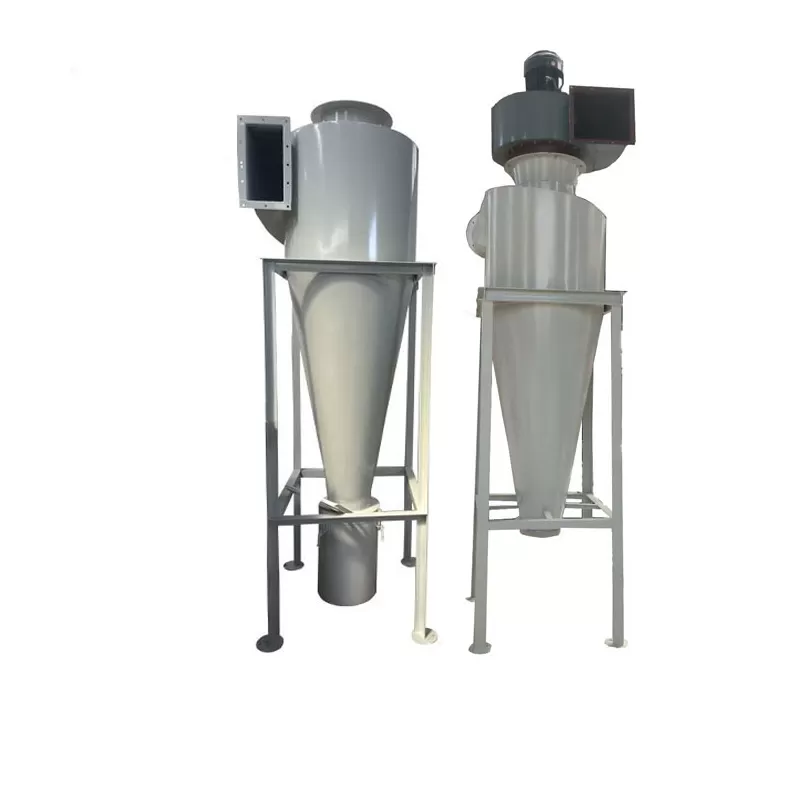
Mechanical Centrifugal Separation for Coarse & Abrasive Industrial Dust
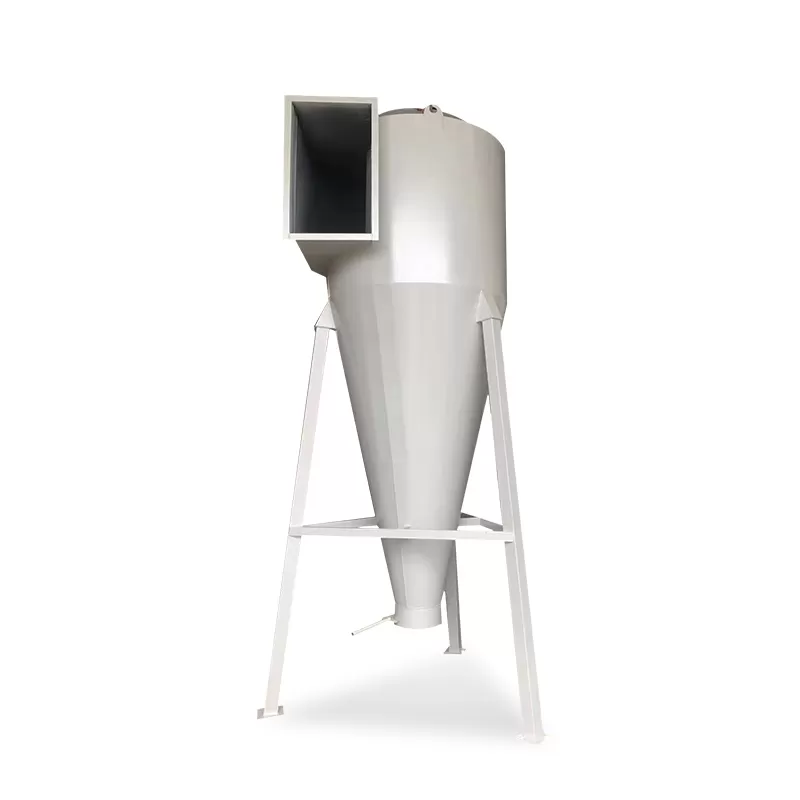
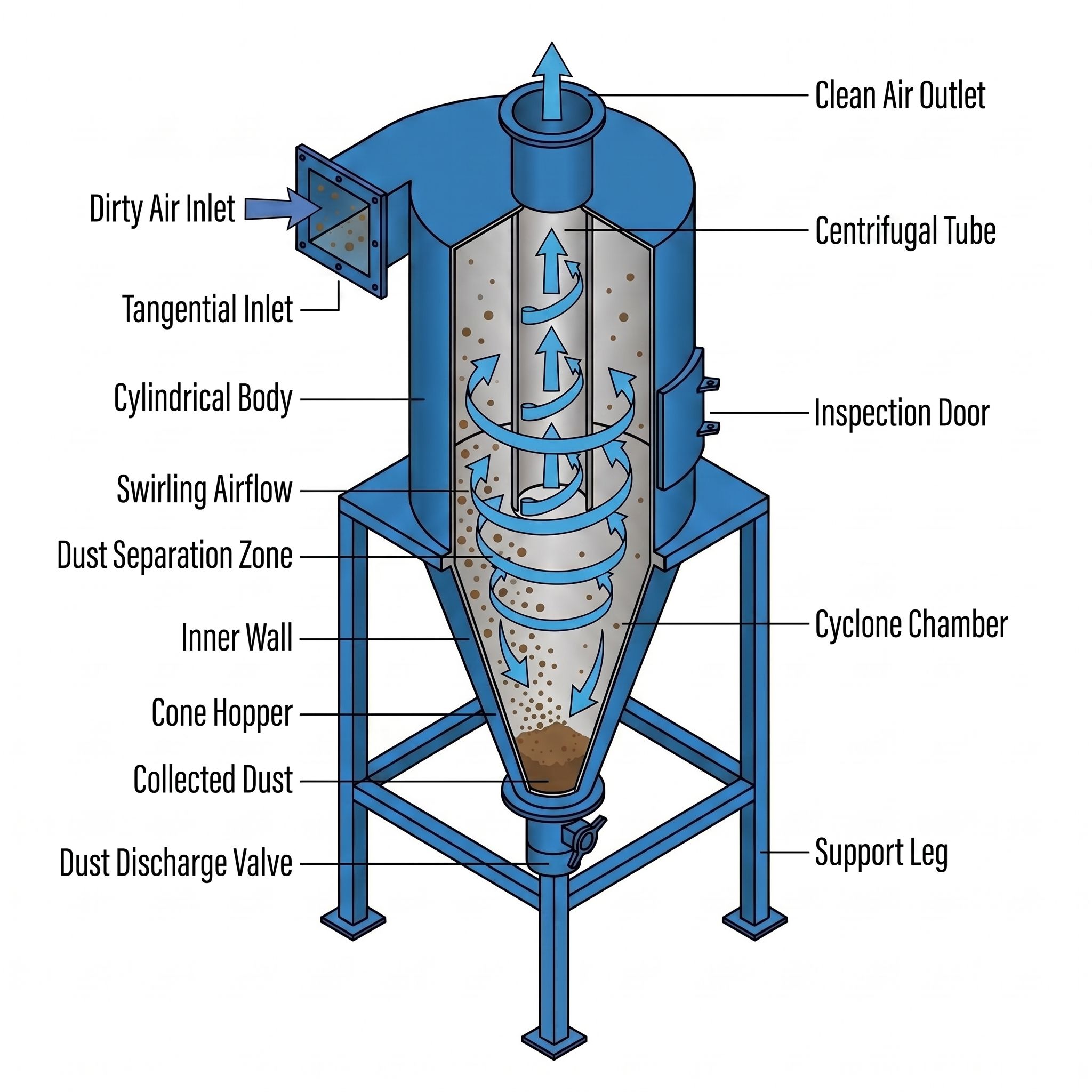
The HCY Series Single-Cylinder Cyclone Dust Collector utilizes powerful centrifugal force (up to 2,000 G) to separate heavy particulates, coarse dust, and abrasive shavings from high-speed air streams without using fabric filter bags or cartridges. Tangential inlet geometry drives dust-laden air into a high-velocity vortex, throwing particles against the outer walls where they settle into the collection hopper while clean air ascends through the top discharge. Operating completely free of consumable filter media, it serves as an economical primary collector or pre-filter to extend downstream equipment life.
Key Operational Advantages
Filterless Mechanical Operation: Eliminates consumable bag or cartridge replacements, preventing clogging under heavy, fibrous, or abrasive dust loads.
High Centrifugal Separation: Achieves 70% to 92% separation efficiency for coarse particulates (≥ 5 μm) across airflows ranging from 1,000 to 32,000 m³/h.
Thermal & Abrasive Resistance: Built with heavy-gauge carbon steel, AR-steel linings, or stainless steel options to withstand temperatures up to 600°C and harsh material friction.
Featured Model Variants
Type 1 | Standard Industrial Cyclone
Airflow: 1,000–15,000 m³/h | Material: Carbon Steel | Temp Resistance: ≤ 350°C
Designed for general woodworking, grain handling, and bulk material transfer points.
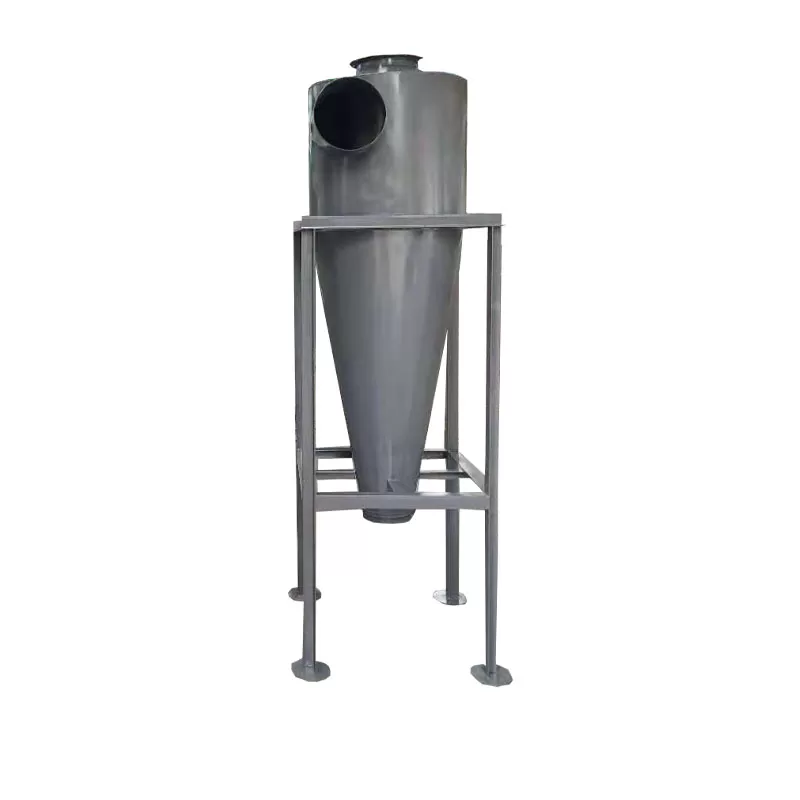
Type 3 | Abrasion-Resistant Foundry Cyclone
Airflow: 3,000–25,000 m³/h | Material: AR Steel | Temp Resistance: ≤ 450°C
Engineered for metal shavings, foundry dust, and highly abrasive mineral processing.
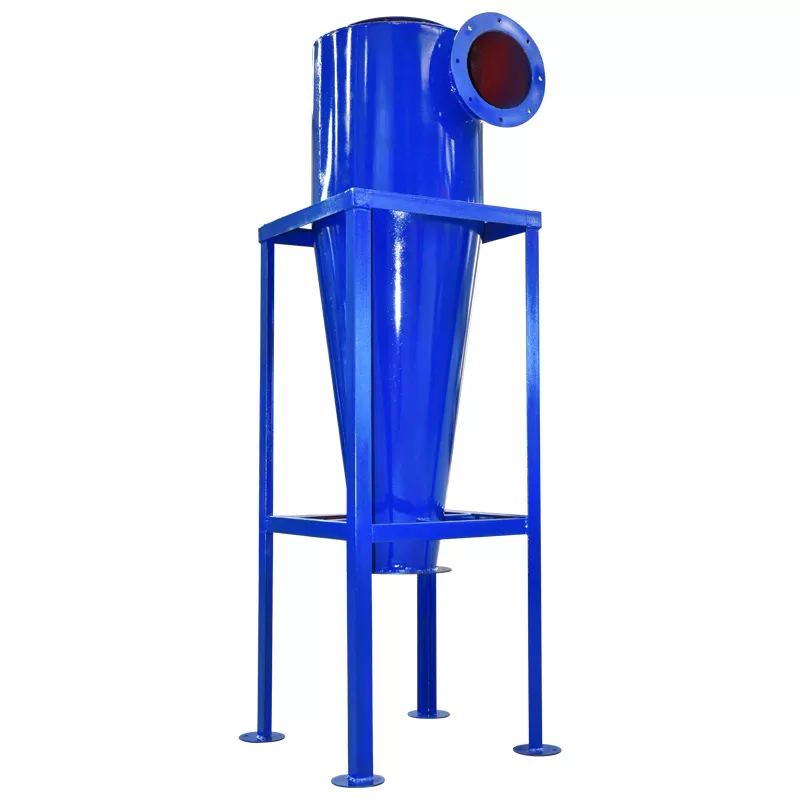
Type 7 | High-Temperature Biomass Cyclone
Airflow: 2,000–30,000 m³/h | Material: AR Steel / Heavy Alloy | Temp Resistance: ≤ 600°C
Built for hot flue gas purification in biomass combustion, incinerators, and industrial boilers.
Why Use a Single-Cylinder Cyclone Dust Collector?
Industries choose Single-Cylinder Cyclone Dust Collectors because they offer:
High efficiency without filters – no cloth bags or cartridges to replace.
Low maintenance requirements – minimal operating costs.
Excellent resistance to abrasive dust – suitable for metal, mineral, cement, and wood dust.
Stable performance in extreme temperatures and harsh production environments.
Strong structural durability – perfect for long-term industrial operations.
Unlike conventional filtration systems, cyclone separators maintain consistent performance with minimal clogging, making them ideal as primary dust collection equipment.
Why Leading Plants Choose SENOTAY Single-Cylinder Cyclone Dust Collector
Factory-Direct Pricing. Certified Quality. Dedicated Support.
Best Price Guarantee
Certified & Compliant
Fast, Reliable Delivery
Cyclone Dust Collector Types & Working Mechanism Comparison Table (10 Types)
Below is a unique, clear comparison table covering 10 cyclone models/types with 7 specifications:
Type No. | Cyclone Shape | Material | Airflow Capacity (m³/h) | Efficiency Range | Temperature Resistance | Typical Application |
1 | Standard Single Cylinder | Carbon Steel | 1,000–15,000 | 70–85% | ≤ 350°C | General industrial dust |
2 | High-Efficiency Cyclone | CS/SS | 2,000–20,000 | 80–95% | ≤ 350°C | Cement & minerals |
3 | Abrasion-Resistant Cyclone | AR Steel | 3,000–25,000 | 75–90% | ≤ 450°C | Metal & foundry |
4 | Stainless Steel Cyclone | SS304/316 | 1,500–12,000 | 75–90% | ≤ 300°C | Food & chemical |
5 | Compact Mini Cyclone | CS | 300–2,000 | 65–80% | ≤ 150°C | Laboratory or small systems |
6 | Large-Diameter Cyclone | CS/AR | 20,000–80,000 | 70–85% | ≤ 420°C | Boilers & power plants |
7 | High-Temperature Cyclone | AR Steel | 2,000–30,000 | 70–88% | ≤ 600°C | Biomass combustion |
8 | Pre-Filter Cyclone | CS | 5,000–50,000 | 65–85% | ≤ 350°C | Pre-baghouse filtration |
9 | Low-Pressure Drop Cyclone | CS/SS | 2,000–18,000 | 65–82% | ≤ 200°C | Energy-saving systems |
10 | Dust Concentration Cyclone | CS | 3,000–40,000 | 75–90% | ≤ 350°C | Heavy dust loads |
Single-Cylinder Cyclone Dust Collector — Technical Specification Table
Physical Dimensions | Performance Ratings | Material & Construction | Operational Data | Certifications & Lifecycle |
Height: 1,500–6,500 mm | Pressure Drop: 800–1,600 Pa | Q235 / SS304 / SS316 | 1,000–32,000 m³/h | 10–15 years |
Cylinder Diameter: 300–2,000 mm | Separation Efficiency: 70–92% (particle ≥ 5 μm) | 3–10 mm | 12–18 m/s | 18–36 months |
Inlet Size: 150×75 to 800×400 mm | Max Temperature: 120–250 °C | Full-penetration / Fillet | 20–180 °C | ISO 9001 / CE |
Outlet Size: DN150–DN800 | Negative Pressure Rating: −3 to −12 kPa | Epoxy / Polyurethane | Manual / Rotary Valve | Industrial Coarse Dust |
Discharge Port: DN200–DN600 | Air-to-Cone Ratio: 1.2–1.8 m/s | EPDM / Silicone | 68–85 dB(A) | C2–C4 |
Bolt Circle Diameter (BCD): 180–750 mm | Overflow Efficiency: ≥ 95% | Carbon Steel | 85–1,950 kg | 1,200–2,000 h |
Access Door Size: 300×500 mm | Bypass Leakage: ≤ 1% | Grade 8.8 / SS304 | 6–16 holes | OSHA Dust Handling |
Total Footprint: 0.5–3.2 m² | Cyclone Efficiency Index: 0.6–1.2 | Carbon Steel | 40–120 Nm | Not Applicable (Mechanical System) |
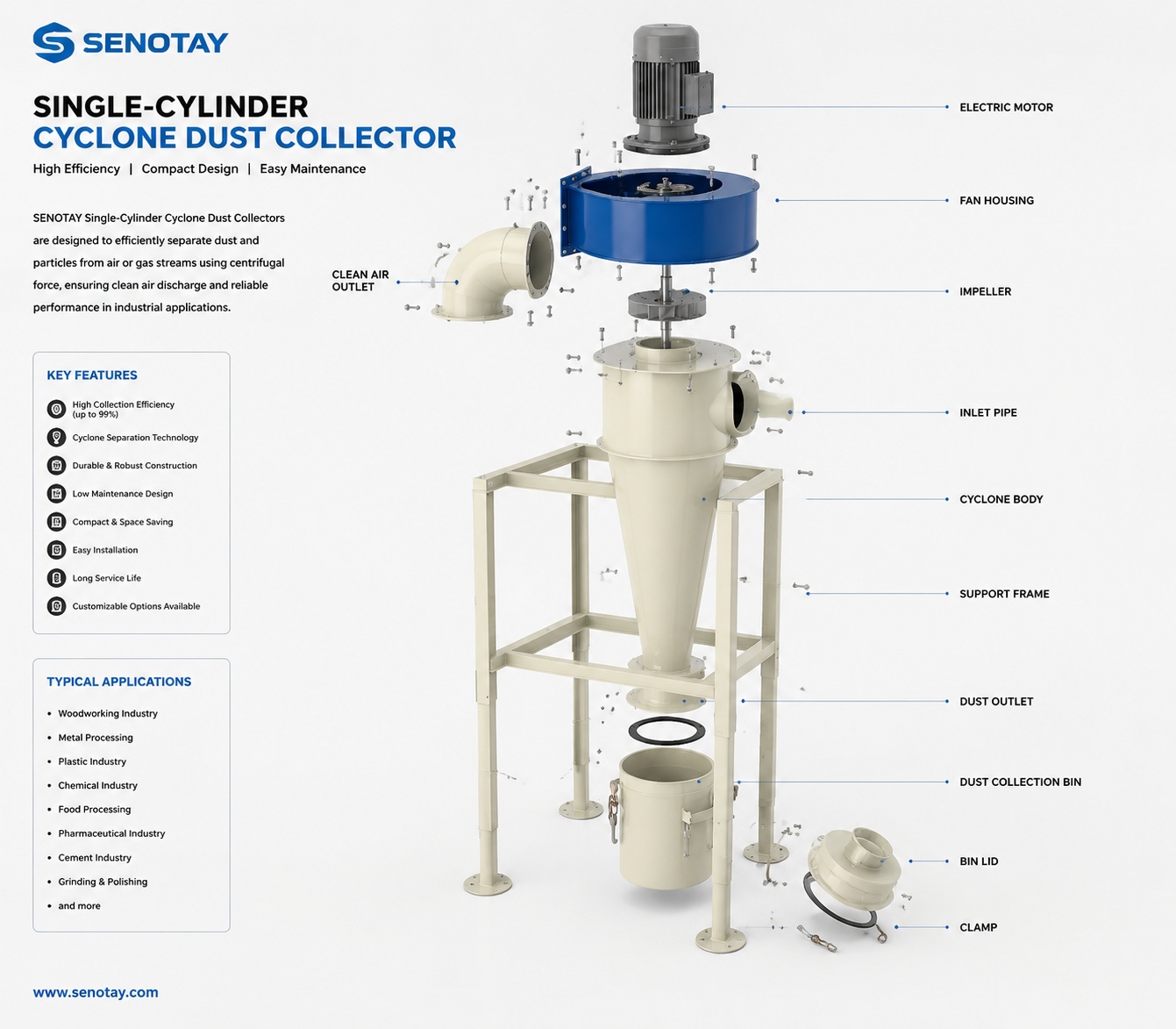
Product Description, Material Properties & Standard Mechanical Characteristics
Senotay manufactures cyclone dust collectors using premium industrial-grade materials to ensure longevity and reliability.
Material Options
Carbon Steel – high strength, cost-effective, suitable for general applications.
Stainless Steel (304/316) – corrosion-resistant, ideal for chemical and food industries.
Abrasion-Resistant Steel (AR series or Q345) – recommended for heavy-duty or high-velocity dust.
Standard Physical & Mechanical Properties
Property | Standard Value | Notes |
Tensile Strength | 400–550 MPa | Depending on material grade |
Operating Temperature | ≤ 450°C | Suitable for high-temp gases |
Wear Resistance | High | Anti-abrasion internal coating optional |
Corrosion Resistance | High (SS 304/316) | Chemical and moisture-resistant |
Pressure Endurance | Up to 30,000 Pa | Stable under negative pressure |
Surface Treatment | Powder coating / Hot-dip galvanizing | Ensures long-term protection |
How Does a Single-Cylinder Cyclone Dust Collector Work? (Working Mechanism)
Dust-filled air enters tangentially into the cylindrical chamber.
A rapid spiraling vortex forms inside the cyclone.
Centrifugal force pushes heavier dust particles to the cyclone wall.
Dust slides downward into a discharge hopper or collection bin.
Clean, lighter air rises through the inner vortex and exits through the top outlet.
This mechanical separation method requires no filter media, reducing maintenance while ensuring stable airflow.
Who Uses a Single-Cylinder Cyclone Dust Collector?
This equipment is used across various industries, including:
Cement plants.
Steel and foundry operations.
Woodworking and sawmills.
Grain processing and agriculture..
Chemical and pharmaceutical plants.
Mining and metallurgy.
Power generation.
Food processing.
Any facility with high dust loads or abrasive particulate benefits significantly from a cyclone separator.
Features of the Single-Cylinder Cyclone Dust Collector
High dust separation efficiency (70%–95% depending on particle size).
Strong abrasion resistance.
Large airflow capacity.
Simple structure and cost-effective maintenance.
Customizable size, inlet angle, and material.
Excellent performance as a pre-filter before bag-type dust collectors.
Durable single-cylinder design with stable airflow management.
Core Component
Cylindrical body (main cyclone chamber).
Conical section.
Dust inlet.
Clean air outlet.
Dust discharge hopper.
Support frame.
Sealed dust collection bucket (optional).
Wear-resistant lining (optional).
Installation Method
Place the cyclone on a level, solid foundation or support structure.
Connect the inlet duct using flanged joints or welded connections.
Attach the outlet ducting to ensure proper airflow direction.
Fix the hopper or dust discharge unit securely.
Add valves, rotary feeders, or airlocks if required.
Check for air leakage and ensure all joints are airtight.
Senotay offers on-site installation guidance and engineering support.
International-standard cyclone geometry for optimal separation efficiency.
Automated plasma cutting ensures dimensional accuracy.
Full-penetration welding for structural strength.
Professional anti-corrosion coating lines.
Custom engineering for non-standard cyclone sizes.
Strict quality testing, including airflow simulation and pressure testing.
Over 10,000 successful global installations.
Explore More Air Pollution Control Equipment
▪ Industrial Baghouse Series
▪ LDMC baghouse dust collector | PPC baghouse dust collector | DMC Pulse Jet Baghouse Dust Collector | Baghouse Dust Collector
▪ Electrostatic & Gas Treatment
▪ Horizontal electrostatic precipitator | Wet electrostatic precipitator | Electrostatic Dust Collector | PP Spray Tower | Catalytic Combustion Dust Collector
▪ Cyclone Dust Separators
▪ Single-Cylinder Cyclone Dust Collector | Combined Cyclone Dust Collector | Ceramic Multi-Tube Cyclone Dust Collector
▪ Cartridge & Station Extraction
▪ Cartridge Dust Collector | Modular Dust Collector | Mobile dust collector | Welding Fume Purifier | Grinding table dust collector
FAQs
1. What is the efficiency of a Single-Cylinder Cyclone Dust Collector?
answers: Efficiency ranges from 70% to 95%, depending on particle size and cyclone design.
2. Can cyclone dust collectors handle high temperatures?
answers: Yes. Senotay cyclones can operate at temperatures up to 450°C or higher with special materials.
3. Do cyclone dust collectors require filters?
answers: No. Cyclones use centrifugal force and do not require filter media.
4. Can the equipment be customized?
answers: Absolutely. Senotay offers custom inlet sizes, diameters, materials, coatings, and structural options.
5. Is a cyclone suitable as a standalone dust collector?
answers: Yes, for coarse or medium particulate. For fine dust, it is best used as a pre-filter before a baghouse.