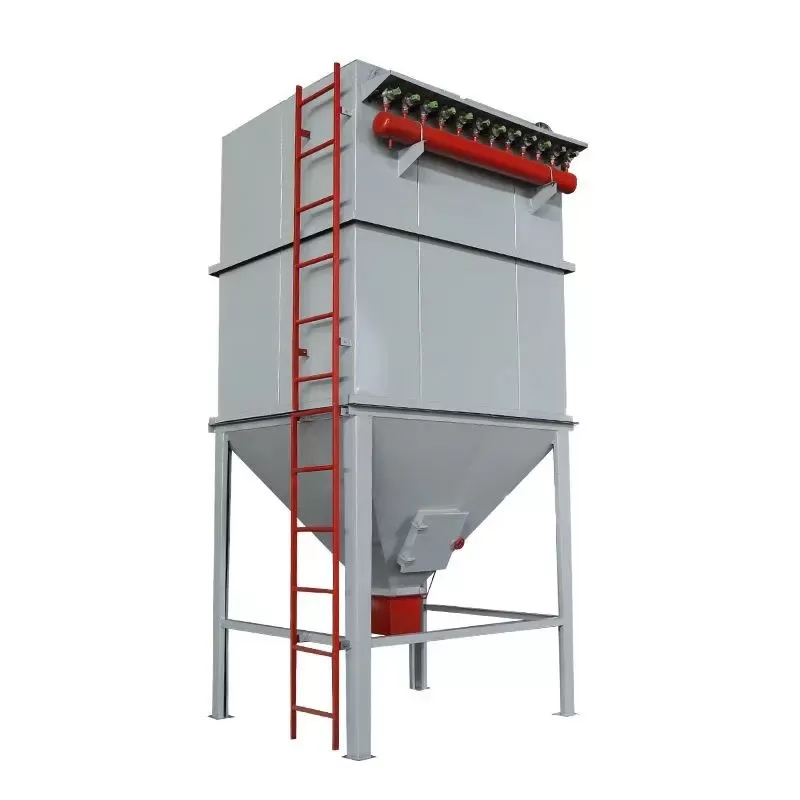
Industrial baghouse dust collector selection
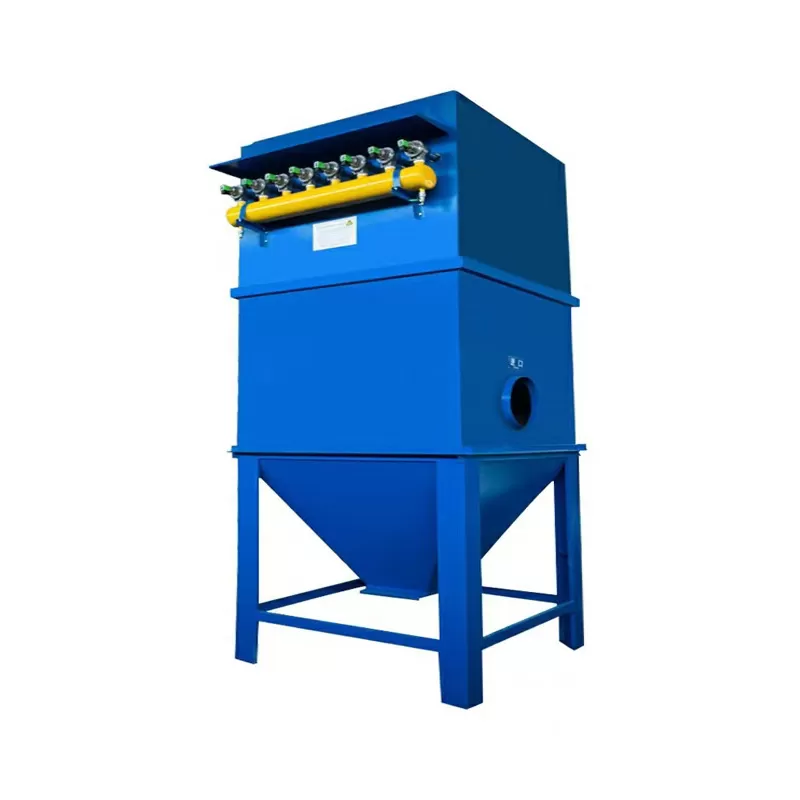
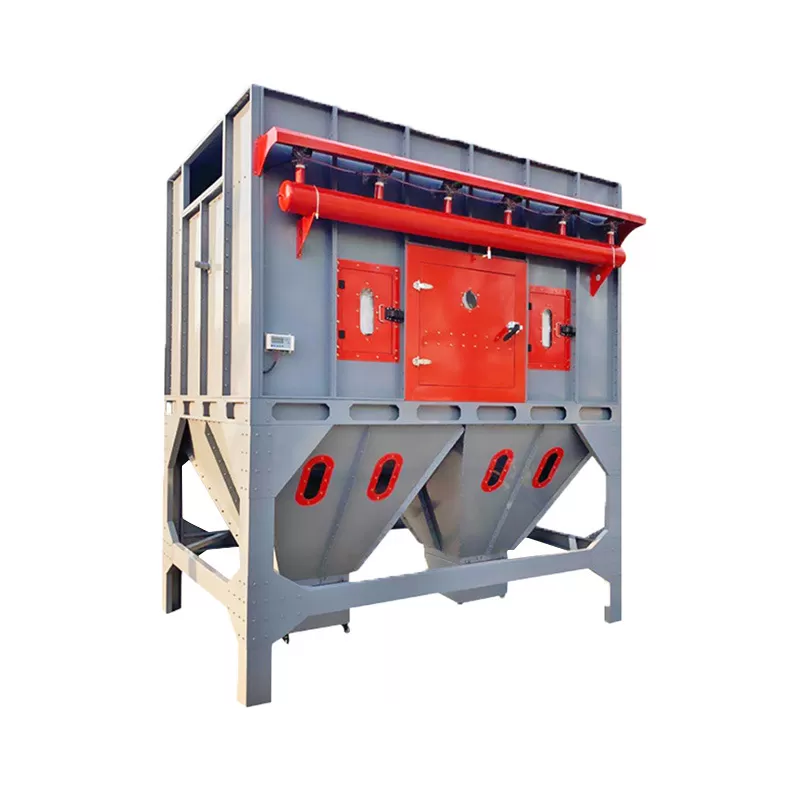
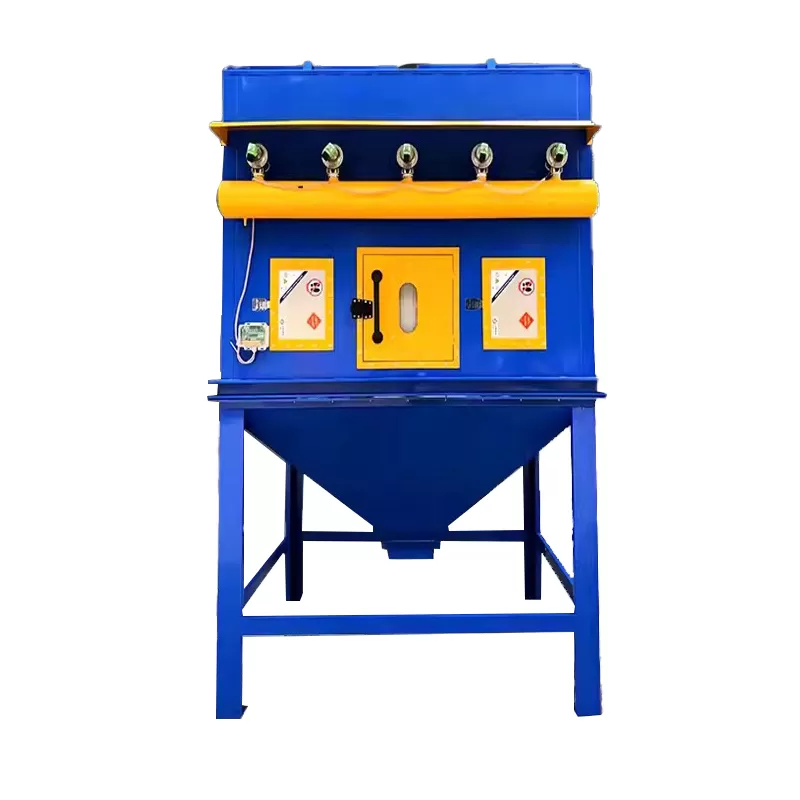
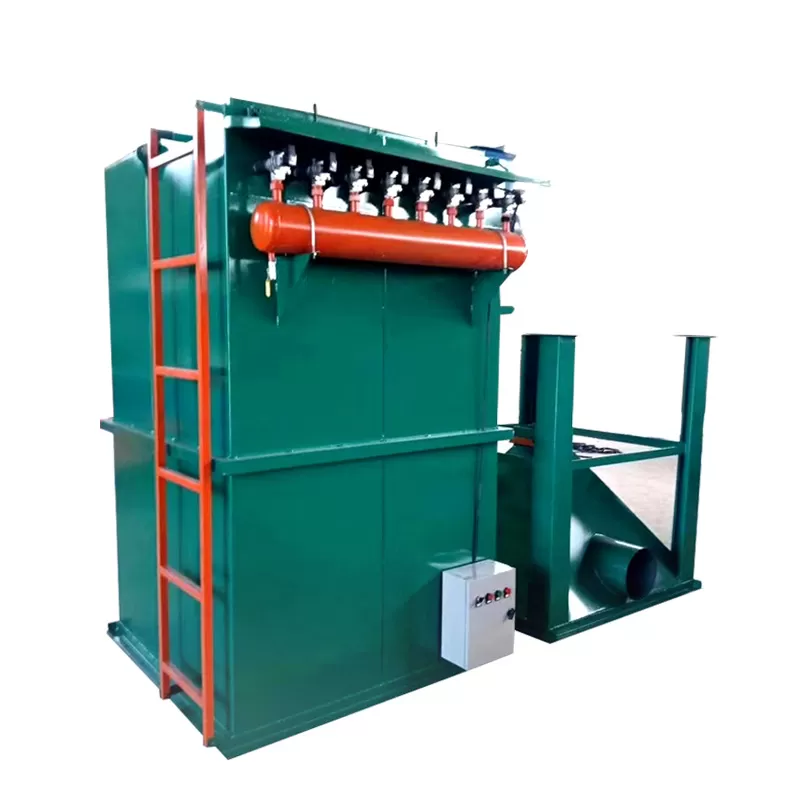
SENOTAY fabric-filter baghouses combine filter bags, support cages, a cleaning system and dust-discharge equipment. Compare the LTMC and DM entries below, then review the published housing and component references for the selected construction.
Fabric-filter separation
Dust accumulates on the filter surface as process gas passes through. The media and collected dust layer both contribute to filtration.
Cleaning matched to duty
Pulse-jet and other bag-cleaning arrangements differ. Confirm the proposed method, cleaning controls and available filtration area.
Integrated dust handling
The inlet, filter chambers, hopper, discharge device and fan must be coordinated with the extraction points and downstream handling system.
Baghouse models and catalog data
Compare the published model entries below as an initial selection reference. Airflow entries explicitly marked CFM retain that unit; the other numerical airflow ranges are in m³/h. Temperature and efficiency values require confirmation for the selected media, dust and operating conditions.
Baghouse models — retain the stated m³/h or CFM unit for each row| Model | Filter Area (m²) | Air volume (units shown) | Temperature Range (°C) | Efficiency (%) | Compressed Air (MPa) | Application Industry |
|---|
| LTMC-H1-4 | 40 | 1,200–2,400 | −20~260 | >99.9 | 0.4–0.7 | Light Dust, Food Processing |
| LTMC-H2-8 | 80 | 2,400–4,800 | −20~260 | >99.9 | 0.4–0.7 | Welding & Metalworking |
| LTMC-H3-12 | 120 | 3,600–7,200 | −20~260 | >99.9 | 0.4–0.7 | Foundries, Casting Dust |
| LTMC-H3-24 | 240 | 7,200–14,400 | −20~260 | >99.9 | 0.4–0.7 | Cement & Concrete Plants |
| LTMC-H3-36 | 360 | 10,800–21,600 | −20~260 | >99.9 | 0.4–0.7 | Metallurgy, Power Plants |
| LTMC-H3-48 | 480 | 14,400–28,800 | −20~260 | >99.9 | 0.4–0.7 | Chemical & Petrochemical |
| DM-400 | 40 | 650 CFM | 5–40 | 99% @ 5 μm | N/A | Workshop Dust Extraction |
| DM-535B | 135 | 2,550 CFM | 0–45 | 99.2% @ 5 μm | N/A | Industrial Fabric Filtration |
| DM-525TS | 82 | 2,550 CFM | −10–50 | 99.1% @ 5 μm | N/A | Anti-Static Industrial Use |
| Custom-Made | As Required | Scalable | Project-specific | Project-specific | Project-specific | OEM/Customized Solutions |
The application column indicates potential duties rather than an approval for every material in that industry. In particular, an anti-static description is not a complete combustible-dust safety specification.
Baghouse construction and component references
These are configuration-dependent catalog ranges and component references, not a universal specification. Final dimensions, flange details, bolt patterns and weight must come from the selected model drawing; range endpoints do not identify matching connections. Operating values require the quoted duty and measurement basis.
Baghouse construction and components — selected configuration governs| Parameter / component | Published reference |
|---|
| Overall length / width / height | 2,500–18,000 / 1,800–9,500 / 4,500–32,000 mm; configuration dependent |
| Inlet flange | DN400–DN2600 |
| Outlet flange | DN350–DN2400 |
| Tube-sheet thickness | 10–16 mm |
| Bolt-circle diameter (BCD) | 500–2,200 mm |
| Access-door options | 500×700 mm / 600×900 mm |
| Filter-bag options | Polyester / PTFE / fiberglass; PPS / NOMEX / acrylic also listed |
| Support cages | Stainless steel / zinc-plated steel |
| Housing options | Q235B carbon steel; ≥4 mm listed housing reference with internal anti-corrosion treatment; selected drawing governs |
| Other listed housing materials | SS304 / SS316 / carbon steel; Q345R option requires selected-design confirmation |
| Pulse-valve reference | DMF-Z-40S; published response ≤0.15 sec, confirm selected valve schedule |
| Control system | PLC with manual and automatic modes |
| Hopper configuration reference | 1.2 m³ volume / 60° discharge angle; confirm model and outlet arrangement |
| Sealing doors | Quick-release sealed-door arrangement |
| Seal / finish options | EPDM / silicone; epoxy coating / hot-dip galvanizing |
CALCULATION & COMMISSIONING CHECK
LTMC-H3-24 loading comparison and bag-condition checks
The LTMC-H3-24 catalog row lists 240 m² of filtration area and 7,200–14,400 m³/h airflow. Using that installed area gives:
7,200 ÷ (60 × 240) = 0.500 m/min
14,400 ÷ (60 × 240) = 1.000 m/min
This calculated range is a comparison of the published entries, not a recommended face velocity for every dust. Confirm actual operating flow, effective online media area and the approved cleaning arrangement. Do not apply this calculation to the DM rows without converting their explicitly stated CFM units and verifying the same volume basis.
Make inspections diagnostic, not just calendar-based
Record bag fabric condition separately from collar seating, cage alignment and seal condition. Look for localized abrasion, tears or contact points during properly isolated service.
Document any collected dust on the clean-air side with the affected bag positions and recent outlet observations; a pressure reading alone cannot locate a leaking bag or seal.
Compare the pressure trend with process throughput and cleaning state. A sudden change warrants investigation but is not, by itself, proof of bag failure or successful cleaning.
The EPA monitoring reference supports using several operating indicators together; follow equipment-specific service guidance for inspection access and replacement-part identification.
How a fabric-filter baghouse works
In a pulse-jet arrangement, process gas flows through supported bags and dust collects on the outside surface. Short compressed-air pulses release accumulated dust into the hopper. The discharge system then transfers the collected material to a bin or conveying system.
As dust builds up, resistance across the filter rises. Cleaning needs to control that resistance while preserving effective filtration. The EPA fabric-filter overview describes differential pressure, outlet particulate concentration and cleaning operation as useful monitoring indicators. This explains the monitoring principle; it is not a test of a SENOTAY model.

Filter media and construction options
Choose bags for the actual gas stream
Media options listed for this range include polyester, PTFE-coated fabric and fiberglass. Other media selections must be confirmed for the quoted design. Give both normal and peak gas temperatures, moisture information and chemical exposure; choosing by temperature alone can overlook condensation or corrosion conditions.
Match housing and service access to the site
The product range includes carbon-steel construction and stainless or zinc-plated support cages. Confirm corrosion protection, gasket materials, access-door arrangement and the space required to remove bags and cages. Fan, motor, controls and discharge equipment should be itemized rather than assumed to be included.
Select a more specific baghouse series
For large long-bag configurations, review the LDMC dust collector. Where compartment isolation during cleaning is a key requirement, review the PPC offline pulse bag filter. The correct choice depends on the complete duty rather than a generic efficiency claim.
Applications and quotation requirements
Baghouse inquiries include cement and concrete processing, metalworking, foundries, mineral handling, power generation and chemical production. Dust that is sticky, wet, highly abrasive or potentially combustible requires specific assessment. Food and other contamination-sensitive applications also require explicit material and hygiene requirements.
Provide operating airflow, temperature and pressure, with the stated volume reference basis.
Describe dust composition, loading, particle-size distribution, moisture and any known hazard properties.
State the required outlet concentration, reporting basis and acceptance-test conditions.
Supply a layout showing extraction points, duct routes, installation space and maintenance access.
Define electricity, compressed air, dust discharge and controls interfaces; identify supplied-by-others items.
For a fair commercial comparison, request the same duty and scope from each bidder. Include replacement media, inspection documentation, installation responsibilities and the proposed service arrangements in the review.
ENGINEERING CHECK
Baghouse operating envelope: moisture and pressure baseline
Specify minimum as well as maximum temperature
The permitted operating envelope is not just the highest media temperature. Condensation can blind the filter or expose the housing to corrosive liquid. Supply water-content or dew-point information where available, relevant gas chemistry, and the temperatures expected during startup, normal running and shutdown.
Ask the engineering proposal to identify any insulation, heating or upstream conditioning required for those conditions. A generic temperature range in a model table does not resolve the dew-point question.
Create a comparable filter-pressure record
Identify the differential-pressure measuring points and units on the drawing. Pressure across the filter is not the same as the total resistance of the hood, ducts, collector and discharge stack.
Record the commissioned baseline with airflow, temperature, cleaning state and filter condition. New media and a conditioned filter may not have the same resistance. Subsequent comparisons should use similar operating conditions; pressure alone does not demonstrate an acceptable outlet dust concentration.
The EPA fabric-filter monitoring reference links moisture, cleaning and condition monitoring to filter operation. Include the agreed recording method and model-specific operating limits in the commissioning documents, not an assumed universal alarm value.
For procurement spanning several equipment types, SENOTAY’s manufacturer overview helps frame the baghouse, ventilation and dust-handling portions of the project as a defined supply package.
Quality documentation for industrial filtration
SENOTAY publishes ISO 9001:2015, ISO 14001:2015 and ISO 45001:2018 management-system certificates for Hebei Outai on the Quality Control & Certifications page. These concern the manufacturer’s management systems, not blanket product approval. Request current copies and confirm the documentation required for your selected model, configuration and destination before ordering.
Baghouse dust collector buying FAQs
Is a baghouse the same as a cartridge collector?
Both use filter media, but conventional baghouses use fabric bags and supporting cages, while cartridge collectors use pleated elements. Dust behavior, cleaning access and operating conditions should guide the choice.
Does the highest catalog airflow determine the right model?
No. Filtration area, gas conditions, dust loading and cleaning arrangement all matter. Ask for the selected operating point and the assumptions used to size the equipment.
How often should filter bags be replaced?
Replacement depends on media condition, operating history and the process. Review differential-pressure trends, leakage or emissions information and inspections; do not assume a universal service-life figure.
What documents support a purchase decision?
Request the project datasheet, layout, materials and media specification, utilities, inspection plan, spare-parts list and applicable conformity documents. Agree how outlet performance will be assessed at the operating duty.
Request a baghouse system proposal
Share the process duty, dust information and site layout. SENOTAY can help define the appropriate baghouse series, equipment interfaces and documentation for a comparable B2B quotation.