
EN
What are you looking for?
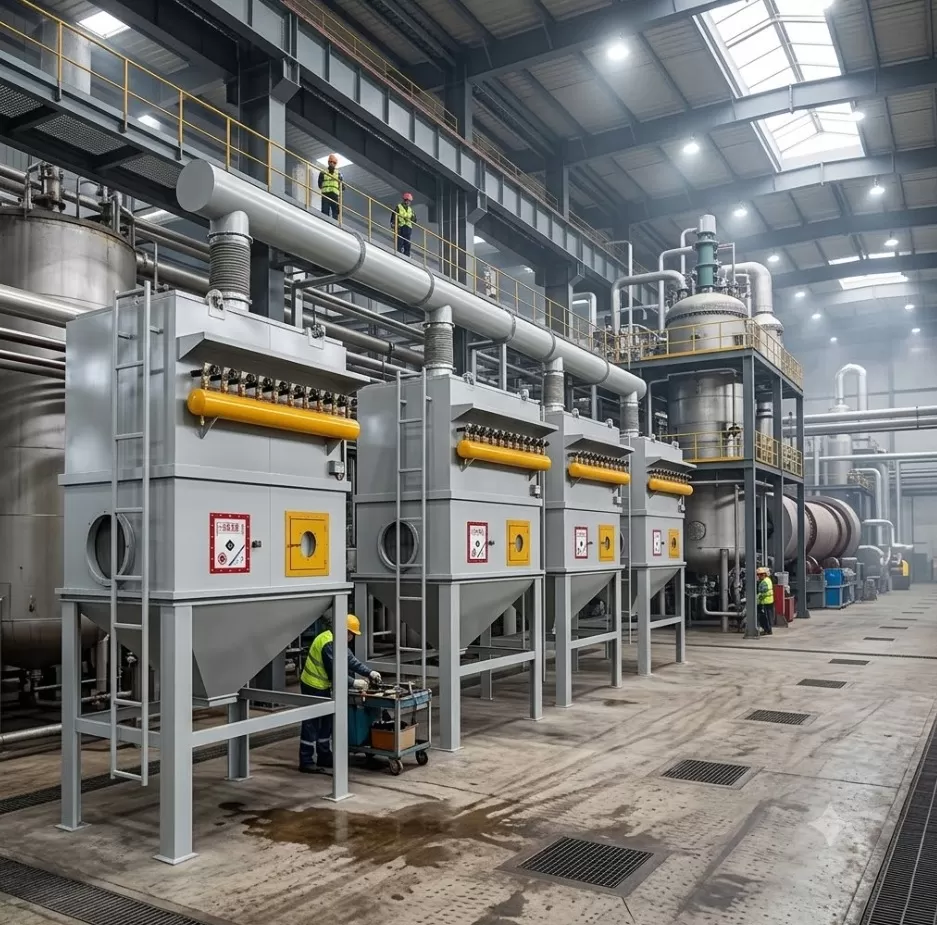
In industries, such as cement, steel, power generation, pharmaceuticals and food processing, a baghouse, or fabric filter dust collector as it is also known, is an important pollution control device. It is used to trap fine particulate matter from industrial exhaust streams on woven or felted filter bags, thus preventing harmful emissions from entering the air.
It's not simply a financial exercise to understand Baghouse Operating Cost. It's a business strategic decision. The global baghouse filter market size was valued above $5 billion in 2024 and is expected to exhibit a compound annual growth rate (CAGR) of 5.2% during the forecast period. However, many facility managers do not realize the total cost of the baghouse beyond the initial purchase price.
We know how to talk to our industrial customers and explain these costs, and we can help you adopt more intelligent filtration solutions based on data science to lower TCO while still meeting performance and compliance requirements.
There are three key factors that affect every baghouse system – energy consumption, maintenance cost and filter replacement. These combined make up 80 – 90% of your annual operating costs once the system is in place.
One of the things that is most easily overlooked in the cost of baghouse operation is the energy used. Airflow through the filter bags is the largest energy consumer in the system, at 30–40% of the total costs of operation.
The electrical cost for small baghouse units is estimated to be $1000 to $2000 per year, and for larger industrial systems, could be more than $20,000 per year. The key driver? Differential pressure (DP).
As the filter dusts up the resistance to air flow rises. The amount of energy consumed by fans increases more rapidly as the pressure drop increases, meaning that a small increase in DP (say 10-15%) can result in a 20-30% increase in fan energy usage. A steel plant case study involving the use of GORE® LOW DRAG Filter Bags showed that it can be proven to lower your energy costs by keeping DP lower throughout the lifecycle of the filter — proving that the right filter technology can directly affect your electricity bill.
Key energy cost factors include:
Fan and motor size (typically 5 HP to 500+ HP for large systems)
Differential pressure across filter bags — higher DP means higher kWh draw
Cleaning system type: pulse-jet systems also consume compressed air (adding $500–$8,000/year)
Operating hours — 24/7 continuous operations vs. shift-based schedules
Motor efficiency class (IE3 vs. IE4 motors can save 8–18% in electricity)
Maintenance is the second most important cost. The annual periodic maintenance of a baghouse system is $1000 to $15,000 depending on operating condition, dust type and bag house system size. This means for regular scheduled work as well as unexpected repairs.
Reactive maintenance is invariably much more costly than preventive maintenance. The cost of an unexpected plant shutdown to the cement or steel plant is $5,000 to $50,000 per day in lost production, compared to maintenance costs which are very inexpensive.
Industry maintenance recommendations include the following as the top five most frequently replaced parts: filter bags, pulse valves, timer boards, solenoids and diaphragm kits. The fan can be used for the life of the system, if the fan belt and fan bearings are properly maintained.
Best practices for cost-effective maintenance:
Check DP every day to detect performance degradation early on.
Perform monthly visual checks for bag hardening, holes or dust accumulation in hopper areas.
Conduct dye testing to check for leaks as part of semi-annual and annual comprehensive inspections
At each annual inspection, change or recalibrate electronic controls, timers and sensors.
Keep thorough maintenance records – Data-driven scheduling can save up to 20% on over replacement costs.
The table below provides a comprehensive annual cost reference for facility planning and budgeting:
Source: Industry data compiled from Torch-Air, US Air Filtration, and Senotay field analysis (2024–2025).
The single most expensive component of a baghouse system is the filter bag. Their lifespan determines how often you will have to replace them and the wrong filter will cost you thousands of dollars more than you need annually.
Normally filter bags last for 1 to 3 years in most industrial dust collection systems. In non-abrasive environments, however, properly maintained systems can last for 4–5 years and in cases of abrasive or high-temperature environments, bag life may be 12–18 months. The cost to replace filters is $3,000 to $20,000 per year for large configurations, depending on the number of bags, the type of media used, and how much they are used.
Not all filter bags are equal. For instance, PTFE membrane filters are more expensive per bag ($50 - $120 per bag) but have the lowest differential pressure, longest service life (4 - 7 years) and best energy performance, which means that they can save both electricity and compressed air costs.
Note: DP = Differential Pressure. Lower DP directly correlates to lower fan energy consumption.
With a wealth of industrial filtration experience, Senotay can assist facilities in lowering the total baghouse operating cost by intelligently selecting the right product, engineering services, and maintenance strategies, based on data.
One example of a medium-size food processing plant: A few medium-size food processing plants that were running a baghouse for 16 hours daily switched from traditional polyester felt bags to a PTFE membrane bag solution, recommended by Senotay. This resulted in a 18% reduction in differential pressure (fan energy savings estimated to save $3200/year) and a 50% increase in bag life (from 18 months to 36 months). Overall savings were over $7,000 per year, with complete ROI to be achieved within less than 14 months.
The solution that Senotay offers combines three pillars on cost optimization:
Product Selection: Selection of the filter media to the precise conditions of operating temperature, chemical exposure and particle type to optimize service life and minimize energy losses.
Eliminate Reactive Emergency Replacement with Preventive Maintenance Planning: Trend Analysis of Differential Pressure and Predictive Replacement Scheduling;
Compliance Assurance: Avoiding costly penalty-driven shutdowns with EPA NESHAP, MACT, and regional emission compliance and enforcement
The total annual operating costs usually are from $4,800 to $12,500 for small systems. There is a range of cost, from $28,000 to $73,000 or higher, depending on energy costs, number of operating hours, dust type, and maintenance.
Filter bags can be used in normal industrial conditions for 1-3 years. Using the best filter media, the proper cleaning cycles, and proactive maintenance, a lifespan of 4-7 years is possible. Replacement should be based on differential pressure trends, rather than on calendar schedules.
The major cause of high energy consumption is due to high differential pressure (DP). If the filter bags are not effectively cleaned, the fan motor has to work more to keep the airflow going up electricity bills. One of the best energy saving measures is to switch to a low DP filter media (change to PTFE membrane filter media).
Yes — consistently. In heavy industries, costs of reactive repair or unplanned downtime range from $5,000 to $50,000 per day. Typical replacement costs for routine inspections, differential pressure monitoring and scheduled replacements are much less than emergency, and can increase the total life of the system to 15-20 years.