
EN
What are you looking for?
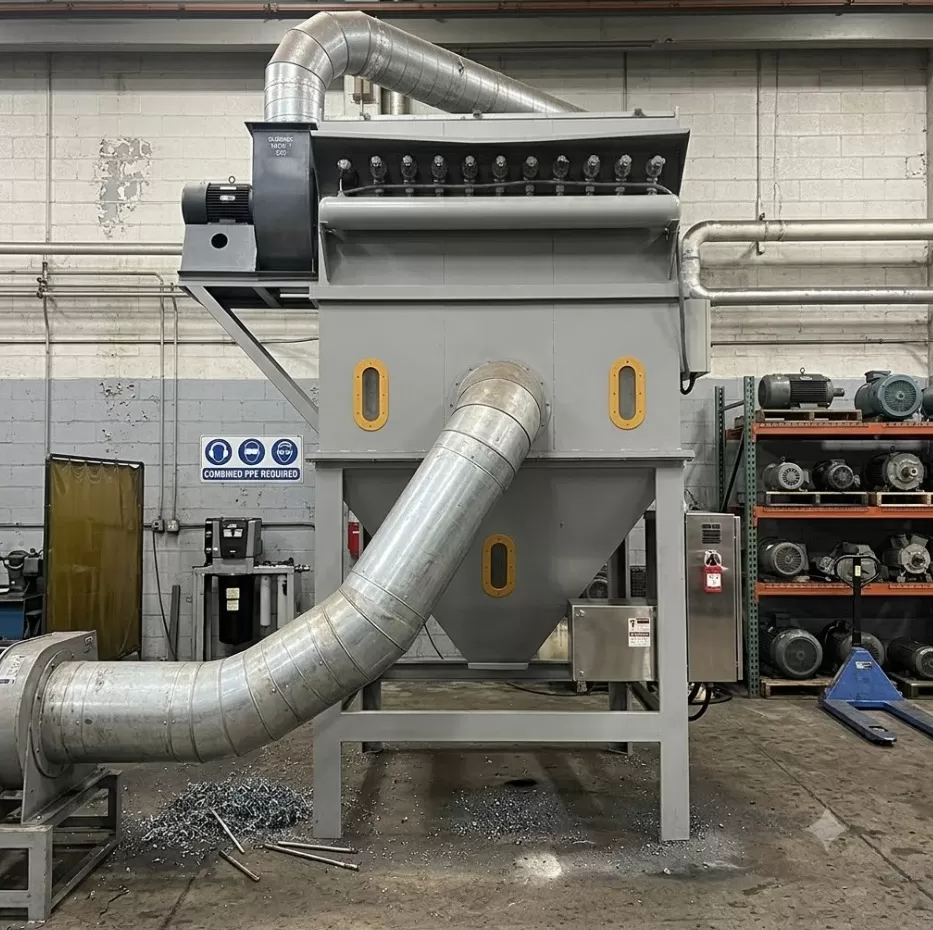
Airborne particulate matter in industrial settings is more than just a nuisance — it is a compliance risk, health hazard and operational liability. A Baghouse Dust Collector is a fabric filter designed to collect dust, fume and fine particulates created during manufacturing, processing, combustion. Designed properly, such systems can be 99.9% efficient in collecting air pollution, meeting the industry standard for air pollution control.
The U.S. Environmental Protection Agency (EPA) estimates that PM2.5 and PM10 from industrial processes cause more than 200,000 premature deaths every year worldwide. Baghouse filtration systems are the most effective technology for meeting NESHAP, OSHA and local emission standards – provided they are optimized for the application.
The engineering teams at Senotay have tested hundreds of baghouse configurations in the cement, steel, woodworking, chemical and food-processing industries. It is consistently found that up to 80% of long term operating performance is a result of design decisions made prior to installation. This article explains the key points you need to know.
Air-to-cloth ratio (A/C ratio) is the amount of air (in cubic feet per minute) that is filtered by each square foot of cloth. In the design of baghouses, it is the most significant parameter for Airflow.
Industry standard ranges:
Pulse-jet baghouses: 3.5 – 6.0 ft/min (for general dust)
Reverse-air baghouses: 1.5 – 3.0 ft/min (for fine or cohesive dust)
Shaker baghouses: 2.0 – 4.0 ft/min
The A/C ratio was lowered from 6.2 ft/min to 4.1 ft/min at a cement plant and resulted in a 34% increase in bag life and a 28% drop in pressure drop, in a field case study conducted in 2023. The one modification resulted in a savings of about $47,000 in maintenance costs per year for the client.
Can velocity is the speed of the air flow in the space between the filter bags in the baghouse house. The velocity in the pulse-jet system can be greater than 3 ft/s, before the cleaned dust particles fall in the hopper, which directly decreases the collection efficiency.
Senotay suggests that in most applications, velocities of less than 2.5 ft/s be used for the design of the can. To ensure a low re-entrainment loss of 15% or less, can velocity for fine dusts <10 microns should not exceed 2.0 ft/s.
Table 1: Key Baghouse Design Parameters and Their Performance Benchmarks (Senotay Reference Data)
The "basis of a baghouse" is its filter bag fabric. The most common reason for early bag failure (accounting for more than 60% of industry surveys) is the selection of the wrong material. The right fabric should have a combination of properties including temperature resistance, chemical resistance, filtering efficiency, and cleanability.
Table 2: Fabric Filter Media — Specifications, Efficiency, and Application Guide (Senotay Standard Reference)
Though the initial cost of a PTFE membrane-laminated bag is 30-50% higher than a conventional bag, application engineers at Senotay state that they can achieve a total cost of ownership (TCO) savings of 18-25% over a 5-year period because of their better surface filtration and cleaning process.
The cleaning system eliminates the dust cake that builds up on the bag surfaces so that the airflow through the bag is maintained and that pressure drop is kept consistent. There are three major mechanisms in operation in industrial baghouses:
Pulse-jet cleaning: Compressed air bursts (80 to 100 psi) remove dust cake; used in 70%+ of new installations worldwide
Reverse-air cleaning: Gentle airflow reversal; recommended for fragile bags; sticky dusts.
Mechanical shaker cleaning: Physical vibration; least expensive but least effective with fine particles
One of the many overlooked design variables is pulse-jet timing. The monitoring data collected at 42 industrial sites by Senotay suggests that over-pulsing (pulsing intervals < 5 seconds) can cause up to 40% wear on bags, whereas under-pulsing can result in the buildup of pressure exceeding system limits. The best pulse interval for most general industrial applications is in the range of 8-12 seconds with a pulse duration of between 100 and 150 milliseconds.
A major contributor to non-uniform loading of dust is poorly designed inlets. Loss of service life can be up to 50% in high velocity areas due to localized bag abrasion, if inlet velocity is greater than 4,000 ft/min without proper baffling. Senotay's inlet velocities range from 3,000 to 3,500 ft/min and they need to be combined with perforated distribution plates and/or deflector baffles to assure uniform gas distribution.
Gas stream temperature must remain at least 20–30°F above the dew point temperature to prevent moisture condensation inside the baghouse.Dust sticks to the filter bags due to condensation, blinds the filter bags and forms a permanent cake which can't be removed by pulsing. Where high relative humidity is required or in processes where combustion gases come into contact with the insulated housing, Senotay combines insulated housing design and pre-conditioning zones to ensure the desired temperature margin.
A biomass energy plant case study reported in 2022 indicated that recurrent bag blinding events which were occurring every 6 to 8 weeks were eliminated by adding a heat-traced inlet section. Uptime went up from 87% to 96% and filter bag change frequency decreased from 3 times per year to 18 months.
Filtered dust is collected in a hopper, which is discharged from the system. Typical design mistakes are:
Too shallow a slope angle: Powdery or cohesive materials will bridge in hoppers that are not angled at 60° or greater.
Inadequate valley angles: In multi-hopper systems, below 60° angles result in material being trapped and compaction occurs.
Overfilling: Dust concentration is too high and the dust is re-entrained in the gas stream above the throat of the hopper.
All standard hopper designs are accomplished at a minimum slope of 60° and are recommended to be 65° when dealing with materials like fly ash, lime or hygroscopic dusts. Common recommendations to avoid overfilling and to ensure even dust cake removal are automated level sensors and rotary air lock discharge systems.
Senotay has more than 10 years of hands-on engineering experience to draw from when you need to design, select and optimize a baghouse system. Senotay combines computational fluid dynamics (CFD) modeling with actual field data from an operational industrial facility to check the design parameters before the commissioning of the facility.
Systems built by Senotay that meet key performance benchmarks:
Average collection efficiency of system: ≥0.5 microns, 99.97%
Mean time between unplanned maintenance events: 18+ months
Extension of filter bags' life cycle: 30–45% above the baseline performance
Pressure drop optimization: usually, maintained within 3-5 inches W.C. across all operating conditions.
Senotay also offers post-installation performance audits, which utilize real-time pressure differential monitoring and emissions stack testing to keep systems operating in design parameters throughout the changing process conditions.
▪ Industrial Baghouse Series
▪ LDMC baghouse dust collector | PPC baghouse dust collector | DMC Pulse Jet Baghouse Dust Collector | Baghouse Dust Collector
▪ Electrostatic & Gas Treatment
▪ Horizontal electrostatic precipitator | Wet electrostatic precipitator | Electrostatic Dust Collector | PP Spray Tower | Catalytic Combustion Dust Collector
▪ Cyclone Dust Separators
▪ Single-Cylinder Cyclone Dust Collector | Combined Cyclone Dust Collector | Ceramic Multi-Tube Cyclone Dust Collector
▪ Cartridge & Station Extraction
▪ Cartridge Dust Collector | Modular Dust Collector | Mobile dust collector | Welding Fume Purifier | Grinding table dust collector
Senotay recommends using an air-to-cloth ratio of 3.5 to 5.0 ft/min for general industrial dust applications. Finer or more cohesive dusts require a lower dust to water ratio of 3.0-4.0 ft/min to release the cake from the filtering surface, and to prolong the useful life of the filter bags.
Directly, whether cleaned dust re-enters the gas stream or not is determined by velocity. Re-entrainment in a pulse-jet baghouse starts to occur when the velocity of the pulse exceeds 3 ft/s. Senotay is aiming for sub 2.5ft/s for constant performance.
The major causes of premature bag failure are: overloading the bag (air-to-cloth ratio), overpulsing/underpulsing, inlet gas temperatures outside the cloth rating, moisture condensation (dew point violation), and overfilling the hopper which causes re-entrainment. They can all be avoided with correct Airflow Design and system sizing.
PTFE membrane bags are recommended for when: dust particles are < 1 micron size; dust is toxic or must comply with zero emissions; dust is sticky or highly cohesive; dust must be captured at >99.99%. Though they cost more initially, they will help to prolong service intervals and decrease the amount of cleaning.
Senotay offers filter media selection consulting, initial design and engineering review, installation commissioning, performance monitoring, and scheduled filter media maintenance audits, all rolling into one. With a data driven approach, the baghouse systems can be maintained to fulfill changing process and compliance needs throughout their life cycles at Senotay.
A well-designed and well-maintained baghouse should have a pressure drop of 3 to 6 inches of water column (W.C.). Readings that continue to exceed 6 inches W.C. are signs of excessive dust cake buildup, under-pulsing or bag blinding. If the readings are below 2"W.C., there might be a bag problem, or a bypass leak.