
EN
What are you looking for?
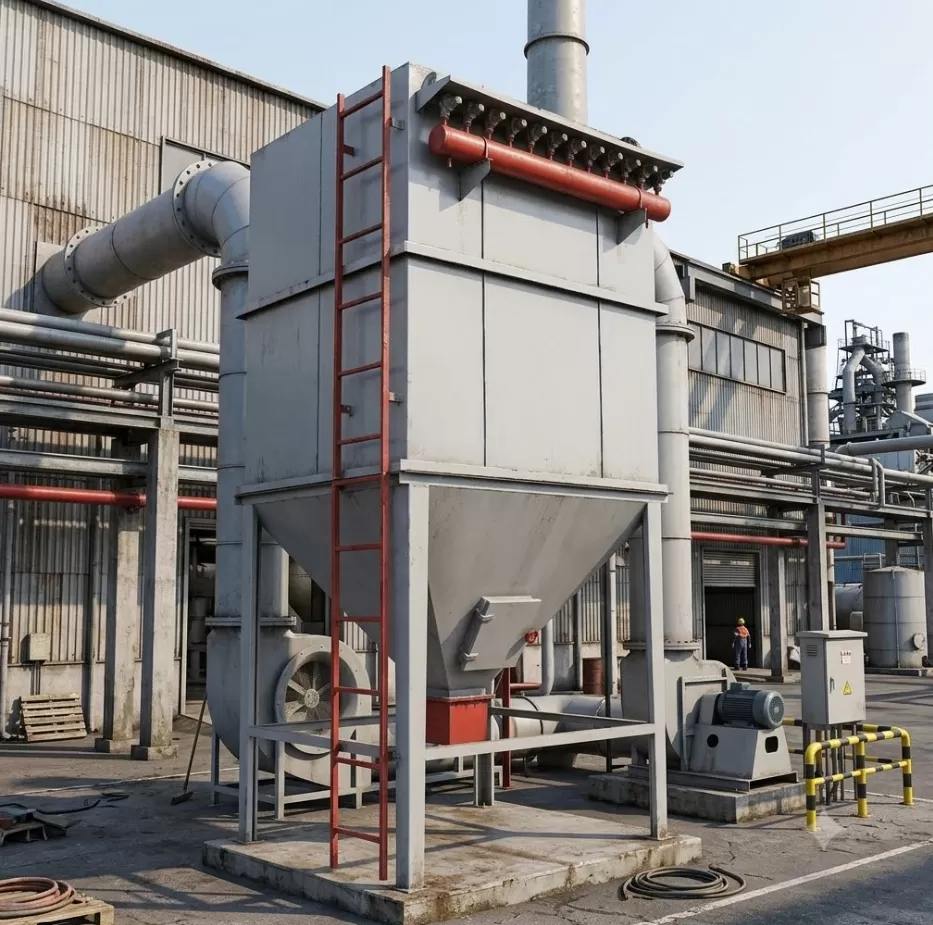
The most important design factor for any pulse-jet or reverse-air baghouse system is the Baghouse Air-to-Cloth Ratio, or gas-to-cloth ratio or filter ratio. It is a measurement of the amount of cubic feet of air per minute of filter fabric. Go wrong and the results are immediate: faster bag wear, faster pressure drop, compliance issues will arise, and expensive unplanned downtime will occur. Do it correctly, and your system will be working in top condition for years.
According to Senotay's engineering data on an average of more than 200 industrial installations, 46% of all baghouse failures are a direct result of an incorrect air-to-cloth ratio or a ratio that has drifted off target. This guide provides you with a formula and industry benchmarks, optimization levers and real-life case data to help you maintain your system within the optimal range.
The formula itself is straightforward. What matters is applying it correctly against your actual operating conditions, not just design specs:
Important: Always use net cloth area, not gross area. Pulse-jet systems typically have 10–15% of bags offline during cleaning cycles — a factor many engineers overlook, leading to underestimated ratios and under-designed systems.
Optimum ratios are dependent on the type of dust, particle size and temperature. The table below shows the benchmarks verified by Senotay with field data and ASHRAE/EPA guidelines:
Source: Senotay field engineering database, EPA AP-42 guidelines, and ASHRAE Filtration Standards (2023 edition).
The simplest way to correct the over-ratio system is to install either extra bag modules or longer bags. One midwest pharmaceutical plant lowered its ratio from 4.8 to 2.9 ft³/min/ft² by installing a second compartment, decreasing the need for bag replacement from every 8 months to every 38 months and saving $31,000 a year.
However, for systems which process diluted gas streams, engineering to reduce infiltration air can achieve a reduction in CFM without any capital expenses. Audits conducted during the Senotay project have found that 60% of facilities surveyed have 8–22% potential airflow loss due to ductwork leaks and unnecessary draft points.
Senotay's expanded PTFE (ePTFE) membrane bags offer, at 15 to 25% less than the standard felt bags, the same airflow with an effective pressure drop. This allows for an extension of an existing system's safe operating range, without requiring any structural changes — great for systems that cannot be expanded.
Dynamic, differential pressure initiated cleaning keeps the ratio consistent, even during high-load periods, to prevent a high dust cake thickness. In variable load processes, Senotay's smart controllers have shown an effective 29% reduction in peak delta-P events, a significant increase in effective air-to-cloth stability.
Recalculate A/C ratio quarterly — process loads and bag counts change; your ratio drifts too
Use net cloth area in all calculations; never use gross bag count without accounting for offline bags
If differential pressure consistently exceeds 5.5 inches w.g., treat it as a ratio warning signal
Document baseline CFM at commissioning — deviations above 10% warrant a full re-audit
Pair ratio monitoring with opacity readings for a complete picture of system filtration health
Case Study: Ratio Optimization Delivers 34% Operating Savings
Application: Cement Industry, Southeast Asia, 64,000 CFM pulse-jet baghouse, 320 bags.
A field audit performed by a Senotay engineer showed that the facility was running at an A/C ratio of 7.1 ft³/min/ft², almost 2 times the maximum recommended A/C ratio for cement dust applications. Root causes: 18 bags were permanently removed from the system due to corrosion, and the throughput of the kiln was increased by 40% for 3 years, without upgrading the system.
Full return on investment was achieved within 9 months of Senotay’s optimization program implementation.
Net Cloth Area: The total area of the bags when they are filtering at that time (excluding bags offline for cleaning or maintenance). Always use this in your ratio calculation.
Differential Pressure (ΔP): Difference between the pressure of dirty air entering the baghouse and clean air leaving the baghouse. It increases due to dust on bags and decreases when the bags are cleaned. A key indicator of ratio problems is sustained high ΔP.
An air to cloth ratio like concept when the baghouse is used for process gases, not ambient air. The same formula and benchmarks continue to be used.
This will be based on the industry and type of dust. The ratios from 3:1 to 6:1 are acceptable for most industrial applications. When using fine, sticky, hygroscopic dusts, the ratio should be lower (2.0–3.5), and for coarser, free-flowing dusts the ratios can be higher (up to 7.0). Always check with Senotay's industry-specific benchmarks for your application.
A high ratio will cause rapid bag wear, higher differential pressure, higher fan energy consumption and may result in particulate emissions exceeding the regulations. Reviewing the data from Senotay indicates that a ratio 30% higher than the recommended maximum decreases the average bag life up to 65%.
Often yes. Leakage in ductwork can be reduced by sealing them, putting all the bags back into service, and installing high permeability ePTFE membrane bags: 15-30% without structural capital investment. Senotay's free site audit determines exactly what levers will work for your system.
Senotay suggests to re-calculate every 3 months or after changes in process capacity of more than 10%. Production increases, new dust sources, and bag retirement all have an impact on the ratio. It is often only calculated at commissioning and not updated — a major contributor to degradation of the system.
Senotay's end-to-end airflow support includes onsite CFM measurement, net cloth area verification, selection of the proper bag media for your dust profile and installation of the real-time delta-P monitoring system. Our optimisation programmes have achieved an average 20-40% reduction in total Baghouse operating cost at 200+ sites worldwide.