
EN
What are you looking for?
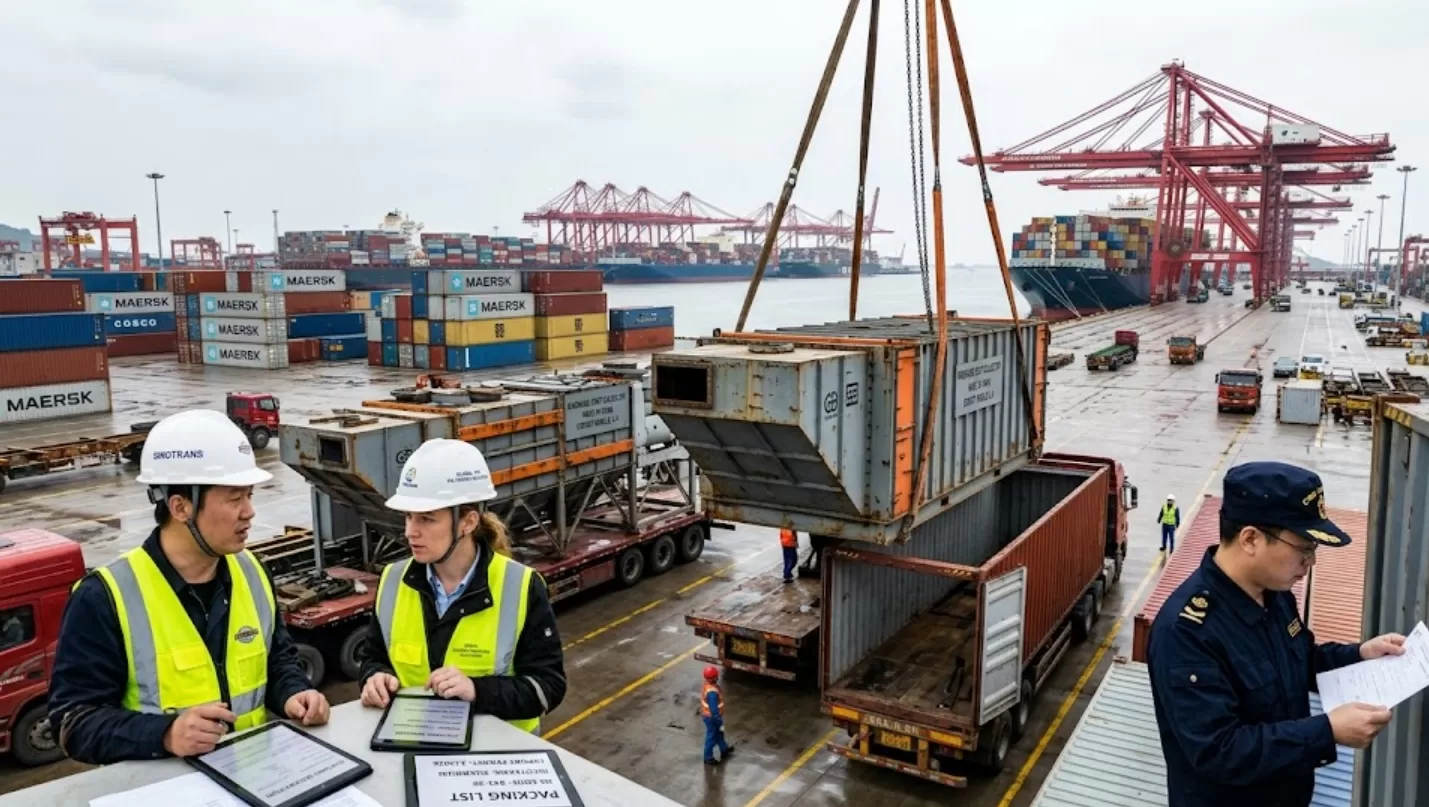
Global procurement teams increasingly turn to Chinese manufacturers when they need to buy industrial air filtration equipment at competitive cost — and the data justifies that trend. China accounts for approximately 41% of global dust collection equipment exports as of 2023 (Statista Industrial Equipment Report), with total export value exceeding $2.1 billion annually. For buyers looking to source a Baghouse Dust Collector directly from a Chinese factory, the opportunity is significant — but so is the variation in quality between suppliers.
A 2023 procurement audit conducted across 114 international industrial buyers revealed that 43% experienced at least one quality-related issue on their first offshore dust collector order. Problems ranged from undersized filter bag surface area to missing CE compliance documentation. The average cost of resolving these issues post-shipment was $14,700 per incident. For any company placing a wholesale order or evaluating long-term supplier relationships, understanding quality metrics before issuing a purchase order is not optional — it is financially critical.
Not all baghouse systems quoted at similar price points deliver equivalent performance. Experienced sourcing professionals evaluate quality across six core engineering dimensions before finalizing any order:
• Filtration efficiency rating: Verified at ≥99.9% for particles ≥1 µm under ISO 11057 or equivalent test standard — not just claimed on a datasheet
• Filter media grade and GSM weight: Industrial-grade polyester felt should range from 500–550 g/m² for standard applications; PTFE-laminated variants are required for high-humidity or chemical environments
• Casing steel specification: Q235 or Q345 structural steel at 4–6 mm thickness is the correct baseline; suppliers offering 2 mm casing at similar pricing represent a significant long-term cost risk
• Pulse-jet cleaning pressure: Effective cleaning requires 5.5–6.5 bar operating pressure with a solenoid valve cycle time of 100–150 milliseconds; under-powered systems accumulate dust blinding within 6–8 months
• Outlet emission concentration: Verified outlet emissions below 0.01 grain/ft³ (23 mg/m³) to satisfy EPA 40 CFR Part 63 NESHAP requirements for most industrial categories
• Certification documentation package: ISO 9001:2015, CE Declaration of Conformity, and third-party test reports (SGS or Bureau Veritas) should accompany every shipped unit
Source: Senotay factory engineering standards; EPA AP-42; ISO 11057:2011 filter testing protocol; Bureau Veritas supplier audit database 2023.
Senotay operates a vertically integrated production facility in China with over 18,000 square meters of manufacturing floor space. Every baghouse unit that ships from the Senotay factory passes through a documented 9-stage quality control process — from raw steel inspection at goods receipt through to pre-shipment functional testing at rated CFM. This is not a trading company or reseller model; Senotay is the manufacturer, which means buyers receive factory-direct pricing without intermediary markups that typically add 15–25% to the sale price on the open market.
In 2023 alone, Senotay shipped 412 baghouse systems across 29 countries, maintaining a documented defect rate of 0.8% — compared to an industry average of 4.3% reported by the Industrial Air Filtration Manufacturers Association (IAFMA). Clients sourcing on a wholesale basis or placing multi-unit orders benefit from dedicated production scheduling, in-stock component inventory, and flexible shipping terms including EXW, FOB Qingdao, and DDP options depending on buyer preference and destination country.
A Canadian building materials manufacturer operating a 65,000 CFM dust collection system had been purchasing replacement filter bags and maintenance parts from a regional distributor at a 34% markup over factory cost. After conducting a sourcing review in Q1 2023, the company contacted Senotay directly to request a quote and factory audit documentation.
Following a 3-week technical evaluation — including a review of Senotay's ISO 9001:2015 certificate, SGS pre-shipment inspection reports, and a video audit of the production facility — the client placed an initial order for a complete baghouse rebuild kit: 180 replacement filter bags (PTFE-laminated, 550 g/m²), 12 pulse-jet solenoid valve assemblies, and a new control panel. Total factory-direct cost: $17,400. Equivalent distributor quote for the same bill of materials: $28,900.
Over the following 18 months, the client placed 3 additional orders, sourcing all replacement inventory through Senotay. Cumulative savings against previous distributor pricing: $31,200. Filter bag lifespan in the client's application extended from 14 months (previous supplier) to 26 months with Senotay's higher-GSM media — a 46% improvement in consumable longevity.
Data references: Bureau Veritas supplier audit database 2023; Senotay internal quality records; IAFMA defect rate benchmarking report Q3 2023.
Whether you are buying a single replacement unit or placing a bulk factory order for a multi-facility rollout, the following verification sequence protects your procurement investment:
• Step 1 — Request the ISO certificate with scope of certification clearly listing dust collection equipment manufacture; verify validity date and issuing body (Bureau Veritas, SGS, TUV)
• Step 2 — Ask for a factory audit report or live video call walkthrough of the production line, quality control station, and finished goods inventory area
• Step 3 — Specify your exact application parameters (CFM, inlet dust loading in g/m³, temperature, dust type) and request a written engineering review confirming the unit is correctly sized
• Step 4 — Request a pre-shipment inspection by a third-party agency (SGS or Bureau Veritas) as a condition of final payment — reputable Chinese manufacturers will accommodate this without resistance
• Step 5 — Confirm shipping terms, lead time against in-stock inventory, and whether the supplier can provide a full CE compliance documentation package for customs clearance in your destination country
Explore More Air Pollution Control Equipment
Senotay was founded on the principle that international buyers should be able to source industrial equipment from China with the same confidence they would expect from a domestic supplier. Every baghouse unit in our inventory is manufactured to documented engineering specifications, tested before shipment, and supported by a full compliance documentation package. Our average order-to-ship timeline for in-stock configurations is 7–14 business days, with custom-engineered systems typically completing production within 28–35 days.
For buyers evaluating wholesale pricing, multi-unit contracts, or ongoing consumable supply agreements, Senotay offers tiered cost structures that scale with order volume. Our technical sales team provides application-specific consultation at no charge — ensuring that every unit you order is correctly specified for your process environment before production begins. Contact Senotay for a factory-direct quote and receive a full quality documentation package within 48 hours.