
EN
What are you looking for?
In industrial environments where airborne particulate is a daily operational reality, a Baghouse Dust Collector is not simply a compliance tool — it is a core energy investment. Whether you are looking to source a new system, order replacement filter bags, or evaluate wholesale pricing from a Chinese factory or manufacturer, understanding the energy return on investment (ROI) of your dust collection setup is essential to long-term profitability.
According to the U.S. Department of Energy, industrial dust collection and ventilation systems account for approximately 25–35% of a facility's total energy consumption. In sectors such as cement, metalworking, woodworking, and pharmaceutical manufacturing, this figure can climb even higher. A single underperforming baghouse unit can silently erode $18,000–$45,000 in annual energy costs per installation.
Senotay specializes in connecting global buyers with verified baghouse dust collector suppliers, manufacturers, and factories — primarily from China — where in-stock inventory, competitive cost structures, and reliable shipping logistics converge to deliver real value.
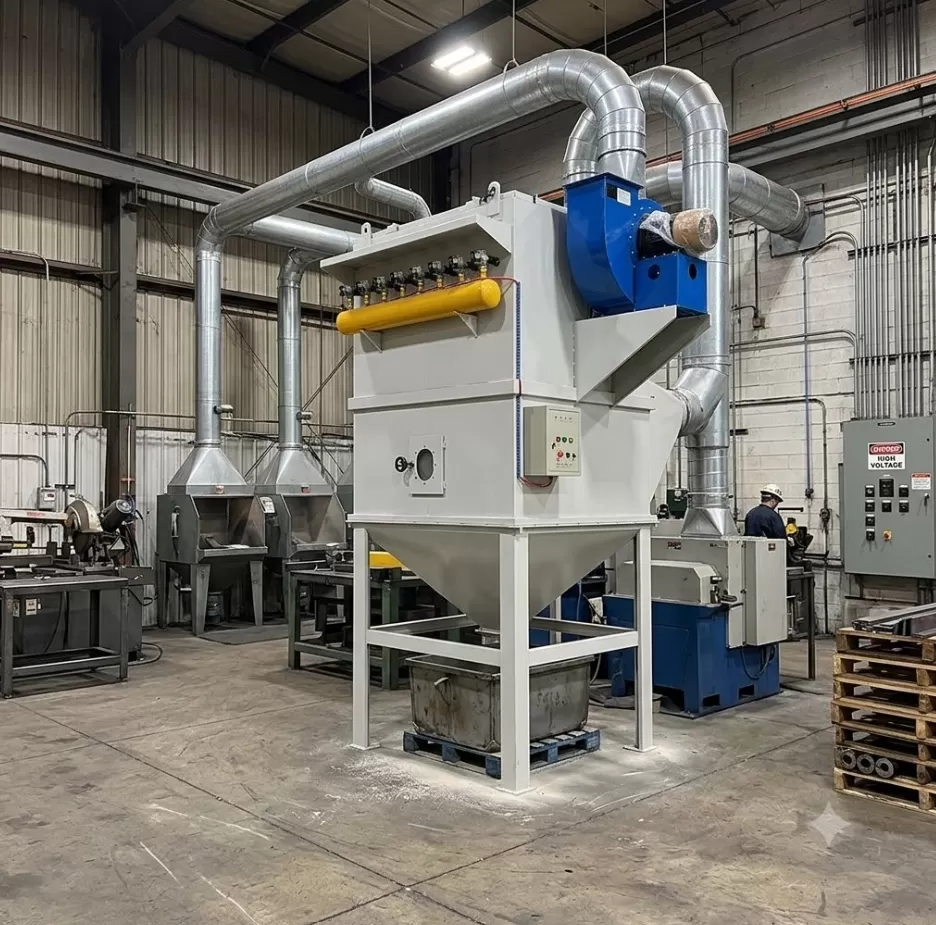
Energy ROI in dust collection is measured not just by upfront purchase price or sale price per unit, but by the total cost of ownership (TCO) over a system's operational lifespan — typically 15–25 years. The three primary energy cost drivers are:
• Pressure Drop: Measured in inches of water gauge (inWG), higher pressure drop means your fan motor works harder, consuming more electricity. Industry benchmark: maintain below 4–6 inWG across filter media.
• Fan Motor Load: A 100 HP fan motor running at 95% efficiency versus 85% efficiency saves approximately 7.5 kW per hour — roughly $5,250 annually at $0.08/kWh.
• Cleaning Cycle Frequency: Pulse-jet systems that overcleaned or undercleaned bags reduce filter life by up to 40%, increasing replacement cost and downtime.
• Filter Bag Condition: Worn or blinded bags increase airflow resistance and can raise energy consumption by 15–22% compared to a properly maintained system.
• Air-to-Cloth Ratio (ACR): Operating outside the recommended ACR range (typically 3:1 to 6:1 ft/min for most applications) directly inflates operational energy costs.
A 2023 case study from a mid-sized metalworking facility in Ohio reported that switching to high-efficiency polyester felt filter bags — sourced at wholesale cost from a Chinese manufacturer with in-stock inventory — reduced their system's pressure drop from 7.2 inWG to 4.1 inWG. This translated to a 19% reduction in fan energy consumption and a full ROI on the filter investment in just 5.2 months.
Table 1: Energy Cost Comparison — Optimized vs. Unoptimized Baghouse Systems
Note: Calculations based on $0.08/kWh industrial rate, 8,000 operating hours/year, and a mid-scale 30,000 CFM baghouse unit. Senotay can provide quote-based cost modeling for your specific application.
1. Right-Size Your Air-to-Cloth Ratio from Day One
Oversized systems run fans harder with less benefit; undersized systems clog faster. When you order or buy a baghouse system, provide accurate volumetric flow data (CFM) to ensure the manufacturer ships a correctly sized unit. Chinese factories that specialize in industrial filtration equipment can custom-configure ACR to application specs before shipping — often at lower cost than domestic options.
2. Invest in Premium Filter Media — the Highest-ROI Component
Filter bags represent 15–20% of a baghouse system's total lifecycle cost. Yet choosing higher-quality media — such as PTFE-laminated or woven fiberglass — can extend bag life from 12 months to 36+ months. Wholesale pricing from verified Chinese suppliers can reduce per-bag cost by 30–45% compared to domestic distributor pricing, while maintaining ISO 9001-certified quality standards.
3. Implement Demand-Based Cleaning Controls
Traditional timer-based pulse-jet cleaning operates on fixed intervals regardless of actual dust load. Transitioning to differential pressure (DP)-triggered cleaning — activated only when pressure drop exceeds a set threshold — can reduce compressed air consumption by 20–35% and extend bag life by 25%. This upgrade typically costs $800–$2,500 and recovers its cost within 3–6 months of operation.
4. Schedule Preventive Maintenance Around Filter Bag Inspection Cycles
A structured inspection protocol aligned with manufacturer recommendations prevents the two most costly failure modes: premature bag blinding (excessive pressure drop) and bag leakage (particulate bypass). Senotay's supplier network maintains in-stock inventory of common bag sizes for rapid-ship fulfillment, minimizing costly unplanned downtime.
5. Evaluate Variable Frequency Drives (VFDs) on Fan Motors
Installing a VFD on the main fan motor allows airflow to scale dynamically with process demand. Studies from the Air & Waste Management Association (AWMA) indicate that VFD-equipped industrial fans save 25–50% in motor energy versus fixed-speed operation. For a 75 HP fan motor running at $0.08/kWh for 6,000 hours annually, the energy savings alone can exceed $8,000/year.
Table 2: ROI Timeline by Optimization Strategy
The decision to source a baghouse dust collector — whether a pulse-jet, reverse-air, or shaker-style unit — from a Chinese factory versus a domestic manufacturer involves evaluating far more than sale price alone. Senotay provides buyers with a structured evaluation framework that weighs:
• Total landed cost: Factory price + shipping + import duties + installation. Chinese-manufactured units typically land at 35–55% of equivalent domestic pricing for comparable specifications.
• Lead time vs. in-stock availability: Senotay maintains access to supplier networks with in-stock units ready to ship within 7–14 business days for standard configurations.
• Certification compliance: All Senotay-vetted suppliers carry CE, ISO 9001, and where applicable, ATEX certifications for combustible dust environments.
• Wholesale volume pricing: For facilities operating multiple units or MRO buyers managing replacement bag inventory, wholesale quote pricing reduces per-unit cost by an additional 12–22%.
Whether you are a procurement manager evaluating a first-time purchase, an EPC contractor sourcing equipment for a new facility build, or a plant engineer looking to cut operating costs with better filter media — Senotay's supplier network delivers verified quality, competitive cost, and reliable inventory.
The industrial air filtration market was valued at $5.8 billion globally in 2023 and is projected to reach $8.4 billion by 2030, growing at a CAGR of 5.4% (Grand View Research, 2024). Key data points driving this growth include:
• 85% of industrial facilities that upgraded their baghouse filter media reported measurable energy savings within the first 12 months of operation.
• OSHA and EPA compliance-related downtime costs U.S. manufacturers an estimated $2.1 billion annually — much of it attributable to inadequate dust collection performance.
• China accounts for approximately 38% of global industrial filtration equipment exports, making it the single largest source market for competitively priced baghouse systems and components.
• Facilities that implement proactive baghouse maintenance programs reduce unplanned downtime by an average of 62% and cut annual maintenance costs by 28–34%.
Explore More Air Pollution Control Equipment
When sourcing a baghouse dust collector through Senotay or requesting a quote from a Chinese manufacturer, ensure your purchase order or RFQ includes the following technical specifications to receive accurate pricing and ensure the shipped unit meets your operational requirements:
• Volumetric airflow: Required CFM at operating temperature
• Dust type and concentration: Grain loading in gr/ACF, particle size distribution (PSD)
• Operating temperature: Continuous and peak temperatures at filter housing
• Outlet emissions requirement: Target mg/Nm³ or grains/SCF for regulatory compliance
• Cleaning mechanism: Pulse-jet, reverse-air, or shaker — based on application and pressure requirements
• Filter media grade: Polyester, fiberglass, PTFE membrane, aramid, or specialty blends
• Housing material: Carbon steel, stainless steel, or specialty alloy based on chemical resistance needs
Senotay's sourcing team can help translate operational parameters into a precise equipment specification, connect you with the right factory partner, and manage the end-to-end procurement process — from initial quote to final delivery and installation support.
Senotay | Industrial Procurement Intelligence | www.senotay.com