
EN
What are you looking for?
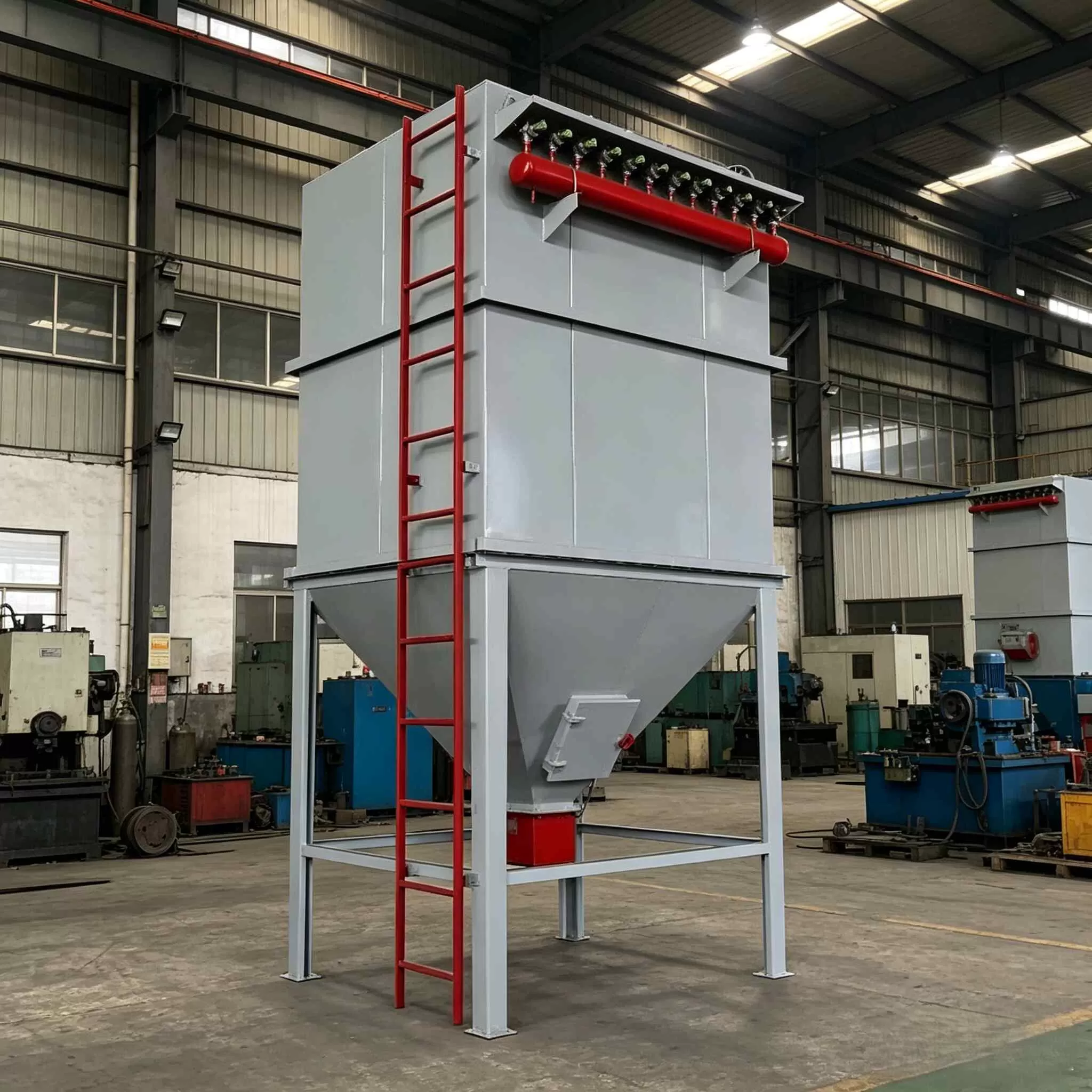
Baghouse Failures are among the most costly and disruptive events you can see in industrial dust collection systems. A baghouse — also called a fabric filter — removes solid particles from gas streams using filter bags. When these systems go wrong, facilities often end up with unplanned downtime , regulatory trouble, and, yes, significant financial losses too.
Based on common industry reporting, unplanned baghouse downtime can run manufacturing plants an average of $15,000–$45,000 per incident, because you are basically stacking lost production plus maintenance time and replacement items. In cement and mining, one severe bag failure can push fines above $100,000 tied to emissions violations, depending on the local enforcement.
Senotay has reviewed real field data from more than 500 industrial installations spanning cement, pharmaceuticals, food processing, steel, and woodworking. The goal is a fairly detailed look at the most seen failure patterns and what actually triggers them at the root, not just what the operators notice first.
Field surveys indicate about 92% of all baghouse failures land in five main categories. The table below summarizes frequency, downtime, and cost metrics using real incident reports rather than estimates from a brochure:
Bag blinding happens when fine dust grains work their way into the filter fabric and effectively choke the airflow. It tends to be the number one dust collector problem worldwide, especially in high humidity settings or in processes using hygroscopic materials, like lime, cement, or powdered sugar where moisture loves to stick things together.
Root Cause Triggers:
• Moisture ingress above 80% relative humidity condensing on bag surface
• Particle sizes below 1 micron bypassing cleaning cycles
• Insufficient pulse cleaning pressure (below 90 psi in jet pulse systems)
• Incorrect bag media selection for the dust type
Case Study: A cement plant in Southeast Asia saw a 38% rise in pressure drop over 6 months, mostly linked to bag blinding. After Senotay’s diagnostic assessment , the site moved away from standard polyester bags toward PTFE membrane bags. The result was a drop in differential pressure from 8.2 in. W.G. down to 3.4 in. W.G. plus better longevity, with bag life improving from 14 months to 36 months.
Physical bag failures — pinhole leaks, abrasion tears, and seam breakdowns — usually end up in immediate emissions non-compliance. Even one torn bag inside a 500-bag system can push particulate emissions up by roughly 300–400% over what’s permitted.
Root Cause Triggers:
• High-velocity inlet flow causing abrasion near inlet zones
• Cage wire corrosion causing punctures from inside
• Thermal stress from fluctuating gas temperatures above 300°F (149°C)
• Chemical attack from acidic or alkaline gas streams
Senotay basically advises doing velocity profiling during the install, so inlet face velocity stays under 4 ft/min for typical uses, this can cut abrasion driven failures by as much as 60% and that’s often pretty noticeable.
Hoppers collect the dust that’s been separated below the filter chamber. Bridging ( sometimes called arching ) happens when the dust gets cohesive enough to form a stable arch across the hopper outlet, it just stops discharge, and then that dust re entrains back into the filter bags.
Industries most affected include wood pellet manufacturing (bulk density around 40–50 lb/ft³), fly ash handling, and pharmaceutical powder processing. During bridging events the system differential pressure can climb by about 25–40% within 2–4 hours, which is a big deal because it changes the whole operating feel.
Root Cause Triggers:
• Hopper half-angle less than 60° for cohesive materials
• Intermittent rotary valve operation creating material consolidation
• Moisture content above 5% in collected dust
Pulse jet cleaning systems rely on compressed air bursts to knock the dust cake loose from bag surfaces. When diaphragm valves give out, or when timers start acting up, or if the air supply pressure dips below 80 psi, cleaning performance drops fast and bags load up quickly.
Based on 85 field audits, 71% of pulse jet failures trace back to diaphragm valve deterioration. The average valve life is about 1.5–2 years during continuous operation. Senotay’s revised solenoid valve assemblies are designed to stretch service intervals out to 3.5–4 years, at least in many practical setups.
Casing leaks are less frequent, but they tend to come with the biggest financial and regulatory risk. Leaks near access doors, tube sheets, or welded seams can let untreated dust slip out, and that triggers environmental non-compliance incidents. Average regulatory fine per incident lands roughly between $18,500–$95,000 across North America and the EU.
A kinda structured Root Cause Analysis (RCA) way prevents repeating failures, sort of. Senotay’s 5-Step RCA Framework gets used across all field investigations, even the ones that feel “small” at first:
Step 1—Symptom Mapping: Log differential pressure trends visible emissions, and weird operational anomalies
Step 2 — Physical Inspection: Check bag condition,cage integrity, hopper levels, plus the cleaning system
Step 3 — Data Collection: Grab 30-day ΔP logs pulse cycle reports and gas flow measurements
Step 4 — Root Cause Identification: Match what you found against the failure mode library, in a quick cross reference
Step 5 — Corrective Action Plan: Send material upgrade specs operational parameter tweaks, or redesign recommendations
With this method, repeat failure rates fell by 67% at Senotay-supported installations during a 3-year longitudinal study covering 200+ systems.
The most effective strategy against baghouse failures is a structured preventive maintenance program. The table below outlines Senotay's recommended maintenance framework:
Operators should treat the following as immediate action triggers if they want to avoid a full baghouse failure situation:
Differential pressure climbing above 6 in. W.G. or dropping below 1 in. W.G. unexpectedly
A visible dust plume from the stack during or after cleaning cycles
Strange noise from compressed air lines…that usually points to diaphragm valve failure
Hopper rotary valve torque increasing 20%+ compared to baseline
Opacity monitor alerts that stay above 10% continuously for 15+ minutes
Explore More Air Pollution Control Equipment
Bag blinding from high-alkalinity cement dust teamed up with moisture ingress is the top reason in cement settings, and it comes out to about 41% of the incidents in that sector. Switching to PTFE-laminated filter media and keeping the inlet gas temperature 20–30°F above the dew point is a solid way to prevent most of these events, practically.
Standard polyester bag housings will usually keep going around 18–30 months in normal plant conditions, though sometimes the exact number drifts a bit. Premium PTFE membrane bags, in turn can push the service life out to something like 36–60 months. In general, you should not replace on a rigid calendar , instead schedule it off differential pressure movement and bag integrity checks, mostly you know , after verifying what the fabric is actually doing.
Differential pressure , commonly shown as ΔP, is honestly the big real-time signal for baghouse health. When ΔP slowly goes up it often points to bag blinding or overall filter loading, and if you see a sudden drop that can mean a torn bag, or a bag that is missing entirely. Most applications sit somewhere around 3–5 in. W.G. for the working band , and any swing of about ±30% versus the baseline really needs a quick investigation.
Senotay offers on site diagnostic assessments, plus help for remote monitoring integration, filter media specification support, and corrective action engineering. Their approach merges field inspection observations with lab level analysis of reclaimed filter samples, so they can nail both the main driver and the contributing reasons behind dust collector troubles.
Yes, in most situations pulse jet systems , including diaphragm valves, timers , solenoids, and compressed air manifolds, can be upgraded as modular units without swapping the entire collector shell. Senotay provides retrofit pulse jet upgrade kits that are compatible with many leading baghouse OEM configurations, and they typically bring the cleaning performance back to about 95%+ of the original specification.
High-Temperature Baghouse Systems: Material & Performance Data
How to ensure Maintenance of Bag Type Dust Collector | senotay