
EN
What are you looking for?
When it comes to industrial manufacturing, a poorly functioning dust collection system not only makes the air dirty but also affects your profits. The inefficacy of air filtration to a large extent results in high energy costs, unplanned downtime of production, and the early life of expensive primary filters. The filter selection for the facilities aiming at 2026 operational standards is not simply "more filtration," but smarter filtration. Engineers can create a revolution in their industrial dust collector performance by using a cyclone dust collector as a high-efficiency pre-separator, which is a costly maintenance overhead, and turning it into a fast and efficient asset.
The importance of a cyclone lies in its "no moving parts" design. It utilizes those centrifugal forces to separate particulates from the airstream without the need for a physical media filtration process.
Centrifugal Separation
The process begins when dust-laden air enters the cyclone inlet tangentially. This creates a high-velocity downward spiral known as a dual-vortex.
The Outer Vortex: Centrifugal force flings heavier particles such as wood chips, metal shaving and abrasive grit against the outer wall. Gravity then pulls these "heavies" down into a collection hopper.
The Inner Vortex: Near the bottom, the air reverses direction and forms a smaller and cleaner inner vortex that exits through the top of the cyclone.
Material Handling Versatility
Unlike baghouses or cartridge collectors that are sensitive to temperature and material type, cyclones are the "workhorses" of the industry. They easily handle "hostile" dust, high-temperature particulates or abrasive materials that would instantly tear or melt standard fabric filters.
In engineering terms, the primary goal of a cyclone dust collector is to lower the "dust loading" on the downstream industrial dust collector.
Preventing Filter Blinding
When fine dust and large debris hit a primary filter simultaneously, they create "filter blinding." The large particles bridge the gaps between filter fibers, trapping the fine dust and creating an impermeable layer. By removing up to 99% of large particulates (typically those >10 microns) before they reach the filters, the primary media can focus solely on sub-micron particles. This often extends the lifespan of expensive HEPA or PTFE-coated cartridges by 200% to 300%.
Maintaining CFM Stability
Every dust collection system operates on a "fan curve." As filters clog, static pressure increases, and the CFM (Cubic Feet per Minute) drops. This loss of suction at the source allows hazardous dust to escape into the worker's breathing zone. A cyclone ensures that the bulk of the waste never reaches the filter, keeping the static pressure drop across the system low and the suction power constant.
Expert Tip:Sizing your cyclone
“Here Calculating the correct cyclone size is not guesswork that it is a function of inlet velocity. For optimal separation, you must maintain an inlet velocity between 3,000 and 4,500 Feet Per Minute (FPM).”
If the velocity is too low (<2,500 FPM), dust settles in the ducting instead of the cyclone. If it is too high (>4,500 FPM), re-entrainment occurs, where dust hits the wall and bounces back into the airstream, exiting the cyclone. To calculate:
InletArea(sq.ft.)= TotalCFM / TargetVelocity(FPM)
Always round your cyclone selection up to ensure you do not exceed the maximum velocity threshold.
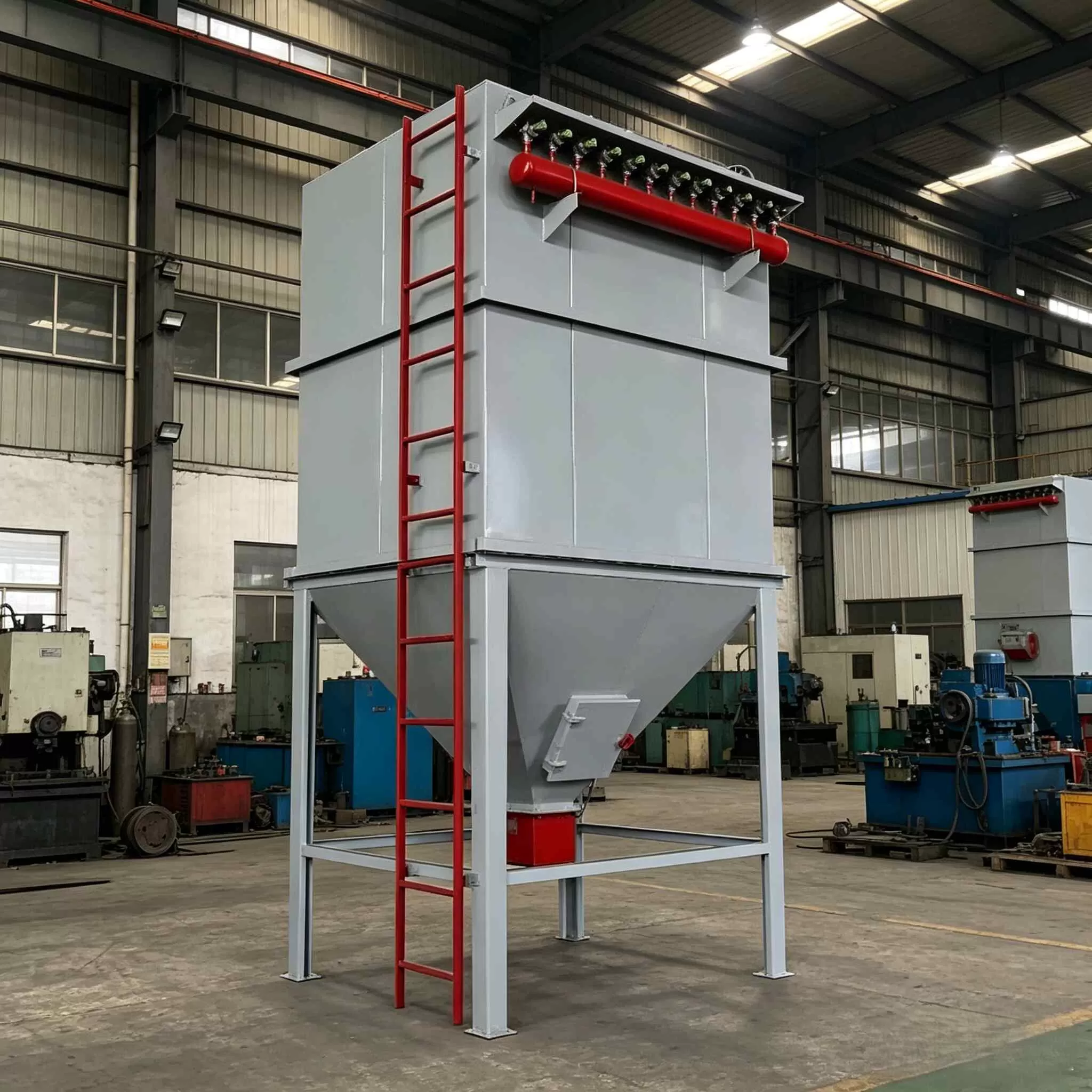
Investment in a cyclone pre-separator is often recouped within the first 12–18 months through operational savings.
Data Comparison: Single-Stage vs. Two-Stage (Cyclone) Systems
The Compressed Air Audit
Most modern industrial dust collectors use pulse-jet cleaning. Generating compressed air is one of the most expensive utility costs in a factory. Because a cyclone reduces the frequency of cleaning pulses required by the secondary filter, the savings in compressed air generation alone can total thousands of dollars annually for large-scale facilities.
The efficiency of the cyclone dust collector greatly depends on the proper sealing at the discharge point, which is indeed critical.
The Rotary Airlock: A top-notch rotary airlock is essential to be fitted at the cyclone's bottom. In the case, air comes back to the hopper (air bypass), it disturbs the vortex and causes the dust to be sent up through the exhaust, thus nullifying the cyclone's whole function.
System Placement: Here at Senotay, we advocate locating the cyclone in close proximity to the heavy waste producing area. Doing so will not only limit the abrasive materials accounting for duct wear but also minimize the probability of duct malfunctions caused by clogs.
If you observe any of the following in your facility, your current dust collection system is likely a candidate for a cyclone upgrade:
Rapid Pressure Spikes: Is your primary filter pressure drop ($\Delta P$) exceeding 5.0" W.G. within weeks of a change?
Abrasive Fan Wear: Are you seeing pitting or holes in your fan blades or blower housing?
Waste Composition: Is your waste bin filling with 80% "heavy" material like sawdust or metal grit? (This material should never reach a filter).
Spark Risks: Do you perform grinding or welding that generates sparks near flammable filter bags? (Cyclones act as a natural spark arrestor).
Explore More Air Pollution Control Equipment
A cyclone dust collector is no longer viewed as an optional accessory; it is an engineering necessity for high-volume, high-efficiency production. By managing the "heavy lifting" of separation through centrifugal force, you protect your most expensive consumables and ensure a stable, safe environment for your workforce.
At Senotay, we don't just sell equipment, we engineer airflow solutions. Our team uses advanced modeling to ensure your cyclone is perfectly sized for your required CFM and static pressure requirements, ensuring peak performance for decades.
Stop wasting money on premature filter replacements. Contact Senotay’s Engineering Team today for a custom airflow analysis and integrate a high-efficiency cyclone into your facility.