
EN
What are you looking for?
If industries require clean air or pure liquids to function safely, there is no room for compromising on the performance of the filtration system. How well contaminates are removed, how long a filter will last, and the amount of energy consumed by the system all depend on the filter is at the heart of every high performing system and the filter bags, cartridges & media are the critical components. Immerse yourself in the world of Cartridge Filter Efficiency whether you are managing an HVAC unit, a dust collection system, or an industrial liquid line, you need to understand this concept first to make smarter purchases and reduced operating costs.
For years, Senotay has been developing filters that allow them to manage three main filter performance parameters: surface area, MERV rating and pressure drop. This article explains each factor using real data, industry statistics and practical examples such that even first-time buyers can make informed and confident decisions.
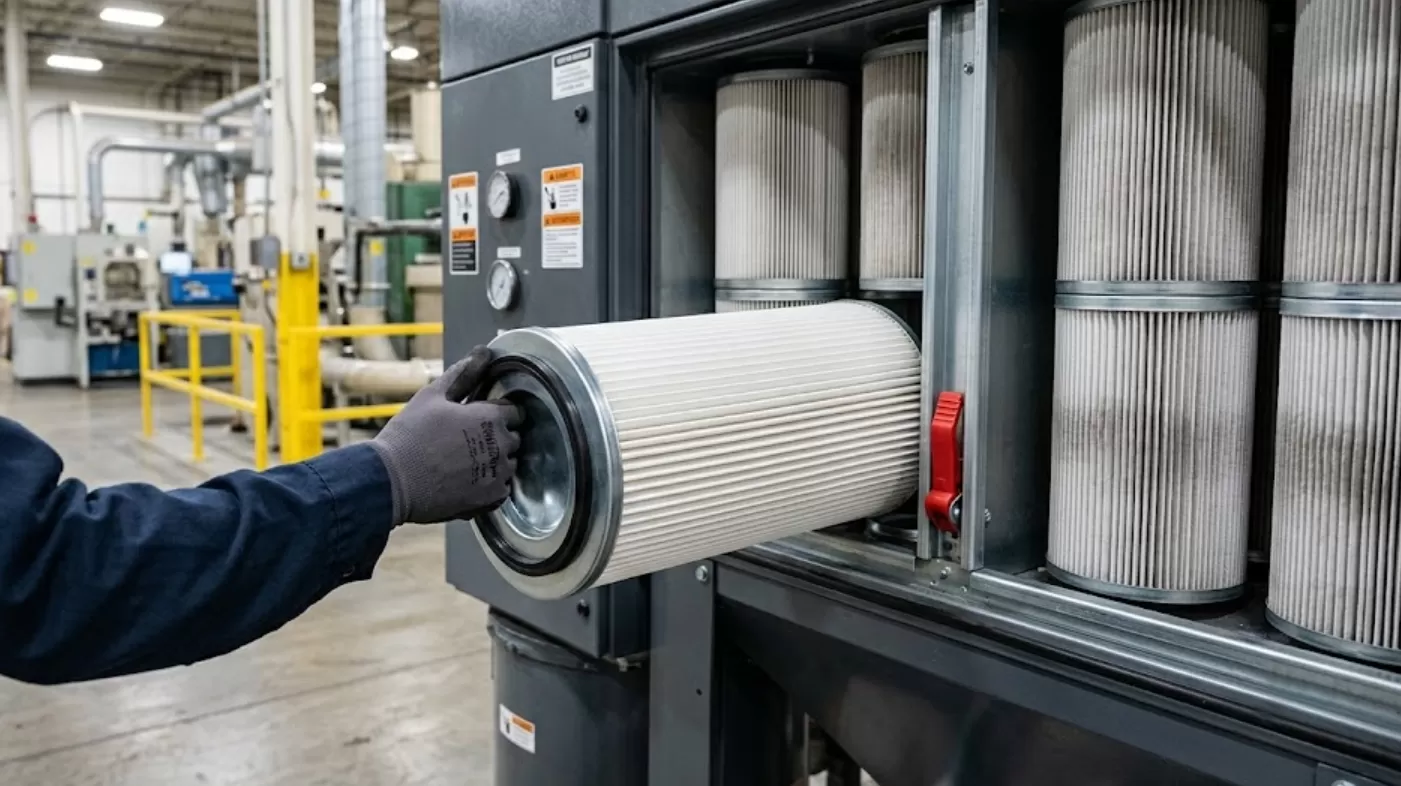
Surface area is perhaps the most overlooked aspect of cartridge filter performance. The higher the media surface area the more particles will be trapped before the filter is clogged, thereby directly increasing its service life and reducing replacement costs.
The Data In fact provides the following picture:
A typical 12” pleated cartridge filter will provide about 125-175 square feet of usable cartridge media area.
Senotay's high efficiency nanofiber cartridges can fit in the same 12-inch size and provide up to 350 square feet.
Industry test results show a filter life that is 40-60% longer with double the surface area.
Filters with greater than 250 sq. ft. surface area can clean an average of 35% fewer times in dust collection applications.
Table 1: Surface Area vs. Filter Life & Maintenance Cost Comparison
Source: Senotay internal performance data & ASHRAE filtration benchmark studies (2023–2024)
Case Study: The cement plant in the Midwest USA was a regional cement company which replaced their standard 150 sq. ft. polyester cartridges with the 320 sq. ft. nano-fiber cartridges from Senotay. The facility has reduced its filter change-outs by over 52% and saved $47,000 in annual maintenance costs over 18 months with no change to the existing housing and airflow configuration.
ASHRAE has established the industry standard rating for filters to determine their effectiveness at removing airborne particles, called Minimum Efficiency Reporting Value, or MERV. They range from MERV 1 (least efficient) to MERV 16 (most efficient for non-HEPA/ULPA applications) with MERV 17–20 reserved for HEPA/ULPA applications.
It's important to know the MERV ratings to understand which filters are required for their home based on the level of contamination they are exposed to:
MERV 1-4: Filters out only large particles (>10 microns). Older window ACs and simple pre-filters.
MERV 5–8: will remove mold spores, dust mite debris and pet dander (3–10 microns). ASME standard for residential heating, cooling and air conditioning.
MERV 9-12: Effective at capturing fine dust, lead particles and auto-emission particles (1-3 microns). Suggested for commercial buildings.
MERV 13-16: Will remove bacteria, smoke and ultra-fine particles (less than 1 micron in size). Essential for hospitals, Pharma, and clean rooms.
Table 2: MERV Rating vs. Application, Particle Size & Pressure Drop
Source: ASHRAE Standard 52.2-2023 | Senotay application engineering data
Note: In an existing HVAC system, an important real life consideration is that MERV 13 is about 50-80 Pa more resistant than MERV 8. This is not problematic in systems that are rated for it, but can cause airflow to be reduced by 10-25% in systems that are not rated for this — which can result in overloading the fans and raising energy costs by 8-12% per year. Before any MERV upgrade, Senotay engineers always make sure that a system compatibility check is performed.
The difference between inlet pressure and outlet pressure in air or liquid depends on the filter and is one of the areas that is not always considered when purchasing a filter, but that becomes apparent in the monthly energy bill. When high pressure drop occurs, the blower/pump will have to strain more to keep the flow rates, which will lead to more electricity being used and mechanical parts becoming worn.
The Ozone Depletion Potential (ODP) due to 25 Pa pressure drop per HVAC system increases the energy cost of fans by 2-4%. (EPA Office of Air Quality, 2022).
Filter plugging at end-of-life (EOL) can be as high as 300-500 Pa (3 to 5 times the design specification).
The estimated power loss for 100 Pa of excess pressure drop in an industrial dust collector operating at 1,000 CFM is 0.75 KWH/day.
Senotay's optimized pleat geometry allows initial pressure drop to be 15–22% lower than the standard market cartridges at equivalent MERV rating.
The average total energy cost savings per year from facilities monitoring and replacing filters at 125 Pa versus at the time of visible clogging is 11%.
The pressure drop is not a fixed value. It increases slowly with an increase in the number of the particles on the surface of the media (depth loading phase) and sharply when the surface is covered with particles (surface loading phase). Senotay cartridges are designed using the ideal pleat spacing and the nano fibre surface treatment extends the depth loading phase by as much as 40%, thereby postponing the pressure rising quickly.
Case Study: A vegetable oil processing plant in Southeast Asia had an energy system that had spikes in energy consumption every month, where it was determined that these spikes were related to a high differential pressure in their bag filter system. The average pressure drop was reduced from 380 Pa to 190 Pa after switching to Senotay's low-resistance cartridge, which also has pulse-jet cleaning. This one change alone resulted in a blower motor energy savings of 18% and an estimated $31,000 USD in only electricity costs for the plant per year.
When selecting a cartridge filter, it is not a matter of just selecting the highest MERV rating or the lowest cost. Before specifying any filter, Senotay suggests assessing four parameters that are intrinsically related:
Match MERV rating to the predominant particle size in your environment: Identify contaminant type & size. MERV 13+ is required for submicron bacteria or smoke. MERV 8-11 may be adequate for coarse industrial dust.
Calculate Required Airflow & Face Velocity – Cartridge efficiency decreases at face velocities over the design range. The optimum range of most pleated cartridges is 250 to 500 FPM (feet per minute). Going over this decreases actual MERV by 1 to 2 grades.
Established a Pressure Drop Budget: Know the maximum pressure drop that your fan or pump can handle before its efficiency decreases. Design to maintain normal operating pressure at 50-70% of the limit to obtain long life filters.
Measure Total Cost of Ownership (TCO): Consider the cost of replacing, the cost of disposal and the impact on energy. Even if the price of the initial units is 20-30% higher, the TCO of Senotay's premium cartridges is 30-45% lower for 24 months.
Senotay filtration products are based on a solid foundation in materials science and field experience. Key differentiators include:
The use of electrospun nano-fiber layers (0.1-0.5 microns in diameter) to be applied to synthetic substrates to enhance particle interception without necessarily increasing the pressure drop is known as Nano-Fiber Technology and is used by Senotay.
Precision Pleat Engineering: In-house pleat spacing calculations ensure that maximum media area is used and that structure integrity is maintained at cleaning pressures as high as 6 bar at high-pulse.
Material Versatility: Senotay offers cartridges ranging from cellulose to polyester, PTFE, fiberglass and nano-fiber composites, covering temperature ranges from -30C to +260C and chemical resistance to acids, alkalis and solvents.
Certifications: All Senotay filtration products are made with ISO 9001:2015 quality management systems and tested to ASHRAE 52.2 and ISO 16890.
Explore More Air Pollution Control Equipment
Q1: What MERV rating should I choose for my commercial building HVAC?
MERV 11–13 achieves an optimal capture efficiency of fine dust, mold spores and bacteria at a pressure drop that can be easily managed for most commercial office buildings. MERV 14–16 should be used in healthcare facilities and labs. Senotay will provide a FREE system evaluation to ensure compatibility.
Q2: How often should I replace a cartridge filter?
Replacement frequency is a function of dust loading, volume of air flow and filter surface area. Generally replace when differential pressure has reached 125-150% of initial clean pressure drop – not on a schedule. In moderate dust environments, it normally takes from 12-24 months for the nanofiber cartridges to reach this point.
Q3: Does higher MERV always mean better air quality?
Not necessarily. A MERV 16 filter in a 8 MERV system will cause too much pressure drop, which will decrease the airflow to the system. Bad air circulation can be detrimental to air quality as well, since it lowers the number of air changes. Before upgrading MERV ratings, always check the resistance of the added air filtration and determine if your fan/blower is able to provide it.
Q4: What is the difference between a cartridge filter and a bag filter?
Cartridge filters consist of a rigid pleated media in a cylindrical form providing a high surface area in a compact format. Bag filters are flexible fabric sewn into elongated bags which are used for very high dust load and low pressure drop at high dust volume. In addition to offering product families, Senotay assists customers in choosing the appropriate format for the system they have, depending on the geometry and contamination.
Q5: Can Senotay supply custom cartridge dimensions?
Yes. Senotay will fabricate filters to fit non-standard housing dimensions, unusual face velocity requirements, or specific chemical resistance requirements. Custom orders will have a minimum order quantity and a 3-4 week lead time based on media choice.
Q6: How does temperature affect filter efficiency?
Even regular polyester media can break down at temperatures above 80°C, affecting the filtering performance and the potential of the media failing. Senotay provides fiberglass and PTFE cartridges that can be used at high temperatures (up to 260°C), and which retain the same MERV rating throughout their operating life.