
EN
What are you looking for?

In the industrial and commercial filtration, two terms prevail in all purchasing decisions: micron rating and filter media efficiency. These measures will help to understand whether your system can sufficiently capture contaminants or whether harmful particles have penetrated your system without being detected. At Senotay, we assist engineers, procurement managers and plant operators in deciphering the science behind Filter Bags, Cartridges and Media to decide based on actual data, rather than what the spec-sheet says.
A micron rating filter is a description of the size of the particles that a filter is designed to capture, in micrometers (μm). One micron is 0.001 millimeters - invisible to the naked eye but crucial to the purity of liquids. A 10-micron filter however, will not necessarily include all 10-micron size particles. Most operational failures lie between nominal ratings and real performance of filtration.
The key to the intelligent management of the filtration is the understanding of this gap. The technical structure of Senotay combines the specification data with a field-validated performance data to ensure that customers always have a clear picture of what they are actually purchasing.
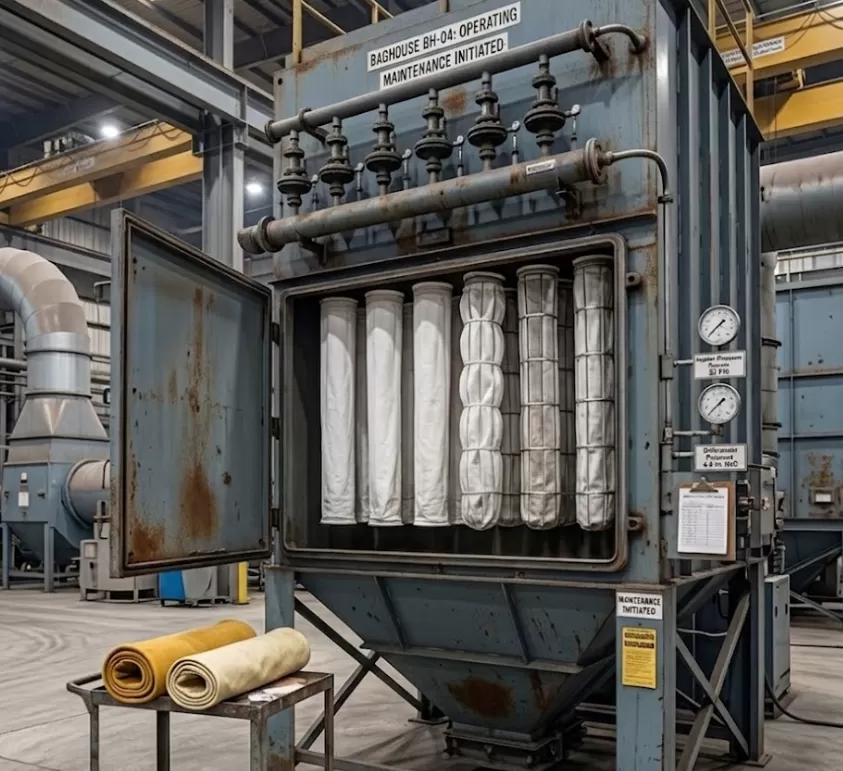
There are two major rating systems which are used by the filtration industry. Mixing the two costs businesses thousands of dollars a year in system downtime, product contamination and premature filter replacement.
Table 1: Nominal vs. Absolute Micron Rating Comparison
Real-World Insight: According to a study by the Hydraulic Institute, 70% of hydraulic system failures are due to fluid contamination - most of which is a result of using nominally rated filters when absolute-rated media is needed. Financial consequences incurred on average of $8,000- $25,000 in mid-scale manufacturing plants on one occurrence of unplanned downtime.
The Beta Ratio ( βx ), is the most rigorously measured performance metric, used in multi-pass testing under ISO 16889. It is an internationally accepted standard that assesses the performance of a filter element in realistic sustained flow conditions, not just in a clean-room single-pass test.
The formula is straightforward: βx = Number of particles ≥ x μm upstream ÷ Number of particles ≥ x μm downstream. A higher beta ratio indicates superior filtration performance.
β10 = 2 → 50% efficiency (nominal-grade)
β10 = 10 → 90% efficiency
β10 = 75 → 98.7% efficiency (common industrial standard)
β10 = 200 → 99.5% efficiency
β10 ≥ 1000 → 99.9%+ efficiency (absolute-grade, pharma/food-grade systems)
The product documentation of Senotay clearly shows the values of Beta Ratio of all the products of cartridge and filter bags, including the values of the micron rating of each of these products.
A pharmaceutical facility that operated 80,000 liters/day of purified water switched the 5-micron nominal bag filter to the 5-micron absolute-rated melt-blown cartridge system of Senotay. Lab tests carried out in 90 days showed:
Particle count reduction improved from 74% to 99.6% at 5 μm
Bacterial contamination incidents dropped by 91% over three quarters
Filter replacement cycles extended from every 3 weeks to every 7 weeks, saving $14,400 annually in media costs
Downstream equipment maintenance costs fell 38% in the same period
An automotive OEM using 10-micron felt bag filters in their paint circulation system experienced recurring finish defects at a rate of 1.8% of panels. Switching to Senotay polyester membrane cartridges with an absolute β10 ≥ 200 rating:
Paint defect rate dropped to 0.2% within 60 days of installation
Paint consumption efficiency improved by 6.4% due to reduced waste
Annual cost savings: approximately $33,000 across two production lines
Without the knowledge of the filter media material below it, that is, micron ratings are meaningless. Even the same 10-micron rating printed on other types of media can give vastly different results in terms of filtration performance.
Table 2: Filter Media Material Comparison — Efficiency, Compatibility & Lifespan
Senotay designs all media specifications to fit the operating requirements of each application - not only by particle size, but also by temperature profiles, compatibility with other chemical substances, flow rate needs and regulatory compliance guidelines.
Explore More Air Pollution Control Equipment
According to industry data, the real performance outcome of a filter expressed as a micron rating is only about 40-50% of the actual performance outcome of the filter. The rest of the factors are usually neglected when procurement is being done:
Flow Rate and Differential Pressure: Flow that is 20 percent above the rated flow can reduce efficiency by as much as 30 percent as fluid bypasses the media pores.
Temperature Change: 20°C higher than rated temperature can cause polymer media integrity to degrade by 15-25% effective increase in functional pore size.
Viscosity of Fluid: Fluid with a high viscosity (over 100 cSt) cannot be used with media with small pores as the viscosity of such fluid will exceed the pressure drop across the filter.
Contaminant Type: Soft, deformable particles (e.g., biological matter, gel particles) can be penetrated by the nominally rated media at particle sizes that are significantly smaller than the rated value.
Media Thickness & Depth: Depth filters with 3–5mm media thickness outperform thin surface filters by 20–40% in high-load environments
Initial vs. Terminal Pressure Drop: Most filters are tested at initial pressure; real-world terminal pressure drop can be 3-5 times higher which affects system capacity.
The technical team of Senotay offers pre-installation system audits, which evaluates all six factors, and then recommend filter specification prior to installation and reduce first-year filter failure rates by an average of 62% to spec-sheet-only selections.
Frequently Asked Questions (FAQ)
A nominal rating filter with a micron rating captures 50-80 percent of the particles at that size, and an absolute rated filter captures 99.9 percent or more of the particles at that size, tested under ISO 16889 multi-pass testing. In critical applications, it is always important to specify absolute-rated media.
The best method of determining filter media efficiency is through the Beta Ratio ( βx) procedure. A β10 ≥ 200 indicates 99.5% efficiency at 10 microns. Lab tests based on single-pass, as well as the multiple-pass ISO tests, would add to a complete picture of efficiency. All products of critical grade in the media can be documented in Beta Ratio documentation by Senotay.
This is the nominal rating difference. A 5-micron filter can only trap 60-75 percent of 5-micron particles unless specified as absolute-rated. Running at a higher than rated flow, at a higher than preferred temperature, or in the inappropriate material of the media will further decrease the efficiency. Senotay suggests an absolute-rated substitute to achieve regular downstream purity.
Replacement time is based on the contaminant load, the flow rate, and the type of media. General industrial cartridges: average 4-8 weeks; pharmaceutical-grade membranes have a life of 8-20 weeks when the environment is low-contamination. The smart monitoring solutions created by Senotay also monitor the differential pressure in real time and activate replacement alarms before performance declines - typically extending the life of the media by 25-35 percent when compared to fixed-interval schedules.
Yes. Senotay specializes in custom filter media arrangements in both micron ranges of 0.1 μm to 500 μm and standard industrial cartridge sizes. Custom orders contain performance certification data sheets, and compatibility testing to the details of the specific fluid chemistry of the customer.
Pharmaceuticals, food and beverage processing, semiconductor manufacturing, hydraulic systems, and precision automotive paint lines have the highest ROI on media upgrades that are rated on an absolute basis. These industries claim 30-90 percent of contamination-related downtime reduction after nominal specifications were changed into absolute specifications.