
EN
What are you looking for?
When sizing filter bags under high thermal loads, choose PPS for acidic/wet streams up to 190°C, Aramid for dry/abrasive dust up to 200°C, and premium PTFE for universal chemical resistance up to 260°C. PPS is your go-to for coal-fired boilers and chemical exhaust — it shrugs off acids and stays solid at 190°C continuous. Aramid is the right call for cement plants and asphalt operations where abrasive dust and 200°C temperature spikes are part of the daily grind. PTFE is the premium pick for incinerators and harsh chemical streams, handling 260°C continuous plus just about anything the flue gas throws at it. Which one you go with comes down to three things: how hot your gas actually runs, what chemicals are in it, and your budget.
Key take aways:
PTFE wins on extremes: Handles the highest heat (260°C) and harshest chemicals, lasting 3–6 years in incinerators, but costs 3–5x more than Aramid.
PPS rules acidic/wet streams: The default for coal boilers at up to 190°C, though it degrades if oxygen levels exceed 12%.
Aramid is the budget abrasive option: Best for dry, high-wear environments like cement or asphalt (up to 200°C), but fails if moisture hits 180°C (hydrolysis).
Labor dictates the real cost: Downtime and bag replacement labor are so expensive that buying a longer-lasting, application-matched material saves more money than picking the cheapest bag.
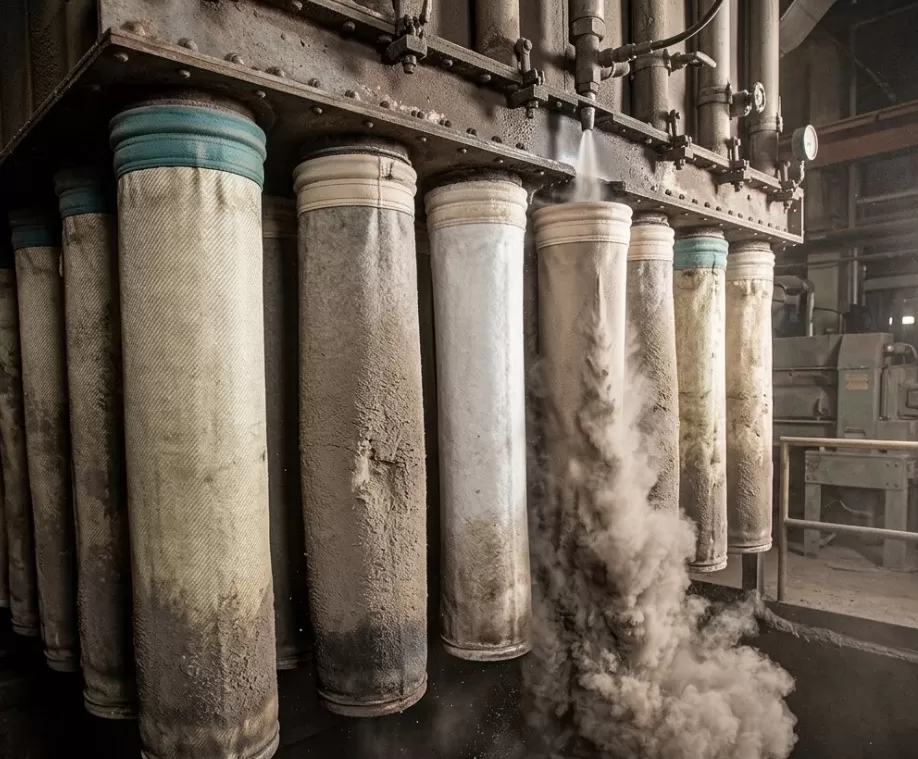
High temp filter bags are the fabric elements inside pulse-jet dust collectors, baghouses, and other industrial filtration systems that run hotter than 130°C. They're the unsung heroes keeping emissions in check and equipment running. The material has to handle three things at once: continuous heat, chemical attack from stuff like SOx, NOx, and HCl in the flue gas, and the mechanical beating of pulse cleaning. Get the material wrong and you're looking at premature bag failure, emissions violations, and unplanned shutdowns. A solid material comparison of PPS, Aramid, and PTFE is really about matching the media to what's actually happening inside your ductwork.
Polyphenylene sulfide — PPS for short — is a semi-crystalline polymer that's become the default spec for coal-fired power plants, waste-to-energy facilities, and chemical processing. It hits a sweet spot between thermal stability and acid resistance that's hard to beat in the mid-cost range.
Thermal limit: 190°C continuous, 220°C peak
Chemical resistance: Excellent against sulfuric and hydrochloric acid, moderate against alkalis
Hydrolysis: Good — holds up fine in moisture-heavy exhaust
Typical uses: Coal boiler baghouses, chemical reactor vent filters, biomass combustion
One catch: PPS doesn't love oxidizing gases. NO₂ or O₂ above 12% can break down the fiber structure over time. If your stream runs oxygen-rich, you might want to look at PTFE or a blended felt instead.
Aramid — you've probably heard it called Nomex® — is a meta-aramid fiber with serious thermal stability and mechanical muscle. It's been the traditional pick for cement kilns, asphalt plants, and steel furnaces, basically anywhere the dust load is heavy and abrasive.
Thermal limit: 200°C continuous, 240°C peak
Chemical resistance: Moderate — strong acids or alkalis will degrade it
Mechanical strength: High — this stuff takes abrasion well
Typical uses: Cement plant baghouses, asphalt mixing, steel electric arc furnaces
Watch out for: Hydrolysis above 180°C if there's significant moisture in the gas
For dry, hot gas streams without serious chemical exposure, Aramid is usually the most cost-effective route. But if your gas is wet or acidic, PPS or PTFE will serve you better.
PTFE is a fully fluorinated polymer — and yes, it's the same basic chemistry as that non-stick pan in your kitchen, though engineered a lot tougher. It offers the highest thermal resistance and chemical inertness of any filter bag fiber on the market. You specify PTFE when bag longevity matters more than upfront cost.
Thermal limit: 260°C continuous, 280°C peak
Chemical resistance: Excellent across the board — acids, alkalis, solvents, doesn't matter
Hydrolysis resistance: Excellent — moisture doesn't touch it
Bonus feature: Non-stick surface means less dust cake buildup and better pulse cleaning efficiency
Typical uses: Hazardous waste incinerators, chemical plants, glass furnaces, carbon black production
The downside: You'll pay 3–5× what Aramid costs. But in severe conditions, it lasts long enough to justify itself.
PTFE also shows up as a membrane laminate on PPS or Aramid substrates — a way to combine the mechanical strength of the base fiber with PTFE's surface release properties.
Here's a full spec-by-spec material comparison across all the dimensions that actually matter when you're choosing filter media. Keep this table handy when you're talking to suppliers.
Here's what it boils down to. PTFE wins on temperature and chemical tolerance without question, but you'll pay for it. PPS sits in the middle — ideal for acidic streams at moderate temperatures. Aramid is the economical choice for dry, abrasive, high-temp applications where chemical attack isn't a concern. No single material is best across the board; the right call depends entirely on your gas profile, temperature range, and what kind of particulate you're dealing with.
Knowing the numbers is one thing. Seeing how they play out in real plants is another.
Coal-fired power and biomass boilers: PPS is the standard here. Flue gas carries SO₂, moisture, and runs around 140–180°C. When pulse cleaning is frequent, shops often spec a PTFE membrane laminate on top.
Cement and asphalt: This is Aramid territory. The exhaust is dry, hot (up to 200°C), and loaded with abrasive dust. Aramid's mechanical strength handles the abuse.
Chemical processing and incineration: PTFE is basically mandatory when HCl, dioxins, or extreme temperatures enter the picture. You don't want a bag failure here — corrosion resistance isn't optional.
Steel and metal smelting: Aramid for electric arc furnaces, PTFE for downstream acid gas scrubbing. Each has its zone.
Waste-to-energy: Usually a PPS + PTFE membrane combo or full PTFE felt. The flue gas composition at these facilities varies so much that it's worth being conservative.
Nobody has an unlimited budget, so let's talk about money. The thing is, bag replacement labor and downtime often end up costing more than the material difference.
Pick Aramid when your temperature sits between 160–200°C, the gas is dry and non-acidic, and keeping upfront costs down matters most. Expect 1–3 years of bag life.
Pick PPS when your gas stream has acid gases (SO₂, HCl) or moisture, temperatures run 130–190°C, and you're looking for a 2–4 year replacement cycle. The moderate price bump over Aramid usually pays for itself through fewer changeouts.
Pick PTFE when temperatures push past 200°C, corrosive chemicals are present, hydrolysis is a real risk, or emissions regulations don't leave room for error. Yes, it's 3–5× the upfront cost, but you get 3–6 years of service and lower pressure drop from better dust release. The math can work out.
Here's a practical process that'll get you to the right answer:
Get real temperature data — both continuous and peak readings. If you're above 200°C continuously, PTFE is your only option.
Test your flue gas chemistry — acid dew point, O₂ content, moisture levels, and any oxidizing agents present.
Look at your dust — is it abrasive, sticky, or fine? That tells you whether you need surface treatments or membrane laminates.
Know your cleaning system — reverse air vs. pulse jet. Pulse jet bags need better mechanical strength, which plays to Aramid's and PPS's strengths.
Run the full cost numbers — not just bag price, but installation labor, disposal fees, downtime, and emissions risk.
Ans: PTFE tops out at 260°C continuous, followed by Aramid at 200°C and PPS at 190°C.
Ans: Yes. PPS handles acids much better. Aramid starts degrading in strong acid environments, especially above 180°C.
Ans: PTFE fiber costs 3–5× as much because it's harder to manufacture and uses specialized raw materials. The longer bag life and chemical resistance usually make up for it.
Ans: Probably not a good idea. Aramid breaks down from hydrolysis in high-moisture streams above 180°C. You'll lose strength fast.
Ans: 2–4 years in well-run coal-fired boiler applications, assuming reasonable operating conditions and cleaning cycles.
Ans: If your dust is fine or sticky, a PTFE membrane helps with cake release and pressure drop. For free-flowing dust in a pulse-jet collector, skip it.