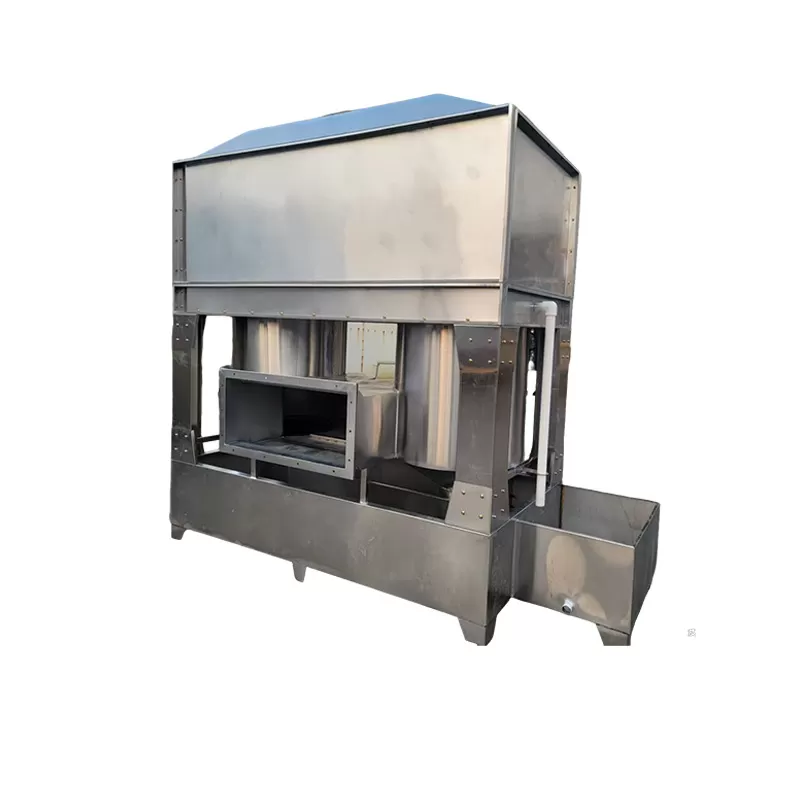
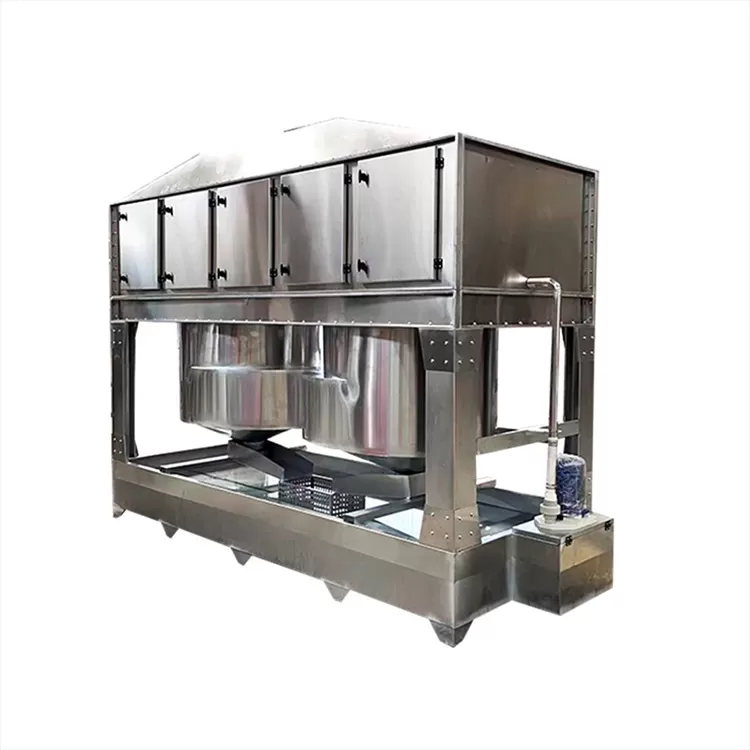
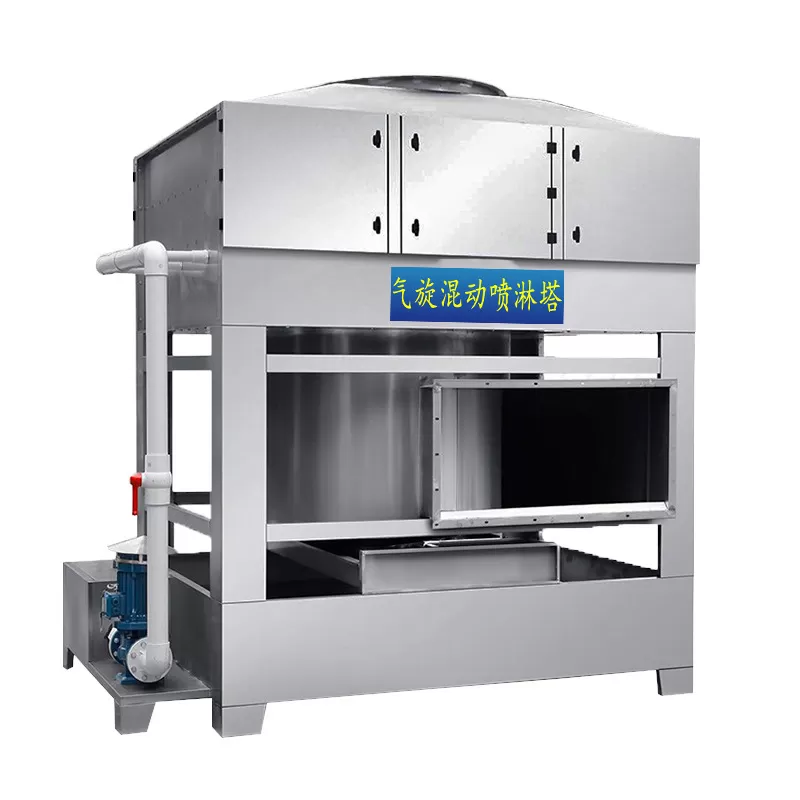
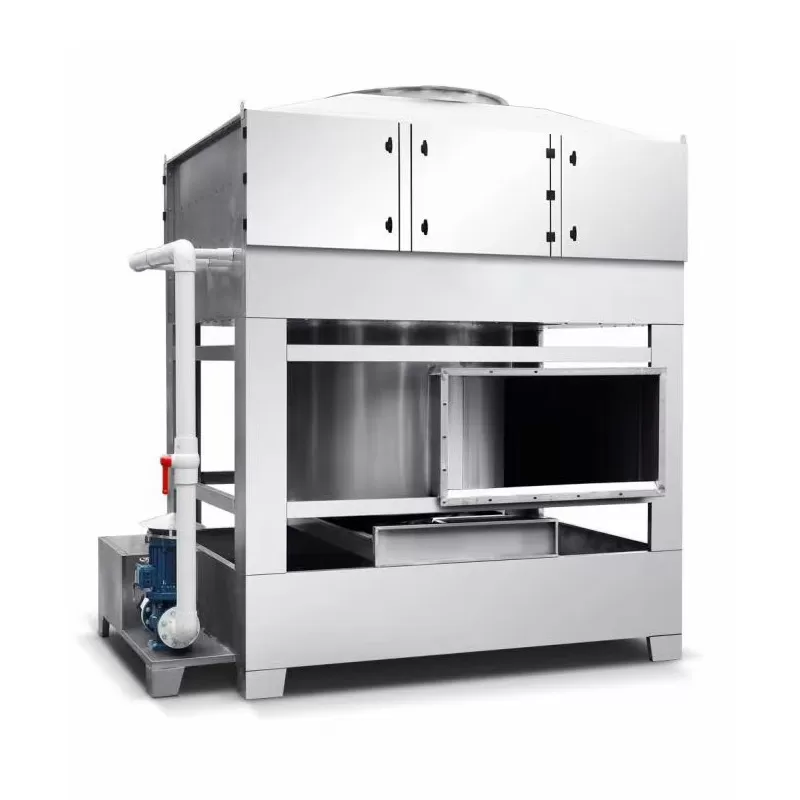
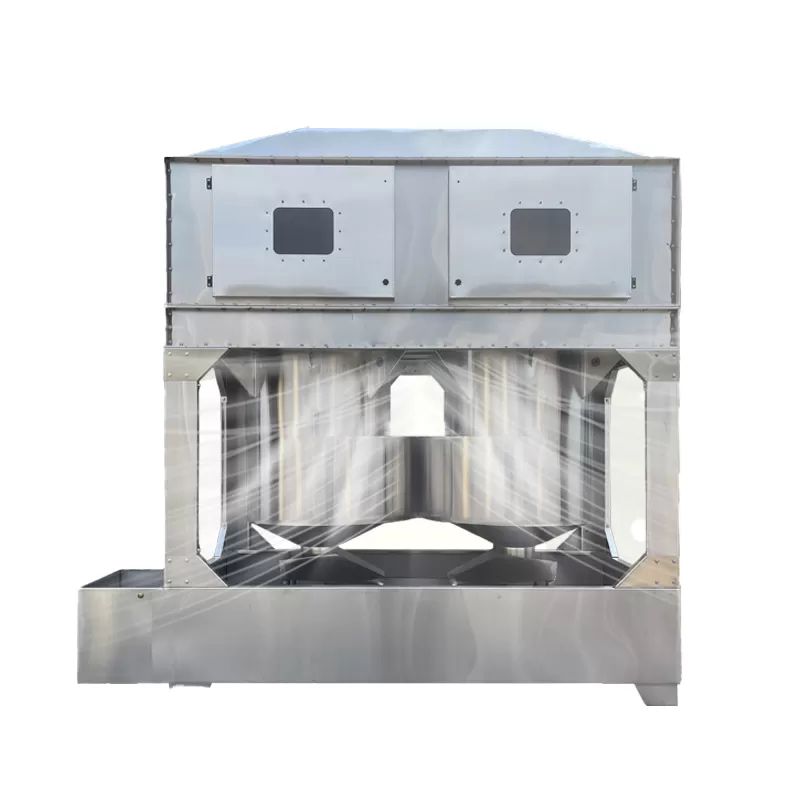
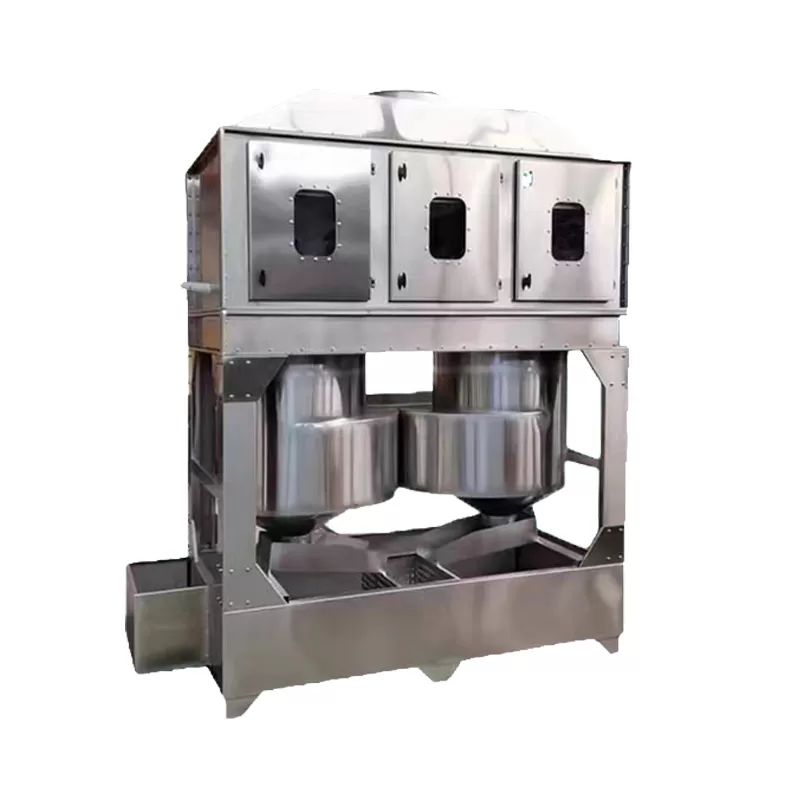
CMS Series Cyclone Mixing Spray Tower
Hybrid Centrifugal Separation & Wet Gas Scrubbing System
The Cyclone Mixing Spray Tower (Cyclone Scrubber) is an advanced hybrid air pollution control system that merges cyclonic dust separation with wet gas scrubbing in a single vessel. Polluted exhaust enters tangentially, creating a high-speed rotational flow that slings heavy particulate matter against the outer walls via centrifugal force. Simultaneously, an internal spray system atomizes a washing liquid that captures fine dust and neutralizes soluble gases like SOx, HCl, and NH₃. By handling both heavy particulate load and acid gas in one pass, it achieves up to 99.6% removal efficiency, making it the premier choice for power plants, metal smelters, and chemical processing facilities.
Featured Model Configurations
CMS-4000 | Heavy-Duty Acid Gas System
Gas Flow: 40,000–50,000 m³/h | Material: PP | Efficiency: 99.2%
Engineered for heavy continuous scrubbing in fertilizer plants, agrochemical manufacturing, and battery production.
CMS-5500 | Mega-Flow Hybrid Tower
Gas Flow: 80,000–100,000 m³/h | Material: FRP/PVC Hybrid | Efficiency: 99.6%
High-capacity hybrid system built for large power generation plants, metal smelting furnaces, and central industrial exhaust networks.
Key Technical Specifications
Handles gas flow capacities from 3,000 to 120,000 m³/h, achieving ≥ 95–99% dust removal efficiency (particles ≥ 2 μm) and 85–98% gas absorption.Tower diameters range from 800 to 4,200 mm with heights extending up to 12 meters. Features include SS316 or ceramic spray nozzles, PP/SS mesh demisters, and an internal anti-corrosive lining (FRP/Rubber/PP). Operates reliably under negative pressures of -2.5 to -4.5 kPa. Designed for a 15–20 year service life and fully compliant with ISO 9001:2015, ISO 14001, and EPA emission standards.
What makes industries to choose Cyclone Mixing Spray Tower
Two-in-One Efficiency: Combines centrifugal cyclone separation with liquid scrubbing in a single vessel, handling exhaust that carries both heavy particulate and acid gas simultaneously—eliminating the need for separate cyclone and scrubber units.
Superior Removal Rates: This two-stage approach achieves 98% to 99% removal efficiency for dust and soluble gases, outperforming standard standalone spray towers.
Massive Scalability: Offers ten model sizes accommodating gas flow capacities from 2,000 up to an impressive 120,000 cubic meters per hour.
Reduced Operating Costs: The tangential separation reduces the liquid volume and energy consumption typically required by standard spray towers when handling heavily particulate-laden gas.
Durable & Heat Tolerant: Constructed from FRP, PVC, or stainless steel to resist corrosion, with the ability to tolerate inlet gas temperatures up to 180°C (and even higher in stainless steel variants).
Why Leading Plants Choose SENOTAY Cyclone Mixing Spray Tower
Factory-Direct Pricing. Certified Quality. Dedicated Support.
Best Price Guarantee
Certified & Compliant
Fast, Reliable Delivery
Product Description and Material Properties
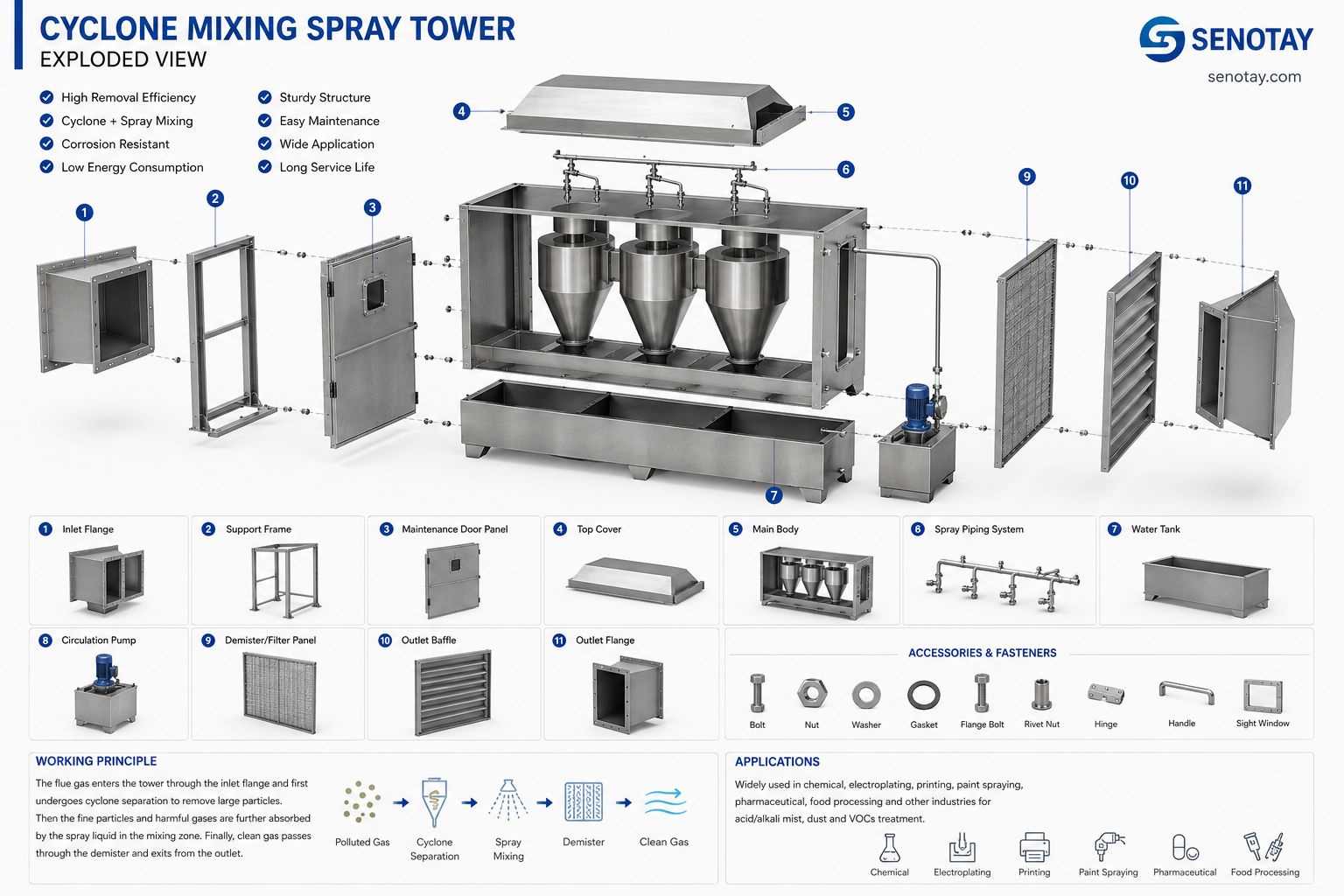
The Cyclone Mixing Spray Tower is a hybrid gas scrubbing system comprising a cylindrical tower body, a tangential gas inlet, spray nozzles, demister section, and liquid circulation tank.
Material Options
Material Type | Application Use | Corrosion Resistance | Temperature Resistance | Durability Level |
FRP (Fiberglass Reinforced Plastic) | General chemical gas scrubbing | Excellent | Up to 100°C | High |
PVC | Acidic gas scrubbing | Good | Up to 60°C | Medium |
Stainless Steel (304/316L) | High-temperature and heavy-duty conditions | Excellent | Up to 250°C | Very High |
PP (Polypropylene) | Organic gas treatment | Good | Up to 80°C | Medium |
Standard Physical & Mechanical Properties
Density: 1.8–2.0 g/cm³ (FRP-based).
Compressive Strength: ≥100 Mpa.
Operating Temperature Range: -20°C to 250°C.
Corrosion Resistance: Excellent against acids, alkalis, and solvents.
Surface Finish: Smooth, anti-corrosive inner lining.
Product Features
Compact Structure: Compact design, exquisite appearance, and rapid response.
Reliable Performance: Over 1.5 million power pulses, voltage deviation tolerance ±10%.
Easy Installation: Internal thread connection, electrical connection junction box and cable socket with IP65 protection rating.
Superior Materials: Valve body made of precision-cast aluminum alloy, sealing material NBR (nitrile rubber).
Working Mechanism of Cyclone Mixing Spray Tower
The Cyclone Mixing Spray Tower operates through a multi-stage purification process:
Tangential Gas Inlet: Polluted gas enters the tower tangentially, creating a high-speed rotational flow.
Cyclonic Separation: Centrifugal forces drive heavier dust and mist particles toward the wall for initial separation.
Mixing and Spraying: Spray nozzles atomize the scrubbing liquid into microscopic droplets that mix and capture remaining fine particles and soluble gases.
Gas–Liquid Contact: Extended contact time ensures effective absorption of sulfur oxides (SOx), hydrogen chloride (HCl), ammonia (NH₃), and other contaminants.
Demisting Section: A mist eliminator removes excess moisture before clean air exits the tower.
Liquid Recirculation: Collected slurry or water is recirculated after filtration, ensuring sustainable operation.
Installation Method
Foundation Preparation: Level platform and anchor bolts installation.
Assembly: Mount tower sections sequentially and connect inlet/outlet ducts.
Nozzle Adjustment: Align spray nozzles for even coverage.
Pump & Piping Connection: Integrate circulation system and water tank.
Testing: Conduct hydrostatic and airflow tests before commissioning.
Types and Working Mechanism Analysis Table
Type No. | Model Name | Tower Diameter (mm) | Gas Flow Rate (m³/h) | Efficiency (%) | Pressure Drop (Pa) | Material Type |
1 | CMS-1000 | 1000 | 2000–5000 | 96 | 800–1000 | FRP |
2 | CMS-1500 | 1500 | 5000–10000 | 97 | 900–1100 | PVC |
3 | CMS-2000 | 2000 | 10000–15000 | 98 | 950–1150 | SS304 |
4 | CMS-2500 | 2500 | 15000–20000 | 98.5 | 1000–1200 | FRP |
5 | CMS-3000 | 3000 | 20000–30000 | 99 | 1100–1300 | FRP+PVC |
6 | CMS-3500 | 3500 | 30000–40000 | 99 | 1200–1400 | SS316L |
7 | CMS-4000 | 4000 | 40000–50000 | 99.2 | 1300–1500 | PP |
8 | CMS-4500 | 4500 | 50000–65000 | 99.3 | 1350–1500 | FRP |
9 | CMS-5000 | 5000 | 65000–80000 | 99.5 | 1400–1550 | SS316L |
10 | CMS-5500 | 5500 | 80000–100000 | 99.6 | 1500–1600 | FRP/PVC Hybrid |
Cyclone Mixing Spray Tower — Technical Specification Table
Physical Dimensions | Performance Ratings | Material & Construction | Operational Data | Certifications & Lifecycle |
Height: 3,000–12,000 mm | Gas Flow Capacity: 3,000–120,000 m³/h | Tower Shell: Q235 CS / SS304 / FRP | ±5.0 kPa | 15–20 years |
Diameter: 800–4,200 mm | Dust Removal Efficiency: ≥ 95–99% | Cyclone Section: Carbon Steel / SS | : –2.5 to –4.5 kPa | ISO 9001:2015 |
Inlet Duct Size: 300×300–1,800×1,800 mm | Particle Capture Size: ≥ 2 μm | Spray Nozzles: SS316 / Ceramic | 800–2,500 Pa | ISO 14001 |
Outlet Diameter: Φ400–Φ2,200 mm | Gas Absorption Efficiency: 85–98% | Internal Lining: FRP / Rubber / PP | 1.0–3.5 L/m³ | GB/T 16297 |
Flange Size: DN300–DN2000 | Cooling Efficiency: ΔT 30–80°C | Demister Type: PP / SS Mesh | 2–8 m³/h | EPA Emission Std. |
BCD: Φ460–Φ2,400 mm | Max Inlet Gas Temp.: ≤ 180°C | Support Frame: Q235 Structural Steel | 2.2–22 kW | CE (Optional) |
Manhole Size: Φ450–Φ600 mm | SO₂ / HCl Removal: ≥ 90–97% | Seal Material: EPDM / PTFE | 1,200–28,000 kg | 6–12 months |
Base Footprint: 1,200×1,200–5,000×5,000 mm | Mist Carryover: ≤ 75 mg/Nm³ | Fasteners: SS / Grade 8.8 Bolts | Vertical / Skid-Mounted | ≥ 100,000 |
▪ Industrial Blower Series
▪ Y5-47 Industrial Blower | 4-72 Industrial Blower | 4-68 Industrial Blower | 9-19 Industrial Blower | 9-26 Industrial Blower
▪ Cycloid Reducer Series
▪ Horizontal Cycloid Reducer | Cycloid Vertical Reducer | Bipolar Cycloid Reducer XWE
▪ XLED Type Cycloid Reducer | XW Type Cycloid Reducer | Planetary Cycloid Reducer
▪ VOC Purifier Series
▪ Oil Fume Purifier | UV Light Oxygen Purifier | Activated Carbon Adsorption Box | Cyclone Mixing Spray Tower
▪ Cyclone Mixing Spray Tower | Regenerative Catalytic Oxidizer | Regenerative Thermal Oxidizer | Catalytic Oxidizer | Thermal Oxidizer
FAQs
Q1: What pollutants can the Cyclone Mixing Spray Tower remove?
Answers:It efficiently removes dust, fumes, acid gases (SOx, NOx, HCl), and odors.
Q2: Is it suitable for high-temperature or corrosive gases?
Answers:Yes, versions made from stainless steel or FRP can handle corrosive and high-temperature exhaust.
Q3: What maintenance does it require?
Answers:Periodic cleaning of spray nozzles, demisters, and circulation tanks ensures peak performance.
Q4: Can it be customized for different industries?
Answers:Absolutely. Each system is designed to your gas properties, flow volume, and emission limits.
Q5: What’s the service life of a Cyclone Mixing Spray Tower?
Answers:Typically 10–20 years depending on material selection and operation conditions.