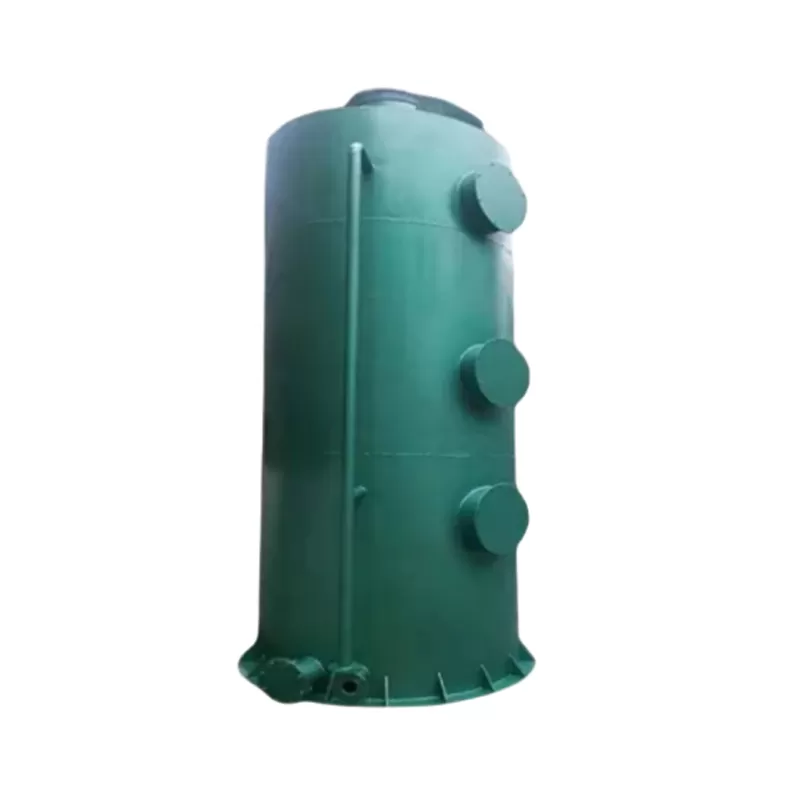
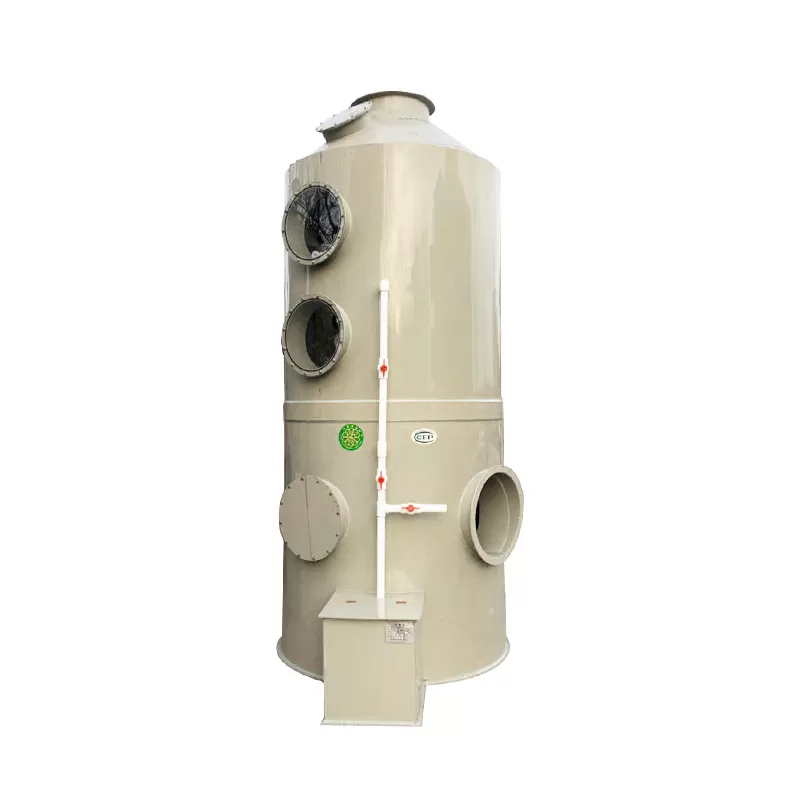
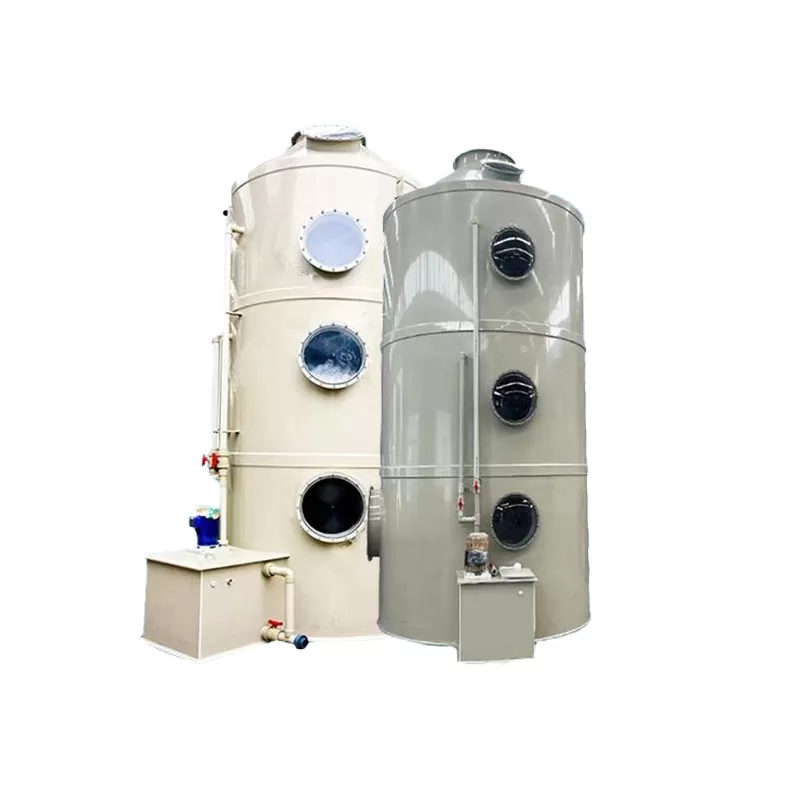
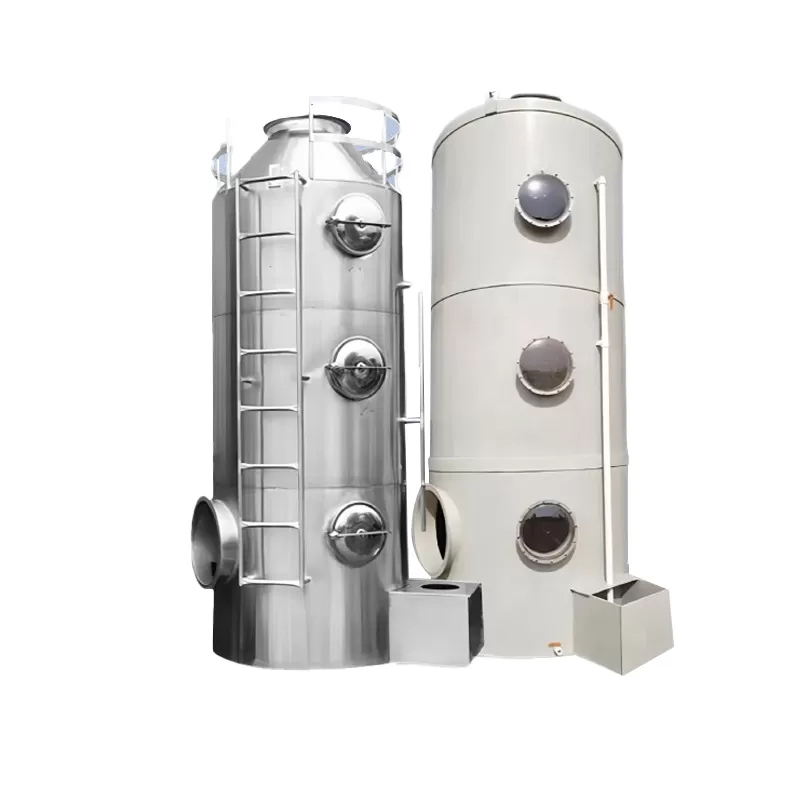
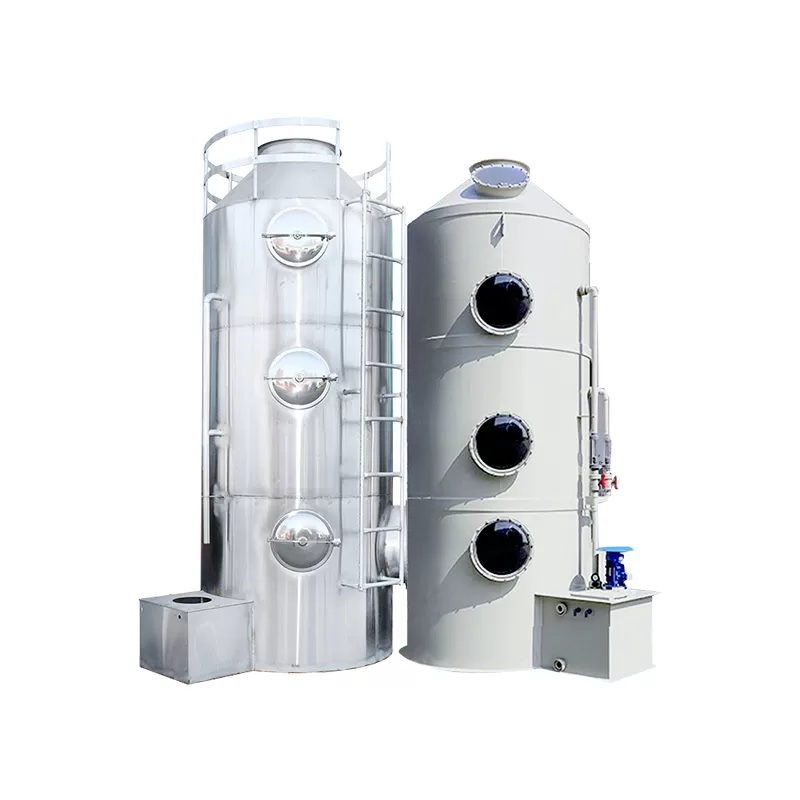
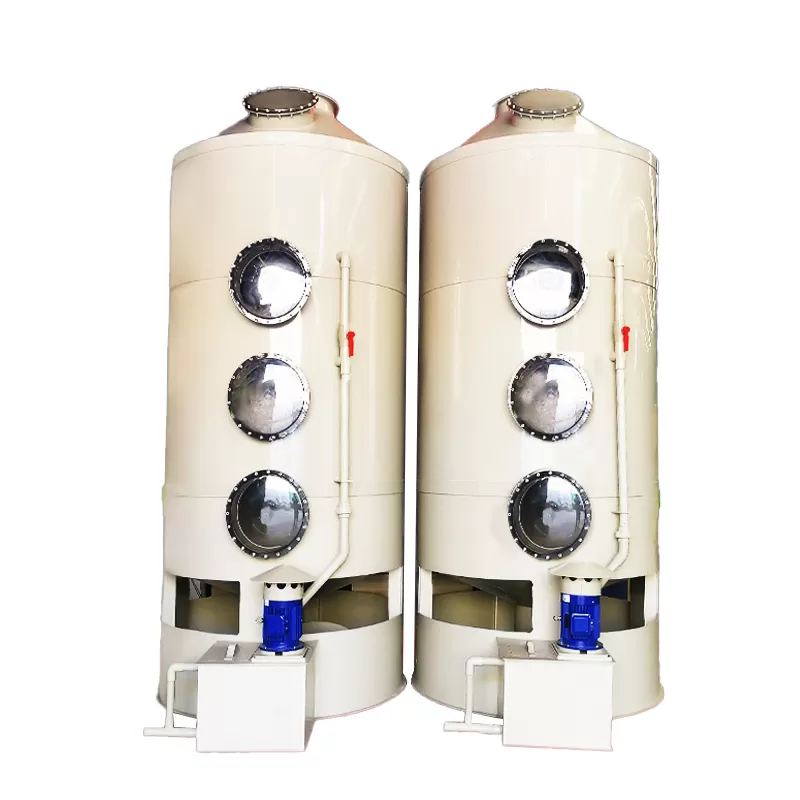
What is a Spray Tower?
A Spray Tower is a vertical gas–liquid contact equipment designed to remove contaminants from industrial exhaust streams. Inside the tower it contaminated gas moves upward while a scrubbing liquid (usually water or chemical solution) is sprayed downward through nozzles. This counter-current contact between gas and liquid ensures the absorption, neutralization or dissolution of pollutants.
Spray towers are widely used in industries requiring odor control, acid gas removal, particulate scrubbing and chemical fume treatment.
Why Spray Tower is necessary?
A Spray Tower is crucial for industrial operations because:
Removes Harmful Pollutants: It Captures toxic gases such as HCl, SO₂, NOx, NH₃, HF, and chemical vapors.
Meets Environmental Regulations: the system Ensures compliance with strict air emission standards.
Protects Worker Safety: It Prevents employees from exposure to corrosive and hazardous fumes.
Minimizes Environmental Impact: It Reduces air pollution and acid rain-causing emissions.
Versatile for Multiple Industries: It Suitable for electronics, chemical plants, pharma, food processing, and metal finishing.
Why Choose SENOTAY for Your Spray Tower System
Senotay manufactures ten spray tower configurations under one product line, covering PP, FRP, PVC, and stainless steel construction so a facility can match tower material to its specific gas chemistry rather than adapting one general-purpose design to every application. Removal efficiency ranges from 85 to 99 percent depending on tower type and pollutant, with operating temperatures spanning minus 20 degrees Celsius for standard PP construction up to 180 for the stainless steel high-temperature line. Chemical and pharmaceutical plants typically start with the PP or Acid-Base configuration for standard acid and alkali fume control, then move to the Packed Bed or Multi-Stage design when a single pass doesn't reach required removal efficiency. Electroplating and semiconductor facilities rely on the PVC and FRP variants specifically for their resistance to the mixed corrosive vapors those processes generate. Hebei OuTai Environmental Protection Equipment Co Ltd manufactures the full Spray Tower line in Hebei, China, with tower type, material, and stage count matched to the specific gas composition and required removal rate.
Why Leading Plants Choose SENOTAY Spray Tower
Factory-Direct Pricing. Certified Quality. Dedicated Support.
Best Price Guarantee
Certified & Compliant
Fast, Reliable Delivery
Types of Spray Towers – Detailed Comparative Table
Type No. | Spray Tower Type | Material | Suitable Gas Type | Operating Temp. | Removal Efficiency | Typical Use Case |
01 | PP Spray Tower | PP | Acid & Alkali Fumes | 0–80°C | 85–98% | Chemical exhaust scrubbing |
02 | FRP Spray Tower | FRP | Corrosive gases | −20–110°C | 90–99% | Heavy industries |
03 | Acid-Base Spray Tower | PP/FRP | Acid & Base Gas | 0–90°C | 95–99% | Neutralization systems |
04 | Venturi Spray Tower | SS/FRP | Particulates | 0–100°C | 95–99% | Dust scrubbing |
05 | Gas Scrubber Tower | PP/FRP | VOCs & fumes | 0–90°C | 85–96% | VOC removal |
06 | Fume Scrubber | PVC/PP | Toxic fumes | −10–70°C | 90–99% | Electroplating exhaust |
07 | Industrial Scrubber | FRP/SS | Mixed pollutants | 0–120°C | 90–98% | Industrial waste gas |
08 | Packed Bed Spray Tower | PP/FRP | Acid Gas | 0–95°C | 96–99% | High-efficiency absorption |
09 | Multi-Stage Spray Tower | PP/FRP | Heavy gases | 0–90°C | 97–99% | High-pollutant industries |
10 | Stainless Steel Spray Tower | SS304/316 | High-temp gases | 0–180°C | 85–95% | High-temp chemical plants |
Spray Tower Installation Method
Installing a Spray Tower involves the following steps:
Foundation Preparation
Placement & Alignment
Piping & Connections
Pump & Nozzle Setup
Electrical & Control System Wiring
Leak Testing & Trial Run
Professional Product Specification Table – Spray Tower
Product Context:
A high-efficiency industrial gas scrubbing system designed for acid-gas neutralization, fume removal, and air pollution control.
Physical Dimensions | Performance Ratings | Material & Construction | Operational Data | Certifications & Lifecycle |
Height: 3,000–12,000 mm | 70–98% (depending on pollutant) | FRP / SS304 / SS316L | Pressure: -2 to +5 kPa | 10–15 years |
Diameter: 800–3,000 mm | 3,000–85,000 m³/h | PP / PVC / SS304 | Pressure Drop: 350–900 Pa | Unlimited (continuous duty) |
Shell: 6–18 mm | 3–45 m³/h | PP Pall Rings | Pump Power: 1.5–15 kW | 7 ISO 9001:2015 |
Base: 300–1,200 mm | Operating Temp: 5–60 °C | UPVC / SS304 | 80 °C | 7 IP55 (motors/panels) |
Inlet Duct Ø: 200–800 mm | (FRP Build): 100 °C | EPDM / PTFE | ≤ 75 dB(A) | HG/T 3797 |
Outlet Duct Ø: 200–800 mm | pH Range: 2–12 | SS304 / HDG Steel | Water Consumption: 0.3–1.2 m³/1,000 m³ gas | CE Marking: Yes |
(BCD): 12–24 bolts @ Ø12–Ø18 mm | ≥ 90% @ >5 μm | FRP Reinforced | Lugs: 2–4 pcs | 12–24 months |
1.2–3.5 m² | Gas Velocity: 1.5–3.0 m/s | FRP beams | Operating: Continuous | JB/T 8530
|
Material Properties of a Spray Tower
Senotay’s Spray Towers are manufactured using premium, corrosion-resistant materials:
PP (Polypropylene): Lightweight, excellent chemical and corrosion resistance.
FRP (Fiberglass Reinforced Plastic): High strength-to-weight ratio, durable in harsh environments.
PVC / CPVC: Suitable for moderate temperature and corrosive applications.
HDPE / LDPE: Ideal for alkaline scrubbing systems.
SS304 / SS316: Used for high-temperature oxidation environments.
Standard Physical & Mechanical Properties of Spray Tower Materials
Density: about 0.91 – 1.6 g/cm³ (depending on material).
Service Temperature: −20°C to 110°C.
Chemical Resistance: Resistant to acids, alkalis, solvents, and corrosive gases.
Mechanical Strength: Tensile strength 25–80 Mpa.
Thermal Conductivity: 0.1 – 0.3 W/m·K.
UV Resistance: Enhanced UV-stabilized material available.
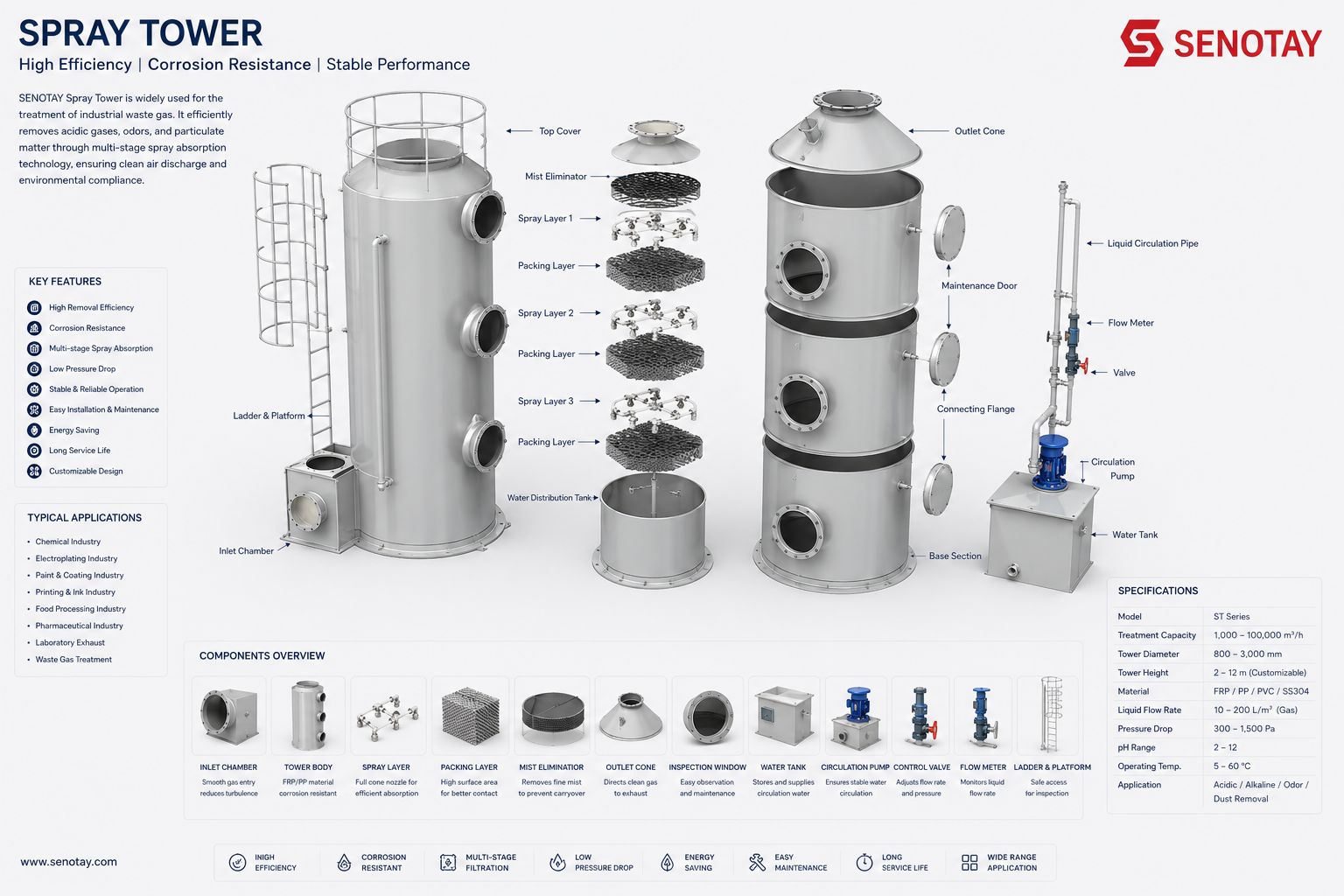
Industrial Applications of Spray Towers
Spray Towers are used across multiple industries, including:
Chemical Manufacturing.
Pharmaceutical Production.
Semiconductor & Electronics.
Fertilizer & Agrochemical Plants.
Metal Surface Treatment.
Battery Manufacturing.
Waste Gas Treatment Stations.
Printing & Coating Industry.
Food Processing & Odor Control.
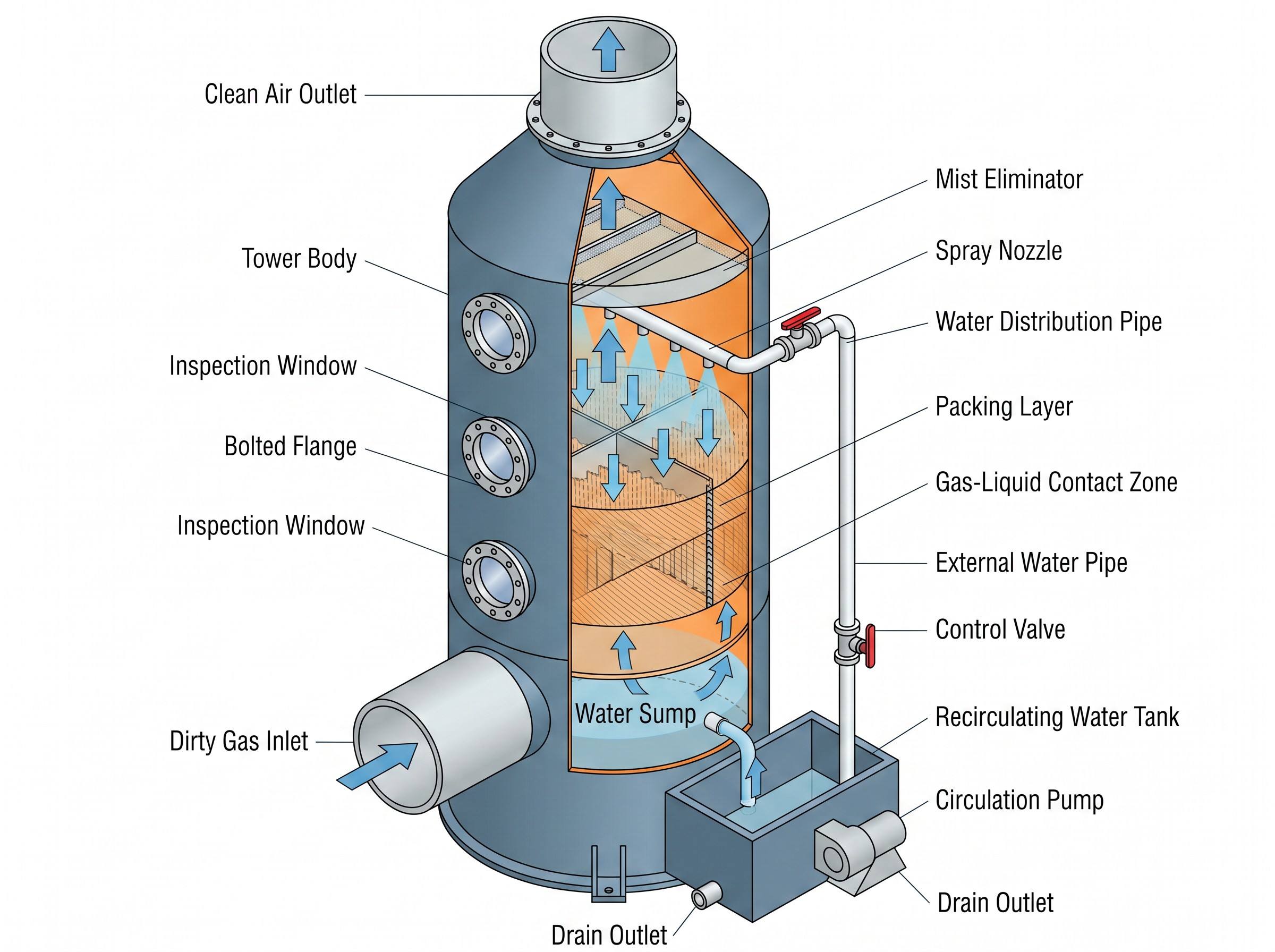
How a Spray Tower Works – Working Mechanism
Contaminated air enters from the bottom of the tower.
Scrubbing liquid is sprayed from the top through specially designed nozzles.
As gas travels upward, liquid droplets capture contaminants through absorption or chemical reaction.
Clean gas exits from the top, passing through a mist eliminator to remove moisture.
Scrubbing liquid is collected at the bottom, filtered, and recirculated back through the pump.
This simple yet highly efficient mechanism makes Spray Towers ideal for acid-gas removal, particulate scrubbing, and neutralization of industrial fumes.
Installation of Spray Tower
Senotay ensures smooth installation with:
Professional engineering drawings.
On-site installation guidance.
Skilled technical team support.
Testing, commissioning & training services.
▪ Industrial Blower Series
▪ Y5-47 Industrial Blower | 4-72 Industrial Blower | 4-68 Industrial Blower | 9-19 Industrial Blower | 9-26 Industrial Blower
▪ Cycloid Reducer Series
▪ Horizontal Cycloid Reducer | Cycloid Vertical Reducer | Bipolar Cycloid Reducer XWE
▪ XLED Type Cycloid Reducer | XW Type Cycloid Reducer | Planetary Cycloid Reducer
▪ VOC Purifier Series
▪ Oil Fume Purifier | UV Light Oxygen Purifier | Activated Carbon Adsorption Box | Cyclone Mixing Spray Tower
▪ Cyclone Mixing Spray Tower | Regenerative Catalytic Oxidizer | Regenerative Thermal Oxidizer | Catalytic Oxidizer | Thermal Oxidizer
FAQs – Spray Tower
1. What pollutants can a Spray Tower remove?
Answers:It can remove acid gases, alkaline vapors, VOCs, ammonia, solvents, particulates, and chemical fumes.
2. What material is best for a Spray Tower?
Answers:PP is ideal for most acid-base fumes; FRP for heavy corrosion; SS for high-temperature gases.
3. How long does a Spray Tower last?
Answers:Typically 8–15 years, depending on material and operating conditions.
4. Is maintenance difficult?
Answers:No. Spray towers are simple, low-maintenance systems with easy access for cleaning.
5. Can the system be customized?
Answers:Yes. Height, diameter, nozzles, packing, flow rate, material, and stages can all be customized.