
EN
What are you looking for?
Global sourcing guide to PPC baghouse dust collectors for cement plants. Compare pulse-jet designs, filter media, and certified manufacturing expertise.
Cement plants, quarries, and heavy industry share one stubborn challenge: dust. Fine particulate from grinding, conveying, and packing does not just dirty the site—it threatens worker health, triggers regulatory fines, and accelerates wear on equipment. A PPC baghouse dust collector is one of the most proven answers, capturing well over 99% of processed dust before it reaches the atmosphere.
In this guide, we explain how PPC baghouse systems work, why they dominate cement plant baghouse dust collection, and how to source a heavy-duty baghouse system from a manufacturer you can trust.
A PPC baghouse dust collector removes fine dust with high filtration efficiency—often above 99%—using rows of fabric bags cleaned by short pulses of compressed air.
Pulse-jet baghouse designs suit continuous processes like cement production because cleaning never stops the airflow.
Matching filter media, airflow, and construction to your process is the key to long bag life and reliable operation.
Global sourcing from an experienced Chinese manufacturer like Senotay delivers certified quality at competitive cost.
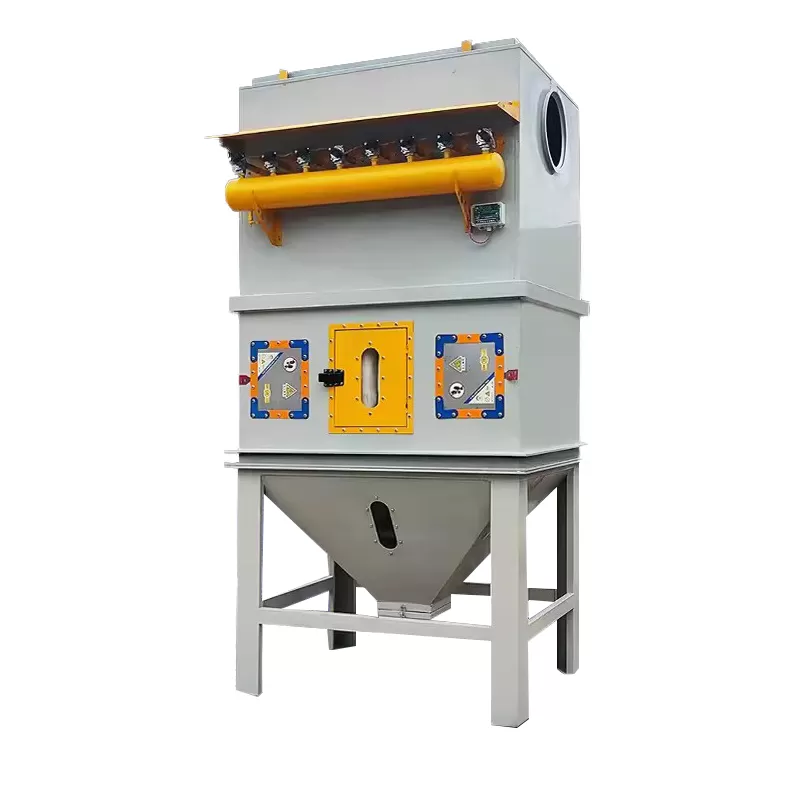
A baghouse—also called a fabric filter—is an industrial dust collection system that filters dust-laden air through bags made of fabric or felt. A PPC baghouse dust collector is a pulse-jet-cleaned baghouse design widely used in cement and minerals processing. Dusty gas enters the unit, passes through the filter bags, and leaves clean, while captured dust is pulsed off into a hopper for recovery or disposal.
The PPC name comes from the pulse-jet cleaning principle: high-pressure compressed air blasts each row of bags in turn, dislodging the dust cake without shutting the unit down. That continuous operation is exactly what cement plants need.
Cement production is essentially a dust machine. Every stage—crushing, raw milling, clinker cooling, cement grinding, and packing—generates fine, alkaline dust. Cement plant baghouse dust collection matters for three reasons:
Compliance: particulate emissions limits are enforced in most countries, and a well-maintained baghouse keeps you comfortably under them.
Equipment protection: less dust in the air means longer life for fans, conveyors, and downstream machinery.
Worker safety and community relations: visible dust plumes are a health concern and a public relations problem.
Because pulse-jet baghouses maintain high efficiency continuously, they have become the default for kiln and mill applications around the world.
A pulse-jet baghouse is built from a few core parts, and understanding them helps you specify the right unit:
Filter bags: fabric sleeves that capture dust; the media choice depends on gas temperature and chemistry.
Cage supports: wire cages keep the bags from collapsing under airflow.
Pulse valves and manifold: deliver short bursts of compressed air to clean each bag row.
Hopper and discharge valve: collect dust released from the bags and remove it continuously.
Fan and ductwork: move dusty air into the unit and clean air out.
Not all baghouses are equal. In cement plants, temperatures spike, dust is abrasive, and processes run around the clock. A heavy-duty baghouse system is engineered for that reality:
Stronger casing and insulation to handle thermal cycling and condensation.
Abrasion-resistant inlet designs that protect bags from scouring by coarse particles.
Oversized hoppers and reliable discharge valves to keep material flowing.
Filter media rated for high temperatures, such as PTFE or fiberglass membranes where needed.
Choosing the right bag fabric is one of the most important decisions you will make. Here is how common media compare:
When specifying industrial dust filtration, work through five questions:
What is the dust? Fine, abrasive, hygroscopic, or explosive dust changes the design.
How hot is the gas? This determines filter media and whether you need a cooling system.
How much airflow? The volume in cubic meters per hour sets the unit size and fan power.
What are the emissions limits? Local regulations set the required collection efficiency.
How will bags be maintained? Access platforms and spares availability affect uptime.
A manufacturer that asks these questions before quoting is a good sign. One that quotes a price without understanding your process is not.
Global sourcing has become the norm for dust collection equipment. For buyers outside China, the appeal is clear: competitive pricing, fast production, and access to a deep manufacturing supply chain. The challenge is ensuring quality—and that is where certifications matter. Senotay has manufactured industrial dust collectors, air filtration, and conveying equipment since 2005, operating certified management systems including ISO 9001 (quality), ISO 14001 (environment), and ISO 45001 (occupational health and safety). These certifications mean documented procedures, audited processes, and consistent products—not lucky batches.
When you source a PPC baghouse dust collector globally, look for:
Real certifications you can verify.
Engineering support for sizing and selection.
Clear lead times, packing, and shipping documentation.
After-sales service, spare parts, and installation guidance.
Ans: A PPC baghouse dust collector is a pulse-jet baghouse used to filter dust from industrial exhaust gas. Fabric bags capture the dust, and short bursts of compressed air clean them continuously, so the unit keeps operating at high efficiency.
Ans: Cement plants generate large volumes of fine, alkaline dust at every stage of production. Pulse-jet baghouses combine high filtration efficiency with continuous operation, which makes them the standard for cement plant baghouse dust collection and emissions compliance.
Ans: Well-designed industrial dust filtration baghouses typically achieve collection efficiencies above 99%, depending on filter media, air-to-cloth ratio, and maintenance.
Ans: Bag life depends on media, temperature, chemistry, and cleaning settings. In typical cement applications, polyester bags may last two to four years, while specialty media in hot or corrosive service varies more. Good pulse timing and inlet design extend bag life.
Ans: Verify certifications such as ISO 9001, ask for engineering support and case studies, confirm lead times and shipping terms, and choose a manufacturer with after-sales service and spare parts support, such as Senotay.
Dust control is not optional in cement and heavy industry—it protects people, equipment, and the environment. A PPC baghouse dust collector, specified correctly and built to last, is one of the smartest investments a plant can make. Whether you need a complete heavy-duty baghouse system or a replacement filter bank, working with an experienced manufacturer is the difference between a system that runs and a system that runs well for decades.
Talk to Senotay today for a free assessment of your dust collection needs and a competitive quote on PPC baghouse systems, shipped anywhere in the world.