
EN
What are you looking for?
Dust in current industrial processes serves as a major hazard which threatens both operational activities and employee safety and business financial stability. Airborne particles which escape control present a threat to equipment and employee safety in manufacturing plants and cement factories which results in expensive regulatory fines.
Every industrial facility requires a Dust Collector because of this need. A properly designed dust collection system protects employee health while ensuring environmental regulation compliance and achieving higher productivity levels and lower operational expenses.
Industrial facilities which prioritize operational efficiency and employee protection require dust collectors as essential equipment for their operations.
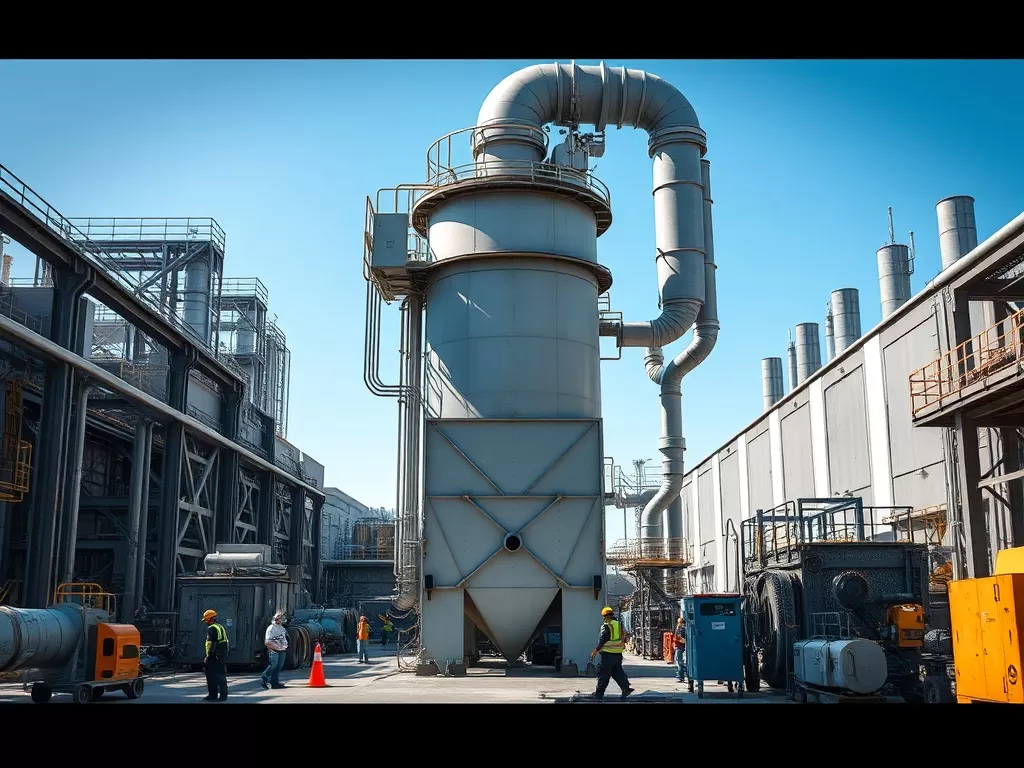
A Dust Collector functions as an industrial air filtration system which operates to capture and filter airborne dust particles that are produced during manufacturing processes. The systems operate by collecting dust from its source which they then move through ductwork to a filtration system that produces clean air which is returned to the building or outdoor space.
A typical industrial dust collection system includes:
Dust captures hoods.
Ducting network.
Filtration unit.
Fan and motor assembly.
Dust discharge system.
Unlike small commercial units, industrial dust collectors are built for continuous operation, high airflow capacity, and demanding environments.
Dust is generated in nearly every industrial sector,like:
Cement and building material plants.
Metal fabrication and foundries.
Woodworking and furniture manufacturing.
Mining and mineral processing.
Grain and food processing facilities.
Common types of industrial dust include:
Fine particulate matter.
Silica dust.
Combustible dust.
Chemical and toxic particles.
Without proper dust collection, these particles remain suspended in the air that is creating hazardous conditions.
Continuous exposure to airborne dust can cause:
Respiratory diseases.
Chronic bronchitis.
Asthma.
Silicosis.
Long-term lung damage.
A high-performance dust collector significantly improves workplace air quality, reducing health risks and creating a safer environment for employees.
Clean air is directly linked to better employee morale and productivity.
2. Ensuring Regulatory Compliance
Government and environmental authorities enforce strict air quality standards for industrial facilities. Failure to implement proper dust control measures can result in:
Heavy fines.
Production shutdowns.
Legal consequences.
Damaged corporate reputation.
An effective dust collector helps facilities comply with safety and environmental regulations while demonstrating corporate responsibility.
3. Preventing Fire and Explosion Hazards
Certain industrial dust types — such as wood, grain, and metal particles — are highly combustible. When these materials exist in their airborne form they become capable of igniting which leads to deadly explosions. Properly designed dust collection systems work to control dust build-up while they reduce fire hazards, which makes them essential for safety.
4. Protecting Machinery and Reducing Maintenance Costs
Dust can infiltrate machinery and cause:
Abrasion and premature wear.
Overheating.
Mechanical failure.
Increased downtime.
By removing airborne particles before they settle on equipment, a dust collector extends machine life and reduces maintenance expenses.
5. Improving Operational Efficiency
A cleaner industrial environment leads to:
Fewer production interruptions.
Stable airflow and process control.
Reduced cleaning time.
Higher operational efficiency.
Facilities with proper dust collection systems experience smoother production and stronger long-term performance.
Different applications require different dust collection technologies.
It is highly effective for large-scale industrial applications with heavy dust loads.
This type of dust collector is Ideal for fine dust and compact installations with high filtration efficiency.
This one uses centrifugal force to separate larger particles and often serve as pre-filtration systems.
It is Suitable for sticky, moist, or combustible dust that cannot be filtered dry.
Selecting the right dust collector depends on dust characteristics, airflow requirements, and facility layout.
A mid-sized metal fabrication plant experienced frequent machine breakdowns and worker complaints due to excessive airborne dust. After installing a properly designed industrial dust collector:
Air quality improved significantly.
Equipment downtime decreased.
Maintenance costs were reduced.
The facility passed regulatory inspections without issues.
The investment delivered measurable returns within the first year.
Installing a dust collector is not just about compliance it is a strategic business decision.
Long-term benefits include:
Reduced healthcare risks.
Lower equipment repair costs.
Increased equipment lifespan.
Improved productivity.
Enhanced corporate image.
When evaluated over time, the return on investment is substantial.
Modern dust collectors are becoming smarter and more energy efficient. New advancements include:
Real-time monitoring systems.
Automated filter cleaning.
Energy-saving fan technologies.
Sustainable filtration materials.
These innovations help industrial facilities operate more efficiently while reducing environmental impact.
High-Temperature Baghouse Systems: Material & Performance Data
How to ensure Maintenance of Bag Type Dust Collector | senotay
Dust exists in all industrial facilities but only some facilities handle it through proper management techniques. The absence of effective dust control measures puts companies at risk because it harms employee safety, damages equipment, creates legal violations, and decreases work efficiency.
Industrial operations need a dependable Dust Collector system because it helps them achieve safety requirements and operational efficiency and legal compliance. The correct dust collection system provides two benefits which are cleaner air and reduced operational expenses and extended system lifespan.
Dust collection serves as an essential requirement for industries that prioritize safety and operational efficiency and dedicated environmental sustainability efforts.
Explore More Air Pollution Control Equipment