
EN
What are you looking for?
Today's industrial operations require clean air maintenance as a mandatory requirement which protects worker safety and meets regulatory standards and supports production efficiency. Industrial operations produce excessive dust and airborne particles which create serious health risks and equipment destruction and environmental breaches when left unregulated.
Industrial Dust Collection Systems serve an essential function in this situation. The Industrial Dust Collection System design ensures safe working environments which protect equipment and enable businesses to operate sustainably for extended periods across multiple industries.
What Is Industrial Dust Collector?
Industrial Dust Collector refers to the process of collecting, filtering and removing dust and airborne contaminants generated during industrial operations. This system is designed to collect dust at the source and transport it through ductwork and separate particles from the air before releasing clean air back into the environment.
An Industrial Dust Collection System typically consists of:
Dust captures hoods.
Ducting network.
Dust collector unit.
Filtration media.
Dust discharge and storage system.
Unlike small commercial units, industrial systems are engineered to handle high airflow volumes with continuous operation and harsh environments.
Common Sources of Industrial Dust
Industrial dust is produced in many sectors, including:
Cement and construction material plants.
Metal fabrication and foundries.
Woodworking and furniture manufacturing.
Mining and mineral processing.
Food, grain, and agricultural processing.
Types of dust commonly encountered include:
Fine particulate matter.
Combustible dust.
Silica dust.
Toxic or hazardous industrial dust.
Without proper Dust Collection, these particles can accumulate rapidly, creating unsafe working conditions.
Why Industrial Dust Collection Systems Are Essential
Protecting Worker Health and Safety
Prolonged exposure to airborne dust can lead to serious health conditions such as:
Respiratory illnesses.
Asthma and chronic bronchitis.
Silicosis.
Long-term lung damage.
An effective Industrial Dust Collection System significantly reduces airborne contaminants, ensuring healthier indoor air quality and protecting workers from occupational hazards.
Compliance with Safety and Environmental Regulations
Government authorities and safety organizations enforce strict air quality and emission standards. Failure to implement proper dust control measures can result in:
Regulatory fines.
Production shutdowns.
Legal liabilities.
Industrial dust collection helps facilities meet workplace safety and environmental compliance requirements while demonstrating corporate responsibility.
Fire and Explosion Risk Prevention
Certain types of dust such as wood dust, grain dust, and metal particles are highly combustible. When suspended in air, they pose serious fire and explosion risks.
Proper Industrial Dust Collection minimizes dust accumulation, significantly reducing the likelihood of fires or explosive incidents.
Protecting Equipment and Reducing Maintenance Costs
Dust particles can infiltrate machinery, causing:
Premature wear.
Mechanical failures.
Overheating.
Increased maintenance downtime.
By capturing dust before it spreads, industrial dust collection systems protect equipment, extend service life, and lower repair costs.
Improving Productivity and Operational Efficiency
A clean industrial environment leads to:
Improved worker efficiency.
Reduced equipment downtime.
Stable production output.
Lower operational disruptions.
Dust collection directly contributes to smoother, more efficient operations.
Types of Industrial Dust Collection Systems
Different industrial applications require different dust collection solutions. Common system types include:
Baghouse Dust Collectors
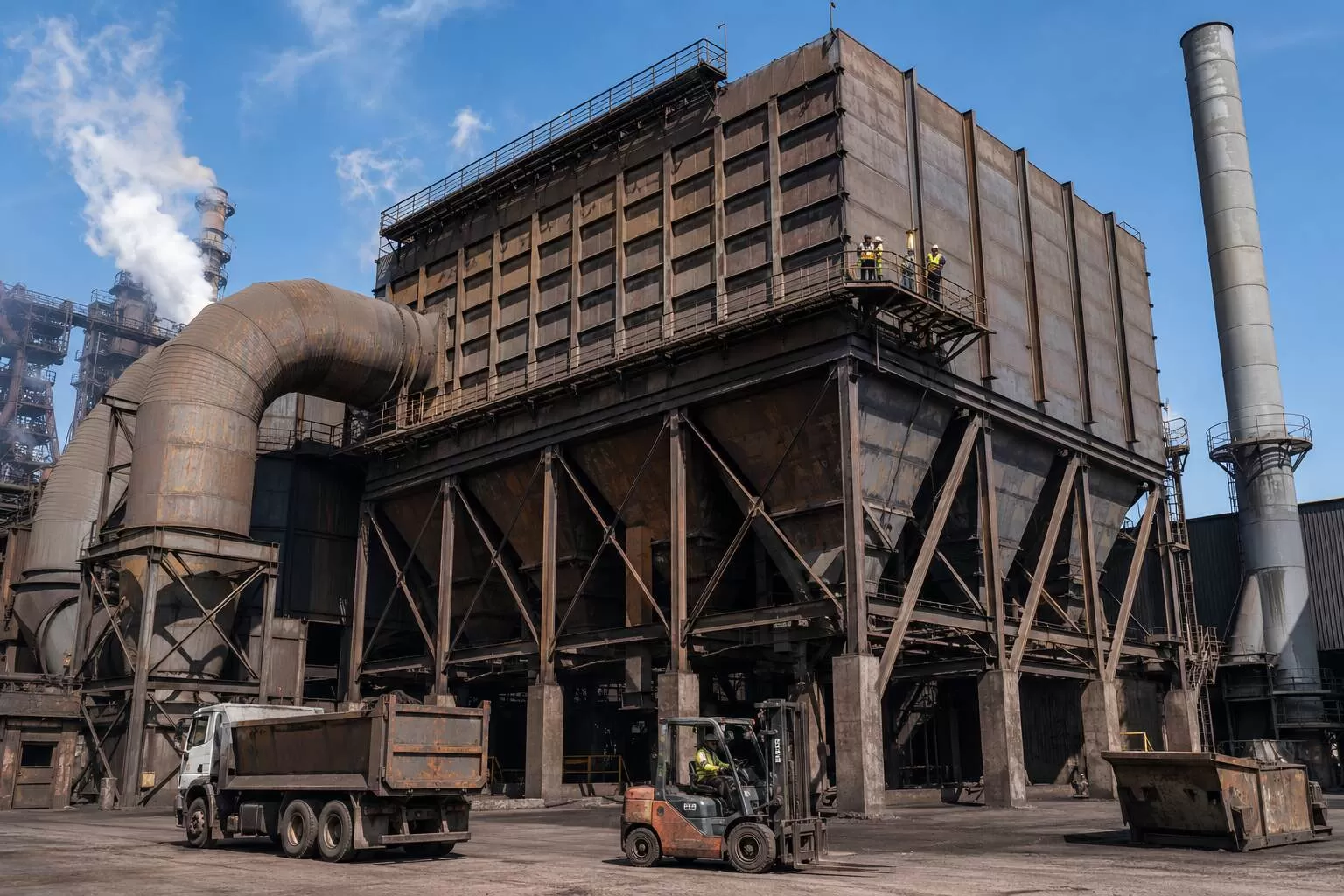
Highly effective for large dust volumes and heavy industrial use, especially in cement and steel plants.
Cartridge Dust Collectors
Ideal for fine dust filtration and compact installations with high efficiency.
Cyclone Dust Collectors
Use centrifugal force to separate larger particles and often serve as pre-filters.
Wet Scrubbers
Best for sticky, moist, or combustible dust that is difficult to filter dry.
Each Industrial Dust Collection System must be selected based on dust characteristics, airflow requirements, and facility layout.
Real-World Example: Industrial Dust Collection in Action
A metal fabrication facility was facing excessive airborne dust, frequent equipment breakdowns, and employee health complaints. After installing a properly designed Industrial Dust Collection System, the company achieved:
Significant improvement in indoor air quality.
Reduced equipment maintenance costs.
Improved worker safety and comfort.
Compliance with environmental standards.
The system delivered measurable operational benefits within the first year of installation.
Key Factors When Choosing an Industrial Dust Collection System
To ensure optimal performance, consider:
Type and volume of dust generated.
Particle size and characteristics.
Required airflow capacity.
Facility layout and available space.
Filtration efficiency.
Maintenance requirements and operating cost.
A professionally engineered system ensures long-term reliability and maximum efficiency.
Long-Term Cost Benefits of Industrial Dust Collection
Although installing an Industrial Dust Collection System requires upfront investment, the long-term benefits far outweigh the cost:
Lower healthcare and safety risks.
Reduced machine repair expenses.
Energy efficiency improvements.
Increased equipment lifespan.
Higher overall productivity.
These systems deliver strong return on investment over time.
Future Trends in Industrial Dust Collection
Modern dust collection technology continues to evolve, with trends including:
Smart systems with real-time monitoring.
Energy-efficient filtration designs.
Automated cleaning mechanisms.
Environmentally sustainable materials.
These innovations are shaping the future of Industrial Dust Collection.
Frequently Asked Questions
Q.What is Industrial Dust Collection?
Answers: It is the process of removing airborne dust from industrial environments using specialized filtration systems.
Q.Why is dust collection important in factories?
Answers: It is important because of Dust collection protects workers, prevents equipment damage, and ensures regulatory compliance.
Q.Which industries require industrial dust collection systems?
Answers: Industries like Manufacturing, mining, cement, woodworking, metal processing, food and agriculture industries.
Q.What happens if industrial dust is not controlled?
Answers: Uncontrolled dust can cause health hazards, fire risks, regulatory penalties, and equipment failure.
Conclusion
Industrial Dust Collection Systems hold critical importance for industrial operations. Industrial dust collection systems serve as essential investments which protect employee health and maintain regulatory standards while providing operational efficiency and cost savings benefits to contemporary facilities.
The proper Industrial Dust Collection System implementation enables businesses to establish safe work environments while safeguarding their assets and attaining sustainable business performance.