
EN
What are you looking for?
A materials-testing facility needed extraction that could follow sample preparation between adjacent benches. This representative Mobile Dust Collector case examines a proposed MDC-2000 package, an illustrative 20-to-7-minute changeover and the checks needed to preserve capture after every move.
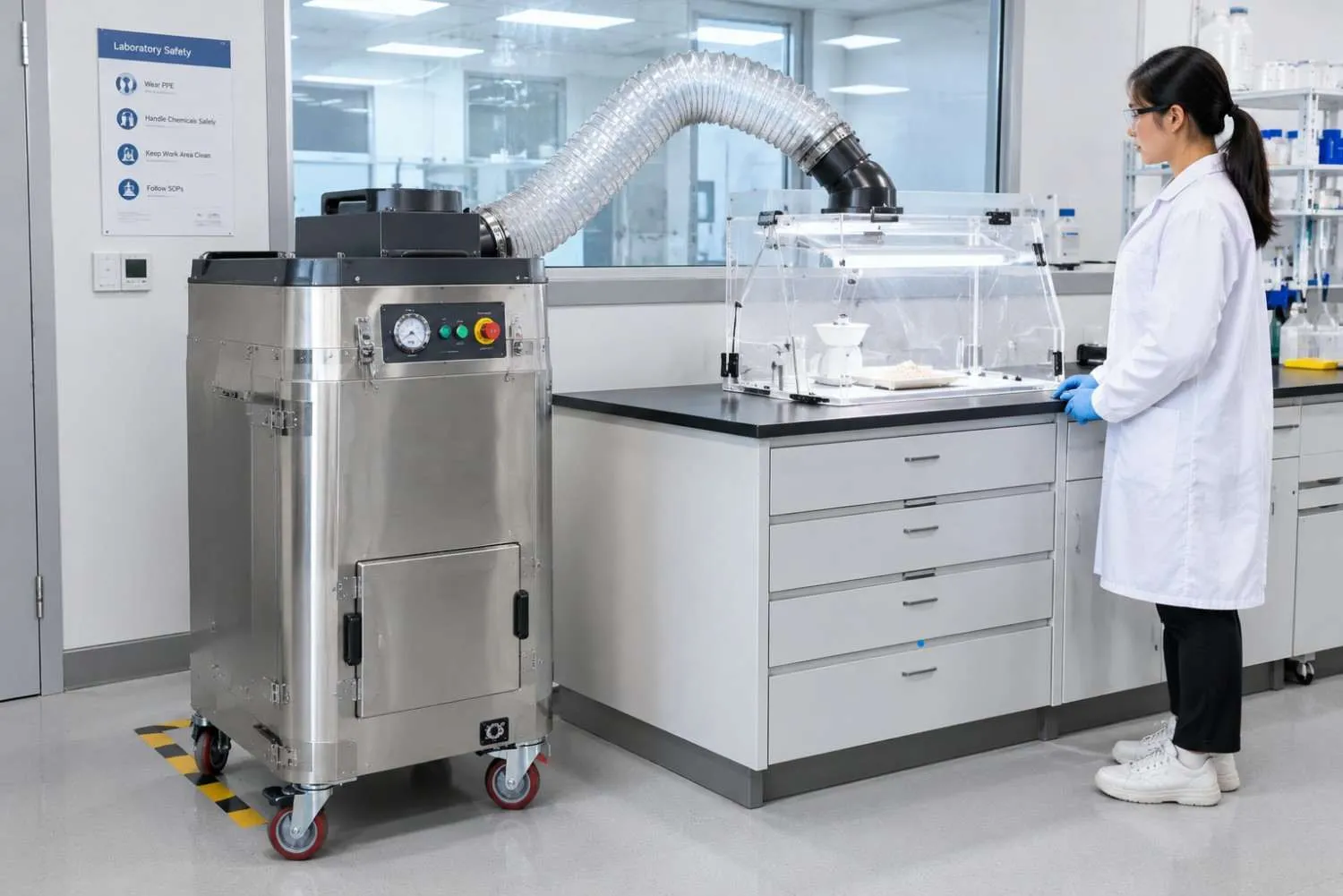 Can one portable dust removal system serve a workshop and lab?
One portable dust removal system can serve approved workshop and laboratory tasks sequentially when the dust, hood arrangement and discharge route remain compatible. Moving the collector does not transfer its performance automatically: hose resistance, enclosure opening and room airflow must be checked. This representative case uses an MDC-2000 with a project target of 1,000 m³/h delivered at the active bench, not simultaneous extraction from both locations.
The scenario compares 1–7 June 2026 with 1–7 July 2026. These figures are assumptions, not field measurements.
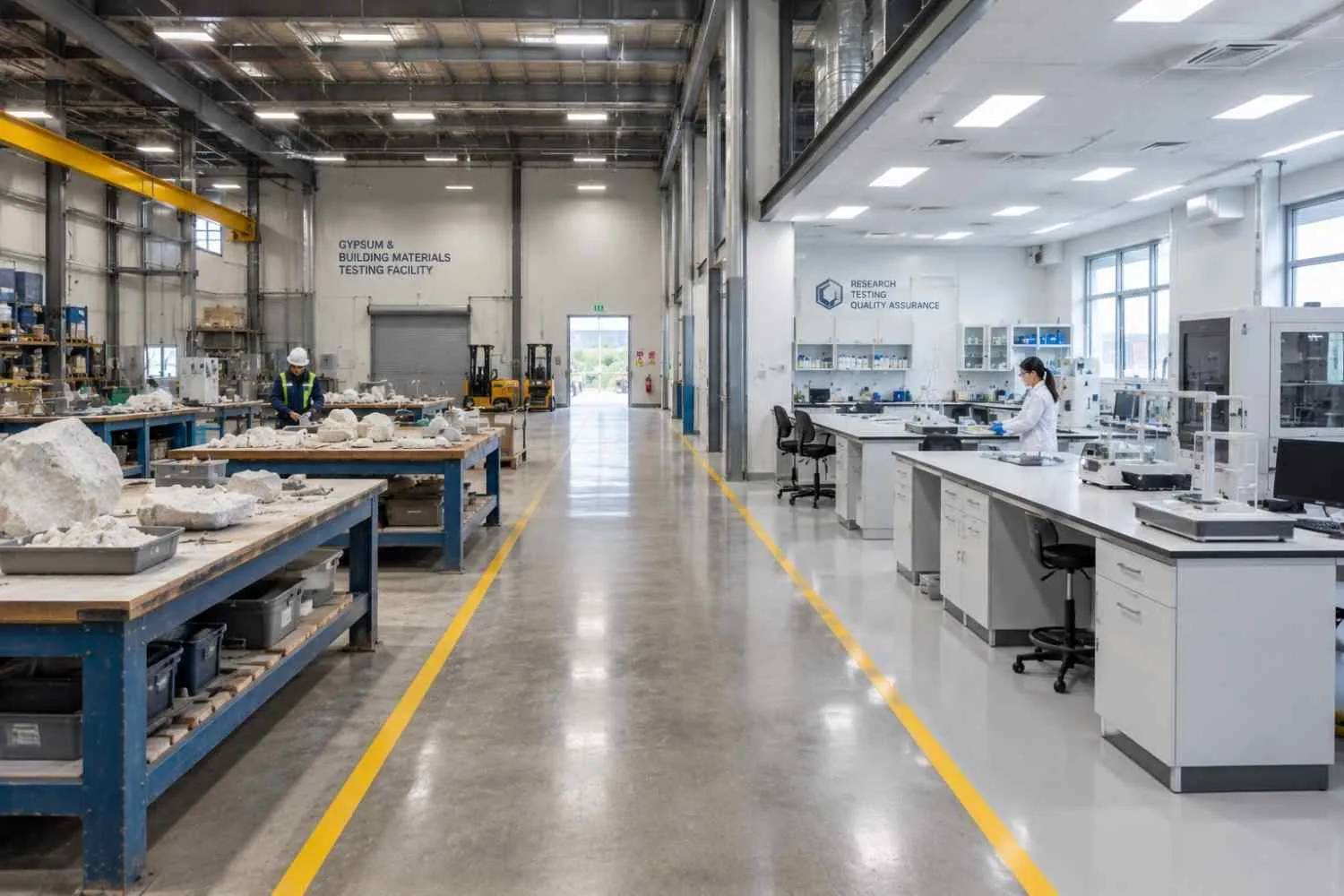
The representative facility checked gypsum-based building products. Technicians prepared specimens in a workshop and transferred selected material to an adjacent laboratory preparation bench. Both locations handled the same approved material family; the proposed collector was not shared with unrelated chemical or biological work.
The workshop supervisor owned a reliable setup, while the laboratory manager needed consistent housekeeping and protection against sample contamination. Maintenance staff had to keep the unit serviceable without occupying a permanent central-plant footprint. The assumed schedule included 4 changeovers per working day, with only one dusty preparation operation active at a time.
The existing temporary extraction arrangement needed repeated repositioning of the collector, hose and inlet. In the representative operating history, changeovers consumed time because technicians had to find a workable route around benches and reconnect equipment before checking suction.
The first attempted improvement was a longer flexible hose. It reduced the distance the collector needed to travel, but the extra bends and variable routing made delivered airflow less predictable. A machine could sound normal while moving less air at the bench.
Every altered connection could change the relationship between the dust source and the extracted air. A faster setup that weakened capture would not meet the facility’s need.
The awkward constraint was the laboratory environment. Passageways had to remain clear, the same dust stream needed controlled handling, and extraction could not disturb unrelated work.
Local exhaust ventilation captures a contaminant near its source and carries it away for treatment or discharge. Filter efficiency describes the fraction removed from air that reaches the filter. Capture effectiveness concerns the material entering the extraction system in the first place.
A cartridge with strong laboratory test performance cannot compensate for an inlet placed outside the dust cloud. Likewise, a large catalogue airflow does not establish the airflow available after adding a hose, bends, an enclosure and a loaded filter.
The fan must overcome resistance throughout the connected system. Longer or kinked hose and accumulated filter dust can shift operation toward lower flow. An indicator should therefore relate to the commissioned arrangement rather than simply show that the motor is energized.
For the proposed task, partial enclosure brings the extraction boundary close to the material. It also reduces reliance on an open capture hood positioned by eye. However, opening the enclosure farther for an awkward specimen changes the required flow and must remain within the approved operating envelope.
HSE’s HSG258 guidance on local exhaust ventilationtreats the hood, duct, cleaner, air mover and discharge as a complete control system. Moving one component requires attention to the remaining connections.
The practical question is whether the assembled arrangement controls the real task after relocation.
The representative design separated a delivered-flow target from the catalogue rating. It also restricted use to the assessed material and task. The proposed enclosure velocity is an engineering starting point, not a universal laboratory requirement or proof of exposure control. A competent commissioning assessment must establish the acceptable operating envelope.
The alternatives should be compared against the task rather than portability alone.
The cheaper routing improvement wins if the existing collector can deliver adequate flow through a repeatable arrangement. Fixed extraction wins where both benches operate together or the process rarely moves. A general mobile collector is the wrong choice for solvent-vapour control, infectious work, potent pharmaceutical powders or combustible dust without an appropriate engineered specification. “Laboratory” describes a location, not a single contamination-control duty.
No customer purchasing record was provided. In the representative selection, the buyer would ask for a fan curve, filter specification, connection drawing and a commissioning demonstration at both approved locations. The deciding evidence would be performance with the intended hose and operating filter condition.
For this representative application, we selected the MDC-2000 cartridge model listed on Senotay’s mobile collector product page. The supply description below is a proposed configuration, not a confirmed shipment.
The proposed scope comprised:
A 304 enclosure and wheeled frame, subject to approved fabrication drawings.
A cartridge selected for the characterized gypsum dust; media grade and cleaning method require confirmation.
Locking castors, transport handle and a sealed collection container.
The approved extraction hose, labelled connections and a bench-flow indicator.
A compatible filtered-outlet connection to the assessed outdoor discharge route.
We chose the 2,000 m³/h nominal model → over selecting solely at the 1,000 m³/h delivered target → because the connected hose, enclosure and filter impose resistance.
We chose a 3 m, 150 mm hose arrangement → over an unspecified extended hose → because the commissioned setup needed a repeatable resistance and routing condition. Changing either dimension would trigger review rather than an assumption of equivalent performance.
We chose one approved active bench → over simultaneous branching → because the project requires 1,000 m³/h at the operating enclosure. Sharing flow without a system calculation could leave both stations below their required duty.
The catalogue establishes the model designation. The enclosure interface, airflow indication, discharge connection, filter specification and cleaning instructions need a project schedule. The accepted trade-off is that mobility still requires reconnection and checks. The collector cannot become a general-purpose unit for every workshop or laboratory activity merely because it has wheels.
The route below is proposed; no factory records were supplied. Senotay’s manufacturing information provides context but does not establish this unit’s manufacturing history.
Production would start with traceable 304 sheet and approved frame components. Cutting and forming would create the enclosure, access panels and collection-container interface.
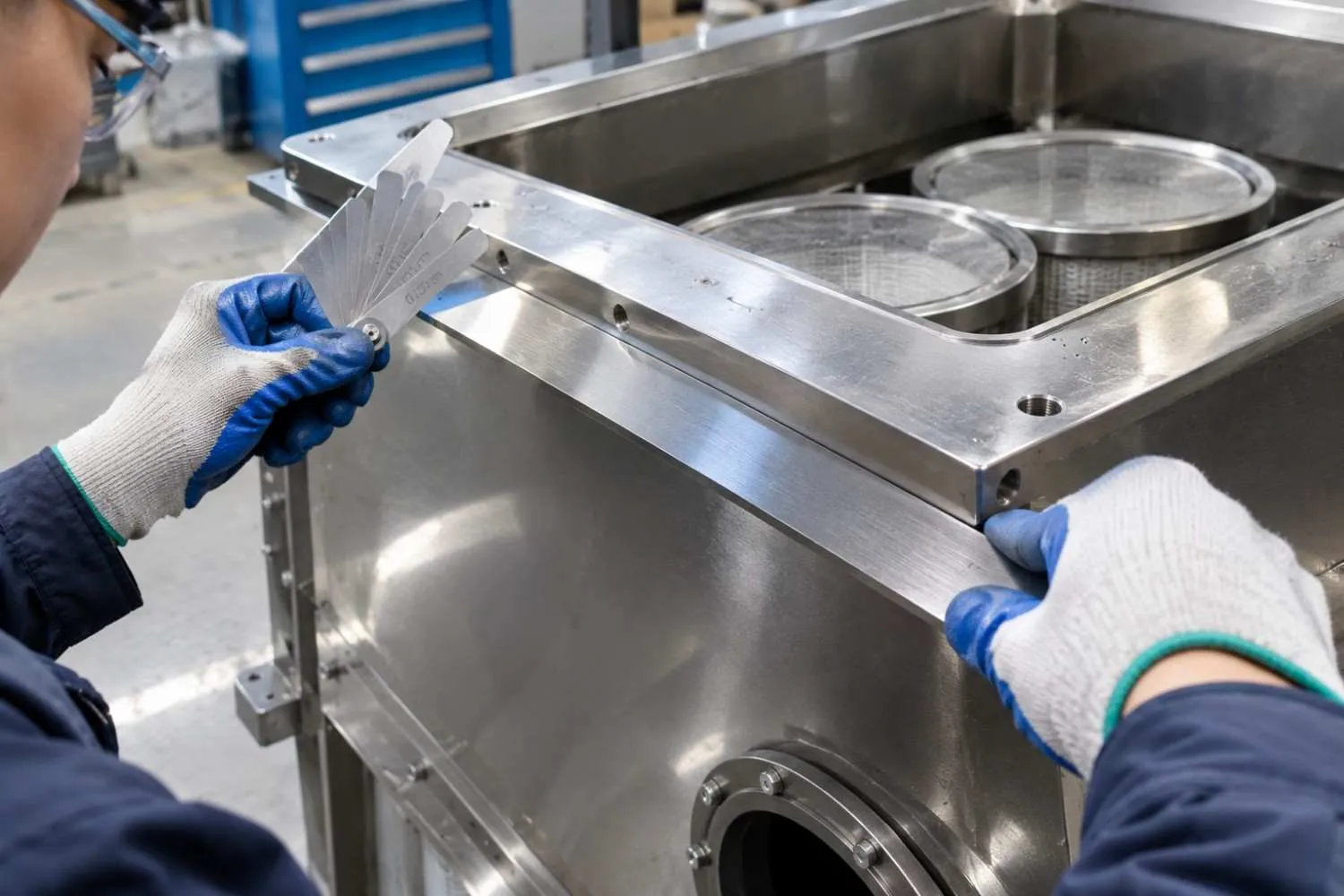
The fabricator would join the enclosure, prepare surfaces and fit the fan, filter seat and seals. The representative filter-seat flatness criterion is 1 mm across the sealing face, checked with a straightedge and feeler gauges against an approved procedure. That is a proposed drawing requirement, not a published MDC-2000 tolerance.
Assembly would add castors, handles, electrical components and connections. Functional checks would cover access closure, container sealing, wheel locking and the commissioned interface requirements.
The illustrative 5-week programme allows 1 week for engineering and procurement, 2 weeks for fabrication, 1 week for assembly and testing, and 1 week for packing. Maintaining repeatable seal contact after repeated opening is the anticipated difficult step.
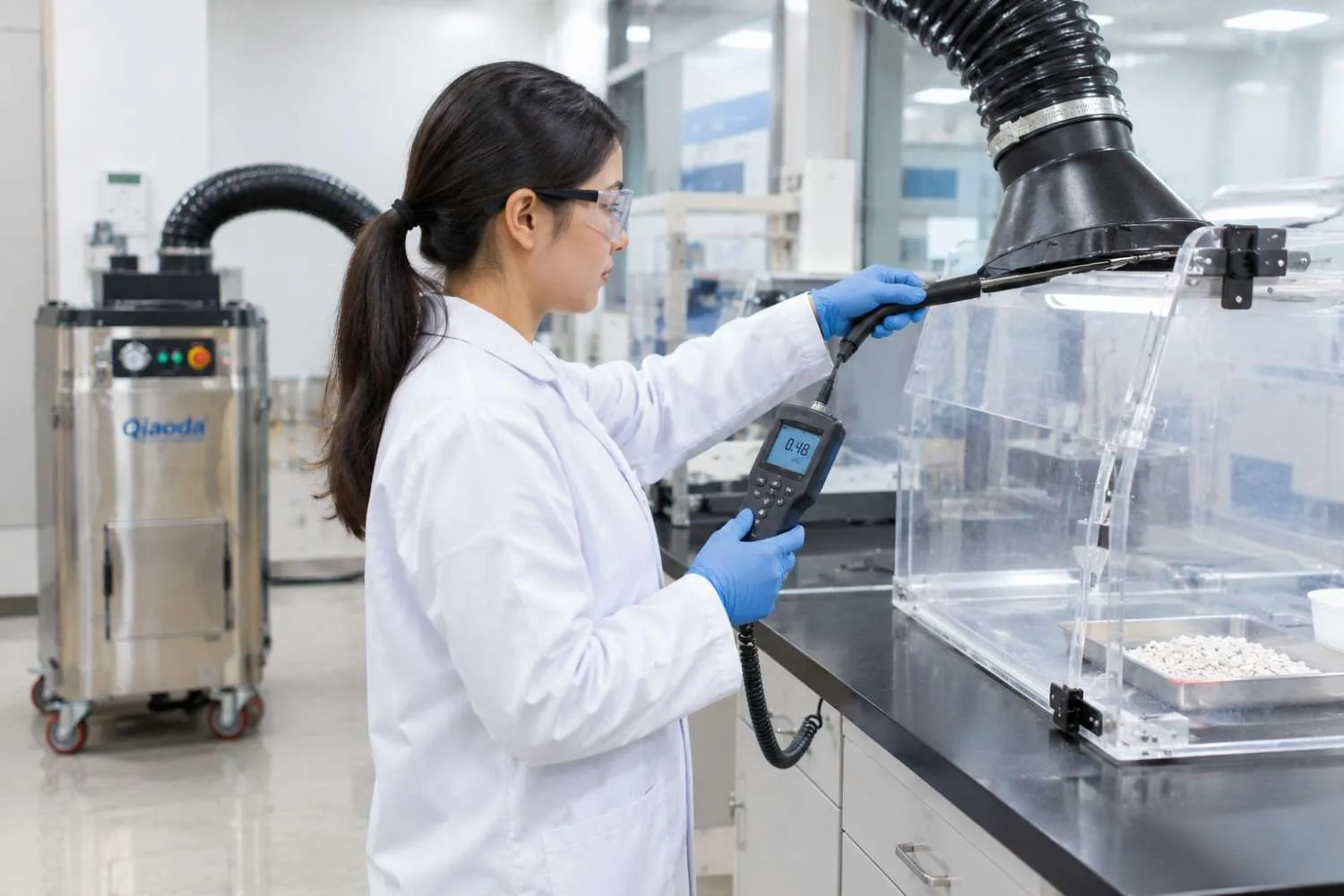
For the assumed Great Britain location, the Control of Substances Hazardous to Health Regulations 2002 govern relevant exposure-control duties. HSE states that LEV should undergo thorough examination and testing at least every 14 months; some processes need shorter intervals. That interval is not permission to ignore deteriorating control between examinations. See HSE’s commissioning and legal guidance.
A competent examiner would assess the complete working system and compare it with the commissioned benchmarks. For this case, each approved bench configuration needs documented airflow, enclosure condition and an assessment of task control. A brief smoke observation alone cannot establish compliance with a substance-specific exposure limit.
If adequate control is not demonstrated, the facility must correct the defect or provide effective alternative control before relying on the arrangement for the affected task. No occupational-exposure result or certified HEPA grade has been supplied.
The table identifies required evidence, not completed tests. Senotay’s quality-control pagedoes not replace the commissioning record.
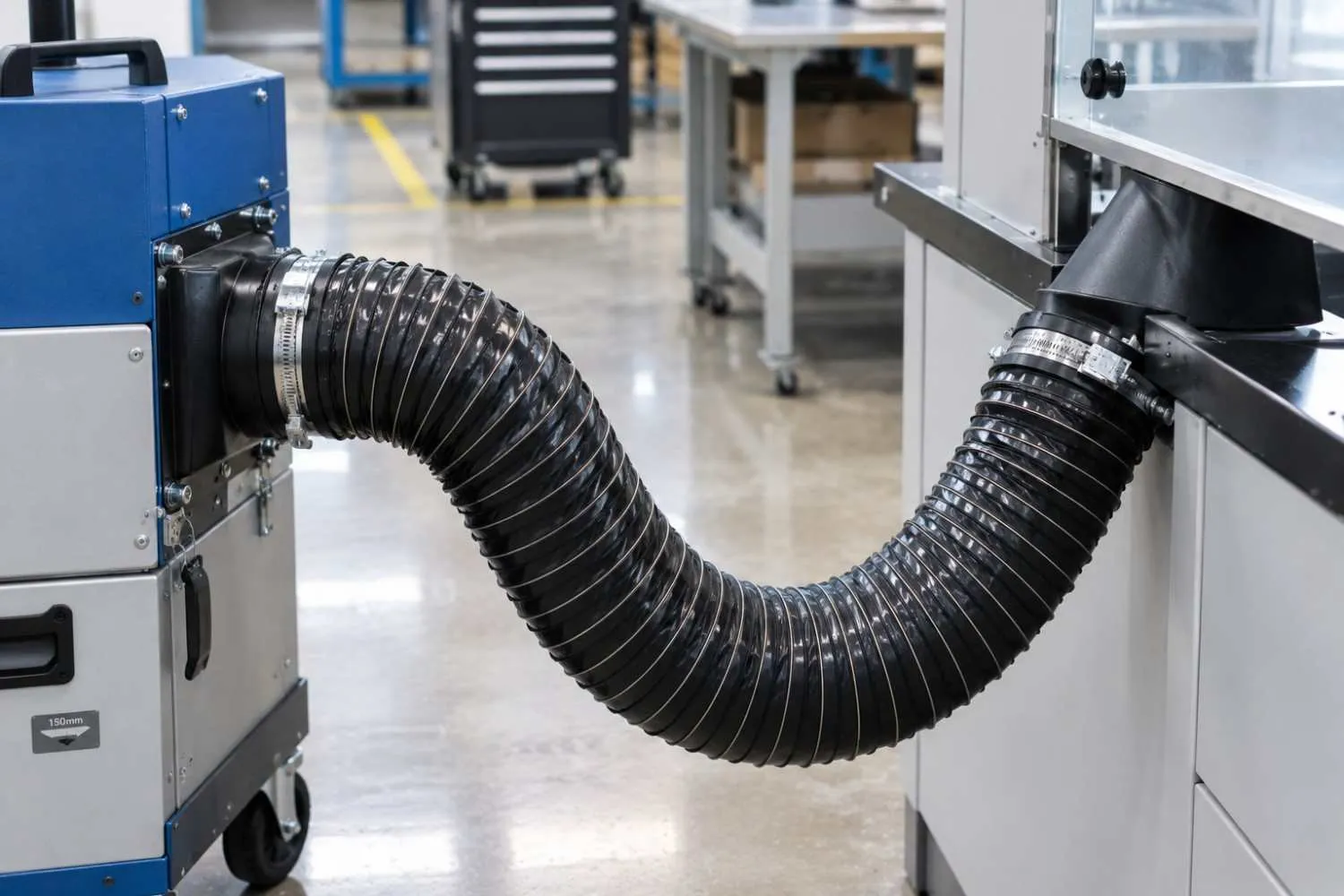
In the illustrative commissioning sequence, positioning the cabinet beside a bench produced a tight hose bend. The airflow indicator failed to reach its proposed acceptance condition even though the fan ran normally. The team rerouted the hose within the approved length and repeated the connected-system checks. This is a representative fault scenario, not a reported site event.
Commissioning would also assess doors, supply-air drafts and specimen positions during actual preparation.
Handover would cover movement, brakes, reconnection, pre-use checks, container handling, filter servicing and fault reporting. The operator would verify the airflow indication before preparation starts, rather than assume the previous bench’s acceptance remains valid.
The representative comparison periods are 1–7 June 2026 and 1–7 July 2026. None of the figures below comes from a supplied field record.
At the assumed 4 changeovers per day, released setup time is (20 − 7) × 4 = 52 minutes/day. This is an illustrative calculation, not verified productivity. Released time creates commercial value only when the facility can use it for additional work or a real reduction in labour cost.
The unexpected benefit in the scenario is clearer fault reporting: technicians can describe a low-flow indication or an incorrect connection rather than report only that suction feels weak.
Electrical demand does not improve. The assumed input rises as delivered flow improves, so the case makes no energy-saving claim. Actual payback also requires equipment, installation, examination, servicing and consumable costs. Faster setup does not establish lower worker exposure; exposure control requires its own evidence.
"Moving our extraction setup between the workshop and preparation lab used to be a major bottleneck. The proposed MDC-2000 package gives us a clear path to faster changeovers, provided we verify the delivered airflow and hose routing at each bench before starting work."
— Mis.Li, Laboratory Manager,AB materials-testing workshop and preparation lab
The governing starting calculation is airflow through the enclosure opening.
Q = A × V × 3,600
Q is airflow in m³/h, A is the open face area in m², and V is average inward face velocity in m/s. The factor 3,600 converts seconds to hours.
For an assumed 0.50 m² opening and initial design velocity of 0.50 m/s:
Q = 0.50 × 0.50 × 3,600 = 900 m³/h.
At the representative delivered target of 1,000 m³/h:
V = 1,000 ÷ 3,600 ÷ 0.50 = approximately 0.56 m/s.
These values are project assumptions, not universal hood criteria. A satisfactory average can conceal weak areas, turbulence or outward transport caused by the task. Test the actual opening and working method.
For the proposed 150 mm internal-diameter hose:
Hose area = 3.1416 × 0.15² ÷ 4 = approximately 0.0177 m².
Mean hose velocity = 1,000 ÷ 3,600 ÷ 0.0177 = approximately 15.7 m/s.
Whether that velocity transports the actual dust reliably depends on its properties and the hose route. It is not a general transport recommendation. The fan must also overcome the combined resistance of the enclosure, hose, filter and exhaust connection at the required flow.
Provide material identity and hazard information, emission-generating task and enclosure opening, required delivered flow and connection layout, and the intended discharge conditions. Ask for the fan curve, approved filter details, loaded-filter operating limit, measured noise basis and service procedure. Require evidence for the full connected duty, including the less favourable approved bench layout.
Compare every approved setup with the commissioned reference and investigate changed readings before continuing the dusty operation.
Filter replacement should follow condition, manufacturer instructions and the assessed duty rather than an unsupported calendar promise. Do not use compressed air to disperse collected dust into the workspace. Waste handling and servicing need controls appropriate to the characterized material, including any contaminants identified during assessment.
Senotay lists the following model lineup. Values describe the catalogue, not delivered airflow through this project’s enclosure.
The representative selection is MDC-2000, with the delivered duty verified separately. Dimensions, weight, filter grade, supply voltage and cleaning method need a signed schedule; this configuration is one of 10 in the range.
Ans: No. Portability describes movement, not compatibility. This case restricts the proposed unit to assessed gypsum preparation. Chemical vapours, biological hazards, combustible materials and highly potent powders require their own control specifications. The same cabinet should not move between unrelated hazards without a suitable assessment and contamination-control procedure.
Ans:No. A cartridge describes a filter format, while HEPA performance requires a defined classification and supporting test evidence. The selected MDC-2000 is listed as a cartridge model. Its published percentage does not establish a HEPA grade, whole-unit leakage performance or suitability for returning air to a laboratory.
Ans:Not under this representative specification. The unit serves one approved bench at a time. Simultaneous operation would require a new airflow and pressure calculation, suitable branch controls and verification of capture at both locations. A nominal catalogue capacity cannot be divided between benches without checking the connected system.
Ans:Only if the assessed contaminants, filtration, leakage performance and applicable requirements justify that arrangement. This representative design instead requires an approved outdoor discharge connection. Its resistance, discharge location and replacement-air needs still require engineering. Neither a clean appearance nor a generic filter percentage establishes safe recirculation.
Ans:The collector is only part of the cost. Include the enclosure interfaces, discharge connections, instruments, commissioning, examinations, cartridges and waste handling. The assumed faster changeover may release useful time, but no price or payback was supplied. Request a quotation against the delivered duty and approved material scope.
Send the material information, task photographs and enclosure dimensions for an initial review. For a quotation, include utilities, both connection layouts and discharge requirements through Senotay’s enquiry page. Request an initial scope response within 2 working days; supplier agreement is required.
Related reading:
Cartridge dust collectors: compare filter arrangements and maintenance access.
Grinding table collectors: evaluate a fixed source-capture alternative.
Senotay application cases: request verified materials-testing and cross-industry mobile extraction references.