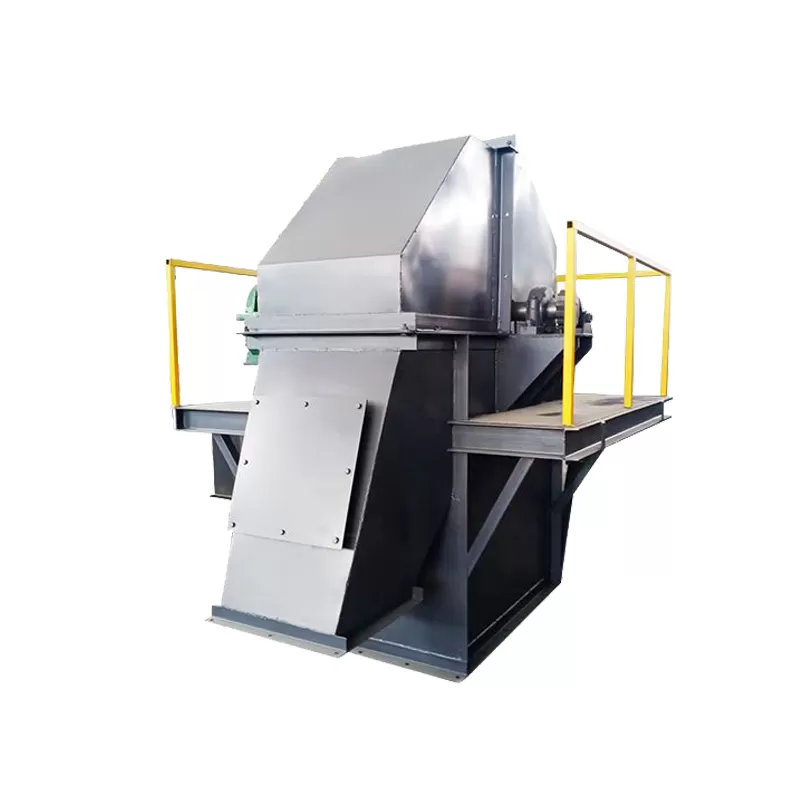
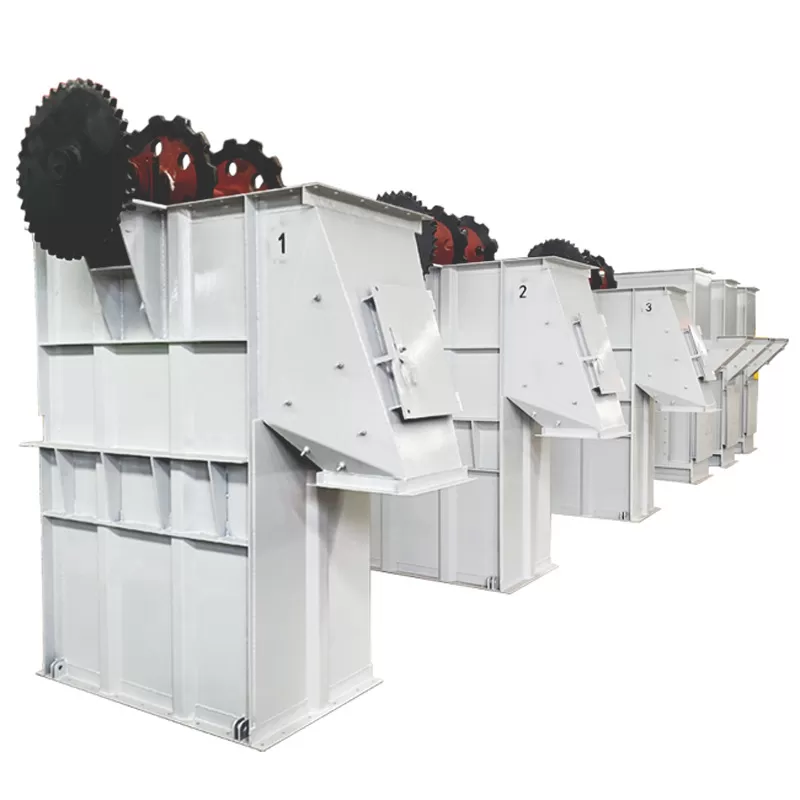
Heavy-Duty Vertical Elevation for Abrasive, Lump & High-Temperature Bulk Materials
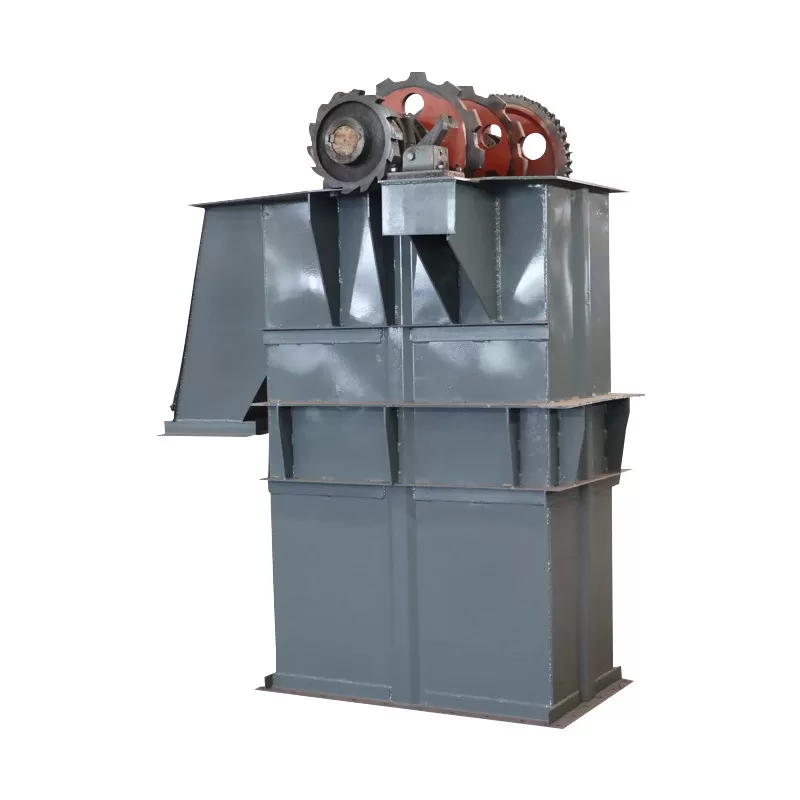
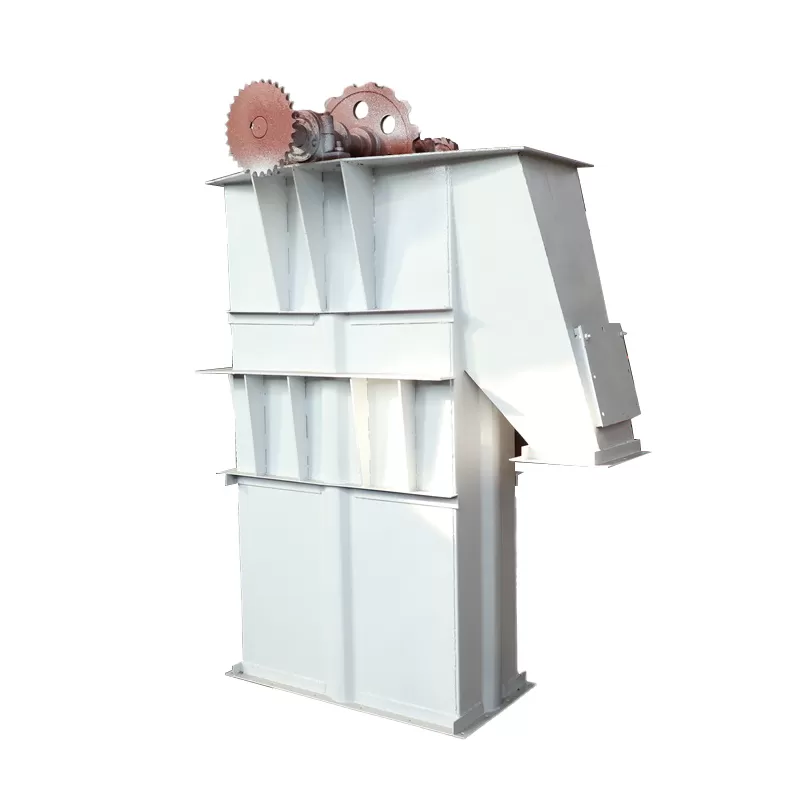
The NE Series Bucket Elevator is a high-capacity vertical lifting system engineered to transport coarse, abrasive, and lump-form bulk solids such as cement clinker, limestone, coal, and metallic ores. Utilizing high-strength alloy plate chains and hardened steel buckets with an inflow-feed and gravity-discharge design, it handles lumps up to 60 mm and temperatures up to 250°C at capacities reaching 800 m³/h. Built to ISO 9001 and CE standards with an enclosed IP54 dual-sealed casing, it delivers continuous vertical elevation up to 40 meters while cutting power consumption by up to 30% compared to centrifugal belt systems.
Core System Advantages
High-Strength Plate Chain Traction: Alloy steel plate chains (HRC 58–62 hardness) provide heavy load-bearing capability and resist extreme abrasion, delivering a service lifespan of 5 to 10 years.
Energy-Efficient Inflow & Gravity Discharge: Inflow feeding and low-speed gravity discharge reduce material impact and back-spill, lowering drive power consumption by up to 30%.
Featured Model Variants
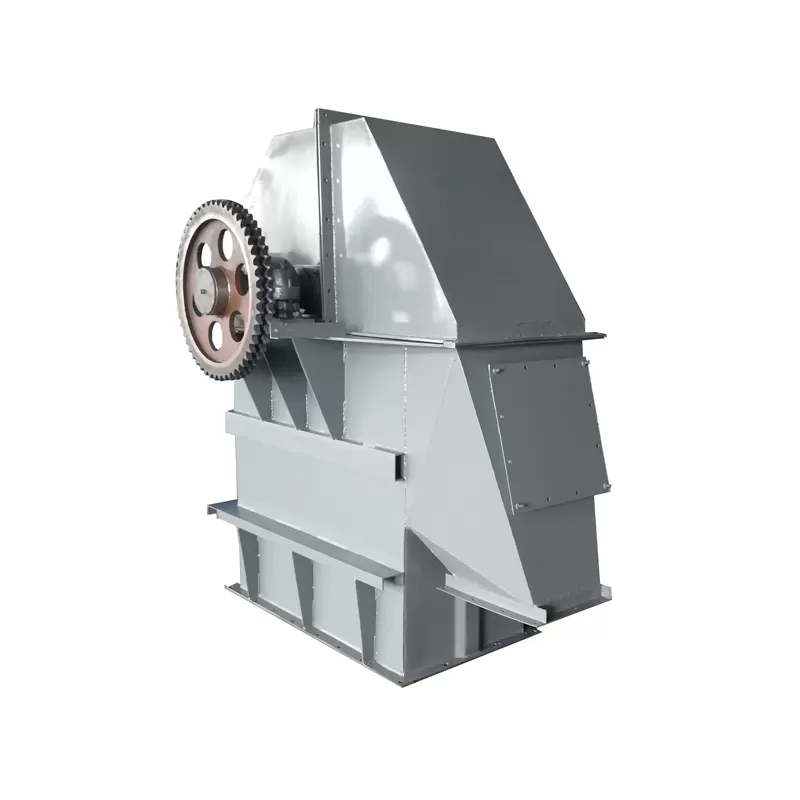
NE800 | High-Volume Industrial Silo Feed
Capacity: 800 m³/h | Bucket Volume: 501.8 L | Max Lump Size: 195 mm
High-capacity system built for large-scale cement plants, power generation stations, and port terminals.
Key Technical Specifications
Throughput volumes from 15 to 800 m³/h across vertical lifting heights up to 40 meters.Operates at a steady chain speed of 0.5 m/s powered by 5.5 kW to 55 kW drive motors. Fabricated from 3–5 mm Q235/Q345 carbon steel with dual-seal IP54 dustproofing, built-in mechanical backstops, and thermal tolerance up to 250°C.
What reason makes you to choose NE Bucket Elevator
When selecting a vertical conveyor system, reliability, capacity and low maintenance define operational success. The NE bucket elevator outperforms conventional conveyors with:
Efficient Power Usage: For Efficient Power Usage It is Inflow feeding & gravity discharge reduce energy consumption by up to 30%.
Long Service Life: This system also ensures a long time service because of Highstrength plate chain (ISO 6336 compliant) which ensures 5 to10 years of chain durability.
Superior Safety: Dual seal IP54 casing prevents dust leakage; built-in backstops ensure safety during power loss.
High Productivity: For productivity it have a high lifting capacity ranges from 15 m³/h to 800 m³/h with a maximum lifting height of 40 meters.
Temperature Resistance: The elevator bucket also operates reliably with materials up to 250°C.
Why Leading Plants Choose SENOTAY NE Bucket Elevator
Factory-Direct Pricing. Certified Quality. Dedicated Support.
Best Price Guarantee
Certified & Compliant
Fast, Reliable Delivery
NE Bucket Elevator Model Comparison Table
Model | Capacity (m³/h) | Bucket Volume (L) | Bucket Distance (mm) | Chain Speed (m/s) | Max Material Size (mm) | Weight (kg/m) |
NE15 | 15 | 2.5 | 203.2 | 0.5 | 50 | 27.5 |
NE30 | 35 | 7.8 | 304.8 | 0.5 | 65 | 35 |
NE50 | 60 | 15.7 | 304.8 | 0.5 | 65 | 64 |
NE100 | 110 | 35.0 | 400 | 0.5 | 95 | 89 |
NE150 | 170 | 52.2 | 400 | 0.5 | 95 | 112.3 |
NE200 | 220 | 84.6 | 500 | 0.5 | 125 | 134 |
NE300 | 320 | 127.5 | 500 | 0.5 | 125 | 188 |
NE400 | 400 | 182.6 | 600 | 0.5 | 145 | 205 |
NE500 | 500 | 260.9 | 700 | 0.5 | 165 | 223 |
NE800 | 800 | 501.8 | 800 | 0.5 | 195 | 313 |
Capacities and parameters may be adjusted based on customer-specific bulk density and flow characteristics.
NE Bucket Elevator – Technical Specification Table
Physical Dimensions | Performance Ratings | Material & Construction | Operational Data | Certifications & Lifecycle |
Overall Height: 6,000–45,000 mm | Operating Pressure: 0.3–0.6 Bar | Q235 / Q345 Steel | 220–480 Nm | 10–18 years |
Boot Section Width: 450–1,100 mm | Max Pressure: 1.0 Bar | 20Mn2 / 40Cr / 20CrMnTi | 1,200–8,600 kg | 20,000–40,000 hrs |
Head Section Width: 500–1,200 mm | Operating Temp: –20 to 120 °C | CC Steel / Nylon / HDPE | 0.25–0.60 m/s | ISO 9001:2015 / CE |
Bucket Width: 160–400 mm | Max Temp: 150 °C | NM400 / UHMW-PE | 35–450 m³/h | JB/T 3926, GB/T 6975 |
Bucket Pitch: 240–500 mm | Conveying Efficiency: > 90 % | 40Cr Forged Steel | 5.5–55 kW | EN 81-31 |
Flange Size: Ø260–Ø760 mm | Max Material Size: ≤ 60 mm | Rubber / Felt / Labyrinth | ≤ 85 dB(A) | 1,000–1,500 hrs |
Bolt Circle Diameter (BCD): Ø220–Ø720 mm | Filling Factor: 0.65–0.75 | 4–8 mm | Gravity / Spring | 5,000–8,000 cycles |
Product Description, Material Properties & Mechanical Standards
The NE series is available from NE15 to NE800, allowing flexible adaptation to different process capacities.
Each model features heavy-gauge steel casings, reinforced chain drive assemblies, and customizable bucket materials (steel or HDPE).
Standard Physical & Mechanical Properties
Property | Specification | Standard Applied |
Casing Thickness | 3–5 mm | ISO 2177 |
Chain Hardness | HRC 58–62 | ISO 6336 |
Motor Protection | IP54 | IEC 60529 |
Operating Temp. | ≤250°C | Industrial Grade |
Chain Speed | 0.5 m/s | Energy-optimized |
Lifespan (Chain/Bucket) | 5–10 years | ISO 1328-1 |
Maintenance Cycle | ≥5,000 hours | CE Certified |
The precise engineering and robust mechanical standards ensure sustained output under the harshest industrial conditions.
How Does an NE Bucket Elevator Work?
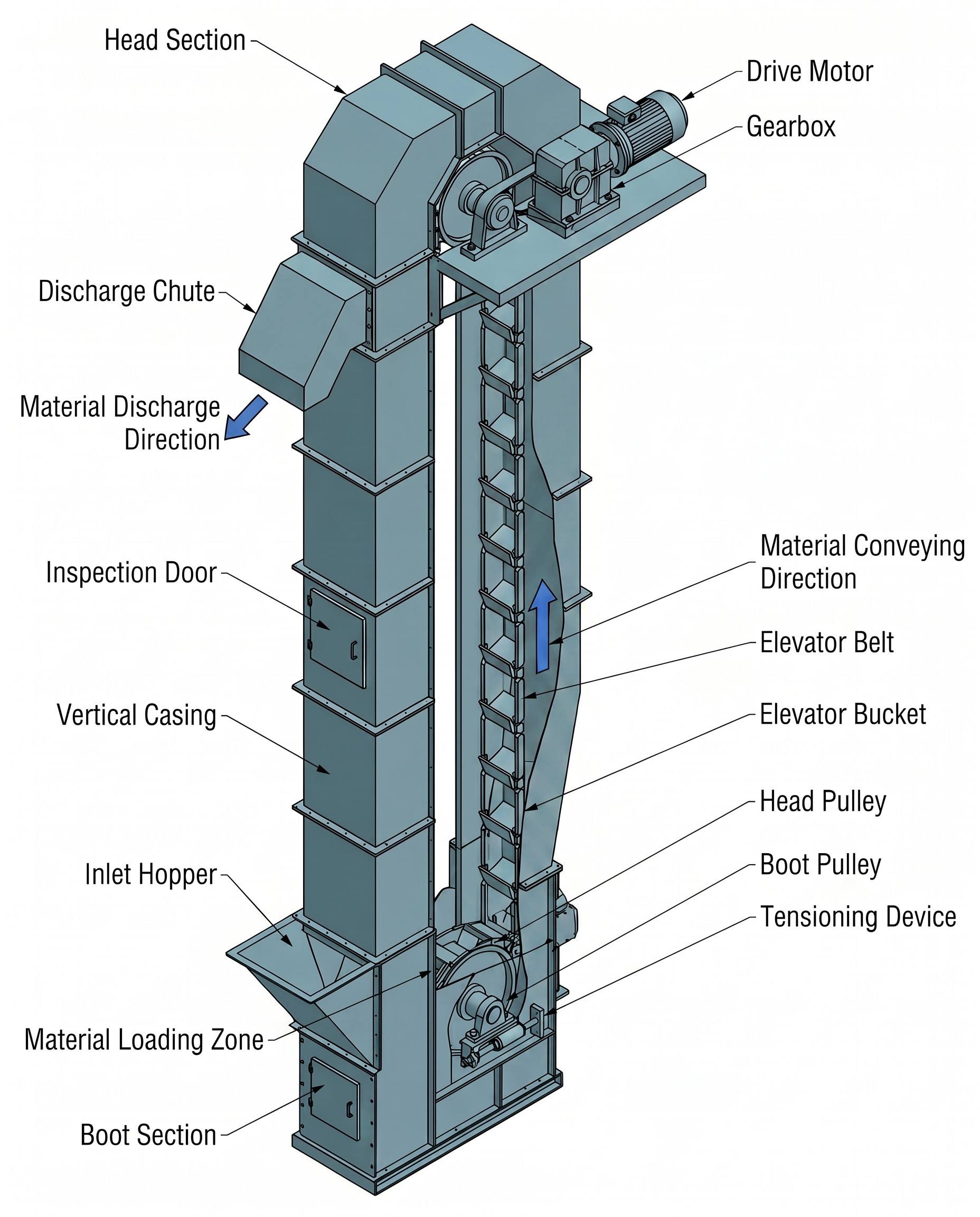
The working mechanism of a chain bucket elevator like the NE type is based on vertical material lifting through a sequence of buckets attached to a traction chain.
Step-by-Step Operation:
Feeding: Material enters the boot section and is scooped into buckets.
Lifting: Buckets ascend vertically at 0.5 m/s; chain motion ensures smooth transport.
Discharge: At the head, buckets invert automatically; material is discharged by gravity.
Return: Empty buckets descend along the guided pathway for continuous operation.
This low-speed, high-torque system minimizes wear and ensures gentle material handling with minimal spillage.
Who Uses an NE Bucket Elevator?
The NE bucket elevator is widely used across various sectors including:
Cement Plants — for clinker and limestone handling.
Mining & Quarrying — for ores and bulk minerals.
Coal & Power Plants — for dry and hot coal lifting.
Fertilizer & Chemicals — for granular material transport.
Agriculture & Food Processing — for grains and feedstock handling.
Its industrial-grade strength and versatile design make it the preferred bulk material elevator for heavy-duty applications.
Features of the NE Bucket Elevator
Scalable Capacity: Ranges from 15 m³/h (NE15) to 800 m³/h (NE800).
Compact Design: Modular construction for easy installation and maintenance.
Noise Reduction: Smooth drive reduces vibration and operational noise.
Corrosion Resistance: Anti-wear plate chain ensures stability even in harsh environments.
Advanced Sealing: IP54-rated protection against dust ingress.
Extended Maintenance Intervals: Over 20,000 operational hours between overhauls.
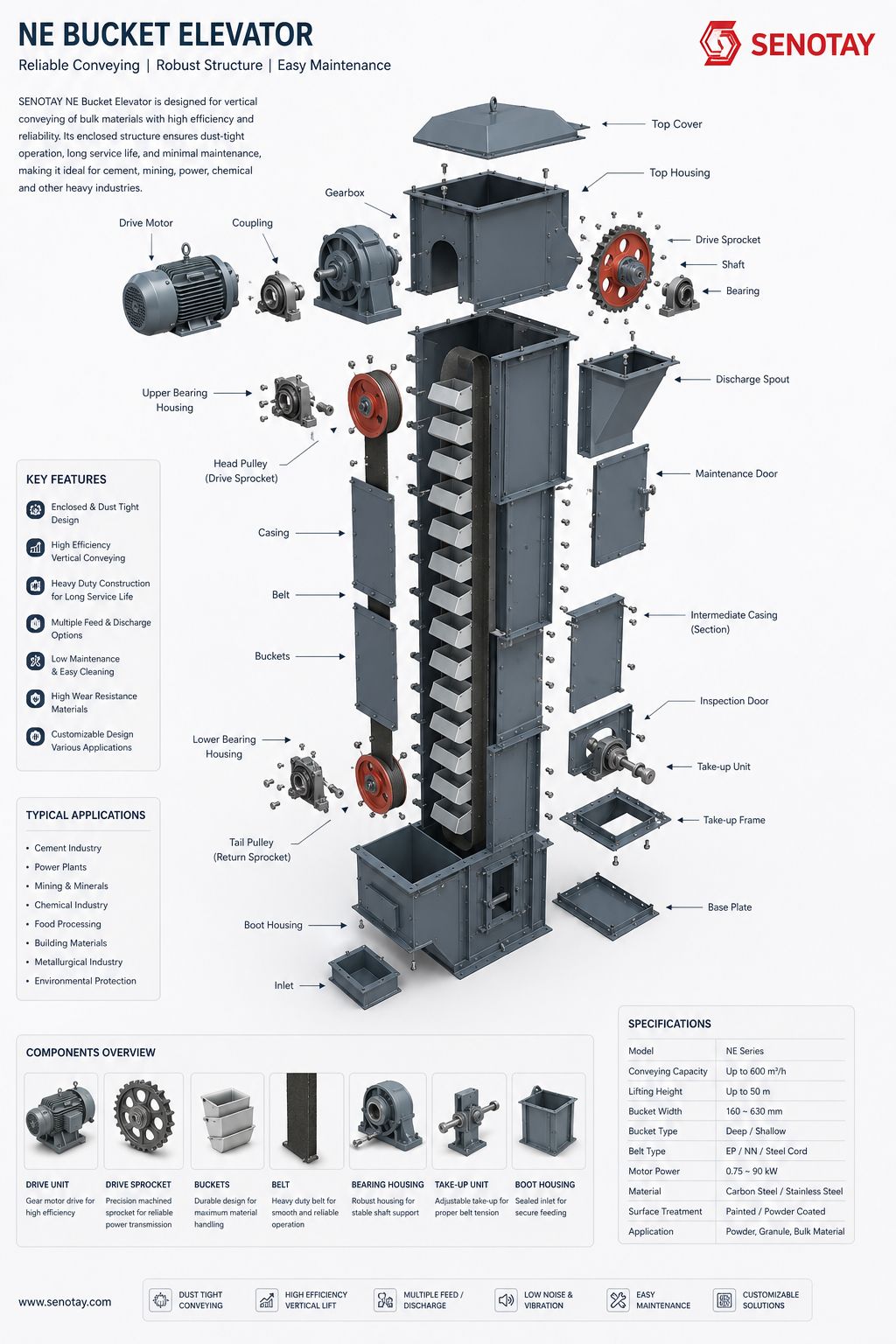
Core Components
Component | Description |
Drive Assembly | Motor-reducer combo with fluid coupling; minimizes shock loads. |
Casing Structure | Modular welded steel panels (3–5 mm thick). |
Buckets & Chain | HDPE or steel buckets with HRC 58–62 hardened chain. |
Tensioning System | Automatic tail unit maintains chain tension (±5% tolerance). |
Sealing System | Triple-lip & labyrinth seals for dustproof operation. |
Bearings | Lubricated roller bearings rated for 70°C max. operating temp. |
Installation Method
The NE type bucket elevator offers straightforward installation:
Foundation preparation — ensure vertical alignment and stable base.
Casing assembly — modular sections are bolted airtight.
Drive & head unit setup — align reducer and shaft coupling.
Chain and bucket assembly — installed from return section upwards.
Tension adjustment & start-up testing — fine-tune to ±0.5% precision.
Senotay provides on-site guidance and remote assistance during setup.
Technical Advantages in Senotay Manufacturing
HEBEI OuTai Environmental Protection Equipment Co., Ltd. (Senotay) is a leading NE bucket elevator manufacturer in China with full ISO 9001:2015 and CE compliance.
Key Manufacturing Advantages:
Precision CNC machining for chain and sprocket alignment.
Automated welding and anti-corrosion coating for extended casing life.
Fully modular design reducing installation time by 40%.
Rigorous QA inspections following ISO & IEC standards.
Custom configurations for high-temperature, abrasive, or food-grade applications.
Senotay’s expertise ensures reliable operation across thousands of projects in cement, mining, and material handling industries.
Explore More Conveying Equipment with SENOTAY
▪ Screw Conveyor
▪ GLS Tubular Screw Conveyor | LS Screw Conveyor | TD Bucket Elevator | WLS Shaftless Screw Conveyor
| Tubular Screw Conveyor | U-type Screw Conveyor | Shaftless Screw Conveyor
▪ Chain Conveyor
▪ MS Chain Conveyor | FU Chain Conveyor
▪ Bucket Elevator
▪ NE Bucket Elevator | TH Bucket Elevator
▪ Dust Humidifying Mixer
▪ SJ Humidifying Mixer | BDSZ Humidifying Mixer
▪ Rotary Feeder
▪ YJD-A-Square Rotary Feeder | YJD-B rotary feeder | YJD-HG-Square rotary feeder | YCD-HG-Square unloader
FAQs
Q1: What materials can the NE bucket elevator handle?
Answers:It efficiently handles materials such as cement clinker, limestone, coal, grain, fertilizer, and sand.
Q2: What is the maximum lifting height?
Answers:Standard configurations support up to 40 meters, with customization available.
Q3: Is the elevator suitable for high-temperature applications?
Answers:Yes, up to 250°C, making it ideal for hot clinker and dry coal handling.
Q4: How often does it require maintenance?
Answers:A regular maintenance cycle is every 5,000 hours, with full inspection annually.
Q5: Does Senotay offer custom designs?
Answers:Absolutely yes, our engineering team tailors every NE bucket elevator to meet specific project requirements and plant layouts.